

Skincare routine for hyperpigmentation and melasma is not just about fixing dark spots—it’s about restoring confidence and comfort in your own skin. Hyperpigmentation and melasma are not just cosmetic concerns. They quietly affect confidence, daily makeup choices, and how comfortable you feel in your own skin. One day it’s a few dark spots, and before you know it, you’re dealing with persistent patches and an uneven skin tone that doesn’t fade—no matter how many products you try.
What makes this frustrating is that most people do too much, too fast. Strong acids, random serums, and “quick fix” trends often inflame the skin, making melasma darker and more stubborn. Your skin doesn’t need punishment. It needs structure, protection, and consistency.
This skincare routine for hyperpigmentation and melasma focuses on calming first, correcting second, and maintaining results long term—just like I guide my real clients in practice.
Who This Works For:
This routine works for you if you want clarity instead of confusion. It’s ideal for beginners who don’t know where to start, busy people who need a simple system, and anyone dealing with melasma flare-ups triggered by sun, stress, or hormones.
It adapts well to sensitive skin, oily skin, dry skin, combination skin, and even acne-prone skin with post-inflammatory marks. If your goal is healthy glow rather than aggressive treatments, this approach fits.
Core Principles:
Treating pigmentation is not about chasing perfection. It’s about respecting how skin heals.
Consistency beats intensity.
Daily gentle care works better than harsh treatments used occasionally.
Barrier health comes first.
When the skin barrier is damaged, pigmentation deepens and becomes harder to fade.
Sun protection is treatment.
Without proper sun protection, no serum or cream can deliver lasting results.
Once you understand these principles, everything else becomes simpler.
Daily Skincare Routine:
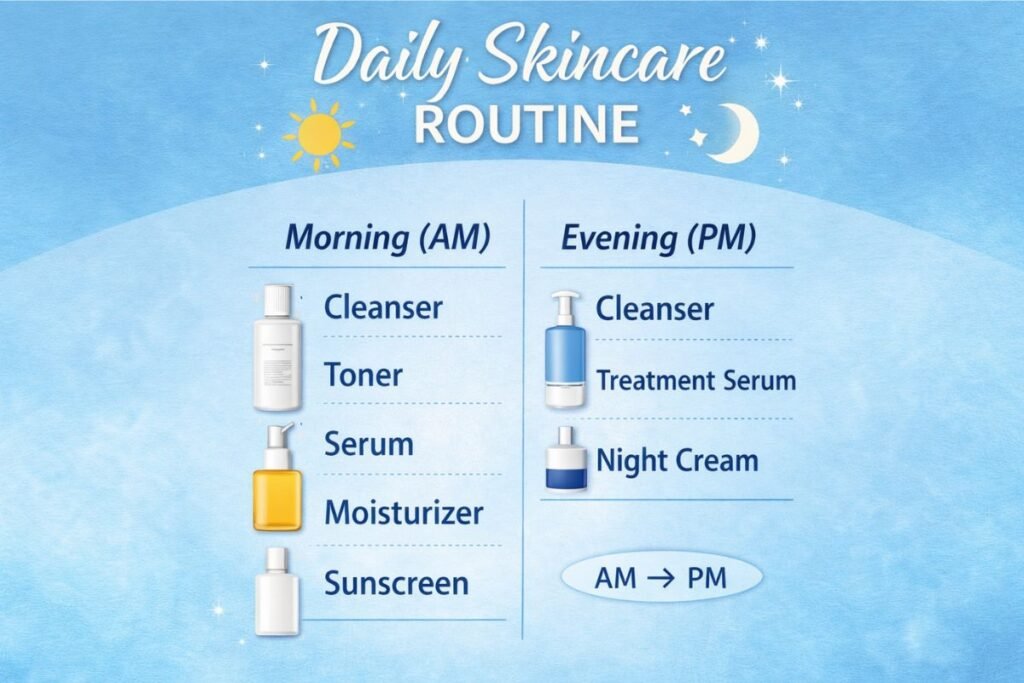
This skincare routine for hyperpigmentation and melasma is designed to be flexible, not overwhelming. Fewer products. Correct order. Repeat daily.
Morning Routine (AM):
- Gentle cleanser
- Hydrating toner (optional)
- Brightening or barrier-supporting serum
- Moisturizer
- Broad-spectrum sunscreen SPF 50
Evening Routine (PM)
- Cleanser
- Targeted treatment serum
- Barrier-repair night cream
This structure protects your skin during the day and supports repair at night—exactly when pigmentation responds best.
Key Product Breakdown (Simple & Clear Table):
Below is a clear, beginner-friendly table explaining what each product does, how to use it, and where it fits in your routine.
| Product | Why You Need It | How to Apply | Ingredients to Look For | Frequency & Order |
| Cleanser | Removes dirt, oil, sunscreen, and pollution so treatments work properly | Massage on damp skin for 30–40 seconds, rinse with lukewarm water | Glycerin, ceramides, gentle surfactants | Morning & Night – first step |
| Toner (Optional) | Adds light hydration and preps skin for serums | Press gently with palms or cotton, never rub | Hyaluronic acid, panthenol, rose water | After cleanser (AM/PM) |
| Treatment Serum | Targets dark spots and melasma at a cellular level | Apply 2–3 drops on dry skin, press gently, wait 30 seconds | Azelaic acid, tranexamic acid, niacinamide | Mostly at night, after cleansing |
| Moisturizer | Strengthens the skin barrier and reduces irritation | Apply a coin-sized amount to face and neck | Ceramides, cholesterol, hyaluronic acid | Morning & Night |
| Sunscreen | Prevents worsening of melasma and pigmentation | Use two finger-lengths for face and neck | Zinc oxide, titanium dioxide, iron oxides | Morning only – final step |
Correct Product Layering (Golden Rule):
Always apply products from thin to thick textures.
Morning order:
Cleanser → Toner → Serum → Moisturizer → Sunscreen
Evening order:
Cleanser → Treatment Serum → Night Cream
Incorrect layering is one of the most common reasons people see no results.
Nourishing Ingredients in Skincare:
Some ingredients consistently perform well for hyperpigmentation when used correctly.
Vitamin C brightens and protects the skin from environmental stress. Hyaluronic acid hydrates deeply without irritation. Retinoids support gradual cell turnover, helping pigmentation fade over time. Peptides strengthen and repair, making skin more resilient.
In real-world use, a combination of azelaic acid at night and daily sunscreen during the day delivers visible improvement within weeks—without overwhelming the skin.
Skin-Specific Concerns:
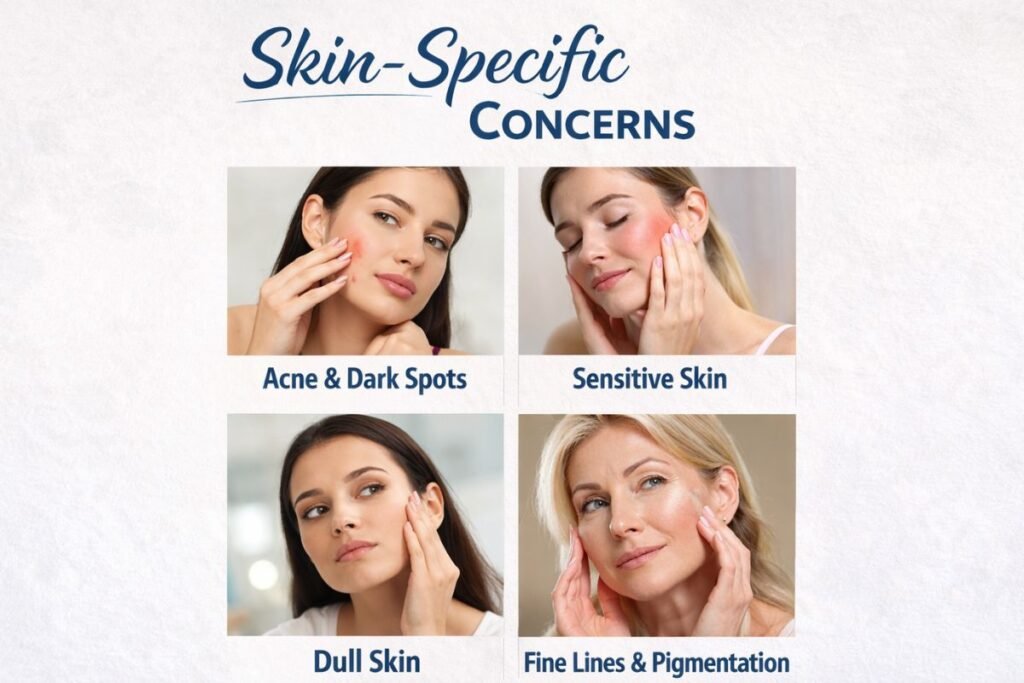
Acne with dark marks:
Stick to azelaic acid and avoid harsh scrubs. Let inflammation settle before pushing treatments.
Sensitive melasma-prone skin:
Focus on hydration and barrier repair. Avoid strong acids and frequent exfoliation.
Dull, tired-looking skin:
Add a gentle vitamin C serum in the morning to restore brightness.
Fine lines with pigmentation:
Introduce a low-strength retinoid two to three nights per week, slowly.
Targeted care always works better than aggressive routines.
Warm-Up (Pre-Skincare Ritual):
Before applying products, prepare your skin:
- Cleanse with lukewarm water
- Lightly press damp palms onto the skin
- Take three deep breaths
This simple ritual improves absorption and reduces irritation—especially important for melasma-prone skin.
Beauty Nutrition:

Your skincare routine doesn’t end at the sink. What you eat influences how your skin heals.
Drink enough water throughout the day. Include omega-3 fatty acids, antioxidant-rich fruits, leafy greens, and vitamin-E-rich foods. These nutrients support skin repair and reduce inflammation from within.
A simple skin-boosting meal: grilled salmon, spinach salad with olive oil, and citrus fruit on the side.
Recovery Rules:
Skin heals during rest, not stress.
Aim for 7–8 hours of sleep. Manage stress with gentle movement, breathing exercises, or quiet walks. During flare-ups, pause active treatments and focus only on cleansing, moisturizing, and sunscreen.
Calm skin always corrects faster.
Results Timeline:
Understanding timelines prevents frustration.
Week 1–2: Skin feels calmer, less reactive
Month 1: Overall brightness improves, patches soften
Month 3: Noticeable fading with consistent care
This skincare routine for hyperpigmentation and melasma rewards patience. Melasma fades gradually—but it does fade.
Common Mistakes & Fixes:
- Over-exfoliating → Fix it by reducing actives
- Skipping sunscreen → Fix it by making it a daily habit
- Using too many products → Fix it by simplifying
- Expecting instant results → Fix it by tracking monthly photos
- Ignoring hydration → Fix it by moisturizing twice daily
FAQ:
How do I know my skin type?
Cleanse your face and wait one hour. Tightness means dry skin, shine means oily, both means combination.
Can melasma disappear completely?
It can fade significantly, but maintenance is essential.
Can I wear makeup?
Yes. Just remove it gently and always apply sunscreen underneath.
When should I start treatment?
As soon as you notice uneven tone or recurring patches.