
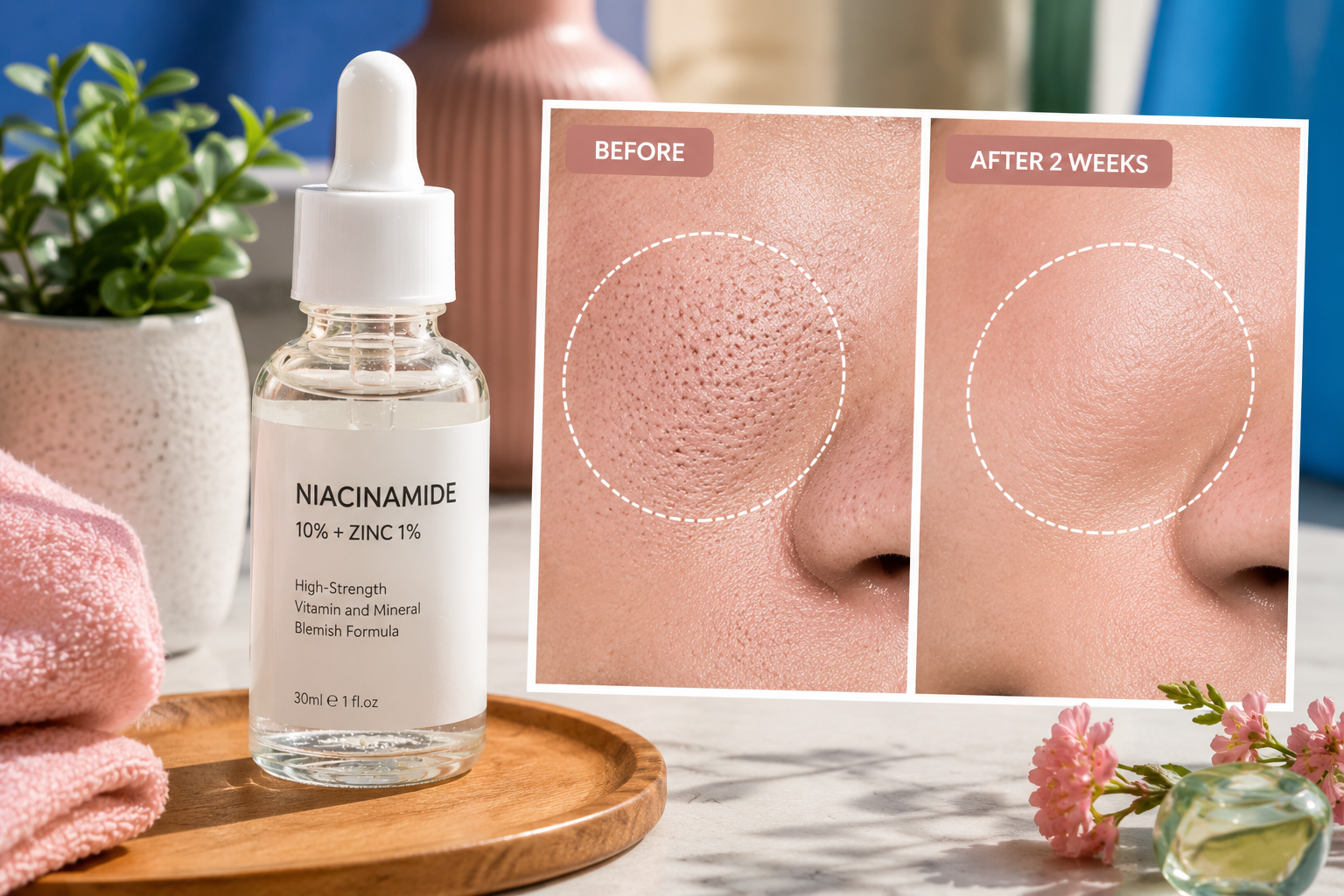
For the longest time, I assumed my pores looked large because I wasn’t using enough “active” skincare. Every few weeks I’d buy something new, hoping a stronger acid or another trendy serum would finally smooth everything out.
Instead, my skin became shinier, more irritated, and somehow my pores looked even more obvious. The turning point wasn’t adding another product. It was simplifying my routine and giving one ingredient enough time to do its job.
That ingredient was niacinamide.
This niacinamide routine cleared my pores in 2 weeks—not because it performed a miracle, but because it helped solve several small problems at the same time. My skin produced less oil by midday, the tiny clogged bumps across my nose gradually became less noticeable, and my complexion looked calmer overall.
If you’re expecting glass-smooth, poreless skin overnight, you’ll probably be disappointed. But if your goal is skin that looks healthier, more balanced, and noticeably clearer, this approach is worth trying.
Quick Answer
If you’re wondering whether a niacinamide routine can noticeably improve clogged pores in two weeks, the short answer is yes—for some people. Niacinamide won’t shrink your pores permanently, but it can help reduce excess oil, strengthen the skin barrier, calm visible redness, and make pores look cleaner and less noticeable over time.
The biggest difference usually comes from using it consistently, layering it correctly, and avoiding products that keep clogging your skin.
Why My Pores Looked Bigger Than They Really Were
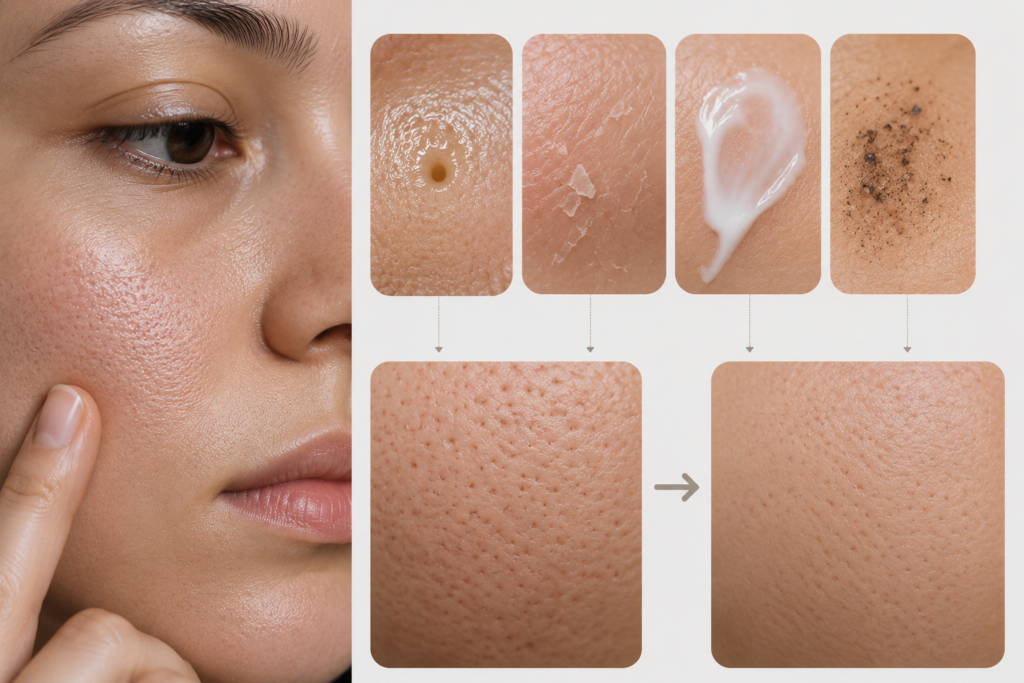
One thing I didn’t understand at first is that pores don’t suddenly become “large.” Most of the time, they simply become more noticeable.
When oil, dead skin cells, sunscreen residue, and everyday grime collect inside a pore, it stretches slightly and casts more of a shadow. Add dehydration or irritation into the mix, and the texture becomes even easier to see.
That’s why chasing stronger exfoliants didn’t help me. My skin wasn’t asking for harsher treatment—it was asking for balance.
Niacinamide supports that balance by helping regulate excess sebum, reinforcing the skin barrier, and reducing inflammation that can make pores appear more obvious.
It doesn’t erase pores. Nothing topical can do that. But cleaner, calmer skin often makes them look much smaller.
Good to Know: Genetics still play a role. If naturally larger pores run in your family, skincare can improve their appearance but won’t permanently change their size.
The Change That Made Niacinamide Start Working
Here’s the mistake I kept making. I’d apply niacinamide one day, skip it for two, switch to another serum, then wonder why nothing changed.
Consistency mattered far more than concentration. Once I used the same routine every day, my skin finally had a chance to respond.
I also stopped combining too many “fix-everything” products at once. That reduced irritation almost immediately.
Looking back, I think my skin improved because I removed the constant cycle of overcorrecting every little breakout.
My Morning Niacinamide Routine
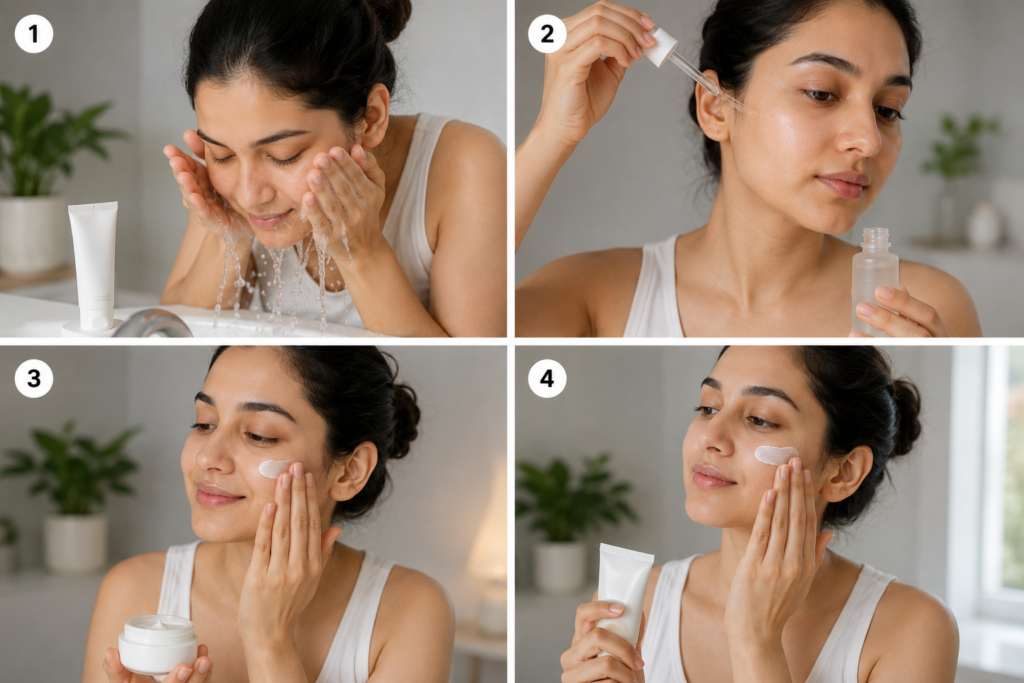
The morning routine stayed surprisingly simple.
Step 1: Start With a Gentle Cleanser
I switched to a low-foaming cleanser that removed overnight oil without leaving my skin feeling squeaky clean.
That tight feeling after washing isn’t a sign your cleanser is working better. It’s often a sign you’ve removed too much of your skin’s natural protective barrier.
When your barrier feels stripped, your skin may compensate by producing even more oil later in the day.
Step 2: Apply Niacinamide to Slightly Damp Skin
After gently patting away excess water, I applied a thin layer of niacinamide serum while my skin was still slightly damp. Not soaking wet—just lightly damp.
That helped the serum spread evenly without using more product than necessary. A few drops covered my entire face.
Using extra didn’t make it work faster.
Step 3: Lock It In With a Barrier-Friendly Moisturizer
This step made a bigger difference than I expected. Early on, I skipped moisturizer because my skin already felt oily.
That was a mistake.
Once I started using a lightweight, fragrance-free moisturizer with barrier-supporting ingredients like ceramides and glycerin, my skin actually became less greasy throughout the day.
Hydrated skin often tries less aggressively to compensate for moisture loss.
Pro Tip: If your niacinamide serum pills under moisturizer, you’re probably using too much product or not giving each layer enough time to settle. Thin layers almost always perform better than thick ones.
Step 4: Finish With Broad-Spectrum Sunscreen
This was the step I used to underestimate.
Sun exposure doesn’t directly clog pores, but it can contribute to collagen breakdown over time. As skin loses firmness, pores can appear more noticeable.
Daily sunscreen protects the progress you’re trying to make. Even the best skincare routine struggles if your skin isn’t protected from UV exposure. If you’re unsure which sunscreen is worth buying, check out our guide to 15 Sunscreens Dermatologists Actually Use Themselves to find dermatologist-approved options for everyday protection.
The Evening Habit That Helped More Than Another Active
At night, I resisted the urge to throw every exfoliating ingredient onto my face. Instead, I focused on making sure my skin was actually clean.
If I’d worn sunscreen or makeup that day, I started with an oil-based cleanser before following with my regular gentle cleanser.
That one habit reduced the tiny rough bumps around my nose more than constantly adding stronger treatments. I hadn’t realized how much residue was being left behind.
Niacinamide performs best when it’s working on clean skin—not on top of leftover sunscreen or makeup.
Why I Didn’t Pair Niacinamide With Everything at Once
When I first started using niacinamide, I made the classic mistake of trying to fix every skin concern at the same time. One serum for pores, another for dark spots, an exfoliating toner every night, a retinoid twice a week, and a vitamin C serum every morning.
On paper, it looked like an impressive routine. In reality, my skin became confused, irritated, and unpredictable. Once I simplified things, it became much easier to see what was actually helping.
Ingredients That Worked Well Alongside Niacinamide
Niacinamide plays well with most skincare ingredients, which is one reason it’s become such a staple. Some combinations stood out more than others.
Ceramides
This pairing made my skin feel stronger within days. Ceramides help reinforce the skin barrier, while niacinamide supports the skin’s natural production of barrier lipids. Together, they reduced that tight feeling I’d get after cleansing.
Hyaluronic Acid
Instead of making my skin look shinier, this combination made it look healthier. One thing I learned the hard way: if you use a humectant like hyaluronic acid in very dry indoor air, don’t leave it sitting on bare skin.
Follow it with moisturizer fairly quickly so the hydration stays where you want it.
Gentle Chemical Exfoliants
Using a mild exfoliating acid once or twice a week helped loosen the buildup sitting inside my pores. The key word is gentle. I stopped treating exfoliation like a daily chore.
Giving my skin recovery days made everything work better.
Watch Out: More exfoliation doesn’t automatically mean clearer pores. Overdoing acids can damage your skin barrier, leaving your skin looking rougher even if you’re technically removing dead skin cells.
The Changes I Actually Noticed During Those Two Weeks
I wish I could say I woke up on Day 14 with completely smooth, poreless skin. That didn’t happen. The improvements were much more gradual.
Days 1–3
My skin mostly looked the same. If anything, it felt calmer because I had stopped overloading it with products.
Days 4–7
By the end of the first week, something interesting happened. My forehead wasn’t nearly as shiny by lunchtime. Normally I’d reach for blotting papers several times a day.
Now I barely needed them. That wasn’t dramatic enough for social media before-and-after photos—but it was noticeable in real life.
Days 8–10
This is when the clogged pores around my nose started looking less obvious. The texture hadn’t disappeared. It simply looked cleaner.
Foundation also sat more evenly across that area because there wasn’t as much congestion underneath.
Days 11–14
By the end of the second week, friends didn’t ask what product I was using. They simply commented that my skin looked healthier.
That’s actually the kind of compliment I trust most. Healthy skin rarely looks filtered. It just looks balanced.
What This Routine Can Improve—and What It Can’t
One reason skincare feels disappointing is that many people expect one ingredient to solve five different problems. Niacinamide has strengths, but it also has limits.
It May Help
- Reduce excess oil production
- Improve the appearance of enlarged pores
- Support a healthier skin barrier
- Calm visible redness
- Fade the appearance of post-acne marks over time
- Improve overall skin texture with consistent use
It Won’t
- Permanently shrink pore size
- Remove deep blackheads overnight
- Replace prescription acne treatments when acne is severe
- Erase acne scars
- Deliver instant results after one or two uses
Understanding those limits made me much happier with my results. I stopped chasing perfection and started noticing steady progress instead.
The Small Mistakes That Slowed My Progress Before
Looking back, my skin didn’t improve because I found a magical routine. It improved because I finally stopped getting in my own way. Here are the habits I had to break.
Constantly Switching Products
Every new launch promised better results. I’d use something for four days, then replace it.
Skin usually needs time to respond. Jumping between products makes it nearly impossible to know what’s helping.
Using Too Much Serum
A full dropper looked satisfying. My skin disagreed.
A thin, even layer absorbed better and left less sticky residue. More product doesn’t mean more effectiveness.
Skipping Moisturizer Because My Skin Was Oily
This was probably my biggest mistake. Once I consistently moisturized, my skin stopped feeling like it needed to compensate by producing extra oil.
That surprised me more than anything else.
Forgetting Sunscreen on “Indoor Days”
I used to think sunscreen only mattered if I planned to spend hours outside. Daily UV exposure still adds up over time.
Protecting your skin helps maintain the improvements your routine is making.
Is This Routine Right for Every Skin Type?
Mostly, yes—but with a few adjustments.
Oily Skin
This is where niacinamide often shines. If excess oil makes your pores look larger, consistent use may help your skin appear more balanced.
Combination Skin
Apply lightweight hydration across the whole face instead of treating only the oily areas. Sometimes the drier parts need just as much attention.
Dry Skin
Niacinamide isn’t drying on its own, but it works best alongside a nourishing moisturizer. Don’t rely on the serum to provide hydration by itself.
Sensitive Skin
Start slowly. Using it every other day for the first week gives your skin time to adjust, especially if you’re already using exfoliating acids or a retinoid.
Patch-test any new product before applying it to your entire face. If you develop persistent burning, swelling, or a rash, stop using the product and seek advice from a qualified healthcare professional.
The Biggest Lesson I Took Away
If you’d asked me a month earlier what would improve my pores, I would’ve guessed a stronger exfoliating treatment. I would’ve been wrong.
The biggest difference came from consistency. Using a straightforward routine every day beat chasing the newest trend every single time.
That’s probably the least exciting skincare advice you’ll hear. It’s also the advice that’s made the biggest difference for my own skin.
FAQs
Does niacinamide actually shrink pores?
Not permanently. Pore size is largely determined by genetics, so no topical skincare product can physically shrink them forever. What niacinamide can do is reduce excess oil, support a healthier skin barrier, and minimize congestion, which often makes pores look noticeably smaller and cleaner.
Can I use niacinamide every day?
Yes. Most people can use niacinamide once or twice daily as part of their regular skincare routine. If you have very sensitive skin or you’re introducing several new products at once, start with once a day or every other day.
Increase gradually if your skin stays comfortable.
Should I use niacinamide in the morning or at night?
Both work well. In the morning, niacinamide fits nicely under moisturizer and sunscreen to help manage oil throughout the day.
At night, it supports the skin barrier while your skin goes through its natural repair process. If your skin tolerates it, using it in both routines is usually fine.
Why didn’t my pores improve after using niacinamide?
The ingredient may not be the problem. Pores often stay congested because of inconsistent cleansing, skipping moisturizer, using too many active ingredients, or expecting results too quickly.
Give your routine at least several weeks before deciding whether it’s working, and make sure the rest of your routine supports healthy skin rather than irritating it.
Can niacinamide be used with retinoids or exfoliating acids?
Usually, yes. Niacinamide is known for being compatible with many active ingredients and may even help reduce some of the dryness associated with stronger treatments.
If your skin is easily irritated, introduce one active ingredient at a time so you can tell how your skin responds.