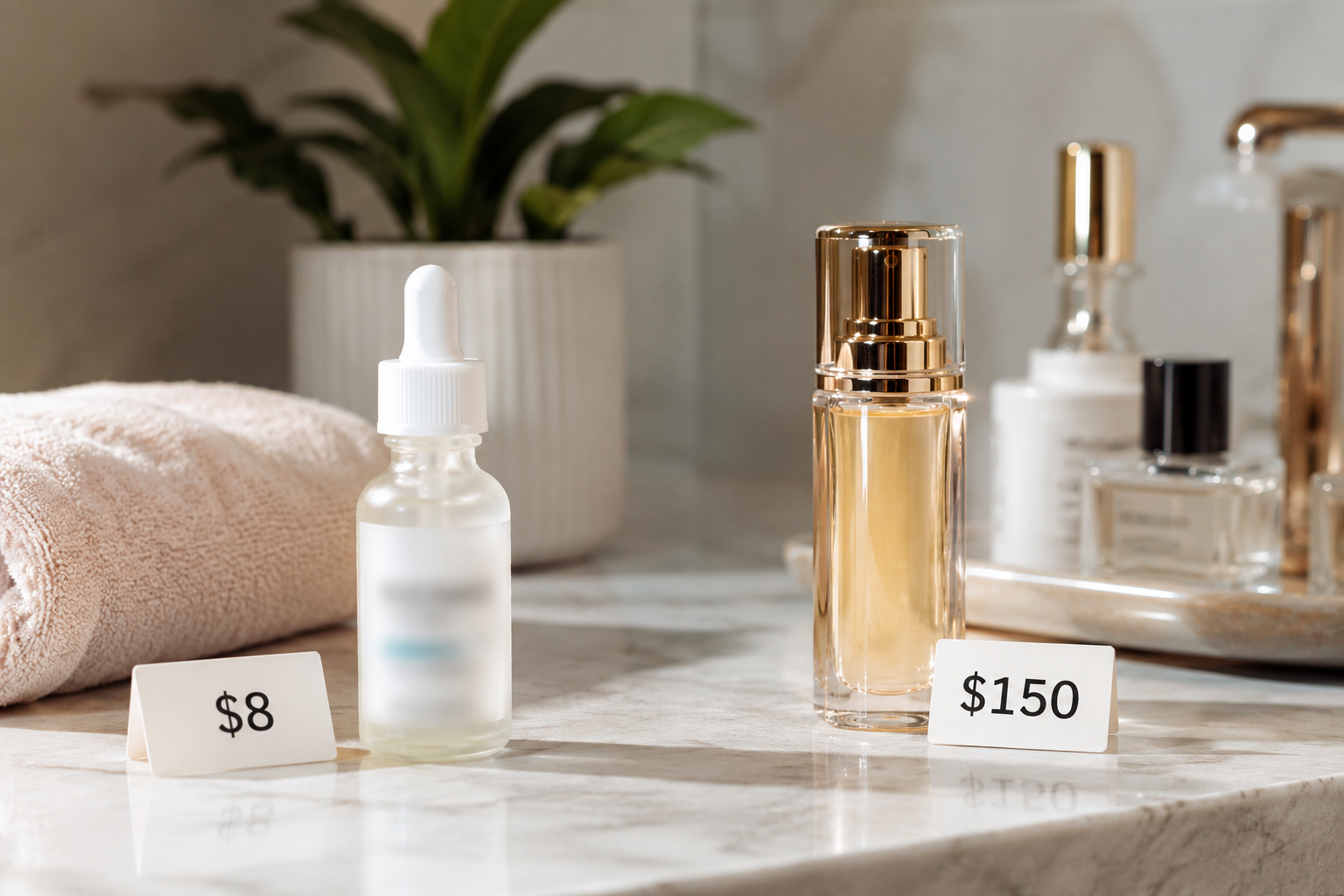
A few years ago, I fell into the same trap many skincare lovers do. I convinced myself that if a serum came in a heavy glass bottle with a luxury price tag, it had to work better. After testing dozens of formulas—from drugstore shelves to department store counters—I realized something surprising: some of the best-performing serums cost less than lunch.
That’s exactly why The $8 Drugstore Serum That Outperforms Luxury Brands has become such a hot topic. It’s not because expensive skincare is bad. Some luxury formulas are excellent. It’s because certain affordable serums focus on ingredients that have real evidence behind them instead of fancy packaging and fragrance.
If your goal is healthier-looking skin—not simply owning an expensive bottle—this is what you need to know.
Quick Answer: Which $8 Drugstore Serum Actually Lives Up to the Hype?
If I had to recommend one affordable serum that consistently competes with products many times its price, it would be The Ordinary Niacinamide 10% + Zinc 1%.
At roughly $6–8 in the US, it delivers a simple, fragrance-free formula built around two proven ingredients instead of unnecessary extras. It won’t replace prescription treatments or professional procedures, but for oily skin, enlarged-looking pores, uneven texture, and post-breakout marks, it performs remarkably well for the price.
Why This Serum Gets Compared to Luxury Products
Luxury skincare often offers beautiful textures, elegant packaging, and a premium experience.
Those things aren’t worthless.
But they don’t automatically improve your skin.
The Ordinary takes a different approach. Instead of spending heavily on marketing and elaborate packaging, the brand focuses on straightforward formulas built around recognizable active ingredients.
Its Niacinamide 10% + Zinc 1% serum contains:
- 10% niacinamide (Vitamin B3)
- Zinc PCA
- A lightweight water-based texture
- No added fragrance
- A vegan formula
The official price is around $6 USD, although retailers sometimes charge slightly more.
What Makes Niacinamide Such a Powerful Ingredient?
Niacinamide is one of the few skincare ingredients that benefits almost every skin type.
It helps support several skin concerns at once instead of targeting only one.
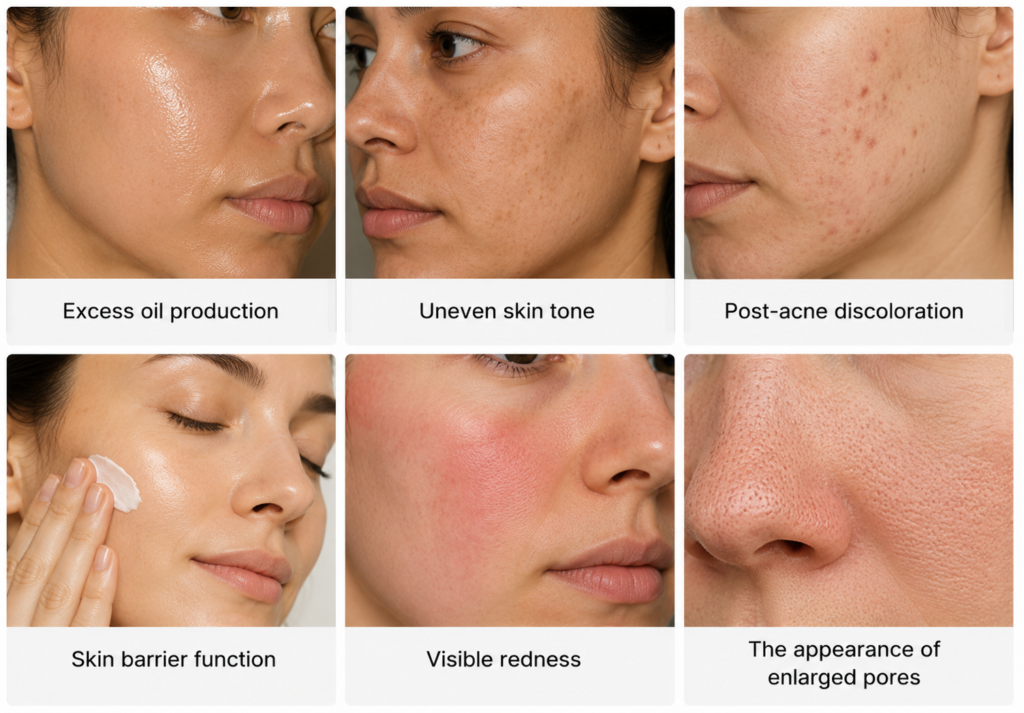
It may help improve:
- Excess oil production
- Uneven skin tone
- Post-acne discoloration
- Skin barrier function
- Visible redness
- The appearance of enlarged pores
Unlike stronger exfoliating acids or retinoids, niacinamide is generally well tolerated by most people.
That’s one reason it appears in products costing $6—and products costing well over $100.
The ingredient itself isn’t rare.
The formula around it is what matters.
The Secret Isn’t the Price—It’s the Formula
One mistake I made early in my skincare journey was assuming higher percentages always meant better results.
Not necessarily.
A well-formulated serum depends on:
- Stable ingredients
- Proper pH
- Compatible supporting ingredients
- Good preservation
- Consistent manufacturing
An expensive serum can still perform poorly if the formula isn’t balanced.
Meanwhile, a straightforward drugstore serum can outperform it simply because everything works together.
That’s exactly why ingredient lists deserve more attention than price tags.
Why Zinc Makes This Formula Different
People often focus only on the niacinamide.
The zinc deserves attention too.
Zinc PCA helps reduce excess oil on the skin’s surface while supporting a healthier-looking complexion.
For someone with oily or combination skin, that combination often feels noticeably more balanced after several weeks of consistent use.
It’s not an overnight fix.
But gradual improvements are exactly what trustworthy skincare usually looks like.
My Experience After Testing Similar Serums
I’ve tested luxury niacinamide serums that felt incredibly silky.
Some absorbed beautifully.
Some smelled amazing.
But after eight or ten weeks, the results weren’t dramatically different from this much cheaper formula.
In a few cases, the expensive versions actually irritated my skin because they included fragrance or essential oils that my skin simply didn’t need.
That’s one lesson I keep coming back to:
Beautiful packaging doesn’t repair your skin barrier.
Ingredients do.
Another Budget Favorite Worth Considering
If your skin prefers slightly simpler textures, Good Molecules Niacinamide Serum is another excellent option.
It also contains 10% niacinamide, is fragrance-free, and usually costs around $6–8, depending on where you buy it. The lightweight formula is designed to help improve uneven tone, texture, and the appearance of pores without feeling heavy.
Some people actually prefer its texture over The Ordinary because it feels slightly less tacky after application.
Neither product is objectively “better.”
Your skin may simply like one texture more than the other.
Drugstore vs Luxury: Where Does the Money Go?
Here’s a realistic comparison.
| Factor | Affordable Serum | Luxury Serum |
|---|---|---|
| Active ingredients | Often similar | Often similar |
| Packaging | Simple | Premium glass and design |
| Fragrance | Usually minimal | Frequently included |
| Marketing costs | Lower | Much higher |
| Cosmetic elegance | Sometimes basic | Often more luxurious |
| Results | Can be excellent | Can also be excellent |
The biggest surprise?
Results don’t always increase with price.
Who Will See the Biggest Difference?
This type of serum usually works best if you have:
- Oily skin
- Combination skin
- Acne-prone skin
- Enlarged-looking pores
- Uneven texture
- Mild post-breakout marks
If your skin is extremely dry, niacinamide alone probably won’t feel moisturizing enough.
You’ll still need a good moisturizer afterward.
Pro Tip: Niacinamide works best as part of a complete routine. Think of it as a supporting player, not the entire team.
What It Won’t Do
This is where honest skincare advice matters.
No serum—whether it costs $8 or $90—can:
- Remove deep acne scars
- Lift sagging skin
- Erase deep wrinkles overnight
- Permanently shrink pores
- Replace prescription treatments
If someone promises those results, I’d be skeptical regardless of the price.
The best skincare improves your skin gradually.
It doesn’t perform miracles.
One Small Mistake That Makes People Think It Doesn’t Work
People often expect visible changes within one week.
That’s unrealistic.
Skin renews itself slowly.
Most people need 6–12 weeks of consistent use before judging a niacinamide serum fairly.
Ironically, many people quit just before the improvements become noticeable.
Watch Out: If you’re introducing several new products at once, you won’t know which one is actually helping—or causing irritation.
How to Get the Best Results From an $8 Drugstore Serum
Buying the right serum is only half the story.
How you use it has a bigger impact than most people realize.
I’ve seen people call a serum “useless,” only to discover they were applying it after a heavy face oil or using five strong active ingredients in the same routine. Even an excellent formula struggles under those conditions.
Here’s how to make the most of a niacinamide serum.
Where It Fits in Your Skincare Routine
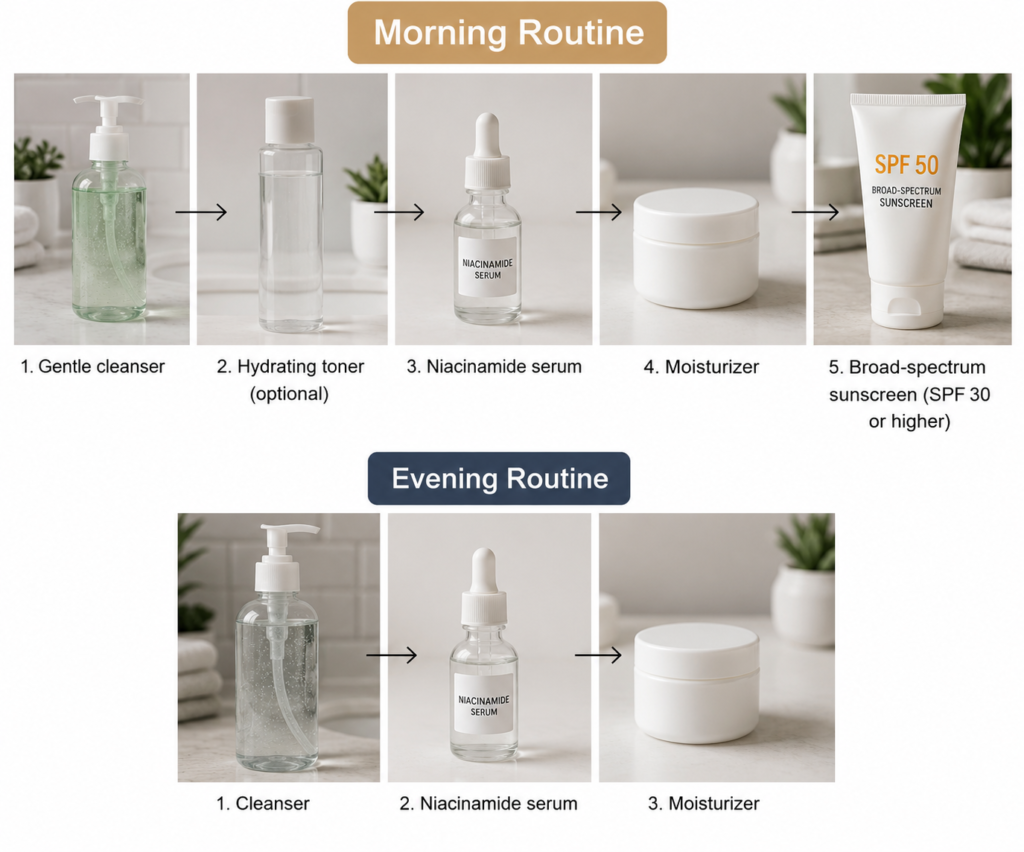
Because niacinamide is water-based, it should usually be applied after cleansing and before heavier creams or oils.
Morning Routine
- Gentle cleanser
- Hydrating toner (optional)
- Niacinamide serum
- Moisturizer
- Broad-spectrum sunscreen (SPF 30 or higher)
Evening Routine
- Cleanser
- Niacinamide serum
- Moisturizer
If your moisturizer already contains niacinamide, adding a separate serum isn’t always necessary. More isn’t automatically better.
Can You Use It With Other Active Ingredients?
One reason niacinamide is so popular is that it plays well with most skincare ingredients.
Works Well With
- Hyaluronic acid for added hydration
- Ceramides to strengthen the skin barrier
- Peptides for a smoother-looking complexion
- Azelaic acid to help reduce the appearance of redness and post-breakout marks
- Retinol because niacinamide can help support the skin barrier and improve tolerance for some users
- Vitamin C in modern formulations. The old belief that they shouldn’t be used together comes from outdated research using unstable forms of vitamin C under laboratory conditions. Today’s formulas are generally compatible.
The key is introducing one new product at a time so you can tell how your skin responds.
Who Should Skip This Type of Serum?
Despite the hype, it isn’t for everyone.
You may want to look elsewhere if:
- Your skin reacts poorly to niacinamide, even after patch testing.
- You’re looking for dramatic wrinkle reduction—retinoids have stronger evidence for that.
- Your main concern is severe dehydration. A serum focused on hyaluronic acid, glycerin, or multiple humectants may be a better starting point.
No single ingredient solves every skin concern.
That’s completely normal.
How Much Should You Apply?
More serum won’t give you faster results. In fact, it can increase the chance of pilling under moisturizer or sunscreen. A pea-sized amount—or two to three small drops—is usually enough for your entire face. Spread it evenly instead of concentrating it in one area.
Your skin only absorbs so much. The rest simply stays on the surface.
Why Consistency Beats Expensive Products
One thing I’ve learned after trying countless skincare products is that consistency almost always wins.
Using an affordable serum every day for three months is likely to give better results than using a luxury serum only when you remember.
Healthy skin comes from habits, not occasional splurges.
That’s why I encourage people to build a routine they can realistically stick with instead of chasing every viral product launch.
The Biggest Mistakes to Avoid
Applying Too Many Active Ingredients
Layering niacinamide, exfoliating acids, retinoids, and multiple brightening serums all at once can overwhelm your skin.
A simpler routine is often more effective.
Judging Results Too Quickly
One week isn’t enough. Most improvements in skin tone, oil balance, and texture happen gradually over several weeks of regular use.
Patience is part of good skincare.
Ignoring Moisturizer
Niacinamide supports your skin barrier, but it doesn’t replace moisturizer.
Think of your serum as the treatment and your moisturizer as the protective seal.
They work best together.
Good to Know: If your skin suddenly becomes dry, tight, or irritated after adding several new products, try simplifying your routine before assuming the serum is the problem.
Is a Luxury Serum Ever Worth the Extra Money?
Sometimes, yes.
Luxury skincare can offer:
- More elegant textures
- Better layering under makeup
- Sophisticated delivery systems
- Premium packaging
- A more enjoyable application experience
If those things matter to you and fit your budget, there’s nothing wrong with choosing a luxury product.
Just remember that enjoyment and effectiveness aren’t always the same thing.
For many people, an affordable serum delivers everything their skin actually needs.
Your Doubts Here
Is The Ordinary Niacinamide 10% + Zinc 1% really better than luxury serums?
For many people, yes. Its simple formula contains well-studied ingredients without unnecessary fragrance or filler ingredients. While some luxury serums offer nicer textures or additional ingredients, better results aren’t guaranteed simply because they cost more.
How long does it take to see results from a niacinamide serum?
Most people notice improvements in oil control and skin texture within 4–8 weeks, while uneven tone and post-breakout marks may take 8–12 weeks of consistent use. Results vary depending on your skin and the rest of your routine.
Can I use a niacinamide serum every day?
Yes. Most people can use it once or twice daily if their skin tolerates it well. If you’re new to active skincare, start every other day for the first week and increase gradually if your skin feels comfortable.
Can I use niacinamide with retinol or vitamin C?
Generally, yes. Niacinamide pairs well with both modern vitamin C formulas and retinol. Introducing products gradually helps you identify any irritation and build a routine your skin can tolerate comfortably.
Is an $8 serum enough for a complete skincare routine?
No. A serum targets specific concerns, but it works best alongside a gentle cleanser, moisturizer, and daily sunscreen. Together, those products create a balanced routine that supports healthier-looking skin over time.