I’d been hearing about skin cycling everywhere. Some people claimed it completely changed their skin, while others insisted it was just another social media trend.
After seeing the same routine pop up over and over, I decided to stop guessing and try it myself. I followed a simple skin cycling routine for 30 days, paid close attention to how my skin reacted, and resisted the urge to add extra products whenever things weren’t perfect.
The results surprised me—but probably not in the way you’d expect.
Quick Answer: Does Skin Cycling Actually Work?
For many people, yes. Skin cycling can help improve skin texture, reduce irritation from active ingredients, and make a routine easier to stick with. The biggest benefit isn’t that it’s magical—it’s that scheduled recovery nights often allow your skin barrier to stay healthier while still getting the benefits of exfoliation and retinoids.
What Is Skin Cycling?
Skin cycling is a repeating nighttime skincare schedule instead of using strong active ingredients every evening.
A basic cycle looks like this:
- Night 1: Exfoliation
- Night 2: Retinoid
- Night 3: Recovery
- Night 4: Recovery
Then you repeat the cycle.
Instead of pushing your skin every night, you intentionally give it time to recover.
That recovery turned out to be the biggest reason this routine worked for me.
My Skin Before Starting
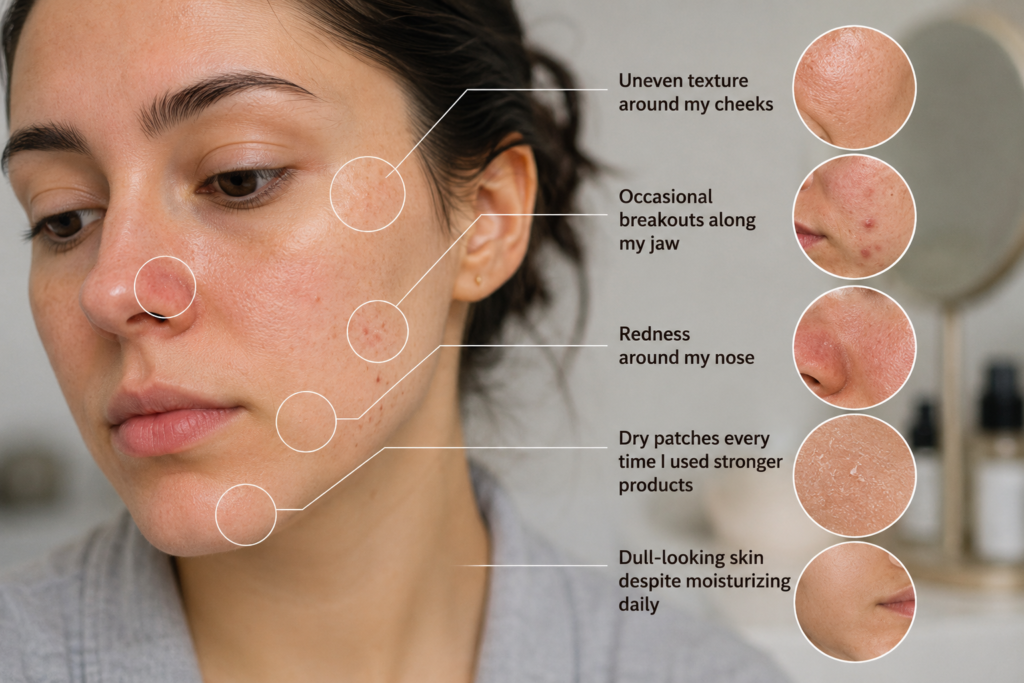
My skin wasn’t terrible.
But it wasn’t exactly happy either.
I dealt with:
- uneven texture around my cheeks
- occasional breakouts along my jaw
- redness around my nose
- dry patches every time I used stronger products
- dull-looking skin despite moisturizing daily
I also had a bad habit of trying too many products at once.
Looking back, my skin probably needed consistency more than another serum.
The Routine I Followed
I kept everything simple.
Night 1 — Exfoliation
I used a gentle chemical exfoliant after cleansing.
No scrubs.
No harsh rubbing.
Just one thin layer followed by moisturizer.
Night 2 — Retinoid
After cleansing, I applied a pea-sized amount of retinoid to completely dry skin.
I waited a few minutes before moisturizing.
That small pause seemed to reduce irritation.
Nights 3 & 4 — Recovery
These became my favorite nights.
I skipped all strong actives and focused on barrier support using:
- fragrance-free moisturizer
- hydrating serum
- ceramide-rich cream
Nothing fancy.
Just hydration.
Pro Tip: Recovery nights aren’t “doing nothing.” They’re often when your skin catches up and repairs itself.
Week 1: My Skin Wasn’t Happy
The first week honestly made me question the whole experiment.
My skin felt:
- slightly tight
- a little flaky
- mildly irritated around my chin
Nothing severe.
But definitely not the instant glow social media promised.
This is where many people quit.
I’m glad I didn’t.
One thing I noticed quickly was that my recovery nights made a noticeable difference. Whenever I reached Night 3, my skin felt calmer again.
Week 2: Things Started Settling Down
Around the second week, I noticed fewer new breakouts.
The dry patches became smaller.
My skin also felt smoother after cleansing.
Not dramatically smoother.
Just enough that makeup applied more evenly.
I also realized something interesting.
The routine forced me to stop experimenting with random products.
That consistency alone probably helped.
Why Recovery Nights Matter More Than Most People Think
I used to believe stronger products produced faster results.
Experience taught me otherwise.
Your skin barrier acts like a protective wall.
When it’s damaged, your skin loses moisture more easily and becomes more reactive.
Giving your skin two recovery nights each cycle seemed to reduce that constant cycle of irritation followed by more irritation.
Some people focus only on exfoliation and retinoids.
In my experience, the recovery nights deserve just as much credit.
Good to Know: If your home is very dry, apply moisturizer immediately after hydrating products. Humectants work best when moisture is available to hold onto.
Week 3: The Difference Became Noticeable
This was when friends started asking if I’d changed something.
My skin looked:
- brighter
- smoother
- less red
- more even
The biggest surprise wasn’t fewer blemishes.
It was how calm my skin looked.
I’d spent years treating breakouts while accidentally irritating healthy skin around them.
Skin cycling helped break that pattern.
Week 4: The Results Felt Real
By the end of 30 days, my skin had changed in several ways.
Texture
This improved the most.
My cheeks felt noticeably smoother.
Redness
Still present, but much less obvious.
Breakouts
I still got the occasional spot.
They healed faster and seemed less inflamed.
Dryness
Much better than before.
Recovery nights made a huge difference.
Overall Appearance
My skin looked healthier.
Not filtered.
Not “glass skin.”
Just healthier.
Honestly, that’s a better goal anyway.
What Didn’t Change
This routine wasn’t perfect.
It didn’t:
- erase pores
- remove old acne scars
- eliminate every breakout
- make my skin flawless
Some online stories make skin cycling sound like a miracle.
It isn’t.
It’s simply a smarter way to organize active ingredients.
That’s enough for many people.
The Biggest Mistakes I Almost Made
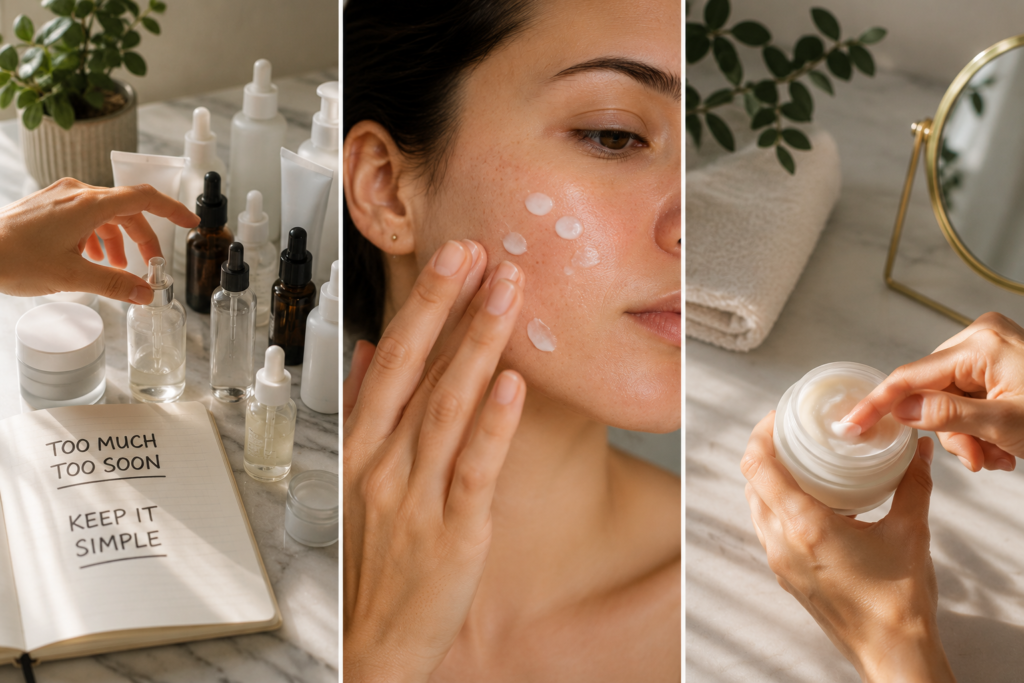
I nearly ruined the experiment during the first week.
Here’s what I learned.
Adding More Products
When results felt slow, I wanted to add another exfoliant.
Bad idea.
Skin cycling works partly because it removes unnecessary complexity.
Using Too Much Retinoid
More isn’t better.
A pea-sized amount covered my whole face.
The extra product only increased dryness
Skipping Moisturizer
I thought oily areas didn’t need much moisturizer.
Wrong.
Even oily skin benefits from barrier-supporting hydration.
Watch Out: If your skin becomes very red, painful, or continues peeling for several days, scale back active ingredients and let your skin recover before restarting.
Who Benefits Most From Skin Cycling?
In my opinion, it’s especially helpful if you:
- are new to retinoids
- have sensitive skin
- frequently overuse exfoliants
- struggle with irritation
- want a simpler routine
- constantly switch products
If you’re already using prescription-strength treatments under professional guidance, your routine may look different.
Who Might Not Love It?
Skin cycling isn’t ideal for everyone.
If your skin already tolerates daily active ingredients well, you may not need scheduled recovery nights.
People using prescription acne treatments or other medical skincare plans should follow the routine recommended by their healthcare provider rather than replacing it with skin cycling.
My Biggest Surprise After 30 Days
The biggest transformation wasn’t smoother skin.
It was learning patience.
I used to judge products after three or four days.
This experiment reminded me that healthy skin usually responds to consistency, not constant change.
That’s a lesson I’ll probably keep longer than any skincare trend.
Would I Keep Doing Skin Cycling?
Yes.
But not because my skin transformed overnight.
I’d continue because it’s simple, realistic, and easy to maintain.
It helped me stop chasing every new product and start paying attention to what my skin actually needed.
That’s probably the most valuable result of all.
FAQs
How long does skin cycling take to show results?
Many people notice smoother skin within two to four weeks, while improvements in tone and overall texture often take longer. The exact timeline depends on your skin type, the active ingredients you’re using, and how consistently you follow the routine.
Can beginners start skin cycling?
Yes. In fact, beginners often benefit the most because the built-in recovery nights help reduce irritation while your skin adjusts to exfoliants and retinoids. Start with gentle products and avoid introducing several new actives at the same time.
Can I use vitamin C while skin cycling?
Yes. Vitamin C is commonly used in the morning, while skin cycling focuses on nighttime skincare. Daily sunscreen is still essential because exfoliants and retinoids can make your skin more sensitive to sunlight.
What if my skin gets dry during skin cycling?
Reduce the strength or frequency of your active ingredients and focus on hydration during recovery nights. A fragrance-free moisturizer with barrier-supporting ingredients can help improve comfort while your skin adjusts.
Is skin cycling good for acne?
It can help some people by reducing irritation caused by overusing active ingredients. However, it isn’t a cure for acne, and persistent or severe breakouts should be evaluated by a dermatologist.
Final Thoughts
Trying skin cycling for 30 days completely changed how I think about skincare. The biggest improvement didn’t come from using stronger products—it came from finally giving my skin time to recover.
If you’ve been stuck in a cycle of trying new products every week or constantly dealing with irritation, this approach is worth considering. Pairing skin cycling with a best face skincare routine for glowing skin can help you build healthy habits that are easier to maintain over time. Just keep your expectations realistic, stay consistent, and let your skin tell you what it’s responding to.
Save this guide so you can refer back to the routine as you build your own skin cycling schedule.