Your makeup looks good at 8 a.m. Then lunchtime arrives, you need more sunscreen, and every option seems bad: smear lotion across your foundation, dust on an uncertain amount of powder, or spray your face and hope enough lands on it.
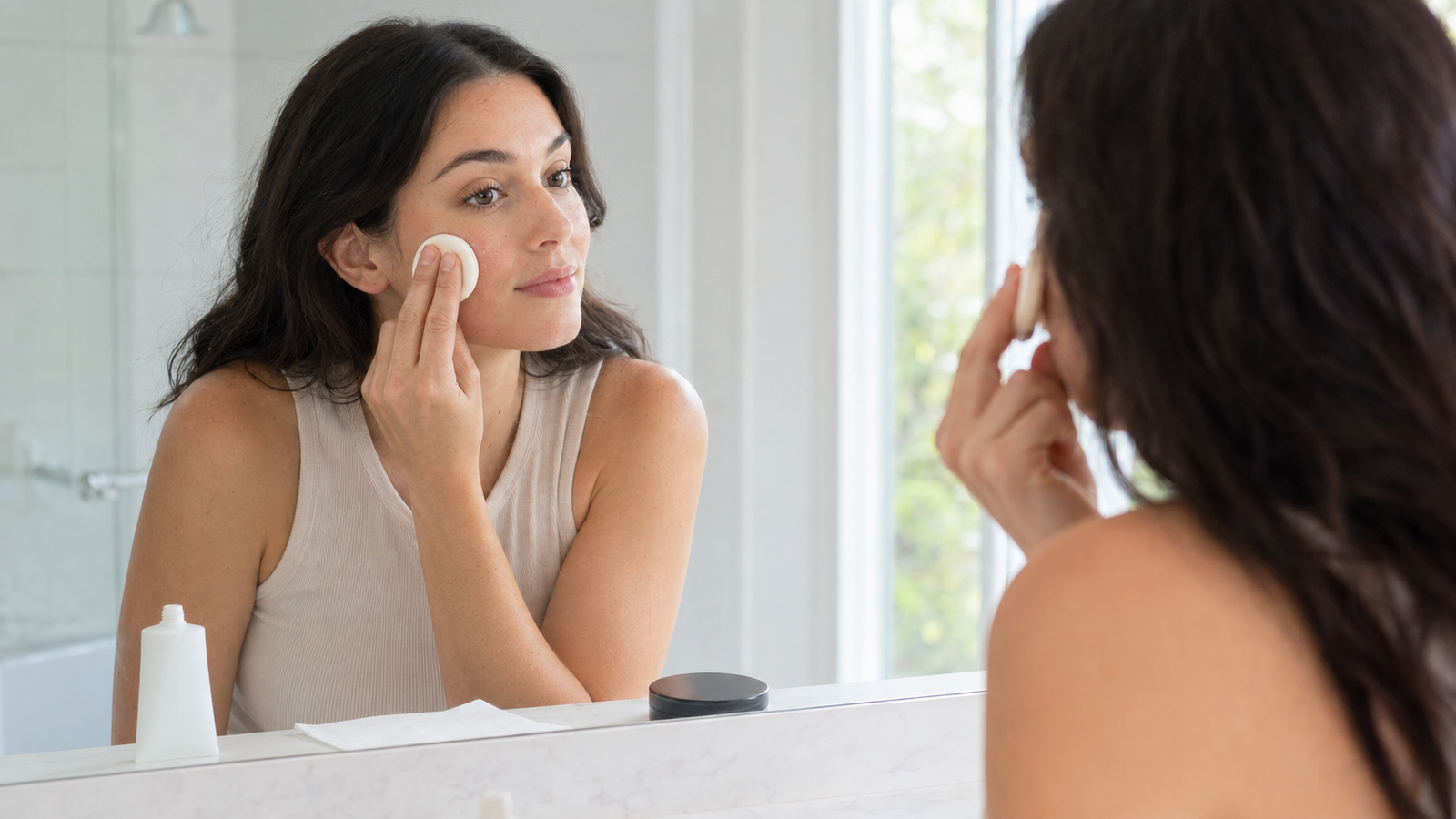
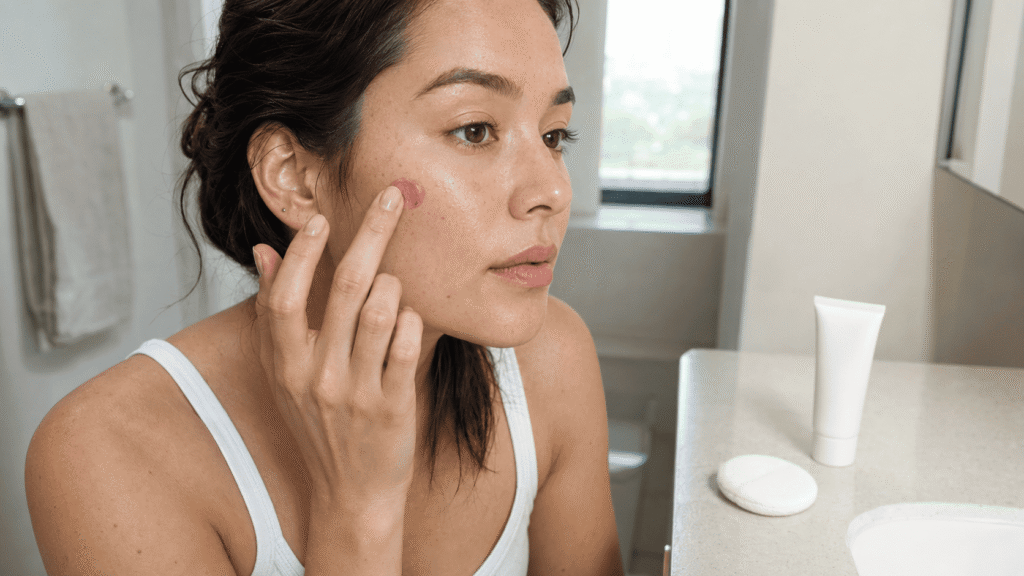
Learning how to reapply sunscreen over makeup without ruining it comes down to one change in technique. Press the product onto your skin instead of rubbing it. A dry cushion puff or dense makeup sponge gives you far more control than your fingers, especially around the nose, cheeks, and under-eye area.
Apply a lightweight, broad-spectrum SPF 30 or higher in small sections using a clean, dry cushion puff. Press—don’t swipe—the sunscreen over your makeup, let each thin layer settle, then touch up only the coverage that moved. For prolonged outdoor exposure, a full lotion reapplication remains more dependable than powder or mist alone.
Why Your Morning Sunscreen Doesn’t Last All Day
Sunscreen doesn’t simply switch off after two hours. Its protective film becomes less even as you touch your face, sweat, produce oil, wipe your mouth, and move through the day. Some UV filters may also lose effectiveness with light exposure.
That’s why reapplication matters most when you’re spending time outdoors. Current American Academy of Dermatology guidance recommends reapplying approximately every two hours while outside and immediately after swimming or sweating.
If you applied sunscreen before commuting, worked away from windows all morning, and plan to drive home near sunset, your needs differ from someone eating lunch on a sunny patio. Reapplication should reflect your actual UV exposure, but makeup isn’t a reason to skip it when that exposure is significant.
Your foundation’s SPF doesn’t solve the problem. You’d need to apply far more foundation than most people wear—and spread it evenly across every exposed area—to approach the labeled protection.
How to Reapply Sunscreen Over Makeup Step by Step
1. Remove Oil Without Wiping Off Your Base
Press a clean tissue or blotting paper onto oily areas before adding anything. Concentrate on the sides of the nose, center of the forehead, upper lip, and chin.
This step matters because sunscreen needs to form an even layer. If you press it over a slick mixture of oil and softened foundation, the puff can lift both products and leave patchy coverage.
Don’t rub or use a cleansing wipe unless you’re prepared to redo that area. A wipe removes oil, but it also takes your morning sunscreen and makeup with it.
2. Choose a Lightweight Lotion You Can Layer
Look for a broad-spectrum SPF 30 or higher with a fluid, serum-like, or light lotion texture. A formula that sets without staying tacky is usually easier to press over makeup than a dense cream.
Your reapplication sunscreen doesn’t have to match the one you used that morning. I often prefer a moisturizing base sunscreen under makeup and a thinner, less dewy formula for touch-ups.
Water-resistant sunscreen makes sense when you’ll be sweating, but it may grip the makeup more firmly as you apply it. Test the combination at home before relying on it for an outdoor event.
Good to Know: Silicone-rich makeup and silicone-heavy sunscreen can sometimes roll into tiny flakes when layered. This “pilling” is a product compatibility problem made worse by rubbing, not proof that the sunscreen is working incorrectly.
3. Load a Clean, Dry Cushion Puff
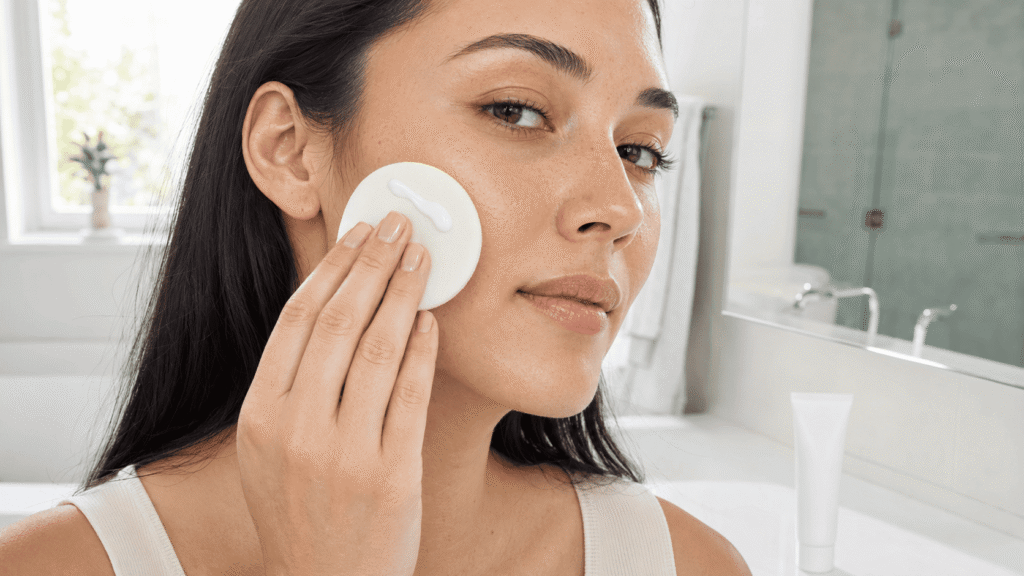
Place sunscreen on the flat side of a clean cushion puff or dense makeup sponge. Tap the puff against the back of your clean hand to spread the product across its surface.
A cushion puff works especially well because it presses product down without absorbing as much as a damp sponge. A wet sponge adds water to the formula and may dilute or disturb the film as you apply it.
I learned this after using a damp blending sponge for weeks and wondering why my foundation kept separating around my nose. Switching to a dry puff made the finish much more predictable.
4. Press the Sunscreen On in Small Sections
Start with one cheek. Use light, overlapping presses until the entire area has a thin, visible layer, then move to the other cheek, forehead, nose, chin, and jaw.
Avoid bouncing the puff rapidly as you would with foundation. Slower presses give the sunscreen time to transfer from the puff to your face instead of repeatedly lifting what you just applied.
Pay extra attention to the top of the cheekbones, bridge and sides of the nose, temples, hairline, and ears. These high points receive plenty of exposure and are easy to miss when you’re trying to preserve makeup.
5. Build Coverage in Thin Passes
The SPF on a label depends on applying a generous, even amount. That’s the awkward truth behind sunscreen touch-ups: a few invisible dots may preserve your foundation, but they can’t be assumed to deliver the stated protection.
Use the amount directed on your sunscreen label and build toward complete, even coverage in two thin passes if one heavy layer shifts your makeup. Let the first pass settle before adding the second.
Don’t rely too heavily on the popular two-finger shortcut. Finger size, product texture, and the area covered all vary. The more useful goal is a continuous layer across the entire face, ears, hairline, jaw, and exposed neck.
Pro Tip: Reapply one side of your face at a time. If the makeup starts moving, you can adjust your pressure or let the sunscreen set before repeating the problem across your whole face.
6. Let the New Layer Set Before Fixing Makeup
Give the sunscreen several minutes to settle. Immediately adding powder can mix pigment into the wet film, creating uneven patches and reducing the chance that the sunscreen forms a continuous layer.
Once it sets, press a small amount of concealer only where coverage lifted. Replace blush with a light tapping motion, then use a minimal amount of powder on oily areas.
Don’t redo your entire face unless you need to. Every extra brush stroke adds another opportunity to shift the sunscreen underneath.
The Best Sunscreen Formats Over Makeup—And Their Limits
Lotion Gives the Most Reliable Reapplication
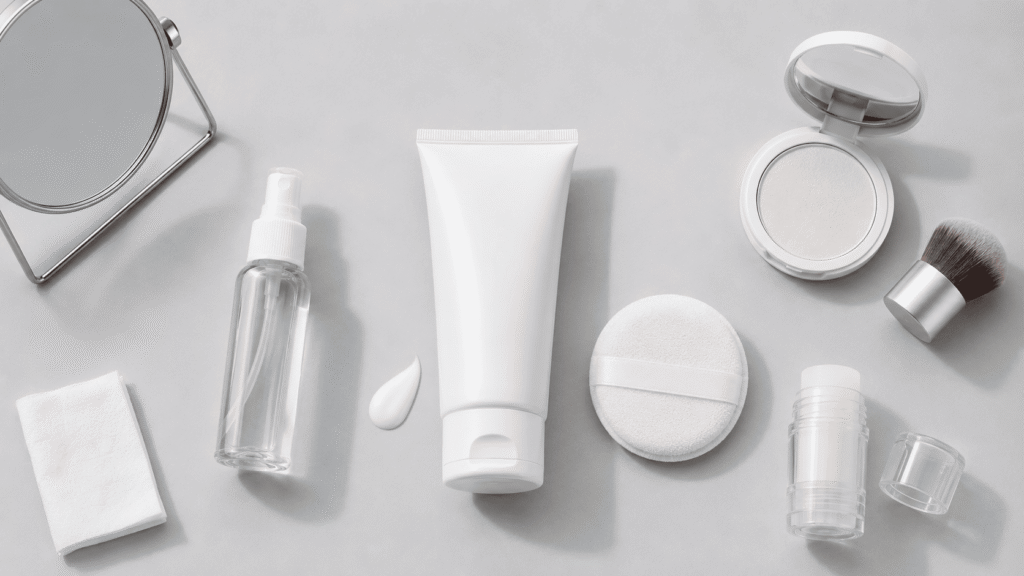
A liquid or lotion sunscreen is the strongest option because you can see where it goes and apply a meaningful amount. It may soften full-coverage foundation, but pressing it on slowly causes far less disruption than rubbing.
This is my first choice for outdoor lunches, long drives, sightseeing, sports events, and any day when sun exposure matters more than keeping every detail of my makeup untouched.
SPF Mist Is Convenient but Hard to Measure
A facial sunscreen mist can refresh a dry finish and reach around delicate eye makeup. The problem is coverage: much of the mist can drift into the air, land on your hair, or settle unevenly.
Don’t spray directly toward your nose and mouth or inhale the mist. Follow the product’s directions carefully. Unless the label provides a clear application amount that you can achieve, I’d treat mist as backup rather than a dependable replacement for lotion.
Powder SPF Works Best as a Supplement
Powder sunscreen is useful along the hairline, over a part, and on oily areas where lotion is difficult to apply. It also makes a practical extra layer over a properly applied base.
The tradeoff is quantity. Most people dust on far less powder than would be needed to match the labeled SPF, and brush application can leave microscopic gaps. Powder shouldn’t be your only sunscreen during sustained outdoor exposure.
Sunscreen Sticks Need More Than One Swipe
A clear stick is portable and less messy than lotion, but one quick pass isn’t enough for even coverage. Sticks can also drag foundation or create thick ridges around the nose.
If you use one, make several overlapping passes according to the label, then gently press the product into place with clean fingers or a puff. Reserve it for targeted areas if it visibly moves your makeup.
Adjust the Method to Your Makeup Finish
For Dewy or Cream Makeup
Blot first and use a sunscreen that sets to a natural or soft-matte finish. Press lightly because cream blush, bronzer, and emollient foundation move more easily than set makeup.
If you know you’ll reapply later, keep the morning base thin. Sheer foundation and spot concealing are much easier to repair than several creamy layers.
For Matte, Long-Wear Foundation
Use a flexible, lightweight sunscreen rather than a fast-drying matte liquid. Putting one rigid film over another can cause cracking or pilling, especially around the mouth.
Work slowly and avoid repeatedly pressing the same area. Long-wear foundation usually survives the first pass well but may lift once it becomes damp.
For Acne-Prone or Sensitive Skin
Choose a fragrance-free, broad-spectrum formula labeled non-comedogenic if clogged pores concern you. Clean the puff after each use rather than carrying a sunscreen-coated applicator in a sealed bag for days.
Sensitive skin may sting when sunscreen mixes with sweat, particularly around the eyes. Gently blot sweat first, and stop using any formula that causes persistent burning, swelling, or a rash.
Watch Out: Don’t keep a used puff loose in your makeup bag. Store it in a ventilated case and wash it regularly; sunscreen, facial oil, and foundation create a grimy applicator surprisingly fast.
When Preserving Makeup Shouldn’t Be the Priority
The press-on method is a compromise between cosmetic wear and practical protection. It works well for normal daily activity, but it isn’t the best answer for swimming, heavy sweating, hiking, or hours in direct sun.
In those situations, remove or blot away the broken-down makeup if necessary and reapply a water-resistant sunscreen generously, following the label’s timing. Add a broad-brimmed hat, sunglasses, protective clothing, and shade instead of asking one face product to do everything.
The FDA also advises reapplication at least every two hours and more often after swimming or sweating. Water resistance lasts only for the stated testing period; it doesn’t mean waterproof.
Bottom Line
The most reliable way to learn how to reapply sunscreen over makeup without ruining it is to accept a small amount of touch-up. A dry puff, thin layers, and patient pressing can preserve most makeup, but no powder or mist makes careful lotion application obsolete.
Save this guide before your next outdoor day, and practice the method once at home. It’s much easier to find the right sunscreen-and-foundation pairing before you’re standing in a sunny parking lot.