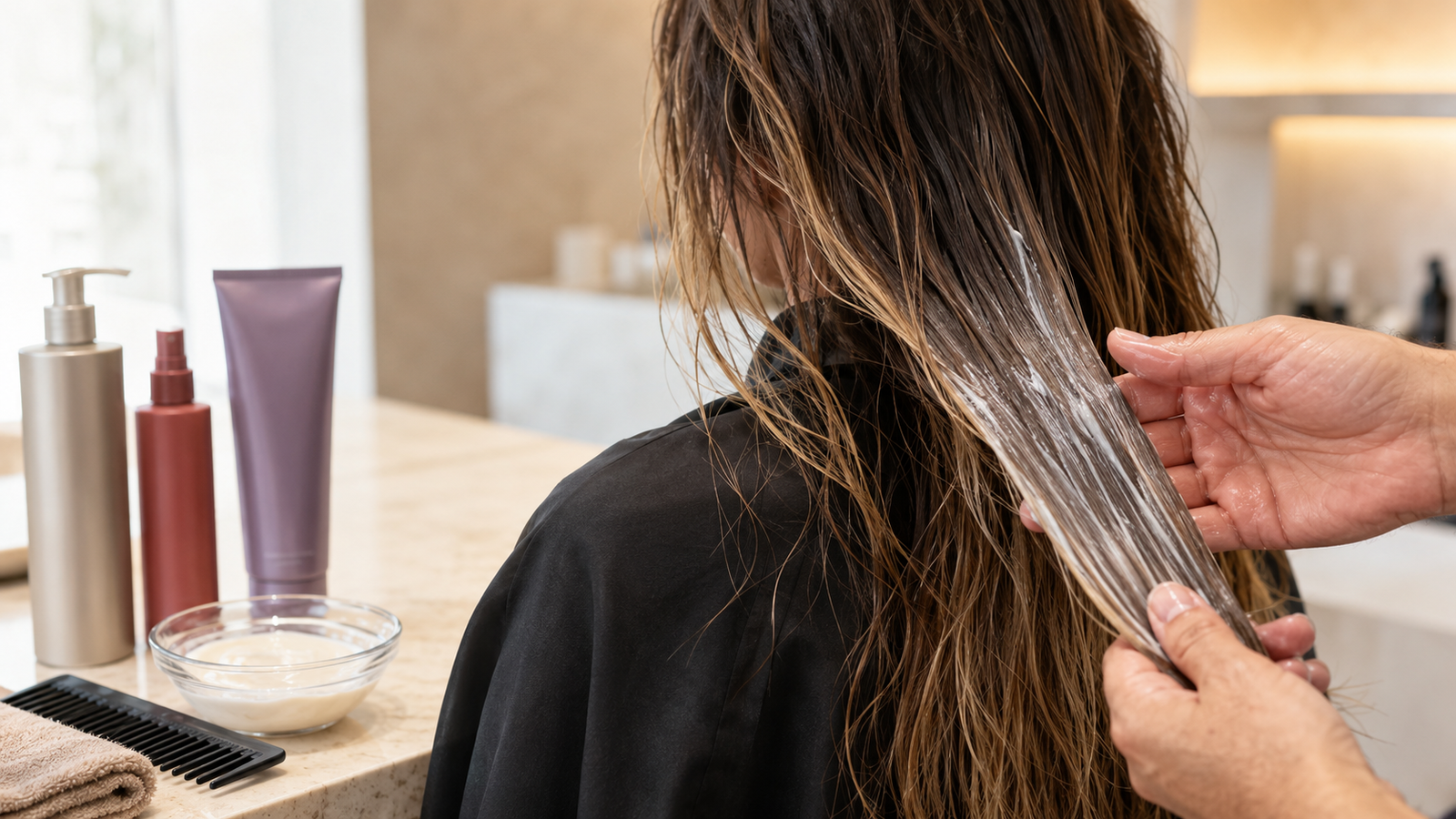
Bleached ends that stretch like gum, curls that won’t hold their shape, and strands that snap during detangling often get labeled “dry hair.” But adding another rich moisture mask doesn’t always fix them. Sometimes the missing piece is temporary structural support from protein.
The best protein treatment for damaged hair isn’t automatically the strongest formula on the shelf. It’s the one that matches your hair’s thickness, porosity, and damage level. Choose correctly, and hair can feel stronger after one use. Choose poorly, and it may become stiff enough to snap when brushed.
The short answer: Joico K-PAK Reconstructor is the best overall protein treatment for moderately damaged hair. Choose ApHogee Two-Step for severe bleach or chemical damage, Redken Extreme CAT for fine hair, Curlsmith Bond Curl Rehab Salve for weakened curls, and SheaMoisture Manuka Honey & Yogurt for thick hair that needs protein and moisture.
Best Protein Treatment for Damaged Hair by Hair Type
| Product | Best For | Protein Type | Strength |
|---|---|---|---|
| Joico K-PAK Reconstructor | Best overall | Keratin amino acids and hydrolyzed keratin | Medium to strong |
| ApHogee Two-Step Protein Treatment | Severe bleach or chemical damage | Modified hydrolyzed proteins | Very strong |
| Redken Extreme CAT Treatment | Fine, brittle hair | Hydrolyzed wheat protein and amino acids | Medium |
| Curlsmith Bond Curl Rehab Salve | Wavy, curly, and coily hair | Amino acids and plant proteins | Medium to strong |
| SheaMoisture Manuka Honey & Yogurt Treatment | Thick, dry, damaged hair | Hydrolyzed vegetable protein | Mild to medium |
| HASK Keratin & Jojoba Oil Deep Conditioner | Mild damage on a budget | Keratin amino acids | Mild |
| Joico K-PAK Reconstructor and Hydrator | Dry, overprocessed hair | Keratin plus conditioning ingredients | Customizable |
What Protein Can—and Can’t—Do for Damaged Hair
Hair is made mainly from keratin. Bleach, relaxers, permanent color, UV exposure, friction, and high heat can lift the protective cuticle and weaken the cortex underneath. Once hair leaves the scalp, it’s biologically dead, so it can’t heal itself like skin.
Hydrolyzed proteins have been broken into smaller fragments. Depending on their size and the complete formula, they can attach to damaged areas, form a protective film, reduce friction, and temporarily improve the strand’s strength and feel.
That doesn’t mean protein permanently rebuilds hair. It won’t fuse a split end together, restore missing cuticle layers, or reverse years of chemical processing. It provides temporary reinforcement while better conditioning and gentler styling prevent more damage.
Good to Know: An at-home keratin mask and a salon keratin smoothing service aren’t the same treatment. Protein masks support damaged strands. Salon smoothing services use heat and chemical processing to reduce texture and frizz.
How to Tell If Your Hair Actually Needs Protein
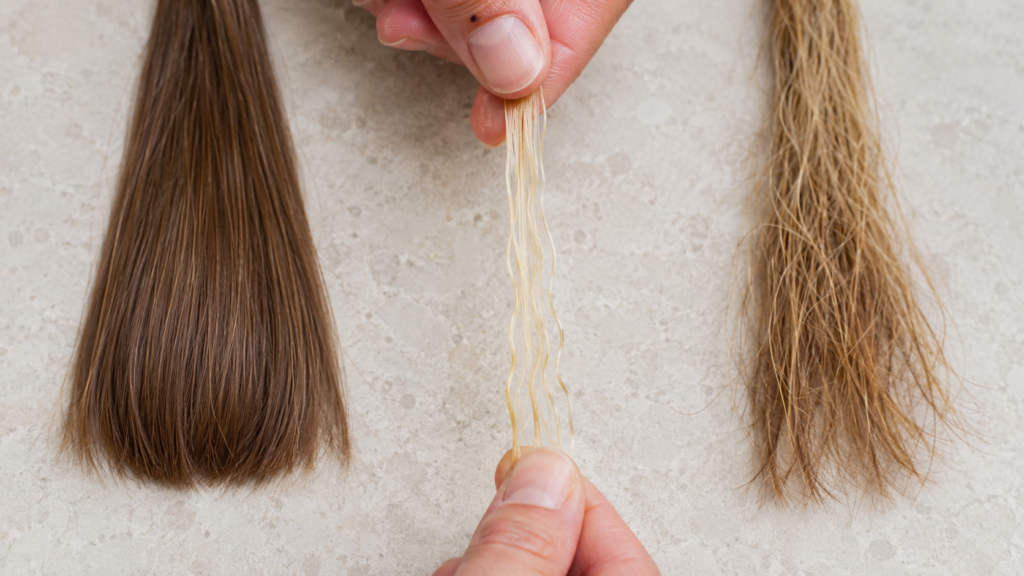
Protein makes the most sense when hair has lost strength and structure. Look for several of these signs rather than relying on one:
- Wet hair stretches unusually far before snapping.
- Bleached sections feel gummy, mushy, or overly soft.
- Curls remain limp after moisturizing treatments.
- Hair breaks during gentle detangling.
- Previously strong strands feel thin through the ends.
- Hair absorbs water quickly but loses moisture just as fast.
- A moisture mask adds softness without reducing breakage.
Don’t rely on the popular glass-of-water porosity test. Styling residue, oil, and water tension can change whether a strand floats or sinks. How your hair behaves during washing, detangling, and drying tells you much more.
I learned this after repeatedly treating my highlighted ends with rich moisture masks. They became soft but stayed stretchy. One balanced protein treatment improved their spring and reduced snapping; repeating it too soon made those same ends stiff.
Dryness alone doesn’t prove you need protein. If your hair feels rough but retains normal elasticity and rarely breaks, start with a moisturizing deep conditioner instead.
1. Joico K-PAK Reconstructor: Best Overall
Joico K-PAK Reconstructor is my top choice for highlighted, porous, heat-styled, or moderately overprocessed hair. It contains keratin amino acids and several forms of hydrolyzed keratin, supported by conditioning ingredients.
The texture isn’t as buttery as a moisture mask, so don’t expect dramatic slip during application. Its value shows after rinsing: weak sections feel firmer, curls may hold their shape better, and the ends are less likely to stretch excessively.
It’s strong enough to make a difference but easier to control than an intensive two-step treatment.
Best for: Color-treated, highlighted, porous, wavy, and curly hair.
Watch out for: Stiffness if you use it too frequently or skip moisturizing conditioner.
How to use it: Apply after shampooing for five minutes, rinse, and follow with a moisturizing conditioner. Start once every three to four weeks.
2. ApHogee Two-Step Protein Treatment: Best for Severe Damage
ApHogee Two-Step Protein Treatment is the heavy-duty option for gummy bleached hair, severe relaxer damage, or strands that stretch dramatically when wet. The first step is a concentrated liquid protein treatment; the second restores moisture and flexibility.
The protein liquid becomes hard as it dries. Don’t comb, bend, or manipulate the hair during that stage. Used correctly, it can make highly compromised strands feel noticeably firmer. Used casually or too often, it can leave them rigid and prone to snapping.
I overdid this treatment during my first month of testing it and paid for it with crunchy ends. It works best as occasional damage control, not as a weekly mask.
Best for: Severely bleached, relaxed, permed, mushy, or extremely high-porosity hair.
Watch out for: Incorrect application and unnecessary repeat treatments.
How to use it: Follow both steps and every timing instruction exactly. Don’t repeat it sooner just because the first result was noticeable.
3. Redken Extreme CAT: Best for Fine Hair
Redken Extreme CAT is a lightweight rinse-out spray containing hydrolyzed wheat protein and amino acids. It supports fragile hair without the heavy oils and butters that can flatten fine strands.
The liquid format lets you target highlighted lengths and worn ends without coating healthy roots. However, it provides very little detangling slip, so treat it as a strengthening step rather than a replacement for conditioner.
Best for: Fine, brittle, highlighted, or easily weighed-down hair.
Watch out for: Dryness if you don’t follow it with a lightweight conditioner.
How to use it: Spray through clean, damp lengths, process as directed, rinse, and condition. Start every three to four weeks.
4. Curlsmith Bond Curl Rehab Salve: Best for Curls
Curlsmith Bond Curl Rehab Salve is a pre-shampoo treatment for waves, curls, and coils weakened by coloring, heat, or repeated manipulation. It combines amino acids and protein-rich ingredients with conditioning support.
It’s especially useful when curls remain soft but look stretched, limp, or unable to spring back. That pattern suggests weakened structure rather than simple dryness.
Curlsmith varies its frequency guidance according to hair porosity, which is more sensible than telling everyone to use it weekly. Low-porosity curls usually need longer gaps between treatments.
Best for: Wavy, curly, and coily hair with poor elasticity or lost definition.
Watch out for: Using it on curls that already feel rough and rigid.
How to use it: Apply to damp hair before shampooing and follow the brand’s timing and porosity guide. Don’t combine it with another strong protein treatment on the same day.
5. SheaMoisture Manuka Honey & Yogurt: Best for Thick, Dry Hair
SheaMoisture Manuka Honey & Yogurt Protein-Strong Treatment combines hydrolyzed vegetable protein with shea butter, glycerin, panthenol, honey, coconut oil, and other conditioning oils.
That protein-moisture balance makes it more forgiving than a concentrated reconstructor. It’s a smart choice when your hair needs greater strength but becomes rough without plenty of conditioning.
The rich formula can overwhelm fine, straight, or low-density hair. Apply it mainly to the lengths rather than coating the roots.
Best for: Thick, coarse, dry, wavy, curly, and coily hair with moderate damage.
Watch out for: Heaviness and buildup on fine or low-porosity hair.
How to use it: Apply after shampooing and rinse at the stated time. Begin every two to four weeks.
6. HASK Keratin & Jojoba Oil Deep Conditioner: Best Budget Pick
HASK Keratin & Jojoba Oil Deep Conditioner is an affordable way to see how your hair responds to protein. It pairs keratin amino acids with jojoba oil and conditioning ingredients.
This is more of a smoothing deep conditioner than a true intensive reconstructor. It can make mildly damaged ends feel stronger and easier to manage, but it won’t provide enough support for gummy, severely bleached hair.
Best for: Mild heat damage, rough ends, frizz, and first-time protein users.
Watch out for: Expecting it to rescue serious chemical damage.
How to use it: Apply after shampooing for the recommended time. Start every two to four weeks rather than every wash.
7. Joico K-PAK Reconstructor and Hydrator: Best Two-Step Pairing
Pairing Joico K-PAK Reconstructor with its Intense Hydrator gives you control over both sides of damaged-hair care. The reconstructor supports weak sections, while the hydrator adds softness, flexibility, and detangling slip.
This combination works well when bleached hair feels both overly stretchy and dry. Those conditions can exist at the same time, which is why using only protein or only moisture may produce an incomplete result.
The main drawback is cost. It also adds an extra step to wash day.
Best for: Coarse, porous, bleached, and overprocessed hair that needs protein and moisture.
Watch out for: Using the reconstructor more often than your hair needs.
How to use it: Apply the reconstructor first, rinse, then use the hydrator. Start every three to four weeks.
Choosing Between a Mask, Spray, or Reconstructor
Protein sprays suit fine hair because they distribute a small amount without adding much weight. They provide little softness, so you’ll normally need a separate conditioner.
Cream masks work better for thick, curly, dry, or coarse hair. They combine strengthening ingredients with emollients that improve slip and flexibility. However, fine or low-porosity hair can become coated if the mask contains too many heavy oils and butters.
Intensive liquid reconstructors belong on severely compromised hair. They provide the strongest temporary reinforcement but leave the least room for careless application.
The ingredient list offers clues but doesn’t reveal the exact protein concentration. Hydrolyzed keratin near the top usually suggests a more protein-focused formula, while protein near the bottom may provide mild support. The full formula still matters more than one ingredient’s position.
How to Use a Protein Treatment Without Causing More Breakage
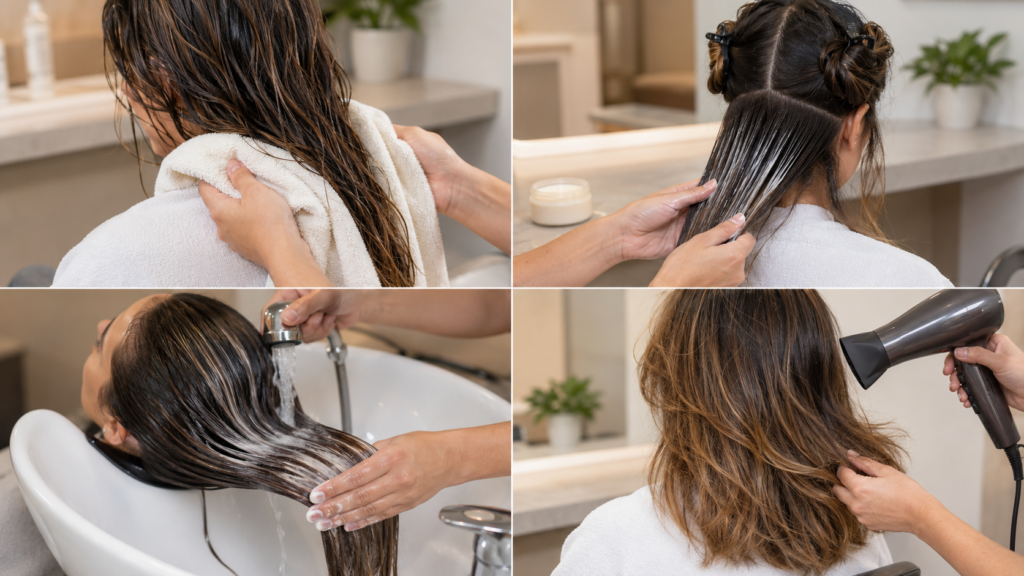
1. Start with clean hair
Unless you’re using a pre-shampoo treatment, apply protein after shampooing. Clean strands allow more even contact with damaged areas.
Massage shampoo into your scalp and let the lather travel through the lengths. Don’t scrub fragile ends together, which adds friction and tangling.
2. Remove excess water
Gently squeeze out water with your hands or a soft T-shirt. If the hair is dripping, the treatment becomes diluted and slides off before you can distribute it properly.
Separate thick or dense hair into sections. Concentrate the product on bleached sections, worn lengths, and older ends.
3. Follow the stated processing time
Leaving a five-minute treatment on for an hour doesn’t guarantee deeper repair. It may simply deposit more product and create stiffness.
Only add heat if the manufacturer specifically instructs you to do so. Uncontrolled heat adds another source of stress to hair that’s already fragile.
4. Restore moisture and slip
Follow concentrated protein treatments with a moisturizing conditioner when directed. Look for ingredients such as cetyl alcohol, stearyl alcohol, glycerin, panthenol, aloe, or suitable plant oils.
Pro Tip: Detangle during the moisturizing-conditioning step rather than immediately after a strong reconstructor. Freshly treated hair can feel firm, and forcing a comb through it may cause mechanical breakage.
5. Keep styling gentle
Apply a suitable leave-in and heat protectant. Air-dry partially or use low to medium heat. Avoid pairing your first intensive protein treatment with a high-temperature blowout or flat-iron session.
Judge the result once the hair is fully dry. It should feel more resilient and hold its shape better. It doesn’t need to feel dramatically softer.
The Truth About Protein Overload
“Protein overload” isn’t a precise medical diagnosis. In hair care, the phrase describes hair that becomes stiff, rough, coated, tangled, or more breakage-prone after repeated protein use.
The problem may involve excessive product deposition, insufficient conditioning, or a formula that simply doesn’t suit your hair. One protein conditioner won’t suddenly destroy healthy strands, but stacking a protein shampoo, mask, leave-in, and styling cream can make some hair types rigid.
Watch Out: Scan your whole routine for hydrolyzed keratin, wheat protein, rice protein, silk amino acids, collagen, quinoa protein, and hydrolyzed vegetable protein. You may be using more protein than you realize.
If your hair becomes hard or straw-like, pause intensive protein treatments for several washes. Use a gentle shampoo, moisturizing conditioner, minimal heat, and careful detangling. Reintroduce one mild protein product only after flexibility returns.
Why DIY Egg and Rice-Water Treatments Are Unreliable
Raw egg contains protein, but whole food proteins aren’t automatically the right size or form to work like hydrolyzed cosmetic proteins. Egg masks are also messy, difficult to rinse, and unpredictable.
Rice water contains starch and small amounts of amino acids. It may give fine hair temporary body, but concentrated mixtures can leave dry or low-porosity hair coated and brittle-feeling.
In my experience, a formulated hydrolyzed rice protein conditioner is far more consistent than homemade rice water. Cosmetic products provide controlled ingredients, preservation, and clear rinse instructions. That’s less exciting than a kitchen hack, but it’s easier on damaged ends.
When Protein Isn’t the Whole Answer
The best protein treatment for damaged hair can reduce breakage and improve manageability, but it won’t stop ongoing damage. Lower your tool temperature, use heat protectant, condition after shampooing, space out chemical services, and handle wet hair gently.
Bond-building products aren’t automatically protein treatments. They use different ingredients and repair approaches. Some routines can include both, but alternate them initially instead of stacking two strong treatments on one wash day.
See a dermatologist if breakage comes with scalp pain, sudden shedding, bald patches, scaling, or thinning near the roots. Protein masks treat the visible hair shaft; they don’t address hair loss or scalp disease.
FAQs
How often should I use a protein treatment on damaged hair?
Start once every two to four weeks for moderate color or heat damage. Strong treatments such as ApHogee Two-Step require longer gaps, while mild masks may suit more frequent use. Reduce the frequency if your hair becomes stiff, rough, tangled, or less flexible.
What is the strongest protein treatment for damaged hair?
ApHogee Two-Step Protein Treatment is one of the strongest widely available at-home choices. It’s intended for severely weakened, gummy, or chemically compromised hair rather than ordinary dryness. Follow both steps exactly and don’t repeat it simply because the first treatment produced an obvious result.
Which protein treatment is best for bleached hair?
Joico K-PAK Reconstructor suits most moderately bleached hair, while ApHogee Two-Step is better reserved for gummy or severely compromised sections. If your bleached hair feels hard and straw-like rather than stretchy, use a moisturizing conditioner first because more protein may increase the stiffness.
Can a protein treatment make damaged hair worse?
Yes, using a treatment that’s too strong or applying it too frequently can leave certain hair types rigid and difficult to detangle. Breakage may increase during brushing. Balance concentrated protein with conditioner, follow the timing instructions, and avoid layering several protein-heavy products.
Should I deep-condition after a protein treatment?
Yes, follow a concentrated protein treatment with moisturizing conditioner when the directions recommend it. The protein step adds temporary firmness, while conditioner restores slip and flexibility. Balanced cream masks may already contain enough conditioning ingredients, so a second mask isn’t always necessary.
Is K18 a protein treatment?
K18 is more accurately described as a peptide-based molecular repair treatment rather than a traditional hydrolyzed protein mask. It has specific leave-in instructions and shouldn’t be used like a rinse-out keratin reconstructor. Both formats target damaged hair, but they don’t work in exactly the same way.
The Honest Bottom Line
Joico K-PAK Reconstructor is the best protein treatment for damaged hair for most people because it offers noticeable reinforcement without the severity of a heavy two-step formula. ApHogee makes more sense for extreme damage, Redken suits fine hair, and Curlsmith is the better match for weakened curls.
Start conservatively and watch how your hair responds. Protein should make strands feel resilient, not hard. Save this guide before your next wash day so you can match the treatment strength to what your hair actually needs.