
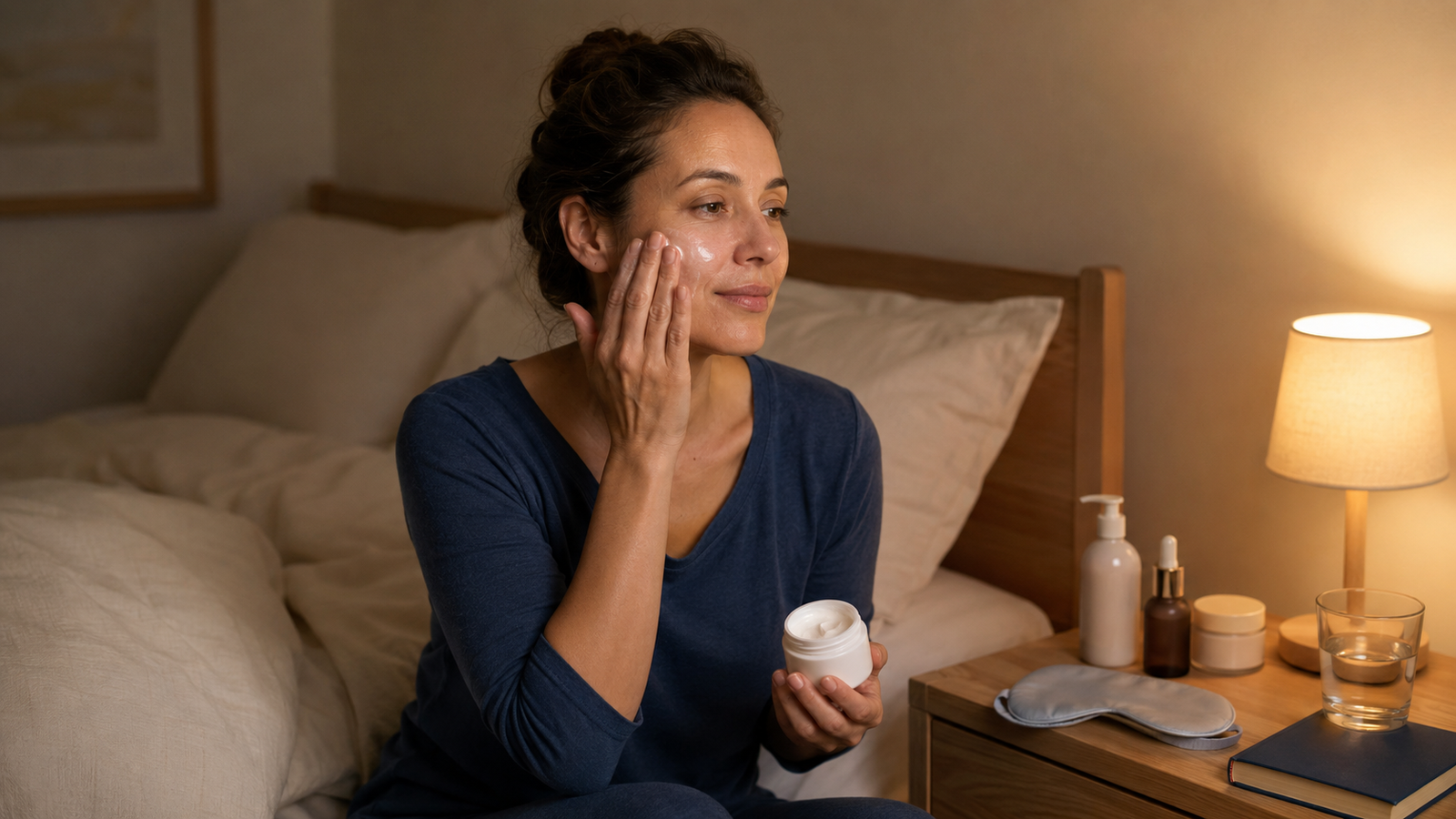
A complicated nighttime ritual can feel comforting for three days—and exhausting by day four. If you’re already tired, a 12-product skincare routine, long bath, journal session, and guided meditation probably won’t become a lasting habit. A bedtime self care routine that improves sleep skin should remove stimulation, protect your skin barrier, and give your brain the same predictable signals each night. It won’t erase wrinkles while you sleep or fix insomnia overnight. What it can do is help your skin retain moisture, reduce avoidable irritation, and make falling asleep feel less chaotic.
A useful bedtime routine starts 30–60 minutes before sleep. Dim the lights, step away from stimulating screens, gently cleanse your face, apply one targeted treatment if needed, seal in moisture, and finish with a quiet activity. Consistency matters more than expensive products or a lengthy ritual.
Why Better Sleep and Better Skin Belong in the Same Routine
Your skin doesn’t suddenly switch into repair mode the second your head touches the pillow. Skin follows a circadian rhythm, and processes such as barrier function, temperature regulation, and water loss change throughout the day. Research has associated ongoing poor sleep with weaker skin-barrier function and more visible signs of intrinsic aging, although sleep is only one piece of the picture.
Genetics, sun exposure, smoking, stress, nutrition, and skincare habits still matter. In other words, sleep supports healthy-looking skin, but it isn’t a replacement for sunscreen or sensible skincare. The routine itself also matters. Sleeping in makeup, using harsh cleansers, or layering several strong actives can leave your face dry and inflamed by morning. A calm, repeatable routine protects the barrier without turning bedtime into another job.
The 45-Minute Bedtime Self Care Routine That Improves Sleep Skin
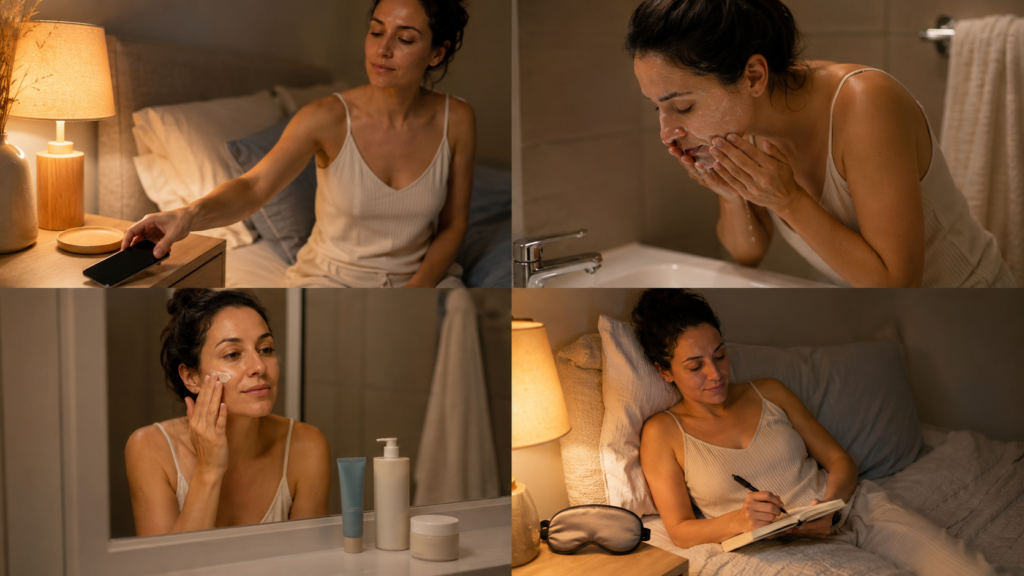
You don’t have to complete every step at an exact minute. Use the order as a flexible countdown and shorten it when necessary. The goal is to repeat the same signals often enough that your body begins to recognize them.
1. Set a Consistent “Start Winding Down” Time
Begin about 45 minutes before you want to sleep. Set a quiet reminder if you tend to lose track of time, but avoid treating bedtime like a deadline you can fail. A steady sleep and wake schedule supports your internal clock. The CDC’s sleep guidance also recommends keeping the bedroom cool and quiet, avoiding large meals and alcohol close to bedtime, and turning off electronic devices at least 30 minutes before sleep.
I used to start my routine only when I felt sleepy. That often meant scrolling until midnight and then rushing through skincare. Starting at a fixed time worked better because it didn’t rely on willpower or perfect sleepiness.
Good to Know: If you can’t maintain the same bedtime every night, protect your wake time first. A reasonably consistent morning schedule can make nighttime sleepiness more predictable.
2. Lower the Light Before You Lower Your Head
Switch off bright ceiling lights and use a warm, dim lamp. Place your phone on charge away from the bed, or turn on a restrictive focus mode that blocks social media and work notifications. The problem isn’t only “blue light.” Exciting videos, upsetting news, emails, and endless choices keep your mind alert. A dim room paired with boring, low-stakes activity is usually more helpful than wearing blue-light glasses while continuing to scroll.
If complete screen avoidance isn’t realistic, choose one calm activity and stop switching between apps. An audiobook with the screen off is less stimulating than short-form video, messaging, and online shopping at the same time.
3. Take a Warm, Short Shower—Not a Steaming One
A warm shower can create a useful transition between the active part of your evening and rest. Keep it comfortable rather than very hot, especially if your skin feels tight, itchy, or easily flushed. Hot water removes more of the lipids that help your outer skin barrier hold water. Long showers may feel soothing in the moment but can leave dry or eczema-prone skin noticeably rougher afterward.
Aim for about 5–10 minutes, then pat your body dry instead of rubbing. Apply body lotion while the skin is still slightly damp. Ingredients such as glycerin, ceramides, petrolatum, dimethicone, and colloidal oatmeal help attract water or slow its evaporation. You don’t need a separate “sleep lotion” unless you genuinely enjoy it.
4. Cleanse Away Sunscreen, Makeup, and the Day
Use lukewarm water and a gentle cleanser. Massage it over the skin with your fingertips, paying attention to the hairline, sides of the nose, and jaw. The American Academy of Dermatology’s face-washing guidance advises against scrubbing, rough washcloths, and very hot water.
If you wear long-wear makeup or water-resistant sunscreen, start with a fragrance-free cleansing balm, oil, or micellar water. Follow with a mild water-based cleanser only if residue remains. Double cleansing is useful for stubborn products; it isn’t a rule for every face. For normal or dry skin, CeraVe Hydrating Facial Cleanser is a widely available, fragrance-free example. Oily skin may prefer a gentle foaming gel, but your face shouldn’t feel squeaky or tight afterward.
Watch Out: Cleansing brushes, grainy scrubs, exfoliating pads, and acid cleansers can become irritating when combined. Removing every trace of natural oil doesn’t make skin cleaner—it often makes the barrier less comfortable.
5. Use One Treatment Based on What Your Skin Actually Needs
Treatment is optional. Cleanser and moisturizer are enough for a basic night, especially if your skin is sensitive, newly irritated, or recovering from over-exfoliation. For acne, an established treatment such as adapalene can help prevent clogged pores and inflammatory breakouts.
Differin Gel contains 0.1% adapalene and is available over the counter in the US. Use a pea-sized amount for the entire face—not a dot on every blemish—and begin two or three nights per week. For uneven texture or early fine lines, a low-strength retinol may be easier to introduce. Results take weeks or months, not three mornings. Retinoids can also cause dryness, peeling, or burning when started too aggressively.
Don’t combine a new retinoid with a strong exfoliating acid, harsh scrub, or multiple acne treatments on the same night. I made that mistake when I first used retinol; the temporary smoothness was followed by stinging and flaky patches that took much longer to calm.
Patch-test new products and increase frequency slowly. Avoid retinoids during pregnancy unless your healthcare professional has specifically advised otherwise. Persistent acne, painful cysts, spreading rash, or ongoing burning deserves professional evaluation.
6. Seal In Water Instead of Chasing a “Night Cream” Label
Apply moisturizer while your skin retains a little water from cleansing. Humectants such as glycerin and hyaluronic acid attract water, while ceramides, squalane, fatty alcohols, silicones, and petrolatum help reduce moisture loss. Texture matters more than the words “day” or “night” on the package. Oily skin may prefer a light gel-cream or lotion. Dry skin usually does better with a cream containing both humectants and barrier-supporting lipids.
Vanicream Daily Facial Moisturizer is a practical fragrance-free example containing glycerin, squalane, hyaluronic acid, and several ceramides. It isn’t automatically right for everyone, but it shows the type of balanced formula worth looking for.
If you live in very dry air, don’t rely on hyaluronic acid serum alone. Apply moisturizer immediately over it. For flaky areas around the mouth or nose, press a rice-grain amount of plain petrolatum over your moisturizer. Slugging the entire face can feel too heavy for acne-prone skin and may intensify irritation from strong actives underneath.
7. Turn the Final Ten Minutes Into a Mental “Close Tab” Ritual
Write tomorrow’s top three tasks on paper, then put the list away. This works better than attempting to solve every problem in bed because it gives unfinished thoughts somewhere physical to land. Follow with a quiet activity: read a few pages, stretch gently, listen to a familiar audiobook, or practice slow breathing. Try inhaling comfortably and making the exhale slightly longer. Don’t force deep breaths if that makes you light-headed.
This step isn’t meant to make you perfectly calm. Its job is to replace stimulating input with something predictable. Some nights you’ll still feel worried or restless; the routine can support sleep without controlling it.
Pro Tip: Create a five-minute “minimum version” for exhausting nights: brush your teeth, remove makeup, cleanse, moisturize, write down tomorrow’s first task, and put the phone away. A short routine you repeat beats an elaborate routine you avoid.
8. Make the Bedroom Friendly to Both Sleep and Skin
Keep the room dark, quiet, and comfortably cool. Blackout curtains, a sleep mask, or steady background noise can help when your surroundings are difficult to control. Change your pillowcase regularly, especially if you sweat heavily or use rich hair products.
A silk or satin pillowcase can reduce friction and hair tangling, but claims that it prevents wrinkles or acne are often overstated. Clean fabric and a comfortable sleeping position matter more than luxury material. Run a humidifier only if your air is genuinely dry. Clean it according to its instructions; a neglected humidifier can spread unwanted buildup into the room. For most people, a well-formulated moisturizer is more reliable than trying to humidify the entire bedroom.
Adjust the Routine to Your Skin Type
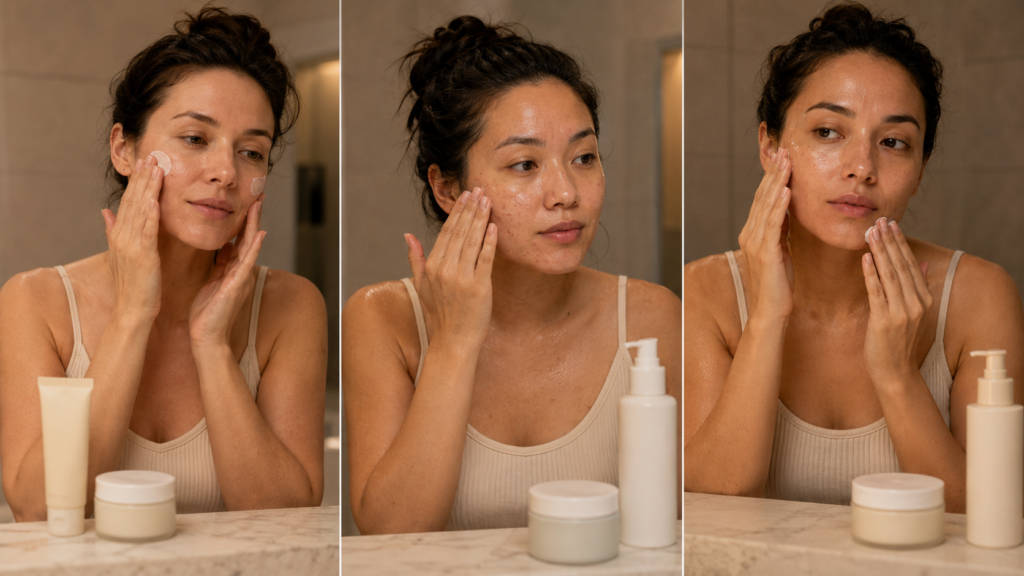
If Your Skin Is Dry or Sensitive
Use a creamy, fragrance-free cleanser or cleanse only at night if morning washing leaves you tight. Skip exfoliating acids until the barrier feels comfortable. Choose a cream with glycerin, ceramides, squalane, or petrolatum.
Fragrance-free is usually more useful than “unscented.” Unscented products may contain masking fragrance, while fragrance-free formulas are made without added scent ingredients.
If Your Skin Is Oily or Acne-Prone
Choose a mild foaming cleanser and a lightweight, non-comedogenic moisturizer. Don’t skip moisturizer to “dry out” acne; irritation can make an already difficult routine harder to tolerate. Introduce only one acne active at a time. Give it several weeks before judging it, unless you develop swelling, hives, severe burning, or another concerning reaction.
If You Have Combination Skin
Apply one lightweight moisturizer everywhere, then add a small amount of cream only to dry areas. Your forehead doesn’t need the same amount of occlusion as flaky skin around the mouth. This targeted approach is often more comfortable than buying separate routines for different parts of your face.
What This Routine Can Realistically Change
Within the first few nights, skin may feel softer simply because you’re cleansing gently and moisturizing consistently. Falling asleep may also feel less scattered once your evening has a clear stopping point. Barrier-related dryness and tightness may improve over two to four weeks if irritation is removed. Acne treatments and retinoids usually need several weeks or months for meaningful visible results.
No bedtime self care routine that improves sleep skin can compensate for persistent sleep deprivation, untreated insomnia, heavy sun exposure, or a product that continually irritates you. If you regularly need more than 30 minutes to fall asleep, wake repeatedly for long periods, or remain very sleepy during the day despite allowing enough time for rest, speak with a healthcare professional. Self-care can support sleep hygiene, but it can’t diagnose or treat a sleep disorder.
FAQs
What is the best skincare routine before bed?
The best routine is usually cleanser, one treatment if needed, and moisturizer. Remove makeup and sunscreen with a gentle product, apply your acne or retinoid treatment according to directions, then moisturize. More steps don’t guarantee better results and may increase irritation.
How long before bed should I start my self-care routine?
Start 30–60 minutes before your intended bedtime. This gives you enough time to lower the lights, finish skincare, and move away from stimulating content without making the routine feel endless. Try to begin around the same time most nights.
Does sleeping earlier improve your skin?
A consistent schedule and adequate, good-quality sleep may support barrier recovery and healthier-looking skin, but simply going to bed early isn’t a cosmetic treatment. Total sleep, sleep quality, sun protection, genetics, and skincare habits all influence how your skin looks.
Should I apply skincare immediately before sleeping?
Apply skincare whenever you can complete it consistently, even if that’s an hour before bed. Applying products earlier may reduce transfer onto your pillow and gives treatments time to settle. The exact minute matters far less than gentle application and regular use.
Can a nighttime routine help with insomnia?
A predictable wind-down routine may support healthy sleep habits, but it doesn’t treat every cause of insomnia. Stress, medication, pain, hormonal changes, sleep apnea, and mental health conditions may require specific care. Seek help if sleep problems persist or interfere with daytime life.
A Routine Worth Saving
The best bedtime self care routine that improves sleep skin is deliberately simple: lower stimulation, cleanse without stripping, treat one concern, moisturize, and repeat a calming final activity. Save this routine and begin with its five-minute version tonight. Once that feels automatic, add only the steps that genuinely make your evenings—and your skin—feel better.