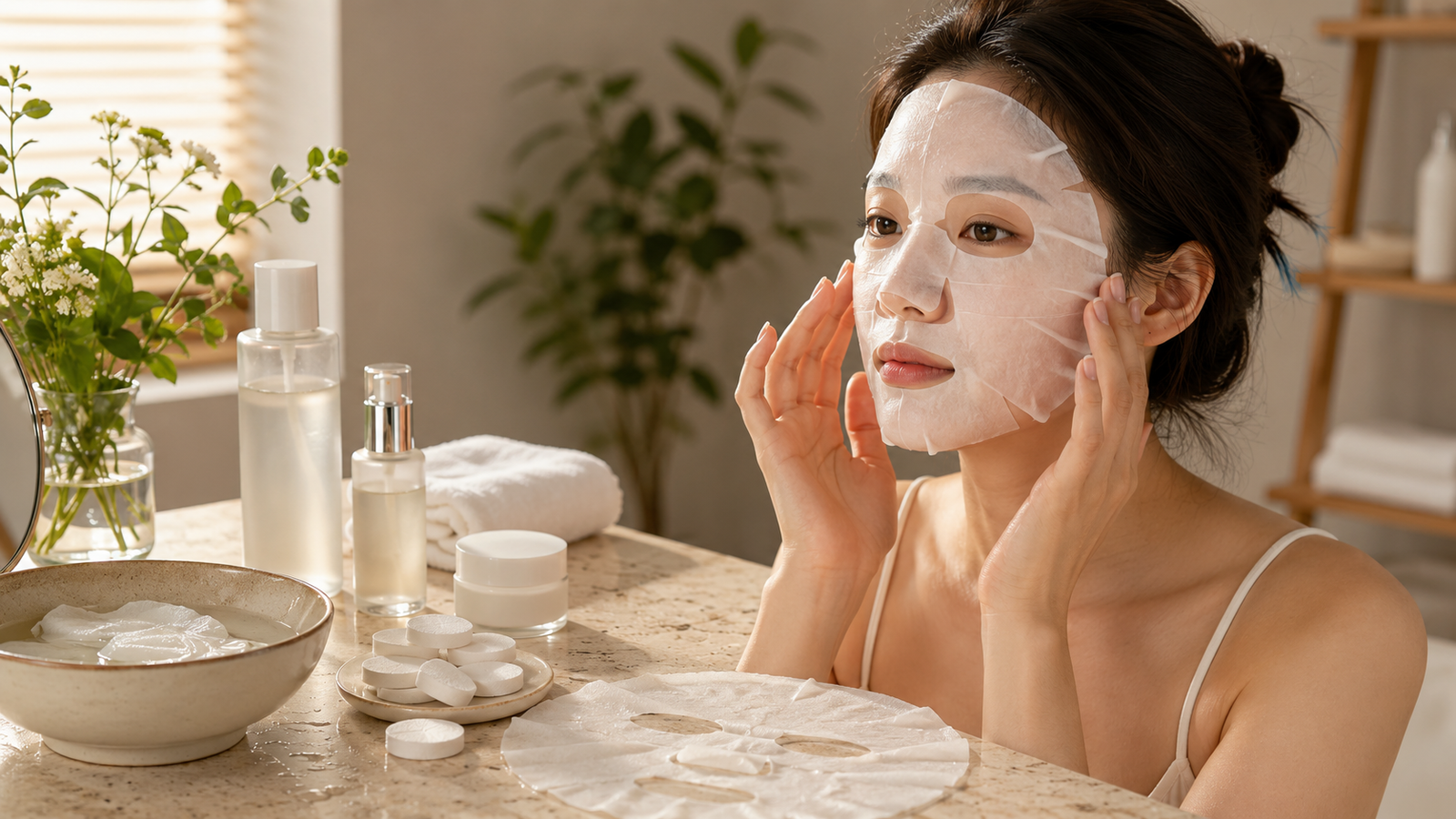
If you’ve only ever used pre-soaked sheet masks, a compression sheet mask might look a little unusual at first. It comes as a small, coin-shaped tablet that expands into a full-face mask once you soak it in a liquid skincare product. While it seems simple, using it correctly can make a noticeable difference in how hydrated and comfortable your skin feels.
What makes compression sheet masks different is the freedom to choose exactly what goes into them. Instead of relying on a one-size-fits-all formula, you can pair the mask with your favorite hydrating toner, essence, or calming treatment. That flexibility is why they’ve become a staple in many Korean skincare routines and are increasingly popular with people who prefer a more customized approach to skincare.
The mask itself isn’t a miracle product, and it won’t replace a well-rounded skincare routine. However, when it’s used correctly with the right ingredients, it can help your skin hold onto hydration longer, leave it feeling softer, and make dry or tight skin look healthier. The key is understanding what products work well, how long to leave the mask on, and the common mistakes that prevent people from getting the best results.
Quick Answer:
To use a compression sheet mask, soak the dry mask in a hydrating toner, essence, or lightweight serum until it fully expands. Apply it to clean skin for 5–10 minutes, remove it while it’s still damp, gently pat in the remaining product, and finish with a moisturizer to lock in hydration.
What Is a Compression Sheet Mask?
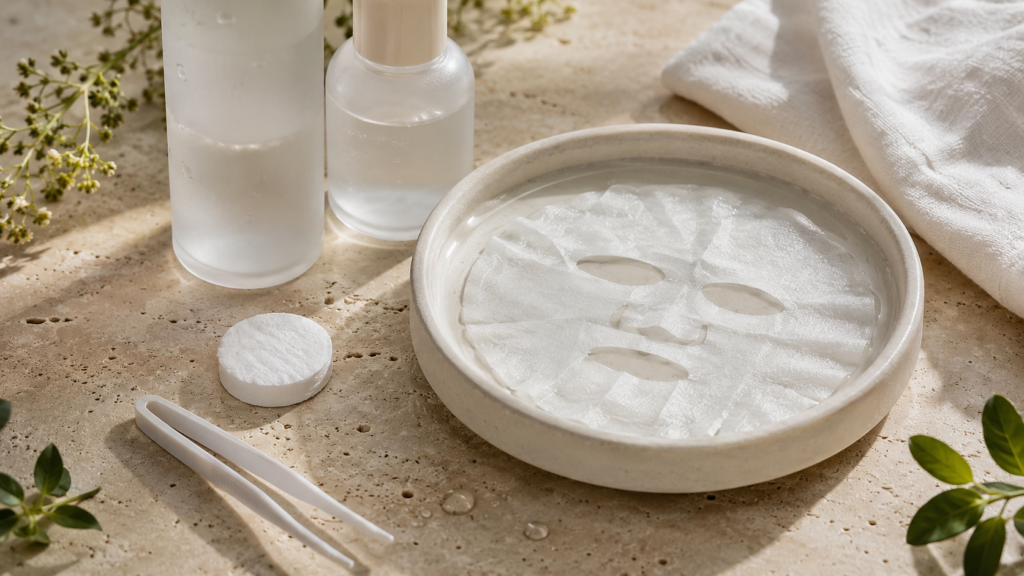
A compression sheet mask is a dry facial mask made from compressed cotton, cellulose, or similar plant-based fibers. Unlike traditional sheet masks that come pre-filled with serum, these masks contain no skincare ingredients until you add them yourself. Once soaked, they unfold into a soft sheet that fits over your face like a regular mask.
This simple design gives you much more control over your skincare routine. If your skin feels dehydrated, you can use a hydrating toner. If it’s irritated, you can choose a soothing essence with calming ingredients. You’re not limited to whatever formula a manufacturer has already packaged inside a disposable sheet mask.
That’s one of the biggest reasons I like compression sheet masks. My skin doesn’t need the same ingredients every day, and being able to adjust the routine based on how it feels that week is far more useful than buying multiple pre-soaked masks that often contain similar formulas.
How Do Compression Sheet Masks Actually Work?
One of the biggest misconceptions online is that compression sheet masks force skincare products deep into the skin. That’s not really what’s happening.
Instead, the mask creates a temporary barrier that slows down evaporation. Normally, a hydrating toner or essence begins evaporating shortly after it’s applied. Covering it with a damp sheet mask keeps the product in contact with your skin for longer, giving humectants like glycerin and hyaluronic acid more time to attract water to the outer layers of the skin.
That doesn’t mean your skin absorbs everything perfectly or that you’ll wake up with dramatically different skin overnight. The biggest benefit is improved hydration, which often makes the skin feel softer, smoother, and more comfortable. When your skin is well hydrated, it also tends to look healthier because dryness and rough texture become less noticeable.
Benefits of Using Compression Sheet Masks
When paired with the right skincare products, compression sheet masks offer several practical benefits. They aren’t designed to replace active treatments or professional skincare, but they can help maximize the hydration your routine already provides.
Helps Skin Stay Hydrated Longer
Hydration is where compression sheet masks perform best. Keeping a hydrating product against the skin for several minutes reduces evaporation and allows moisturizing ingredients to remain on the skin’s surface longer than they normally would.
Lets You Customize Your Routine
Unlike pre-soaked masks, compression sheet masks let you decide what your skin needs that day. You can switch between a calming toner after sun exposure, a hydrating essence during winter, or a lightweight barrier-supporting formula whenever your skin feels stressed.
Reduces the Waste of Buying Multiple Sheet Masks
If you already own skincare products that work well for your skin, there’s no need to buy separate sheet masks for every concern. A single pack of compression masks can be used with different toners or essences, making them a practical option for people who prefer a simplified skincare collection.
Supports a Healthy Skin Barrier
Hydrated skin generally feels more comfortable and is better able to maintain its protective barrier. While compression sheet masks don’t repair the skin barrier on their own, pairing them with barrier-supporting ingredients like ceramides, panthenol, or beta-glucan can help support a healthy skincare routine over time.
How to Use Compression Sheet Masks Step by Step
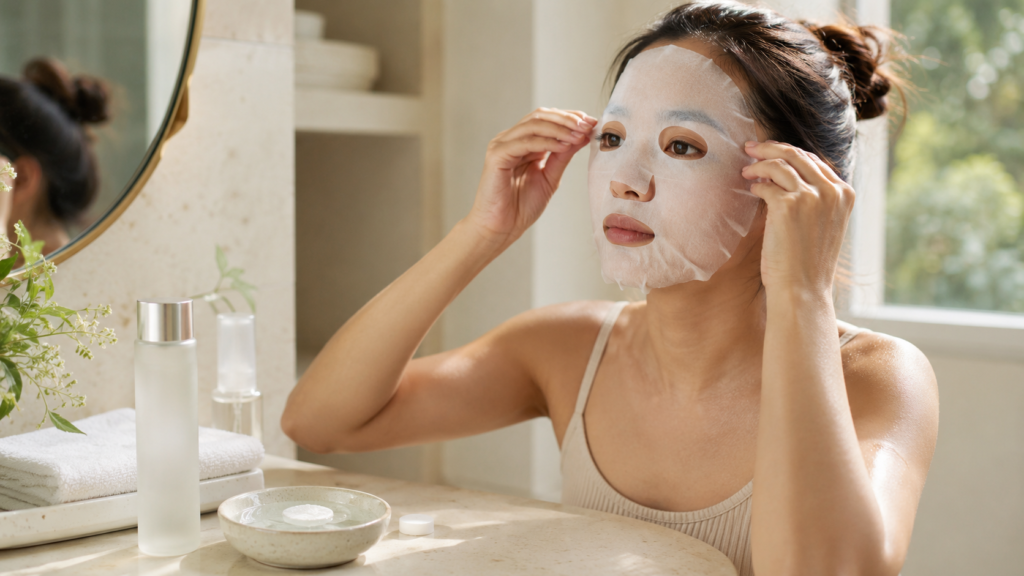
Using a compression sheet mask isn’t complicated, but a few small details can make the difference between a relaxing hydrating treatment and a disappointing experience.
Step 1: Cleanse Your Skin First
Always begin with clean skin. Remove sunscreen, makeup, excess oil, and daily buildup using a gentle cleanser that doesn’t leave your face feeling stripped or tight. Hydrating products work better when they’re applied directly to clean skin instead of sitting on top of leftover residue.
If you’ve been wearing heavy makeup or water-resistant sunscreen, consider double cleansing before using the mask. Starting with a clean surface helps the skincare product spread evenly across the face and reduces the chance of clogged pores.
Step 2: Choose the Right Liquid
The liquid you use is much more important than the mask itself. Compression sheet masks are simply carriers, so your results depend largely on the skincare product you soak them in.
Hydrating toners, lightweight essences, and soothing formulas are usually the best choices. Ingredients such as glycerin, hyaluronic acid, panthenol, beta-glucan, centella asiatica, and aloe vera work especially well because they’re designed to increase hydration without overwhelming the skin.
Avoid soaking the mask in strong exfoliating acids, retinoids, benzoyl peroxide, or concentrated treatment products. These ingredients aren’t intended to remain under a damp sheet for several minutes and may increase irritation instead of improving results.
Step 3: Fully Saturate the Mask
Place the compressed tablet into a clean bowl or the palm of your hand and slowly pour the liquid over it. Within a few seconds, the mask will begin expanding until it unfolds completely.
Make sure every section is evenly soaked before applying it to your face. If parts of the mask remain dry, add a little more product instead of stretching the fabric, which can cause the delicate material to tear.
Step 4: Apply the Mask Evenly
Once the mask has fully expanded, gently unfold it and line it up with your eyes, nose, and mouth. Smooth it over your skin so it sits comfortably against your face without large air pockets or folded edges.
You don’t need to press the mask firmly into your skin. Light contact is enough to keep the hydrating ingredients evenly distributed across your face. If the mask shifts, simply adjust it instead of stretching the material.
Step 5: Leave It On for 5–10 Minutes
One of the most common mistakes people make is wearing a sheet mask for too long. Many assume that the longer it stays on, the better the results, but that’s not how hydration works.
Once the mask starts drying out, it can begin pulling moisture away from the surface of your skin instead of keeping it there. Removing it while it’s still slightly damp usually leaves your skin feeling softer and more comfortable than waiting until it’s completely dry.
Step 6: Pat In the Remaining Product
After removing the mask, don’t rush to wash your face. Instead, use clean fingertips to gently press the remaining toner or essence into your skin until it feels evenly absorbed.
Avoid rubbing vigorously, especially if your skin is sensitive. Gentle pressing helps distribute the product without creating unnecessary friction or redness.
Step 7: Finish With Moisturizer
This is the step that many people skip, but it’s one of the most important. Hydrating products add water to the skin, while moisturizer helps reduce water loss by creating a protective barrier over the surface.
Choose a moisturizer that suits your skin type and apply it immediately after the remaining product has absorbed. If you’re using a compression sheet mask in the morning, complete your routine with a broad-spectrum sunscreen before going outside.
The Best Products to Use With Compression Sheet Masks
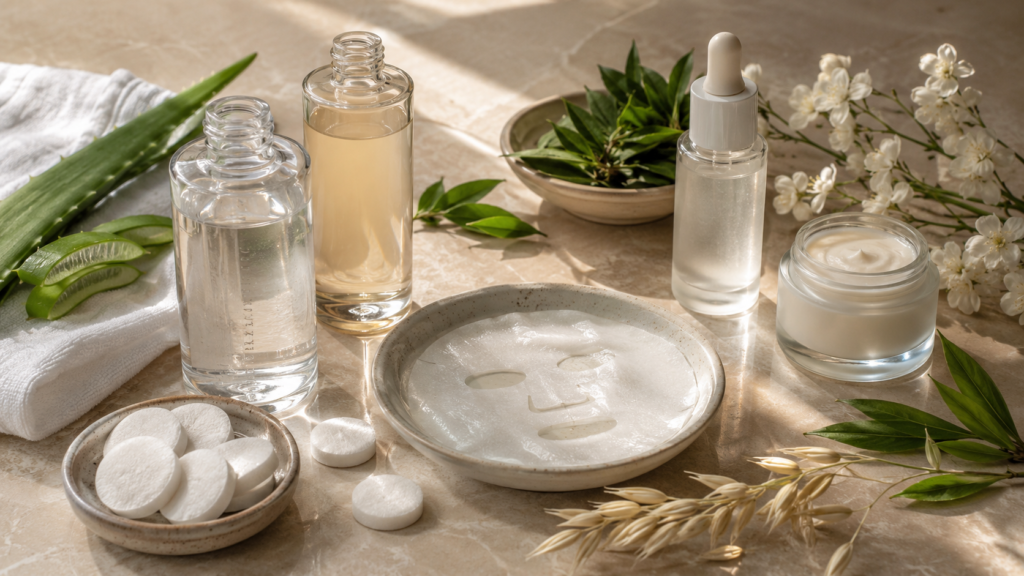
Choosing the right skincare product makes far more difference than choosing the most expensive compression sheet mask. Since the mask simply holds the liquid against your skin, the formula you use determines the results.
Hydrating Toners
Hydrating toners are the easiest and safest option for most skin types. Look for formulas containing ingredients like glycerin, hyaluronic acid, panthenol, beta-glucan, or polyglutamic acid. These ingredients help attract moisture to the skin without feeling heavy or greasy.
They’re also thin enough to spread evenly throughout the mask, giving your skin consistent hydration from start to finish.
Lightweight Essences
Essences are another excellent choice, especially if your skin feels dull or dehydrated. They usually contain a combination of hydrating and skin-conditioning ingredients while remaining lightweight enough for daily use.
Because of their watery texture, essences saturate compression sheet masks evenly and leave very little sticky residue afterward.
Barrier-Supporting Formulas
If your skin feels dry, tight, or irritated, consider using products formulated with ceramides, cholesterol, fatty acids, or panthenol. These ingredients help support the skin barrier and can leave your complexion feeling more comfortable after masking.
While a single treatment won’t repair a damaged skin barrier overnight, using these ingredients consistently can improve how your skin feels over time.
Soothing Products for Sensitive Skin
People with sensitive skin often benefit from fragrance-free toners or essences containing centella asiatica, oat extract, green tea, aloe vera, or allantoin. These ingredients are known for their calming properties and are generally well tolerated by reactive skin.
Whenever you try a new product, patch test it first instead of applying it to your entire face under a sheet mask.
Products You Should Never Use
Not every skincare product belongs inside a compression sheet mask. Since the mask keeps ingredients against the skin for several minutes, strong treatments may become more irritating than intended.
Avoid using:
- High-strength glycolic acid
- Strong salicylic acid treatments
- Retinol or retinal products
- Benzoyl peroxide
- Essential oils
- DIY lemon juice or vinegar mixtures
- Undiluted vitamin C formulas with a very low pH
These products work best when applied in thin layers according to their directions. Covering them with a damp sheet mask can increase sensitivity without providing additional benefits.
How Often Should You Use Compression Sheet Masks?
For most people, using a compression sheet mask one to three times per week is enough to maintain healthy hydration. That’s frequent enough to support your regular skincare routine without overcomplicating it.
If your skin becomes unusually dry because of cold weather, air conditioning, travel, or frequent exfoliation, you may choose to use one more often for a short period. Once your skin feels balanced again, returning to a few treatments each week is usually sufficient.
Daily use isn’t harmful for everyone, but it also isn’t necessary. Healthy skin benefits more from a consistent skincare routine than from masking every single day.
Common Mistakes to Avoid
Even though compression sheet masks are simple to use, a few common mistakes can keep you from getting the best results. Paying attention to these small details can make your routine much more effective.
Leaving the Mask on Too Long
It might seem logical that wearing a sheet mask for 20 or 30 minutes would provide better hydration, but the opposite can happen. Once the mask begins drying out, it may start drawing moisture away from the surface of your skin.
For the best results, remove the mask while it still feels slightly damp. Your skin should feel hydrated and comfortable, not tight or dry.
Using the Wrong Skincare Product
A compression sheet mask should be paired with gentle, hydrating products instead of strong treatment formulas. Ingredients like exfoliating acids, retinoids, or benzoyl peroxide are designed to be applied in thin layers, not held against the skin for several minutes.
If your goal is hydration, stick with toners, essences, or calming formulas that support the skin barrier.
Skipping Moisturizer
Hydrating your skin is only half of the process. Without a moisturizer, much of that water can gradually evaporate, especially if your skin is naturally dry or the air around you has low humidity.
Applying moisturizer immediately after removing the mask helps seal in hydration and leaves your skin feeling softer for longer.
Reusing Compression Sheet Masks
Compression sheet masks are made for one-time use only. Washing and reusing them increases the risk of bacterial growth and reduces the quality of the fabric, making it less effective during future treatments.
Using a fresh mask every time is the safest and most hygienic approach.
Can Compression Sheet Masks Help Every Skin Type?
One reason compression sheet masks are so versatile is that you can adjust the skincare product based on your skin’s needs. The mask itself stays the same, but the liquid inside can be completely different from one routine to the next.
Dry Skin
Dry skin usually benefits the most from compression sheet masks because hydration is their primary strength. Pair the mask with a hydrating toner or essence containing ingredients like glycerin, hyaluronic acid, panthenol, or beta-glucan, then follow with a nourishing moisturizer.
Oily Skin
Many people with oily skin avoid hydrating products because they’re worried about feeling greasy. In reality, oily skin can still become dehydrated, especially after using harsh cleansers or acne treatments.
A lightweight, oil-free hydrating toner often provides enough moisture without making the skin feel heavy.
Combination Skin
Combination skin responds well to balanced hydration. Choose a lightweight essence or toner that hydrates without leaving oily areas feeling overloaded. Since you’re choosing the liquid yourself, it’s easy to adjust the routine as your skin changes throughout the year.
Sensitive Skin
If your skin is easily irritated, fragrance-free and alcohol-free products are usually the safest option. Ingredients such as centella asiatica, oat extract, green tea, aloe vera, and allantoin are popular choices because they’re known for their soothing properties.
Whenever you’re trying a new product, perform a patch test before using it with a full-face compression sheet mask.
Learning how to use compression sheet masks is less about following a trend and more about making your existing skincare routine work more effectively. The mask itself is simply a tool, but pairing it with the right hydrating products can leave your skin feeling softer, smoother, and more comfortable after each use.
The biggest takeaway is to keep your routine simple. Choose a gentle hydrating toner or essence, remove the mask while it’s still damp, and always finish with a moisturizer to help lock in hydration. Those small habits will do far more for your skin than chasing viral skincare hacks or leaving a mask on for longer than necessary.
Used consistently alongside a balanced skincare routine, compression sheet masks can become an easy way to give your skin extra hydration whenever it needs it—without adding unnecessary complexity to your regimen.