Not long ago, mushroom extracts were mostly associated with supplements and wellness drinks. Now they’re showing up in serums, moisturizers, toners, masks, and even cleansers. At first, I assumed it was another ingredient riding the clean beauty wave. After testing several mushroom-based formulas over the years, though, I realized there’s more substance here than the marketing often suggests.
The truth is that mushroom skincare isn’t one magical ingredient. It’s a category of botanical extracts, each with different strengths. Some mushrooms help support hydration, others are rich in antioxidants, and a few appear especially good at calming skin that becomes easily irritated. Knowing the difference matters because not every mushroom product delivers the same results.
Mushroom Skincare: The Adaptogen Beauty Ingredient Explained
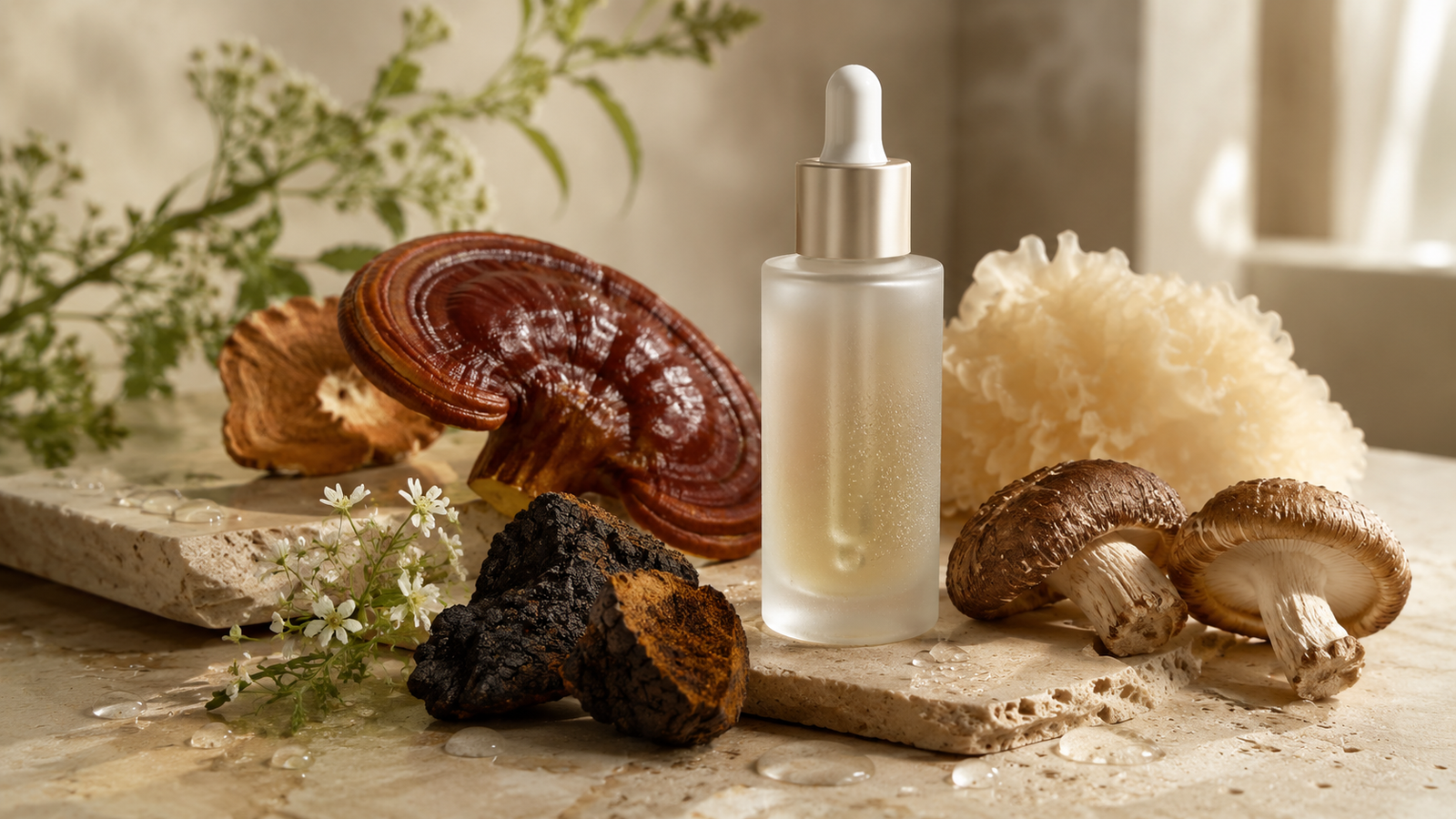
Mushroom skincare refers to skincare products made with extracts from functional mushrooms such as reishi, tremella, chaga, shiitake, cordyceps, and several others. Many of these mushrooms contain antioxidants, polysaccharides, beta-glucans, amino acids, and other naturally occurring compounds that help support the skin barrier, improve hydration, and reduce the appearance of environmental stress. Rather than dramatically changing your skin overnight, mushroom extracts work gradually by helping your skin function more effectively.
Why Mushrooms Have Become a Serious Skincare Ingredient
If you’ve noticed mushrooms appearing in products across every price range, there’s a reason.
Modern skincare has shifted away from chasing harsh treatments for every concern. Instead, there’s a growing focus on supporting the skin barrier and helping skin stay balanced over time. That’s exactly where many mushroom extracts fit.
Unlike exfoliating acids or retinoids, mushrooms don’t usually force your skin to renew itself faster. Instead, many work behind the scenes by supplying compounds that help skin retain moisture, defend itself against environmental stress, and recover from everyday irritation.
That makes them especially interesting if your skin often feels tight, reactive, or unpredictable.I also appreciate that mushroom extracts can usually fit into an existing routine without requiring you to rebuild everything you’re already using.
What Makes Adaptogenic Mushrooms Different?
One word you’ll see repeatedly is adaptogen.
Technically, adaptogens are plants and fungi traditionally studied for helping the body respond to stress. In skincare, the term is used a little differently.
Your moisturizer can’t magically make your skin “adapt” to stress in the same way your body responds internally. Instead, adaptogenic mushroom extracts are valued because they contain compounds that may help skin better cope with external stressors like pollution, UV exposure, dry air, and temperature changes.
Think of them as supportive ingredients rather than corrective ones.That’s an important distinction because many marketing campaigns blur the line between wellness claims and skincare science.
Good to Know
An ingredient can be an adaptogen in herbal medicine without automatically becoming a miracle skincare ingredient. The quality of the extract, the formulation, and the concentration all matter just as much.
How Mushroom Extracts Actually Work on Skin
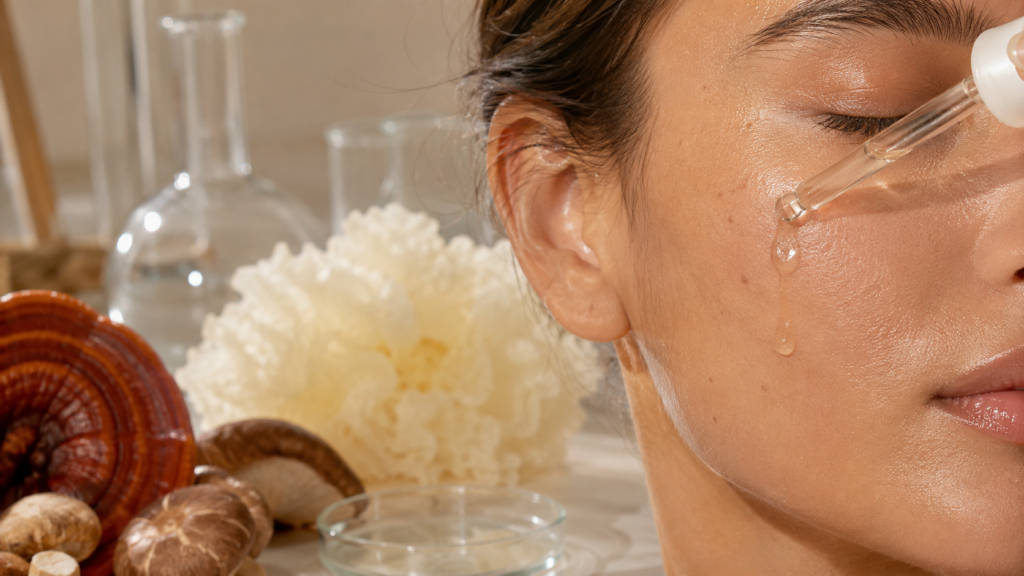
This is where mushroom skincare becomes much more interesting than the packaging suggests.Different mushrooms contain different groups of beneficial compounds, but several appear repeatedly.
Beta-Glucans Support the Skin Barrier
One of the most valuable compounds found in many mushrooms is beta-glucan.
Beta-glucans act as humectants, meaning they help attract and hold water within the outer layers of skin. Well-hydrated skin generally looks smoother, feels softer, and becomes less prone to irritation.
Healthy hydration also improves how your skin barrier functions.
When your barrier is damaged, moisture escapes more easily while irritants penetrate more readily. Supporting hydration helps reduce that cycle.
Many people compare beta-glucans with hyaluronic acid, but they aren’t identical.
Beta-glucans often provide hydration while also helping calm skin, making them especially appealing for people whose skin becomes red after trying stronger active ingredients.
Antioxidants Help Defend Against Daily Environmental Stress
Your skin constantly deals with UV light, pollution, smoke, and other environmental stressors.These exposures create unstable molecules called free radicals that contribute to visible signs of premature aging over time.
Many mushroom extracts naturally contain antioxidant compounds that help neutralize some of this oxidative stress.That doesn’t replace sunscreen.
Instead, think of antioxidants as additional support alongside daily SPF rather than an alternative to it.
Polysaccharides Improve Moisture Retention
Many functional mushrooms are naturally rich in polysaccharides.These large sugar molecules help improve water retention within the skin’s surface.That’s one reason mushroom moisturizers often leave skin feeling comfortably hydrated without becoming greasy.
If you’ve ever used a moisturizer that initially felt rich but your skin still became tight an hour later, moisture retention—not just oil content—may have been the missing piece.
Some Mushroom Extracts Help Calm Reactive Skin
One reason mushroom skincare has become popular among people with sensitive skin is its calming reputation.Several mushroom extracts appear to help reduce the appearance of redness while supporting overall barrier recovery.
That doesn’t mean they’ll treat medical skin conditions.
But if your skin often reacts after over-exfoliating, spending too much time in dry air, or trying a new active ingredient, mushroom extracts may help restore balance more comfortably than simply adding another heavy moisturizer.
Pro Tip
If your skin feels irritated after introducing retinoids or exfoliating acids, resist the urge to add more active ingredients. For many people, switching to a simple moisturizer containing mushroom extracts for a few nights gives the skin barrier time to recover before restarting stronger treatments.
The Mushroom Extracts You’ll See Most Often
Not all mushroom ingredients do the same job.
Learning what each one is known for makes product labels much easier to understand.
Reishi
Reishi is probably the best-known adaptogenic mushroom in skincare.
It’s valued primarily for its antioxidant content and its ability to support stressed, easily irritated skin. Reishi products tend to work well in moisturizers, calming serums, and overnight creams designed to strengthen the skin barrier over time.
People expecting dramatic anti-aging results usually end up disappointed. In my experience, reishi performs best as a long-term supporting ingredient rather than a quick fix.
Tremella (Snow Mushroom)
Tremella is often compared with hyaluronic acid because of its impressive moisture-binding ability.
It leaves skin looking plumper and feeling softer without the heavy finish some richer creams create.
For dehydrated skin, tremella is often one of the most immediately noticeable mushroom ingredients because improved hydration can make fine dehydration lines appear less visible after consistent use.
Watch Out
Hydrating ingredients work best when you lock them in with a moisturizer. If you apply a mushroom serum to freshly cleansed skin but skip moisturizer—especially in a dry climate—you may not get the comfortable hydration you’re expecting.
Chaga
Chaga is rich in antioxidant compounds that help protect skin from everyday environmental stress. While it won’t erase wrinkles, it may help reduce the appearance of dullness caused by pollution and UV exposure over time. Chaga is most often found in antioxidant serums and lightweight moisturizers designed for daily use.
Shiitake
Shiitake mushrooms naturally contain compounds that support healthier-looking skin and may help improve overall skin texture. They’re often included in brightening formulas because they’re associated with a more even-looking complexion. Don’t expect dramatic fading of dark spots on their own, but they can complement ingredients like niacinamide and vitamin C.
Cordyceps
Cordyceps is commonly added to skincare for its conditioning and revitalizing properties. It works well in products aimed at tired or dehydrated skin that lacks freshness. In my experience, cordyceps doesn’t produce dramatic overnight results, but skin often feels more comfortable and balanced after several weeks of consistent use.
Which Skin Types Benefit Most From Mushroom Skincare?
Dry Skin
Dry skin usually benefits the most from mushroom extracts because many are rich in humectants and barrier-supporting compounds. A cream or serum containing tremella or beta-glucans can help skin stay hydrated for longer instead of feeling comfortable for only a few hours.
Sensitive Skin
If your skin becomes red easily or reacts to new products, mushroom skincare is worth considering. Look for simple formulas without added fragrance or unnecessary essential oils. Gentle ingredients are usually more important than having a long ingredient list.
Combination Skin
Combination skin often responds well to lightweight mushroom serums layered beneath a moisturizer. This gives dry areas extra hydration without making the oilier parts of your face feel heavy.
Oily Skin
Many people with oily skin avoid hydrating ingredients because they worry about shine.
That’s usually a mistake.
Oily skin can still become dehydrated. Lightweight mushroom gel serums absorb quickly and support hydration without leaving behind a greasy finish.
How to Add Mushroom Skincare to Your Routine
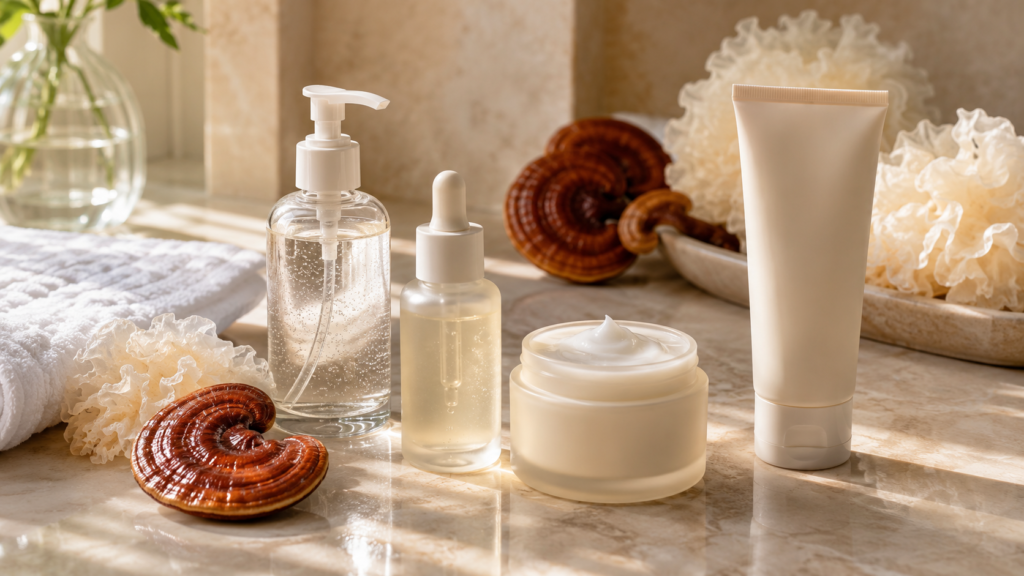
One thing I like about mushroom extracts is that they’re easy to work into almost any skincare routine.
You don’t need to replace everything you already use.
Morning Routine
Cleanse your skin first if needed. Apply a mushroom serum while your skin is still slightly damp, then follow with moisturizer and finish with sunscreen. Because most mushroom extracts are gentle, they layer well under SPF without causing pilling.
Evening Routine
At night, apply mushroom products after cleansing and before your moisturizer.
If you’re already using retinoids or exfoliating acids, mushroom serums often work well as the calming layer that follows those stronger ingredients. Many people notice that their skin feels less tight the following morning.
Pro Tip
If you’re introducing several new products, don’t start them all at once. Add mushroom skincare first for a week or two before changing anything else. That makes it much easier to tell what’s actually helping your skin.
Ingredients That Pair Well With Mushroom Extracts
Mushroom skincare is versatile because it generally doesn’t compete with other common skincare ingredients.
Hyaluronic Acid
Both ingredients focus on hydration, making them an excellent combination for dehydrated skin. Apply the hydrating serum first, then seal everything in with moisturizer.
Ceramides
Ceramides repair the skin barrier while mushroom extracts help support hydration and comfort. Together they make an excellent routine for skin that feels dry, flaky, or irritated.
Niacinamide
Niacinamide helps improve barrier function and reduce the appearance of excess oil, while mushroom extracts provide extra hydration and antioxidant support. The combination works well for combination and sensitive skin.
Vitamin C
Vitamin C helps defend against environmental damage, and antioxidant-rich mushroom extracts provide additional support. Using both in the morning under sunscreen creates a balanced daytime routine.
Retinoids
Retinoids remain one of the most effective anti-aging ingredients available, but they can also cause dryness during the adjustment period.
Mushroom moisturizers don’t replace retinoids, but they often make them much easier to tolerate.
Do Mushroom Extracts Clash With Other Ingredients?
Generally, no.
Unlike some exfoliating acids or prescription treatments, mushroom extracts are considered gentle and compatible with most skincare routines. The bigger concern isn’t ingredient conflicts—it’s product formulation.
If a mushroom product also contains large amounts of fragrance, drying alcohol, or irritating botanical oils, those ingredients may cause problems even if the mushroom extract itself is well tolerated. That’s why I spend more time reading the full ingredient list than the front label.
Serum, Cream, or Toner: Which Formula Is Best?
The best format depends on your skin’s biggest concern.
Serums usually contain higher concentrations of mushroom extracts and work well if hydration or barrier repair is your main goal. Creams are better for dry skin because they combine mushroom extracts with nourishing moisturizers that help reduce water loss.
Toners are the lightest option and work best as an extra hydration step rather than the main treatment. If you’re trying mushroom skincare for the first time, I’d start with a serum. It gives you the best chance of seeing what the ingredient can actually do before adding more products.
How Long Does Mushroom Skincare Take to Work?
Hydration is usually the first improvement you’ll notice. If your skin is dehydrated, it may feel softer and more comfortable within a few days.
Barrier support takes longer. Most people need four to eight weeks of consistent use before they notice skin becoming less reactive or staying hydrated for longer throughout the day.
Antioxidant benefits are even less obvious because they’re helping protect your skin over time rather than creating dramatic overnight changes. One mistake I made early on was switching products too quickly. I expected visible changes within a week, but mushroom skincare rewards consistency more than impatience.
What Mushroom Skincare Won’t Do
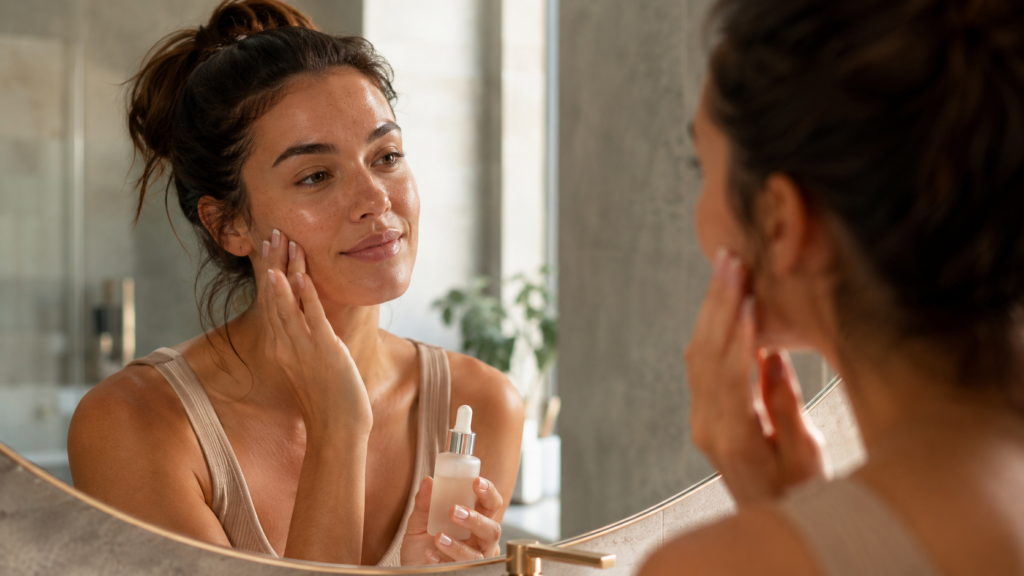
One reason mushroom skincare has become so popular is that it’s marketed as if it can solve every skin concern.
It can’t. Mushroom extracts won’t erase deep wrinkles, permanently fade pigmentation, tighten loose skin, or replace proven ingredients like sunscreen or retinoids.
Think of them as supportive ingredients that help your skin stay healthier and more resilient rather than dramatic treatment ingredients. That’s actually a strength. A product doesn’t have to promise miracles to deserve a place in your routine.
Common Mistakes That Keep Mushroom Skincare From Working
Expecting Overnight Results
Mushroom extracts improve hydration and support the skin barrier gradually. If you stop using them after a week because nothing dramatic happened, you probably won’t experience their long-term benefits.
Choosing Marketing Over Ingredients
A product covered in mushroom illustrations doesn’t necessarily contain a meaningful amount of mushroom extract.
Read the ingredient list. Look for mushroom extracts near the middle or upper half of the list instead of buried at the very end.
Skipping Moisturizer
Hydrating mushroom serums work best when followed by a moisturizer that helps lock water into the skin. Using a hydrating serum alone often leaves skin feeling dry again a few hours later.
Ignoring the Rest of Your Routine
No single ingredient can overcome harsh cleansers, over-exfoliation, or skipping sunscreen every day. Healthy skin comes from a balanced routine, not one trending ingredient.
Is Mushroom Skincare Worth Trying?
For the right person, yes.
If your goal is calmer, more comfortable, and better-hydrated skin, mushroom extracts are one of the more interesting botanical ingredients available today. If you’re hoping for dramatic wrinkle reduction or fast pigmentation correction, you’ll probably be disappointed unless your routine also includes ingredients with stronger evidence behind them.
I don’t consider mushroom skincare essential for everyone. But I do think it’s one of the few beauty trends that has enough science and practical results to justify the attention it’s received.