There was a point when my skincare routine was doing more harm than good. Every cleanser seemed too harsh, every moisturizer stung for a few seconds, and my skin felt tight again within an hour of washing my face. I kept buying products labeled “hydrating,” convinced I just needed more moisture. Looking back, the problem wasn’t dryness alone—it was a damaged skin barrier.
The Ceramide Routine That Rebuilt My Skin Barrier didn’t involve a dozen new products or an expensive overhaul. In fact, it was the opposite. I stripped my routine back to the essentials, chose products designed to support the skin barrier instead of constantly treating it, and gave my skin enough time to recover. The biggest lesson I learned was that healthy skin isn’t built overnight, and more skincare doesn’t always mean better skin.
The Ceramide Routine That Rebuilt My Skin Barrier: Quick Answer
A simple ceramide-focused routine starts with a gentle cleanser, followed by a hydrating serum if needed, a ceramide-rich moisturizer, and sunscreen every morning. At night, skip unnecessary actives until your skin feels comfortable again. Most people notice less tightness within a couple of weeks, while full barrier recovery often takes several weeks of consistent care.
Why My Skin Barrier Needed Repair Instead of More Hydration
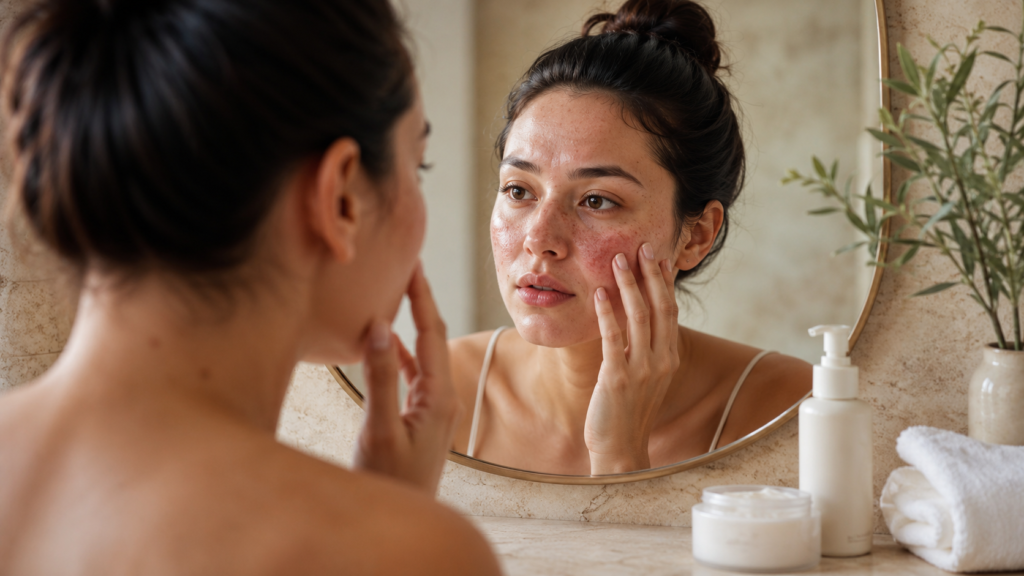
For a long time, I assumed my skin was just dry. I kept layering hydrating products, hoping one of them would finally make my face feel comfortable. Instead, my skin became more reactive. Even products I’d used for years suddenly caused a mild burning sensation, and makeup clung to patches that hadn’t existed before.
That’s when I realized I wasn’t dealing with ordinary dryness. My skin barrier—the outermost protective layer that keeps moisture in and irritants out—had been compromised. Once that protective layer weakens, even gentle skincare can feel uncomfortable because your skin becomes much more sensitive to everyday products and environmental stress.
One thing that surprised me was how easily a damaged barrier can be mistaken for dehydrated skin. You can actually have an oily T-zone while the rest of your face feels painfully tight. That’s because your skin may produce extra oil while still losing too much water through a weakened barrier.
What Ceramides Actually Do for Your Skin
You’ll often hear people describe the skin barrier as a brick wall, and it’s one of the few skincare analogies that genuinely helps explain what’s happening.
Your skin cells are the bricks. Between those bricks sits a mixture of lipids—mainly ceramides, cholesterol, and fatty acids—that acts like mortar. Together, they help keep water inside the skin while blocking irritants, pollution, and allergens from getting in.
When that lipid layer becomes depleted, tiny gaps form in the barrier. Water escapes more easily through a process called transepidermal water loss (TEWL), while everyday irritants can penetrate more easily. That’s why damaged skin often feels dry, sensitive, red, and uncomfortable all at once.
Ceramides don’t instantly “repair” your barrier on their own. Instead, they replenish some of the lipids your skin naturally contains, giving your barrier the building blocks it needs to recover over time. That’s also why many of the best barrier-repair moisturizers combine ceramides with cholesterol and fatty acids rather than relying on ceramides alone.
How My Barrier Became Damaged in the First Place
I didn’t damage my skin overnight, and I definitely didn’t repair it overnight either.
In my case, the problem started with good intentions. I introduced a retinoid, added an exfoliating acid a few nights a week, experimented with a vitamin C serum, and still used a foaming cleanser that left my skin feeling squeaky clean. None of those products were bad on their own, but together they became too much for my skin.
I also made the mistake of thinking that a little tingling meant a product was “working.” It doesn’t. While some active ingredients can cause temporary adjustment, persistent burning, stinging, or redness is your skin asking you to slow down.
If any of these sound familiar, your skin barrier may need extra support:
- Your moisturizer suddenly burns after application.
- Cleansing leaves your skin feeling tight for hours.
- Redness lingers longer than it used to.
- Your skin feels rough even though it looks shiny.
- Makeup separates around dry patches that weren’t there before.
- Almost every new skincare product seems irritating.
Not every one of these symptoms automatically means your barrier is damaged, but seeing several together is a strong clue that simplifying your routine may help.
Watch Out: If your skin feels painful, develops cracks, oozes, or a rash that keeps getting worse despite simplifying your routine, it’s time to stop experimenting with skincare and see a dermatologist. Some skin conditions need medical treatment rather than more moisturizing products.
The Biggest Mistake I Made Before Switching to a Ceramide Routine
The biggest mistake wasn’t choosing the wrong moisturizer.
It was believing I could “fix” irritation by adding another serum.
Every time my skin became dry, I’d buy another hydrating product without removing the exfoliants and active ingredients that were causing the irritation in the first place. I was constantly trying to fill a leaking bucket instead of patching the hole.
Everything changed when I simplified my routine. Instead of chasing new ingredients, I focused on protecting the barrier my skin already had. That meant using fewer products, avoiding unnecessary irritation, and choosing formulas designed to support barrier function instead of aggressively treating every perceived problem.
One product that immediately earned a permanent place in my routine was CeraVe Moisturizing Cream. It isn’t the most luxurious moisturizer on the shelf, but its combination of ceramides, cholesterol-supporting lipids, and humectants made my skin feel comfortable without leaving it greasy. I also had good results with La Roche-Posay Toleriane Double Repair Face Moisturizer, especially on days when my skin felt slightly less dry because it absorbed more quickly.
Those weren’t miracle products. They simply gave my skin consistent support while I stopped doing the things that kept damaging it.
Why Simplicity Worked Better Than a 10-Step Routine
One of the biggest surprises was realizing that my skin didn’t need more products—it needed fewer interruptions.
When your barrier is struggling, every additional product introduces another ingredient your skin has to tolerate. Even gentle formulas can become overwhelming if you’re layering six or seven different products twice a day.
For several weeks, my routine became intentionally boring. There were no exfoliating acids, no peel pads, and no experimental serums. Once my skin stopped feeling tight and reactive, I slowly reintroduced active ingredients one at a time instead of all at once.
That slower approach taught me something I wish I’d understood years earlier: consistency almost always beats complexity when you’re trying to rebuild a damaged skin barrier.
My Morning Ceramide Routine That Finally Stopped the Tightness
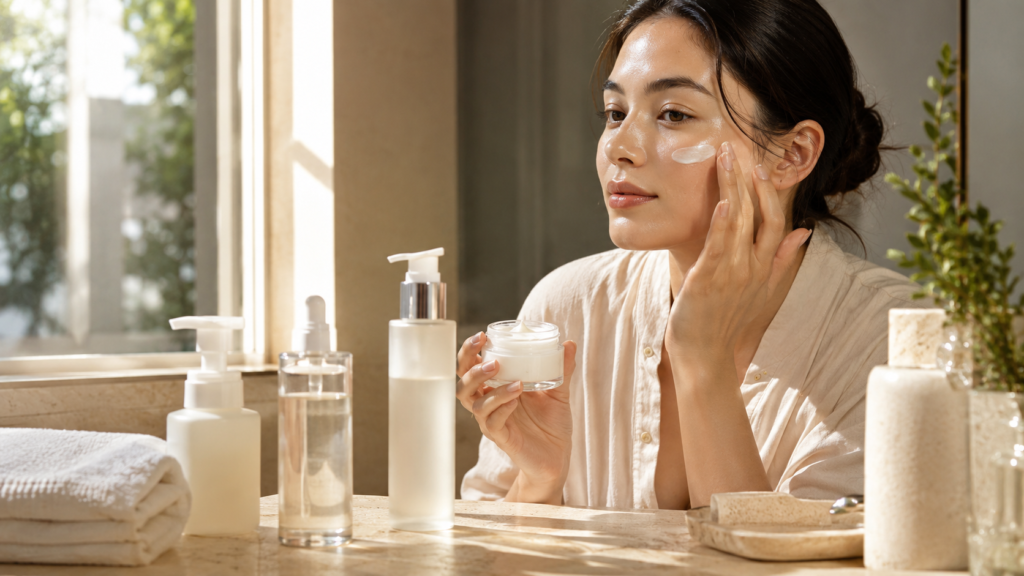
Once I accepted that my skin needed repair instead of constant treatment, my morning routine became much simpler. Every product had a clear purpose, and I stopped buying anything that promised instant results. That consistency made a much bigger difference than adding another trendy serum ever did.
Step 1: Start With a Gentle Cleanse
One of the first changes I made was switching to a cleanser that left my skin feeling comfortable instead of squeaky clean. If I woke up with normal or dry skin, I sometimes skipped cleanser altogether and rinsed with lukewarm water. On oilier mornings, I used a gentle hydrating cleanser that removed overnight oil without stripping away the lipids my skin was trying to rebuild.
Some excellent options include CeraVe Hydrating Facial Cleanser, Vanicream Gentle Facial Cleanser, and La Roche-Posay Toleriane Hydrating Gentle Cleanser. They clean effectively while helping maintain the skin’s natural moisture barrier, making them a much better choice than harsh foaming cleansers during barrier repair.
Step 2: Add a Hydrating Layer Only If Your Skin Needs It
This was another lesson I learned through trial and error. A hydrating serum isn’t automatically necessary just because your barrier is damaged. If your moisturizer keeps your skin comfortable throughout the day, you can often skip this step entirely. I only reached for a hydrating serum when my skin felt dehydrated or tight after cleansing.
When I did use one, I applied it to slightly damp skin before moisturizer. Lightweight formulas such as Vichy Minéral 89, The Ordinary Hyaluronic Acid 2% + B5, or La Roche-Posay Hyalu B5 Serum added hydration without overwhelming my skin. I always followed with moisturizer within a minute because humectants perform best when they’re sealed in rather than left to dry on their own.
Pro Tip: A hydrating serum should make your moisturizer work better, not replace it. If your skin still feels tight after using one, the missing step is often a richer moisturizer rather than another serum.
Step 3: Make a Ceramide Moisturizer the Center of Your Routine
If I had to choose just one product that genuinely helped rebuild my skin barrier, it would be a ceramide moisturizer. Everything else in my routine supported this step, but this was the product I never skipped. Rather than looking for long ingredient lists filled with trendy actives, I focused on formulas that combined ceramides, cholesterol, fatty acids, and humectants because those ingredients naturally work together to support the skin barrier.
I rotated between CeraVe Moisturizing Cream, La Roche-Posay Toleriane Double Repair Face Moisturizer, Illiyoon Ceramide Ato Concentrate Cream, and Vanicream Moisturizing Cream depending on how my skin felt. Richer creams worked best during the worst flare-ups, while lighter lotions were enough once my barrier had started recovering.
A common mistake is applying too little moisturizer. I used enough to comfortably cover my face and neck with a thin, even layer instead of rubbing in a tiny amount until it disappeared. If your skin absorbs moisturizer almost instantly and still feels tight, it usually needs a little more—not another product.
Step 4: Finish Every Morning With Sunscreen
Once my barrier began improving, I realized sunscreen was protecting the progress I’d worked so hard to make. UV exposure doesn’t just contribute to premature aging; it also makes it harder for irritated skin to recover. Even the best barrier-repair routine won’t perform as well if your skin is dealing with unnecessary sun damage every day.
I preferred moisturizing sunscreens that layered well over a ceramide cream. EltaMD UV Daily SPF 40 and La Roche-Posay Anthelios Melt-In Milk SPF 60 both felt comfortable on my skin and didn’t leave it feeling dry by the afternoon. The most effective sunscreen is always the one you’ll wear consistently, so finding a formula you actually enjoy using is worth the effort.
My Night Routine Focused on Repair Instead of Results
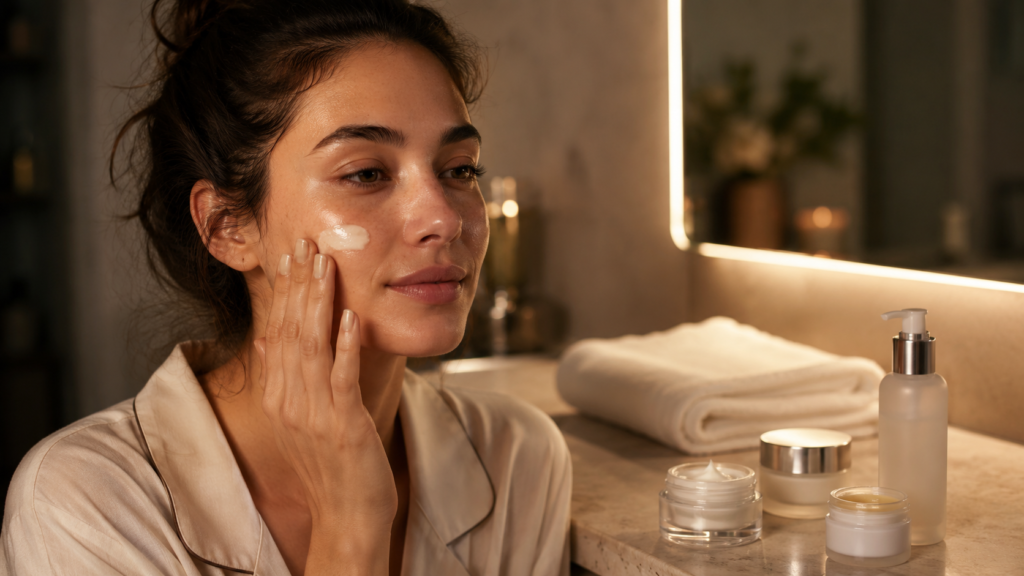
Nighttime used to be when I experimented the most. I rotated exfoliating acids, retinoids, brightening serums, and treatment masks because I thought more active ingredients meant faster progress. In reality, I was keeping my skin in a constant cycle of irritation. Simplifying my evening routine was the turning point that finally allowed my barrier to recover.
Step 1: Remove Makeup and Sunscreen Without Stripping Your Skin
If I’d worn sunscreen or makeup, I removed it as gently as possible. On heavier makeup days, I started with a cleansing balm or cleansing oil before following with a gentle cleanser. If I’d only worn sunscreen, one cleanse with CeraVe Hydrating Facial Cleanser or La Roche-Posay Toleriane Hydrating Gentle Cleanser was usually enough.
Many people assume double cleansing is essential every night, but that’s not always true. Cleansing should remove sunscreen and makeup effectively, not leave your skin feeling dry or squeaky. If your cleanser is doing its job in one wash, there’s no benefit to cleansing twice just because it’s popular online.
Step 2: Keep Your Routine Intentionally Boring
This was probably the hardest habit for me to stick with because I always felt like I should be doing more. Instead of reaching for exfoliating acids or retinoids every night, I focused on giving my skin a break. After cleansing, I either applied a hydrating serum if my skin felt dehydrated or went straight to my ceramide moisturizer.
For several weeks, that was my entire evening routine. It wasn’t exciting, but it was exactly what my skin needed. Once the redness, burning, and tightness disappeared, I slowly introduced active ingredients one at a time instead of bringing everything back at once.
Step 3: Seal Very Dry Areas When Necessary
Some parts of my face, especially around my nose and cheeks, stayed dry even after moisturizer. On those nights, I applied a very thin layer of Vaseline Original Healing Jelly or Aquaphor Healing Ointment over those specific areas before bed. Both products contain petrolatum, which forms a protective layer that significantly reduces transepidermal water loss while your skin repairs itself overnight.
I didn’t slug every evening because my skin didn’t always need that extra protection. Using petrolatum only on the driest areas gave me the benefits without making my entire face feel heavy or greasy.
Good to Know: If you’re acne-prone, you don’t have to cover your whole face with an occlusive. Applying a small amount only where your skin feels flaky or irritated is often enough to support barrier repair while keeping the rest of your routine comfortable.
How Long Did It Take to Rebuild My Skin Barrier?
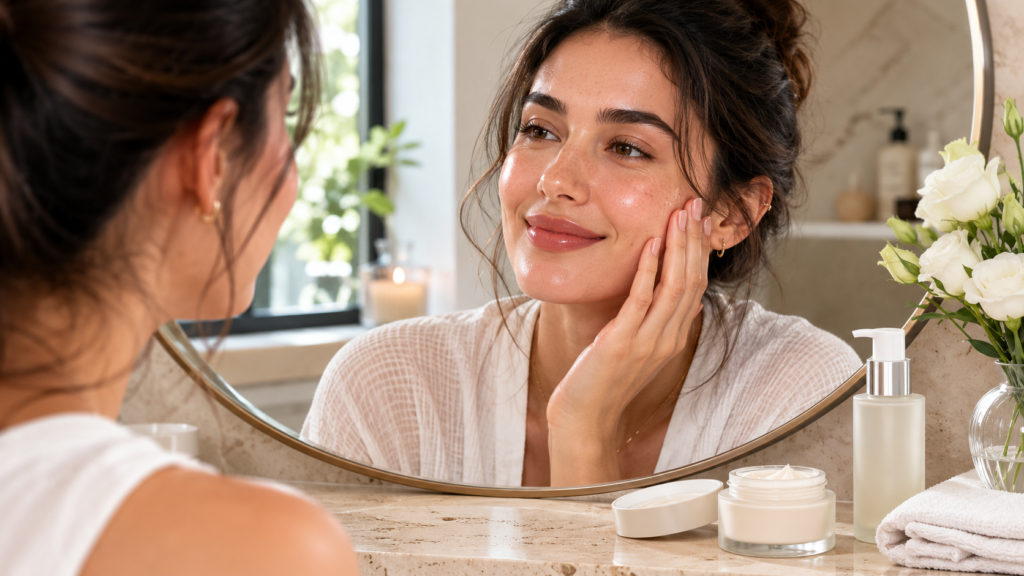
One of the biggest mistakes I made was expecting results within a few days. A damaged skin barrier doesn’t suddenly repair itself because you switched moisturizers. Your skin needs time to replace lost lipids and restore its natural protective function, and that process can’t be rushed.
For me, the first improvement wasn’t visible—it was how my skin felt. After about a week, cleansing no longer left my face painfully tight. Within two to three weeks, the stinging after moisturizer had almost disappeared, and my skin stayed comfortable for much longer during the day. It took around six weeks before my complexion looked consistently healthier and makeup stopped clinging to dry patches.
If your barrier has only been mildly irritated, you may recover faster. On the other hand, if you’ve been over-exfoliating for months or using multiple strong actives together, it’s normal for recovery to take longer. Consistency matters much more than finding another “miracle” product.
When I Started Using Active Ingredients Again
Stopping every active forever isn’t realistic, and it isn’t necessary either. The goal is to let your skin recover first, then slowly reintroduce the products that genuinely benefit your skin.
I waited until my skin felt comfortable for at least two weeks before adding anything back. That meant no burning after cleansing, no lingering redness, and no tightness a few hours after moisturizing. Once those signs disappeared, I reintroduced one active ingredient at a time instead of restarting my entire routine overnight.
I started with a retinoid once a week because it was the product I missed most. After a couple of weeks without irritation, I increased it to twice weekly. Only after my skin handled that comfortably did I think about adding an exfoliating acid back into my routine. Testing one product at a time made it much easier to identify what my skin actually tolerated.
Watch Out: If your skin starts stinging again after reintroducing an active ingredient, don’t assume you need a stronger ceramide cream. It’s usually a sign that your skin needs more recovery time before using that treatment regularly.
Why Some Ceramide Products Work Better Than Others
Not every moisturizer with “ceramide” on the label performs the same. Some contain tiny amounts of ceramides but rely mostly on lightweight emollients, while others are formulated specifically to support barrier repair.
When comparing products, I now pay much more attention to the full ingredient list than the marketing claims on the front of the packaging. A good barrier-repair moisturizer often contains a combination of ceramides, cholesterol, fatty acids, glycerin, and squalane because these ingredients work together to strengthen the skin barrier and reduce moisture loss.
Texture also matters more than many people realize. Gel creams are often enough for oily or combination skin, while rich creams usually work better if your skin feels tight, flaky, or irritated. Choosing the right texture for your skin type makes it much easier to stay consistent with your routine.
The Habits That Quietly Damaged My Barrier
Looking back, it wasn’t one bad product that caused the problem. It was several small habits that gradually weakened my skin barrier over time. Once I changed those habits, my routine became much more effective without becoming more complicated.
These are the biggest mistakes I avoid now:
- Using exfoliating acids more often than my skin needed.
- Washing my face with hot water.
- Trying several new skincare products at the same time.
- Switching moisturizers every few weeks because I expected faster results.
- Scrubbing away flaky skin instead of moisturizing it.
- Assuming a tingling sensation meant a product was working.
- Skipping sunscreen while using active ingredients.
None of these habits seem dramatic on their own, but together they can keep your skin in a constant cycle of irritation.
Who Should Try a Ceramide Routine?
A ceramide-focused routine isn’t only for people with naturally dry skin. Anyone with a weakened skin barrier can benefit from giving their skin the lipids and hydration it needs to recover.
You may notice the biggest improvement if you have:
- Dry or dehydrated skin.
- Sensitive skin that reacts to many products.
- Redness after cleansing.
- Flaky patches caused by over-exfoliation.
- Skin that’s adjusting to retinoids.
- Tightness that returns soon after moisturizing.
People with oily or acne-prone skin shouldn’t avoid ceramides either. A damaged barrier can actually make oily skin feel worse because it often responds by producing even more oil. Choosing a lightweight ceramide lotion instead of a heavy cream is usually enough to support the barrier without making skin feel greasy.
If your skin is persistently inflamed, painful, cracked, or develops a rash that doesn’t improve after simplifying your routine, it’s worth making an appointment with a dermatologist. Barrier damage isn’t always the only issue, and conditions like eczema, rosacea, or allergic contact dermatitis often need a more targeted treatment plan.
What This Routine Didn’t Do—and That’s Okay
One reason I trust this routine is because it didn’t promise unrealistic results. It didn’t erase my pores, remove every fine line, or give me permanently glass-like skin. Skincare simply doesn’t work that way.
What it did do was make my skin feel comfortable again. The constant tightness disappeared, redness became much less frequent, and I stopped worrying that every new product would trigger another flare-up. Once my barrier became healthier, the rest of my skincare routine worked better because my skin could finally tolerate the ingredients I actually wanted to use.
That’s the biggest takeaway I’d share with anyone dealing with a damaged skin barrier: don’t chase perfection. Focus on building healthy, resilient skin first, and everything else becomes much easier afterward.