
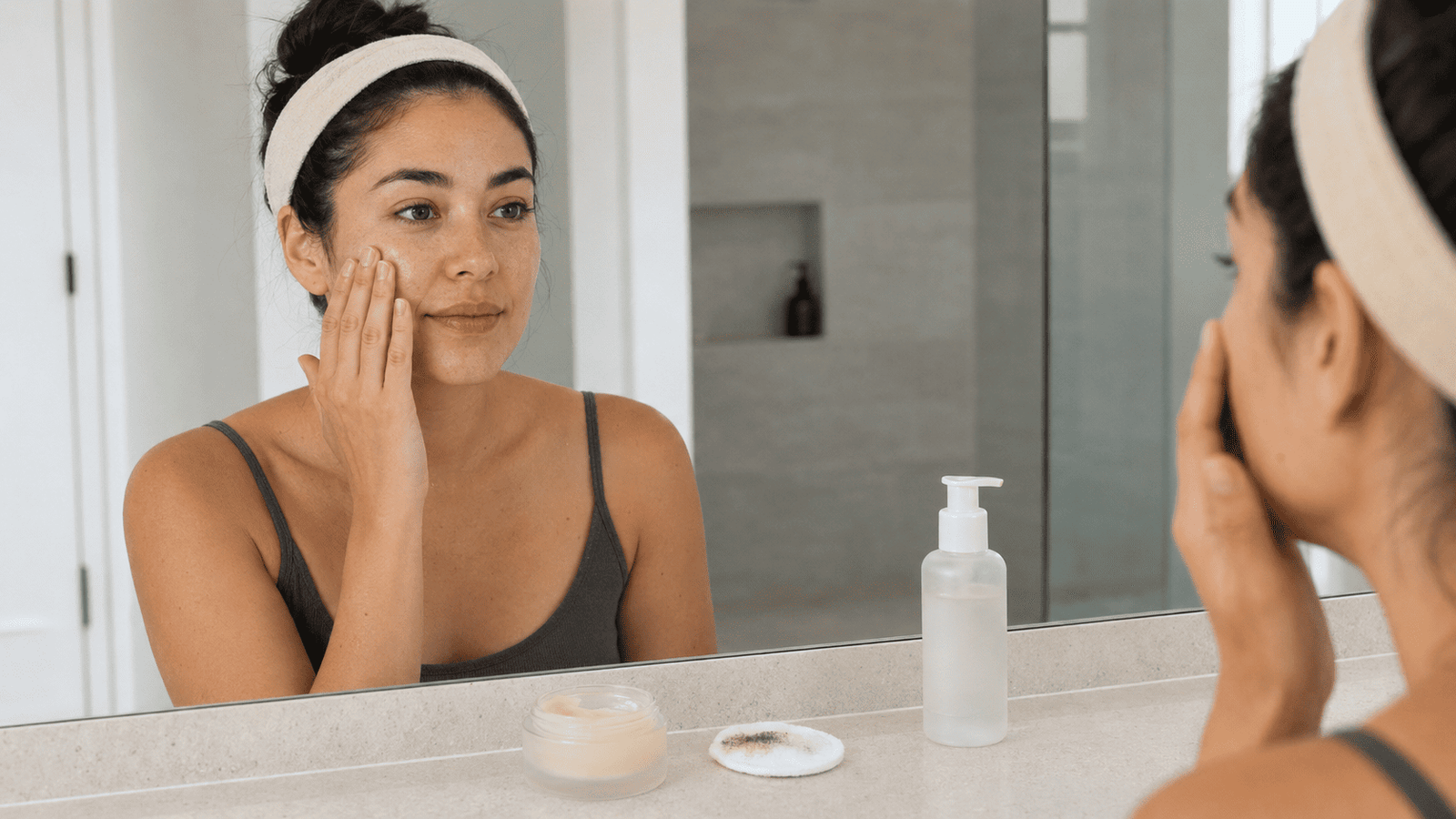
Water-resistant sunscreen and long-wear makeup are designed to stay on your face, which becomes a problem when your evening face wash only removes the surface layer. Foundation may remain around your nose, mascara can cling between your lashes, and a waxy sunscreen film often collects along the hairline. A simple double-cleansing routine for makeup and sunscreen removes these layers in two gentle stages without relying on rough wipes or aggressive scrubbing.
The first cleanser loosens makeup, sunscreen, and excess oil, while the second washes away the remaining residue, sweat, and dirt. Your skin should feel soft and comfortable afterward—not tight, squeaky, or unusually shiny. Double cleansing is a removal method, not a treatment for acne, pores, or uneven texture.
Quick Answer: Begin with a cleansing oil, balm, or micellar water to break down makeup and sunscreen. Rinse it away, then wash your face for 20–30 seconds with a gentle water-based cleanser. Double cleanse at night when you’ve worn stubborn products; you don’t need to repeat the process automatically every morning and evening.
How Double Cleansing Works
Double cleansing doesn’t mean washing your face twice with the same powerful cleanser. Makeup, sebum, and many water-resistant sunscreen ingredients sit in an oily film, so an oil-based first cleanser helps dissolve and lift that layer. This lets you remove stubborn products with less rubbing than you might need with a standard face wash alone.
The second cleanser contains surfactants, which have both oil-attracting and water-attracting parts. These molecules surround the loosened oils and residue so water can carry them away during rinsing. The result should be thoroughly cleansed skin without the stripped feeling that often comes from repeated washing with a harsh formula.
One well-formulated cleanser may be enough to remove a lightweight, non-water-resistant sunscreen. Double cleansing becomes more useful when you wear tinted mineral SPF, waterproof mascara, full-coverage foundation, or several layers of reapplied sunscreen. It won’t “detox” your pores or cure breakouts, but it can help prevent leftover makeup and sunscreen from sitting on your skin overnight.
Choose Your First Cleanser
The best first cleanser depends on what you’re removing and which texture you enjoy using. Cleansing oils, balms, and micellar waters can all work, but they aren’t interchangeable in every situation. Heavier, water-resistant products usually need more dissolving power than light makeup or everyday sunscreen.
Cleansing Oil
A cleansing oil spreads quickly and works well on foundation, cream makeup, water-resistant sunscreen, and excess sebum. Choose a formula made specifically for facial cleansing instead of using plain coconut, olive, or facial oil. A proper cleansing oil contains emulsifiers that allow it to combine with water and rinse away more cleanly.
When you add water, the oil should become a thin, milky liquid. This change helps carry away the makeup and sunscreen it has dissolved rather than leaving a greasy layer behind. Oily and acne-prone skin can use a cleansing oil, but you should stop if a particular formula repeatedly causes closed bumps or irritation.
Cleansing Balm
A cleansing balm performs the same basic job in a solid, less-drippy texture. It gives you more control around the eyes, nose, and hairline, making it useful for waterproof mascara or full-coverage makeup. Start with approximately an almond-sized amount because an overly thick layer can be difficult to emulsify and rinse.
Sensitive skin should look for a fragrance-free balm without strongly scented essential oils. Fragrance doesn’t improve makeup removal and may irritate reactive skin or cause watery eyes. I’ve tested beautifully scented balms that made the cleansing experience feel luxurious for ten seconds and uncomfortable for the rest of the night.
Micellar Water
Micellar water is a practical first step for light makeup, everyday sunscreen, or anyone who dislikes oily textures. Its small surfactant clusters attract makeup, oil, and debris, allowing a cotton pad to lift them from the skin. It may struggle with very water-resistant mascara or thick mineral sunscreen, so don’t compensate by scrubbing harder.
Saturate a soft cotton pad, hold it against eye or lip makeup for several seconds, and then wipe gently. Giving the formula time to work reduces friction and usually removes more product than quick, repeated swipes. Even if the label says “no rinse,” following with a gentle face wash is sensible when micellar residue makes your skin feel tight, itchy, or coated.
Pro Tip: Choose your first cleanser according to product resistance rather than skin type alone. Light sunscreen may only need micellar water, while tinted mineral SPF and waterproof makeup generally respond better to an emulsifying oil or balm.
A Simple Double-Cleansing Routine for Makeup and Sunscreen
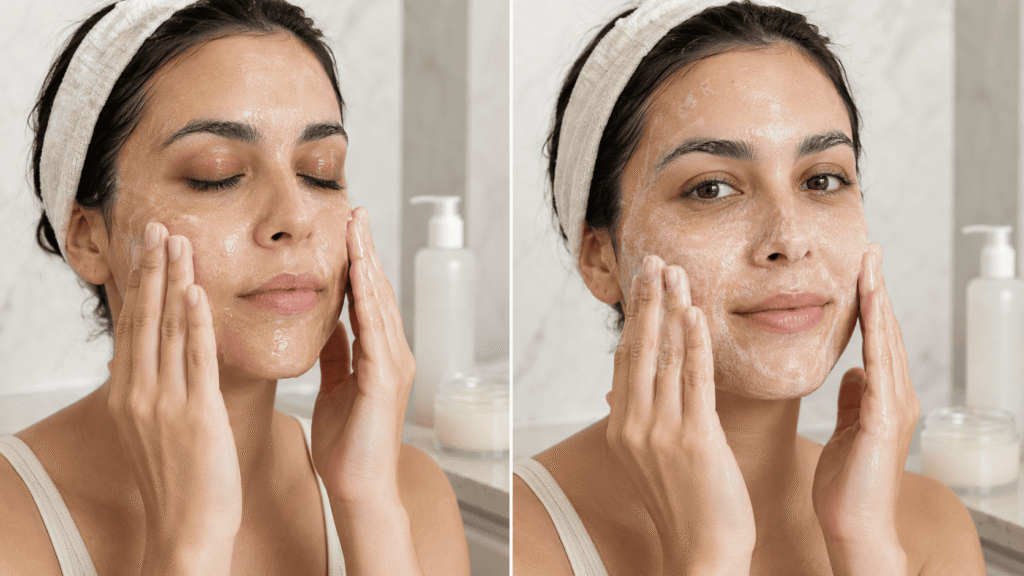
Use this routine in the evening after wearing makeup, water-resistant SPF, or several sunscreen layers. The whole process should take around two minutes, so there’s no need for a prolonged facial massage. Gentle, focused cleansing works better than repeatedly rubbing every part of your face.
Step 1: Start With Clean, Dry Hands
Wash your hands so you don’t transfer dirt, hair products, or excess oil to your face, then dry them before reaching for your first cleanser. Most cleansing oils and balms work best on dry skin because starting with water can make the formula emulsify before it has dissolved your makeup and sunscreen. Follow the label directions if your cleanser is specifically designed for damp skin.
Step 2: Massage the First Cleanser
Apply your cleansing oil or balm to dry skin and massage gently for 30–60 seconds using your fingertips. Focus on the sides of your nose, eyebrows, hairline, jaw, and the crease beneath your lower lip, where tinted sunscreen and foundation often collect. Keep your eyes closed while dissolving mascara, and lightly roll the lashes between coated fingertips instead of pulling them downward.
Longer isn’t automatically better, especially if your skin is sensitive or you use retinoids, exfoliating acids, or acne treatments. Extending the massage for several minutes can increase redness without removing much more product. If the cleanser stings your eyes or skin, rinse it off rather than trying to tolerate the discomfort.
Step 3: Add Water and Emulsify
Wet your fingertips and continue massaging until the oil or balm changes from clear or waxy to thin and milky. This emulsification step helps suspend the dissolved sunscreen, makeup, and excess oil in water so everything can rinse away. If the texture still feels thick or slippery, add a little more water and massage again before rinsing with lukewarm water.
Skipping this step is one of the main reasons cleansing balms leave a heavy film. Using a wet washcloth to force off that layer may create unnecessary friction, particularly around the nose and cheeks. A properly emulsified product should release with water without requiring hard wiping.
Step 4: Use a Gentle Face Wash
Apply a small amount of water-based cleanser to damp skin and massage it for approximately 20–30 seconds. Concentrate on the hairline, nostrils, jaw, and other areas where the first cleanser may have left residue. A low-foam gel can suit oily or combination skin, while dry and sensitive skin may prefer a creamy lotion cleanser.
Look for a cleanser with a comfortable after-feel rather than judging it by how much it foams. Glycerin and ceramides can be useful, but the overall formula matters more than one ingredient printed on the label. You don’t need a scrub, cleansing brush, exfoliating acid, or strong acne wash for this step every night.
I learned this after pairing double cleansing with an active face wash and assuming more cleansing would mean fewer blemishes. My skin looked polished for several days, then became tight, shiny, and sensitive enough that moisturizer stung. Your treatment products should handle acne and texture; your cleanser only needs to remove the day gently.
Step 5: Rinse Carefully
Rinse around your temples, hairline, jaw, and beside the nostrils because these edges are easy to miss. Use lukewarm rather than hot water, as extra heat can increase dryness and flushing without removing makeup more effectively. Pat your face dry with a clean, soft towel instead of rubbing until it feels squeaky.
After rinsing, your face shouldn’t feel oily or coated, but it also shouldn’t feel stretched when you smile. Immediate tightness usually means one of the cleansers is too harsh, you washed for too long, or the water was too hot. Clean skin should still feel like skin.
Step 6: Apply Your Night Products
Continue with your normal nighttime routine after cleansing. A straightforward order is hydrating serum, treatment, and moisturizer, although your skin may not need every category. Double cleansing comes before all leave-on products, including retinoids, acne treatments, facial oils, and sleeping masks.
Clean skin helps skincare spread evenly, but it doesn’t make strong actives safer or guarantee faster results. If you use retinoids, benzoyl peroxide, or exfoliating acids, keeping both cleansers mild becomes even more important. Apply moisturizer promptly if your skin tends to become dry after washing.
Adjust It for Your Skin
A simple double-cleansing routine for makeup and sunscreen should change according to your skin’s response. The same combination that feels comfortable on oily skin may be too much for dry or reactive skin. Frequency, cleanser texture, and massage time all matter more than following a rigid two-step rule.
Dry or Sensitive Skin
Pair a fragrance-free oil or balm with a creamy, non-foaming cleanser, and keep both massage stages brief. Apply moisturizer shortly after drying your face to limit moisture loss. You may only need the complete routine after waterproof makeup, tinted SPF, or several sunscreen applications.
After a lightweight sunscreen day, one gentle cleanse may be enough. If your face burns, flakes, or stays tight after moisturizing, pause double cleansing and simplify your routine. Sensitive skin benefits more from efficient product removal than from adding an unnecessary second wash every night.
Oily or Acne-Prone Skin
Try a lightweight emulsifying oil, non-waxy balm, or micellar water followed by a mild gel cleanser. Avoid choosing the strongest foaming formula just because your skin produces oil. Over-cleansing removes surface oil temporarily, but it doesn’t retrain your oil glands and may make acne treatments harder to tolerate.
Cleansing oils and balms don’t automatically clog acne-prone skin, but individual formulas can cause problems. A cleanser also shouldn’t cause a “purge,” since it doesn’t stay on the skin long enough to speed up cell turnover like a retinoid or exfoliating acid. If persistent bumps appear after introducing a new balm, stop using it rather than adding more exfoliation.
Combination Skin
Use a smaller amount of first cleanser on dry outer cheeks and spend more massage time around the nose, chin, and hairline. You don’t need separate cleansing systems for different parts of your face. A gentle gel-lotion texture usually provides a comfortable middle ground for the second step.
Adjusting your technique is often more effective than using a harsh cleanser on the T-zone and trying to repair the cheeks afterward. If only your nose holds onto tinted SPF, concentrate the first cleanse there. The entire face doesn’t need equal pressure or equal massage time.
Watch Out: Persistent tightness, redness, flaky patches, burning, or a strangely shiny surface can indicate over-cleansing. Reduce the frequency and switch to milder products instead of trying to cover the irritation with additional serums.
When Two Cleanses Make Sense
Double cleansing is most useful after waterproof makeup, full-coverage foundation, tinted mineral SPF, water-resistant sunscreen, or several layers of reapplied sunscreen. It also helps after event makeup or thick, waxy products that remain around the nose and hairline after one wash. In these situations, two gentle cleanses can be less irritating than repeating a harsh cleanser or scrubbing with wipes.
On bare-skin days, one cleanser is usually enough. The same may be true after wearing a light, non-water-resistant sunscreen if your regular face wash removes it without leaving a visible film. Double cleansing every evening isn’t a requirement or proof that you’re taking skincare seriously.
The method mainly belongs in a nighttime routine because that’s when you need to remove sunscreen, makeup, sweat, and daily buildup. You rarely need to repeat it in the morning. A water rinse may suit dry or reactive skin, while oily skin can use one gentle cleanser if overnight oil feels uncomfortable.
Why Your Skin Still Feels Coated
If your skin feels coated after cleansing, you may not be emulsifying the balm or oil thoroughly enough. Add water gradually and massage until the texture becomes noticeably thinner before rinsing. Using too much first cleanser can also create a thick layer that takes longer to break down.
Mineral sunscreen often gathers around eyebrows, facial hair, nostrils, and the hairline. Focused massage in these areas works better than washing your entire face for several extra minutes. Waterproof mascara may need a dedicated eye-makeup remover rather than a third full-face cleanse.
Don’t test cleanliness by wiping your face repeatedly with toner until the cotton pad looks perfectly white. The pad can collect normal skin oil, tiny flakes, and fibers even after your makeup is gone. This habit often encourages unnecessary washing and friction.
Signs You’re Over-Cleansing
A clean face should feel soft, flexible, and comfortable. Tightness that continues after moisturizer, new flaky patches, persistent redness, itching, or burning when you apply gentle products can all point to over-cleansing. Some people also notice skin that looks unusually shiny on the surface but feels dry underneath.
Reducing cleansing usually helps more than adding another barrier serum while continuing the same harsh routine. Use one cleanser on lighter days and reserve the full two-step method for makeup and sunscreen that genuinely need it. If irritation continues after simplifying your routine, or you develop swelling, a painful rash, or persistent dermatitis, see a qualified skin professional.