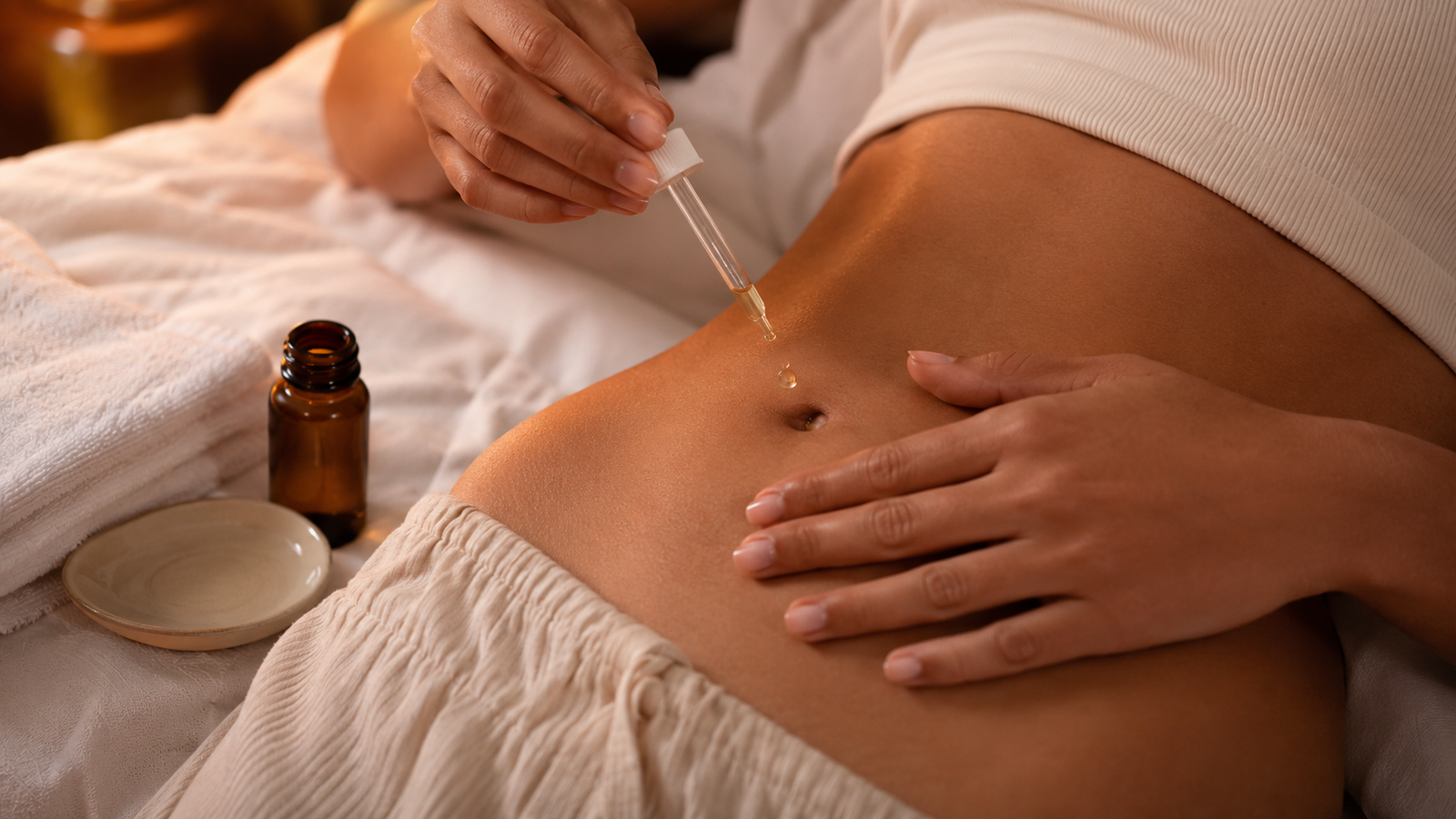
You’ve probably seen videos claiming that putting a few drops of oil in your belly button can give you glowing skin, softer lips, healthier hair, or even improve your overall wellness overnight. It sounds surprisingly simple, which is exactly why the Belly Button Oiling Ayurvedic Beauty Practice has become popular again on social media.
The reality is more interesting than the viral claims. Belly button oiling does have roots in traditional Ayurveda, but many of the beauty benefits circulating online go far beyond what the practice was originally intended for. If you’re curious whether it’s worth adding to your nighttime routine, here’s an honest look at what it can realistically do—and what it probably can’t.
Quick Answer:
The Belly Button Oiling Ayurvedic Beauty Practice is a traditional self-care ritual that involves applying a few drops of oil to the navel before bed. While many people find it relaxing and moisturizing for the skin around the belly, there isn’t strong scientific evidence that oil placed in the belly button directly improves skin, hair, lips, or internal organs. Think of it as a calming wellness ritual rather than a proven beauty treatment.
Why the Belly Button Became Important in Ayurveda

Ayurveda views the navel as a significant point in the body because it represents the center from which nourishment first reached a developing baby through the umbilical cord. After birth, that physical connection disappears, but the area continues to hold symbolic importance within Ayurvedic philosophy.
Traditional Ayurvedic texts describe the navel as an important energy center associated with digestion, balance, and overall well-being. Rather than treating it as a shortcut to cure different concerns, Ayurveda generally emphasizes daily rituals that support the body’s natural balance over time.
This is where modern conversations sometimes become confusing. Ancient Ayurvedic teachings discuss the navel within a much broader lifestyle that includes nutrition, sleep, massage, movement, and herbs. Social media often isolates one small ritual and presents it as though it can replace that entire system.
In my experience, that’s where expectations become unrealistic. A few drops of oil can absolutely feel soothing, but expecting dramatic skin or hair changes from this practice alone usually leads to disappointment.
What Actually Happens When You Put Oil in Your Belly Button?
This is probably the biggest misconception surrounding the Belly Button Oiling Ayurvedic Beauty Practice.
Many online posts claim that the belly button contains special glands or hidden pathways that rapidly absorb oil and distribute it throughout the body. Human anatomy doesn’t support those claims. Once the umbilical cord is cut after birth, the navel becomes a scar. It doesn’t remain connected to internal organs through an open channel capable of transporting oils around the body.
So why do some people genuinely enjoy the practice?
The explanation is much simpler.
The skin inside and around the belly button can become dry, especially during colder months or after frequent bathing. Applying a nourishing oil softens that skin, reduces surface dryness, and can make the area feel more comfortable.
The ritual itself also encourages relaxation. Slowing down for a minute before bed, gently massaging the area, and associating the routine with winding down can create a calming effect that’s completely real—even if it isn’t caused by the oil traveling through the body.
Good to Know: Many wellness rituals feel beneficial because they encourage consistency, mindfulness, and relaxation. Those benefits are still valuable even when they aren’t magical.
Can Belly Button Oiling Improve Your Skin?
This is where expectations need to stay realistic.
There’s no convincing evidence that putting oil inside your belly button directly hydrates the skin on your face or reduces wrinkles. Your facial skin responds primarily to ingredients applied where they’re needed, along with consistent sunscreen use, moisturizing, hydration, sleep, and genetics.
That said, the Belly Button Oiling Ayurvedic Beauty Practice may still have indirect benefits for some people.
If you choose a gentle plant oil and massage it into the surrounding skin, you may notice:
- Softer skin around the navel
- Less tightness caused by dryness
- A relaxing bedtime routine that helps reduce daily stress
- Better consistency with nighttime self-care habits
Stress doesn’t directly cause every skin concern, but it can influence how your skin behaves over time. Creating calming rituals before bed may help support overall well-being, which can indirectly benefit your appearance.
The important distinction is that the oil isn’t traveling from your belly button to your cheeks. The benefits come from the ritual itself and from caring for your skin consistently.
Why Some People Believe It Helped Their Hair and Lips
You’ll find countless personal stories online claiming that belly button oiling transformed dry lips or encouraged thicker hair.
There are a few possible explanations.
First, people often start several healthy habits at the same time. Someone may begin drinking more water, improving their skincare routine, sleeping better, and practicing nightly oiling together. When results appear weeks later, it’s easy to credit the newest ritual instead of the combination of lifestyle changes.
Second, beauty improvements usually happen gradually. Hair grows slowly, skin constantly renews itself, and lips respond quickly to direct moisturizers. These natural timelines can make unrelated improvements seem connected.
Finally, expectations influence perception. When you spend a few quiet minutes caring for yourself every night, you naturally become more aware of positive changes.
None of this means people’s experiences aren’t genuine. It simply means the cause may be different from what social media suggests.
Which Oils Are Traditionally Used for Belly Button Oiling?
Ayurveda doesn’t rely on one “magic” oil. The choice traditionally depends on your skin, the season, and the reason you’re practicing the ritual. Modern wellness routines often simplify this, but different oils have different textures and benefits.
Sesame Oil
Sesame oil is one of Ayurveda’s classic massage oils. It’s rich, deeply emollient, and works well if your skin tends to feel dry.
Because it’s heavier than many plant oils, I usually recommend using only a few drops. Applying too much doesn’t make the ritual more effective—it simply leaves excess oil sitting on the skin.
Coconut Oil
Coconut oil feels lighter and cooler on the skin, making it a common choice during warmer weather.
If your skin tolerates coconut oil well, it can help soften dry skin around the navel. However, people who are prone to body acne may prefer another option, since coconut oil can feel quite occlusive on some skin types.
Sweet Almond Oil
Sweet almond oil is a nice middle ground. It spreads easily, absorbs reasonably well, and leaves the skin feeling comfortable without being overly greasy.
It’s often a good option if you’re trying belly button oiling simply as a relaxing bedtime ritual rather than following traditional Ayurvedic practices exactly.
Jojoba Oil
Although not a traditional Ayurvedic oil, jojoba oil has become popular because it closely resembles the skin’s natural oils.
In my experience, it’s one of the easiest oils for beginners because it feels lightweight and doesn’t leave as much residue on clothing or bedding.
Castor Oil
Castor oil is probably the most exaggerated oil online.
It’s extremely thick and sticky, which makes many people assume it’s more powerful. In reality, its texture doesn’t automatically make it a better beauty treatment. If you choose castor oil, use only one or two drops or dilute it with a lighter carrier oil to avoid an uncomfortable, tacky feeling.
Pro Tip: Choose cold-pressed, fragrance-free oils with as few added ingredients as possible. The simpler the ingredient list, the lower the chance of unnecessary irritation.
How to Practice Belly Button Oiling Safely
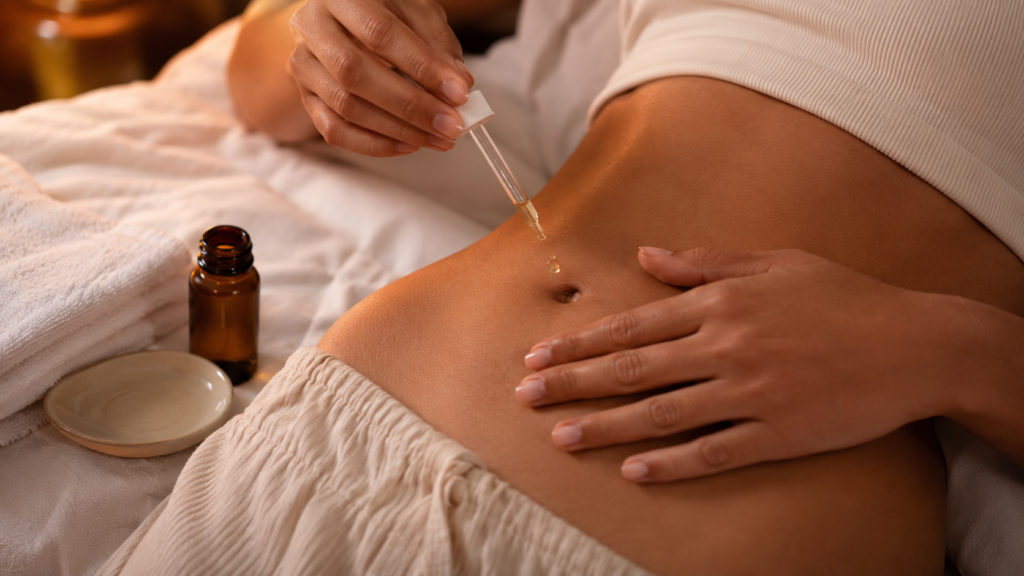
The Belly Button Oiling Ayurvedic Beauty Practice doesn’t need to be complicated. A gentle, consistent approach is far more comfortable than using large amounts of oil.
Step 1: Start With Clean Skin
Wash the area with warm water and a mild cleanser if needed, then dry it completely.
This matters more than many people realize. The belly button naturally collects sweat, lint, and dead skin. Trapping moisture or debris under oil isn’t ideal.
Step 2: Use Only a Few Drops
Place two to four drops of your chosen oil directly into or around the navel.
More isn’t better. Excess oil usually stays on the surface, transfers onto clothing, and doesn’t provide extra benefits.
Step 3: Massage Gently
Using clean fingertips, massage around the belly button in slow circular motions for about one minute.
The massage itself may be one of the most relaxing parts of the routine. Gentle pressure encourages you to slow down before bed, which is something many nighttime routines are missing.
Step 4: Leave It Overnight
Allow the oil to remain on the skin while you sleep.
If you’re worried about staining sheets, let the oil absorb for several minutes before getting dressed or lying down.
Step 5: Repeat Consistently
Two to four nights each week is enough for most people.
Daily use isn’t automatically better. If the skin already feels soft and comfortable, you don’t need to force the routine every night.
Where Belly Button Oiling Fits in Your Evening Routine
One thing I rarely see mentioned is timing.
If you’re already following a nighttime skincare routine, belly button oiling should come at the very end, just before bed. Finish cleansing, facial skincare, body lotion, and lip balm first.
Think of it as a relaxing closing ritual rather than a treatment that needs to interact with the rest of your skincare products.
Unlike facial oils, belly button oil doesn’t need to be layered with serums or moisturizers to work. Its purpose is simply to moisturize the local skin and create a calming bedtime habit.
What This Practice Won’t Do
This is probably the most important section in the article.
The Belly Button Oiling Ayurvedic Beauty Practice won’t detox your body, balance your hormones, reverse aging, grow hair dramatically faster, cure digestive disorders, or permanently fix dry skin on your face.
Those claims aren’t supported by current scientific evidence.
Some people also believe the oil reaches internal organs through hidden pathways in the navel. Modern anatomy doesn’t support that explanation.
That doesn’t mean the ritual has no value.
Many wellness habits survive for centuries because they help people slow down, care for themselves, and build consistent routines. Those benefits are worth appreciating on their own without turning them into miracle claims.
Watch Out: Don’t apply oil to an infected, irritated, bleeding, or recently pierced belly button. If you notice pain, swelling, unusual discharge, or a persistent odor, skip the oil and have the area evaluated by a healthcare professional rather than trying to treat it at home.
Who Might Enjoy the Belly Button Oiling Ayurvedic Beauty Practice?

Not every beauty ritual has to produce dramatic before-and-after results to be worthwhile. In my experience, the Belly Button Oiling Ayurvedic Beauty Practice is most enjoyable for people who appreciate slow, intentional self-care rather than quick fixes.
You may like this ritual if you:
- Enjoy evening wellness routines that help you unwind.
- Have dry skin around your navel that could use extra moisture.
- Like traditional Ayurvedic practices and want to explore them respectfully.
- Prefer simple rituals that encourage consistency instead of adding another complicated skincare step.
On the other hand, if you’re hoping it will replace a proven skincare routine, you’re likely to be disappointed. A fragrance-free moisturizer, daily sunscreen, and targeted skincare ingredients will have a much bigger impact on your skin than belly button oiling alone.
Common Mistakes That Can Make the Practice Less Pleasant
Most people don’t have problems with belly button oiling itself—they run into issues because of how they do it.
Using Too Much Oil
A few drops are enough. Filling the belly button with oil doesn’t increase absorption or make the ritual more effective. It usually just leaves an oily residue on clothing and bedding.
Skipping Basic Hygiene
The belly button is a small fold in the skin where sweat, lint, and dead skin cells can collect. Applying oil without cleaning the area first may trap debris against the skin.
A quick wash and thorough drying before oiling is a simple habit that makes a noticeable difference.
Choosing Highly Fragranced Oils
Essential oils and heavily scented blends are popular online, but they aren’t always the best choice for such a sensitive area.
If you’re trying this practice for the first time, stick with a plain carrier oil that contains minimal added ingredients.
Expecting Overnight Results
Social media has a way of making every beauty ritual sound instant.
In reality, if you notice any benefits, they’ll most likely be limited to softer skin around the navel and the relaxing effect of a consistent bedtime routine. That’s still worthwhile—it just isn’t the dramatic transformation many viral videos promise.
Is There Any Scientific Evidence Behind Belly Button Oiling?
This is where traditional practice and modern research take different paths.
Ayurveda has valued oil massage and daily self-care rituals for centuries. There is also a growing body of research suggesting that massage, relaxation, and consistent self-care habits can support stress management and overall well-being.
However, there isn’t strong clinical evidence showing that placing oil specifically inside the belly button improves skin quality, stimulates hair growth, hydrates lips, or delivers nutrients throughout the body.
That doesn’t automatically make the ritual meaningless.
Many traditional wellness practices continue because they help people feel calmer, more connected to their routines, and more mindful before sleep. Those experiences are real, even if the mechanism is different from what viral claims suggest.
I think that’s the healthiest way to approach the Belly Button Oiling Ayurvedic Beauty Practice: enjoy it for what it realistically offers instead of expecting it to solve concerns that are better addressed with evidence-based skincare or medical care.