You can’t keep pool water completely away from your hair unless you keep your head above water. A swim cap helps, but it isn’t a waterproof seal. The realistic goal is to limit how much chlorinated water reaches the hair, remove pool residue promptly, and restore the lubrication that keeps strands flexible.
This pool proof hair routine chlorine damage prevention guide works for occasional pool days and regular swim training. It covers what to do before entering the water, how to wash afterward, which products are worth considering, and why pale hair sometimes turns green.
A useful pool-proof routine starts before you enter the water. Wet your hair thoroughly with clean water, apply a small amount of conditioner or pre-swim protectant, and wear a properly fitted swim cap. After swimming, rinse immediately, wash with a swimmer’s or chelating shampoo when needed, and condition the lengths. Prevention matters more than trying to repair severely dried-out hair later.
How Pool Water Actually Affects Your Hair
Chlorine is used to control harmful organisms in pool water, so the goal isn’t to treat it like a mysterious toxin. The hair problem comes from repeated exposure to treated water, pool minerals, sunlight, and mechanical friction. Hair fibers are covered by overlapping cuticle cells that protect the inner cortex.
Bleaching, coloring, heat styling, and everyday wear can lift or damage that cuticle. Once hair becomes porous, it absorbs water more readily and loses internal moisture faster during drying. Repeated pool exposure can leave the surface rougher, making hair feel stiff, tangled, or unusually dry.
The effect is often more noticeable on bleached, highlighted, relaxed, permed, naturally dry, or tightly curled hair because these strands may already have a more vulnerable surface. Pool water also doesn’t deserve all the blame for rough post-swim hair. Sun exposure, tight hairstyles, rubbing with towels, and repeatedly pulling a swim cap over dry strands can add substantial friction.
The Pool Proof Hair Routine for Chlorine Damage Prevention
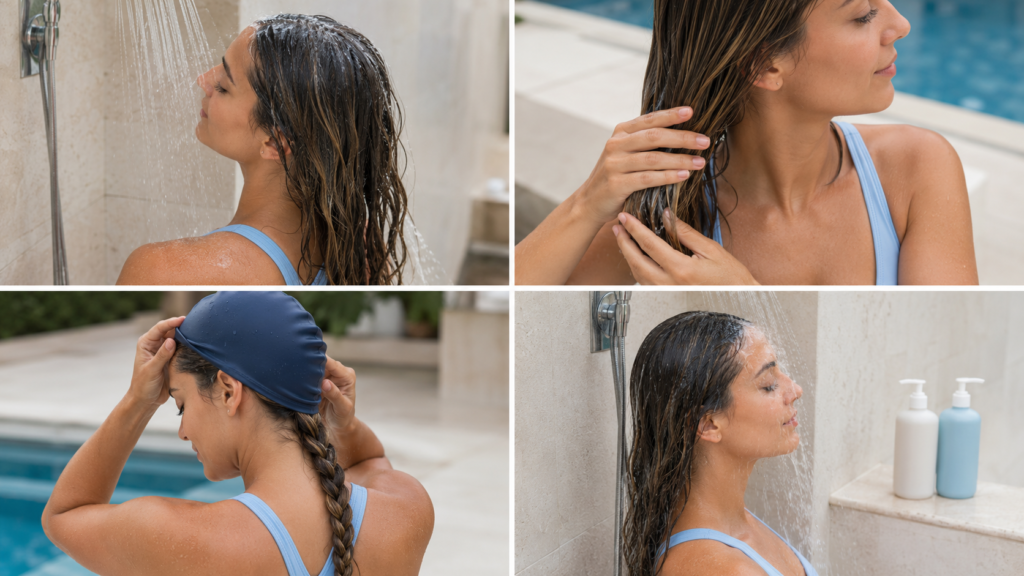
The most effective routine starts before you enter the pool. Once dry, porous hair has absorbed chlorinated water and mineral deposits, shampoo can remove residue, but it can’t instantly return the strand to its previous condition.
1. Saturate Your Hair With Fresh Water First
Rinse your hair under a shower until it’s thoroughly wet, including the underneath layers and ends. Hair fibers swell as they absorb water. Starting with clean water leaves less room for pool water to enter as freely, although it won’t create a completely impermeable barrier.
A quick splash over the top isn’t enough for thick, curly, or dense hair. Separate the hair with your fingers and let the water reach the scalp and interior sections. This usually takes less than a minute but makes a noticeable difference in how the hair feels afterward.
I used to skip this step because it seemed too simple to matter. My ends consistently felt rougher after those swims, especially when I let dry highlighted hair go straight into the pool.
2. Apply a Light Pre-Swim Barrier
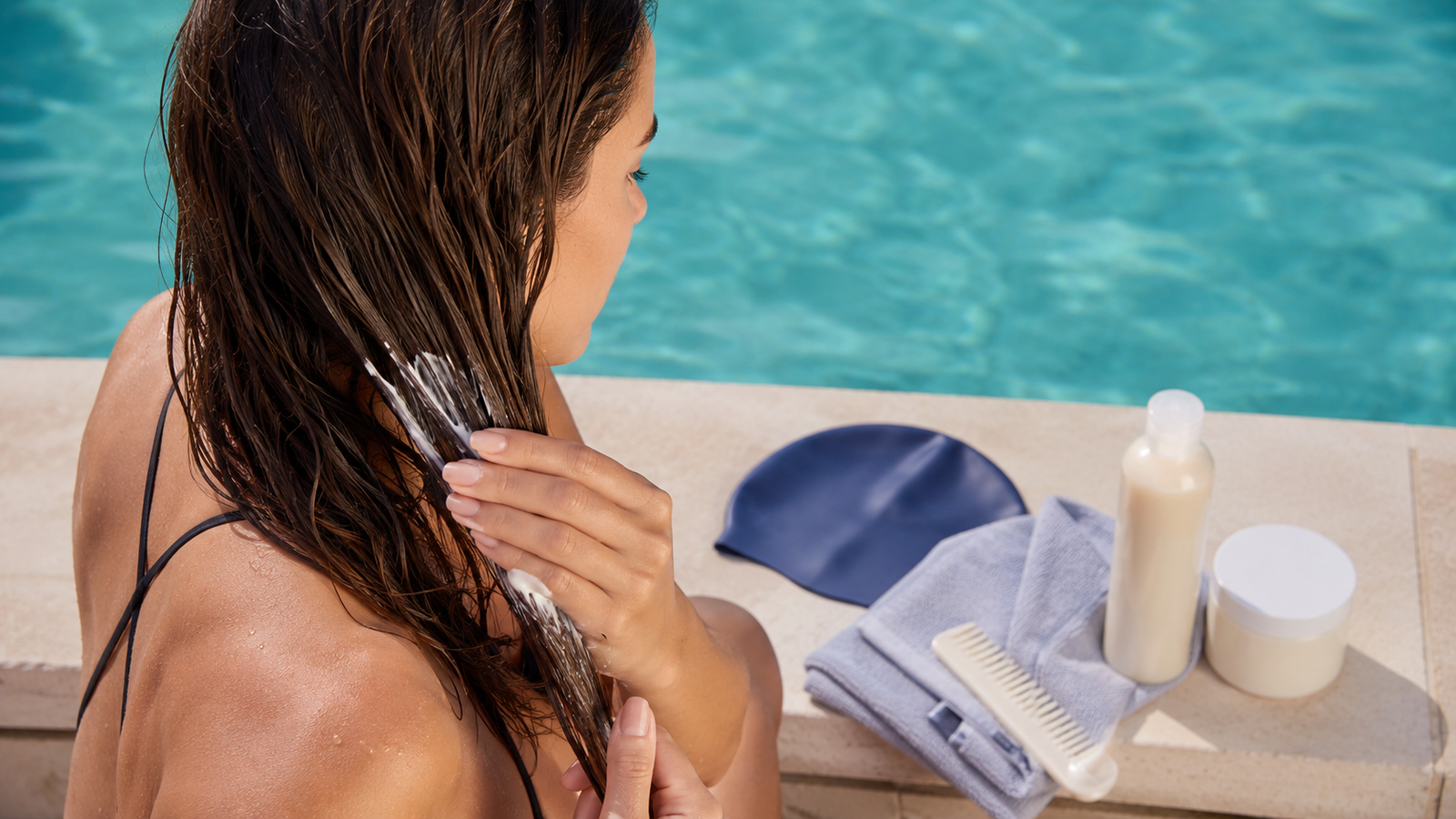
Smooth a small amount of regular conditioner, leave-in conditioner, or a dedicated pre-swim product through the mid-lengths and ends. Focus on older, more porous areas rather than coating the scalp heavily. Conditioning agents reduce friction and help create a temporary film over the cuticle.
They don’t neutralize every pool chemical, but they can slow water contact and make the hair easier to detangle afterward. AquaGuard Pre-Swim Hair Defense is an authentic US-available option specifically made for use before swimming.
A regular silicone-based conditioner can also work if your pool permits it. Some facilities discourage heavy oils or excess conditioner because they can affect water quality, so use a modest amount and check the rules.
Pure coconut or olive oil is often recommended online, but I don’t consider a heavy oil coating the best public-pool option. It can make caps slide, leave residue in the water, and require aggressive shampooing later—which defeats part of the protective purpose.
Pro Tip: Apply enough product to make the lengths feel smooth, not visibly white, greasy, or dripping. More product doesn’t automatically provide more protection.
3. Secure the Hair Without Creating New Breakage
Gather long hair into a low braid, compact bun, or several flat twists before putting on your cap. Use a soft, snag-free tie instead of an elastic with a metal join. Avoid pulling fragile edges into an extremely tight style.
Chlorine may contribute to dryness, but repeated tension can cause breakage around the hairline independently of pool exposure. If your hair is very long, don’t pile a bulky bun directly on top of your head. A flatter style distributes the hair more evenly and allows the cap to sit closer to the scalp.
4. Wear a Properly Fitted Silicone Swim Cap
A swim cap reduces direct water flow and keeps the hair contained, but it won’t keep every strand dry. Water normally enters around the edges, especially during longer or more active swims. Silicone caps are generally smoother and less likely to pull hair than traditional latex.
People with thick, curly, coily, braided, or loc’d hair may need a long-hair or extra-volume cap rather than forcing their hair into a standard size. The American Academy of Dermatology includes wearing a swim cap, rinsing immediately, using a swimmer’s shampoo, and following with conditioner among its recommendations for swimmers.
Slide the cap over wet, conditioned hair slowly. Don’t snap the edges against the hairline, and remove it by lifting the seal before pulling it backward.
Watch Out: A painfully tight cap isn’t more protective. If it pinches your hairline, causes a headache, or repeatedly tears out strands, change the size or cap design.
5. Rinse Immediately After Leaving the Pool
Don’t let pool water dry completely in your hair while you sit in the sun or drive home. Rinse with clean, lukewarm water as soon as possible, even if you plan to shampoo later. The first rinse removes a meaningful amount of surface residue before it has more time to dry onto the hair.
Pay attention to the nape, underneath layers, and the area around the hairline where the cap sits. Avoid very hot water. Heat can increase swelling and leave an already roughened cuticle feeling even less manageable. Squeeze the hair gently instead of twisting or wringing it.
6. Choose Between Regular, Clarifying, and Chelating Shampoo
These shampoos don’t all perform the same job. A regular gentle shampoo removes sweat, oil, and routine dirt. A clarifying shampoo removes heavier cosmetic buildup, while a chelating or swimmer’s formula is designed to target mineral deposits and pool residue more effectively.
If you swim occasionally and rinsed well beforehand, your normal shampoo may be enough. Frequent swimmers, blondes developing a dull or green cast, and anyone who can still smell the pool after washing may benefit from a swimmer’s shampoo.
Ultra Swim Chlorine Removal Shampoo is an affordable US option formulated to remove chlorine buildup and oxidized metal deposits. Malibu C Swimmers Wellness Shampoo is another established swimmer-specific formula intended to address chlorine, copper, and mineral buildup.
Apply shampoo mainly to the scalp and work the lather gently through the lengths while rinsing. Don’t scrub the ends together. One thorough wash is usually better than two aggressive rounds.
A chelating shampoo can be drying when overused, particularly on bleached or tightly curled hair. Occasional swimmers may need it only after pool exposure, while daily swimmers should judge frequency by buildup, texture, and the product’s directions.
7. Condition for Slip, Not Just Softness
After shampooing, apply conditioner from the mid-lengths to the ends. Look for fatty alcohols such as cetyl or cetearyl alcohol, conditioning agents such as behentrimonium chloride, and lubricating silicones such as amodimethicone or dimethicone.
These ingredients reduce friction between strands. That matters because wet hair is easier to stretch and break, particularly when bleach, chemical processing, or repeated pool exposure has weakened it.
Leave the conditioner on for the directed time, then detangle with your fingers or a wide-tooth comb. Start at the ends and work upward in small sections. Don’t drag a brush from the roots through a knot.
A deep conditioner can improve softness and manageability, but it can’t permanently fuse split ends back together. In my experience, leaving a regular conditioner on for three to five minutes often works better than buying an expensive mask and using it inconsistently.
8. Dry Gently and Keep Heat Low
Press excess water out with a microfiber towel or soft cotton T-shirt. Rubbing creates friction along the raised cuticle and can turn minor tangling into visible frizz or breakage. Apply a lightweight leave-in conditioner to the ends if they still feel rough.
Air-dry when practical, or use a blow-dryer on low or medium heat with a heat protectant. Avoid flat-ironing immediately after every pool session. If you swim several times per week, constant high-heat styling may cause more cumulative damage than the pool itself.
Choose a simple braid, twist-out, loose bun, or low-heat style between sessions. The less mechanical and heat stress you add after swimming, the easier it becomes to keep the hair flexible and manageable.
Why Blonde Hair Turns Green After Swimming
Chlorine itself usually isn’t the green pigment. Copper may enter pool water from pipes, equipment, source water, or copper-based pool treatments. Oxidized copper can bind to the hair surface, where it becomes especially visible on blonde, gray, white, highlighted, or very porous hair.
That distinction matters because purple shampoo is designed to counter yellow tones, not remove copper deposits. It may alter the overall tone without solving the underlying buildup. Use a chelating swimmer’s treatment made to remove metals rather than applying ketchup, baking soda, lemon juice, or undiluted vinegar.
Acidic and abrasive DIY remedies may leave compromised hair rougher, and their metal-removal ability is inconsistent. A green cast that remains after one gentle chelating treatment may require a salon service. Don’t repeat strong treatments several times in one day.
Adjust the Routine to Your Hair Type
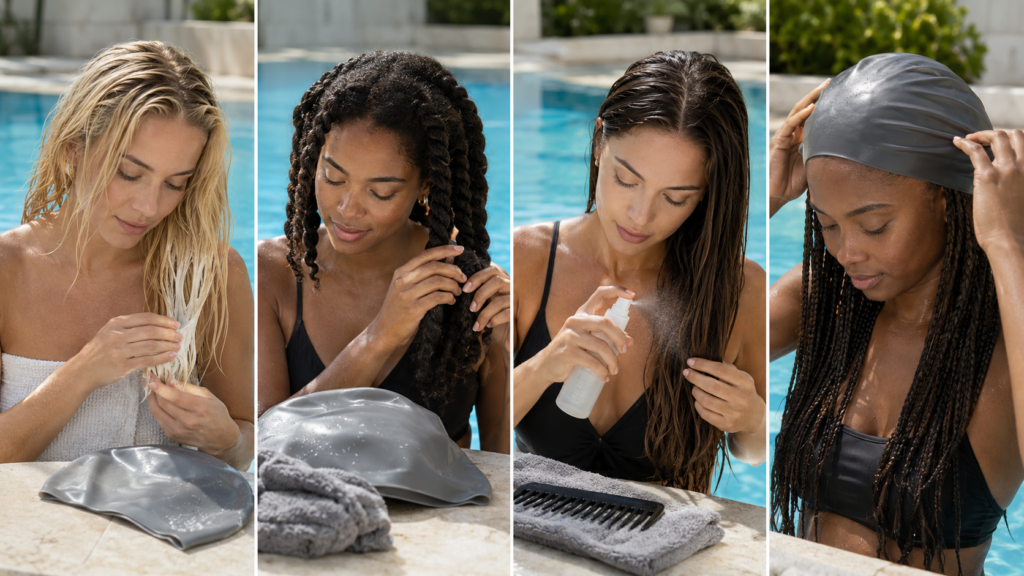
Bleached, Highlighted, or Color-Treated Hair
This hair usually needs the strictest protection because chemical processing increases porosity. Always pre-wet, use a light protective conditioner, and wear a cap. Choose a color-safe swimmer’s shampoo and follow with a richer conditioner.
Wait until the hair feels normal before adding another strong clarifying treatment. If you’ve recently bleached or colored it, ask your stylist how long to wait before swimming because the answer depends on the service and your hair’s condition.
Curly and Coily Hair
Focus on reducing both dryness and tangling. Wet the hair in sections, apply conditioner evenly, and use a cap designed for extra volume. After swimming, detangle only when the hair has enough conditioner and slip.
You may not need to shampoo the full lengths after every short swim, but the scalp and hair still need a prompt fresh-water rinse. Persistent chlorine odor, stiffness, or dullness signals that water alone isn’t removing enough residue.
Fine or Low-Porosity Hair
Use a lightweight pre-swim spray or a very small amount of conditioner. Heavy creams and oils can collapse fine hair and may create buildup that requires stronger cleansing.
Condition only where needed after shampooing. A light rinse-out formula may give sufficient slip without leaving the roots flat.
Braids, Locs, and Protective Styles
Saturate the style with clean water before swimming and use a cap large enough to avoid compression. Rinse for longer afterward because dense styles can hold pool water internally.
Squeeze out water gently and allow the style to dry completely, including the roots. Constant dampness can contribute to scalp discomfort, odor, and buildup. Heavy creams inside dense styles may also be difficult to remove.
The Weekly Reset for Frequent Swimmers
If you swim three or more times per week, schedule one more thorough wash based on how your hair behaves rather than following an inflexible calendar. Use a swimmer’s or chelating shampoo, condition deeply, and inspect the ends for tangles and splitting.
Protein treatments can temporarily improve the feel and strength of some damaged hair, but more protein isn’t always better. Hair that becomes unusually hard, rigid, or straw-like may need fewer strengthening products and more conditioning slip.
Bond-building treatments can be useful for hair already damaged by bleach, color, or heat, but they aren’t chlorine shields. A product such as the K18 Leave-In Molecular Repair Hair Mask is designed for chemical and heat damage, not as a substitute for rinsing and chelating after swimming.
Good to Know: If the ends remain rough after conditioning, they may be weathered or split rather than simply dry. A small trim often improves manageability more honestly than another expensive mask.
What This Routine Can and Can’t Prevent
A consistent pool proof hair routine chlorine damage prevention plan can reduce dryness, mineral buildup, tangling, discoloration, and friction-related breakage. Hair should feel easier to comb and less coated after swimming.
It can’t make a swim cap waterproof, restore split ends, or make heavily bleached hair immune to repeated exposure. It also won’t fix scalp burning, sores, sudden shedding, or severe breakage.
Stop using any product that causes persistent itching, swelling, or burning. See a dermatologist if scalp irritation continues after leaving the pool or if you notice unusual hair loss rather than ordinary breakage.