Social media makes Pilates Face look like the answer to sagging skin, promising a sharper jawline and lifted cheeks after just a few minutes of daily exercises. Those dramatic before-and-after videos are certainly eye-catching, but they rarely tell the whole story. The truth is that facial exercises can be a useful addition to your routine, but only if you understand what they’re actually capable of.
Pilates Face focuses on controlled facial movements, better posture, and reducing muscle tension rather than forcing your face through exaggerated exercises. It won’t replace cosmetic procedures or reverse significant skin laxity, but it may help your face appear more relaxed, balanced, and subtly more defined when practiced consistently alongside a good skincare routine.
Quick Answer:
Pilates Face is a facial exercise method inspired by the principles of body Pilates. It emphasizes slow, controlled muscle movements, good posture, and relaxation instead of repetitive facial workouts. While it won’t permanently lift loose skin, it may improve muscle awareness, reduce facial tension, and create a fresher, more rested appearance over time.
What Is Pilates Face?
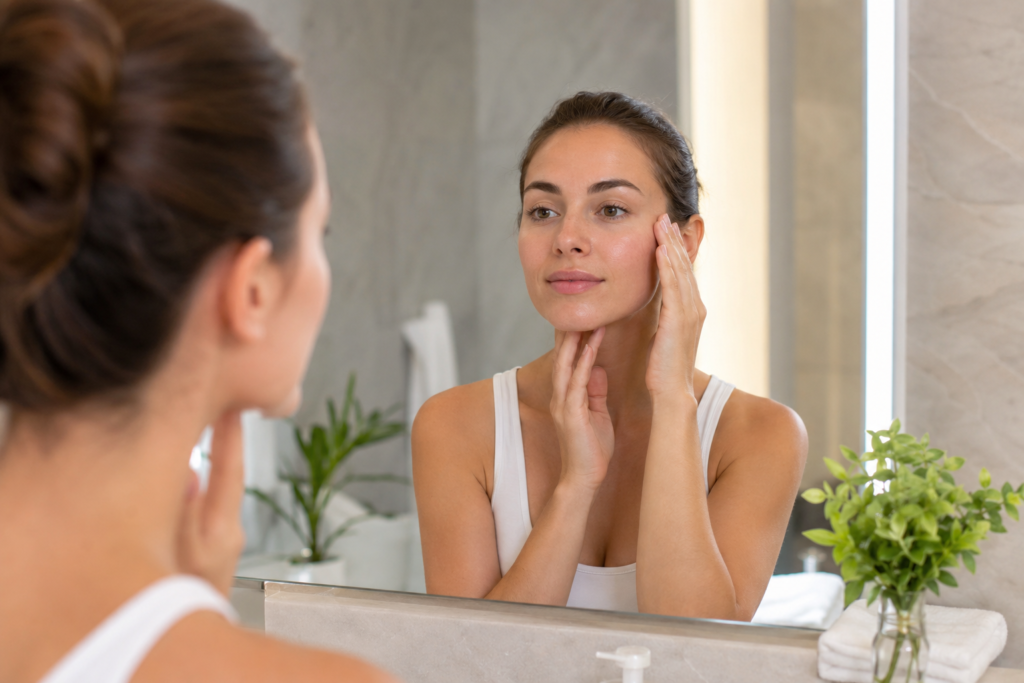
Pilates Face applies the same ideas that make traditional Pilates effective: precision, control, alignment, and consistency. Instead of making exaggerated facial expressions over and over, the goal is to activate specific facial muscles while teaching others to relax. This balanced approach is one reason the trend has gained attention among people looking for a more natural way to support their appearance.
One thing many videos overlook is that your face isn’t meant to be “trained” like your arms or legs. Some facial muscles become weak with age, while others become overactive from daily habits like squinting, frowning, or clenching your jaw. Pilates Face tries to restore that balance instead of making every muscle work harder.
Why Facial Muscles Behave Differently From Body Muscles
Facial muscles are unique because many of them attach directly to the skin instead of connecting one bone to another. That design allows you to create expressions, but it also means they respond differently to exercise than larger muscles throughout the body. You shouldn’t expect dramatic muscle growth or dramatic lifting from facial workouts alone.
Another important difference is that facial aging isn’t caused by muscles alone. Collagen naturally decreases over time, fat pads shift, and skin gradually loses elasticity. Facial exercises may support muscle control, but they can’t rebuild collagen or tighten loose skin on their own. That’s why realistic expectations matter from the beginning.
Why the Pilates Face Trend Is Different From Traditional Face Yoga
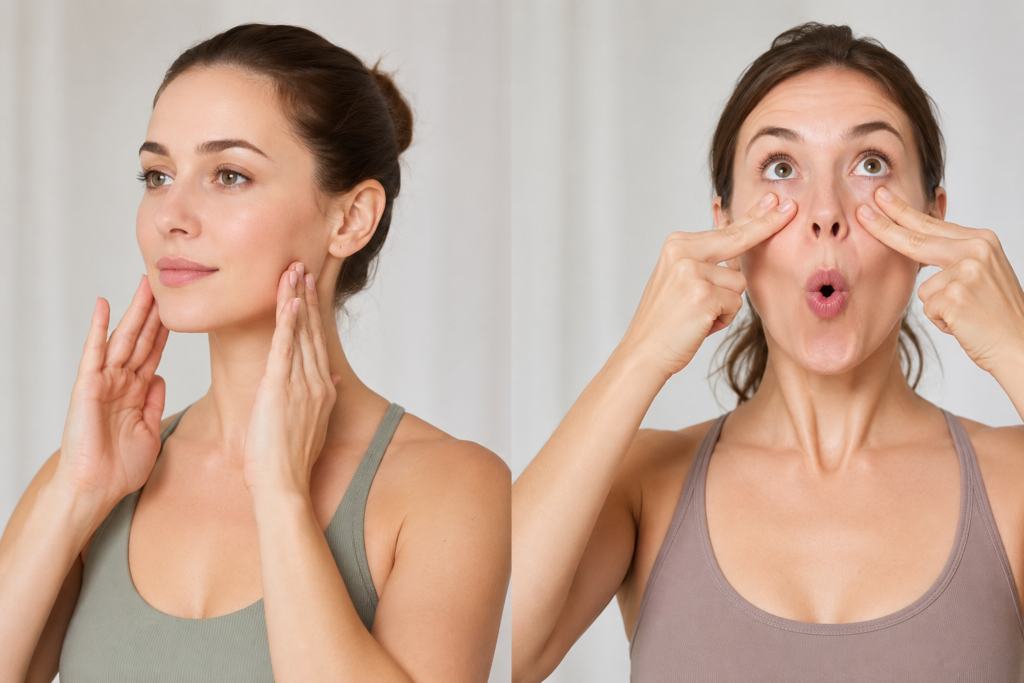
Although people often use the terms interchangeably, Pilates Face and face yoga aren’t exactly the same. Traditional face yoga routines sometimes rely on high repetitions or exaggerated expressions, while Pilates Face usually emphasizes controlled movement, proper breathing, and good posture.
In my experience, this slower approach feels much more comfortable over time. I tried intense facial exercise routines years ago and noticed my jaw felt tighter after long sessions. Shorter, more controlled movements combined with conscious relaxation gave me better results and were much easier to stick with consistently.
What Benefits Can You Realistically Expect?
The biggest improvement most people notice isn’t an instant lift but better facial awareness. Once you become more conscious of how often you clench your jaw or raise your eyebrows, you naturally start relaxing those muscles throughout the day. That alone can make your face appear softer and less tired.
Regular practice may also improve circulation for a short time after each session, which is why your skin can look slightly brighter immediately afterward. This temporary boost shouldn’t be confused with permanent lifting, but it can contribute to a healthier-looking complexion when combined with good skincare, hydration, and daily sunscreen.
Some people also notice subtle improvements in facial symmetry because they become aware of muscles they rarely use. Rather than trying to make both sides of the face perfectly identical, the exercises encourage balanced muscle engagement, which often creates a more natural appearance.
Good to Know: A sharper-looking jawline after facial exercises is often partly the result of improved posture and reduced jaw tension rather than stronger facial muscles alone.
What Pilates Face Cannot Do
It’s easy to understand why this trend has become so popular, but some online claims go far beyond what facial exercises can realistically achieve. Pilates Face cannot replace a facelift, remove deep wrinkles, rebuild lost collagen, or permanently tighten significantly loose skin. Those changes involve structural changes beneath the skin that exercises simply can’t reverse.
If a video promises dramatic lifting after one session, remember that lighting, facial expression, hydration, camera angles, and temporary muscle engagement can all influence how the face looks. That’s why it’s better to judge your progress over several weeks instead of comparing yourself to carefully staged social media clips.
A Beginner-Friendly Pilates Face Routine
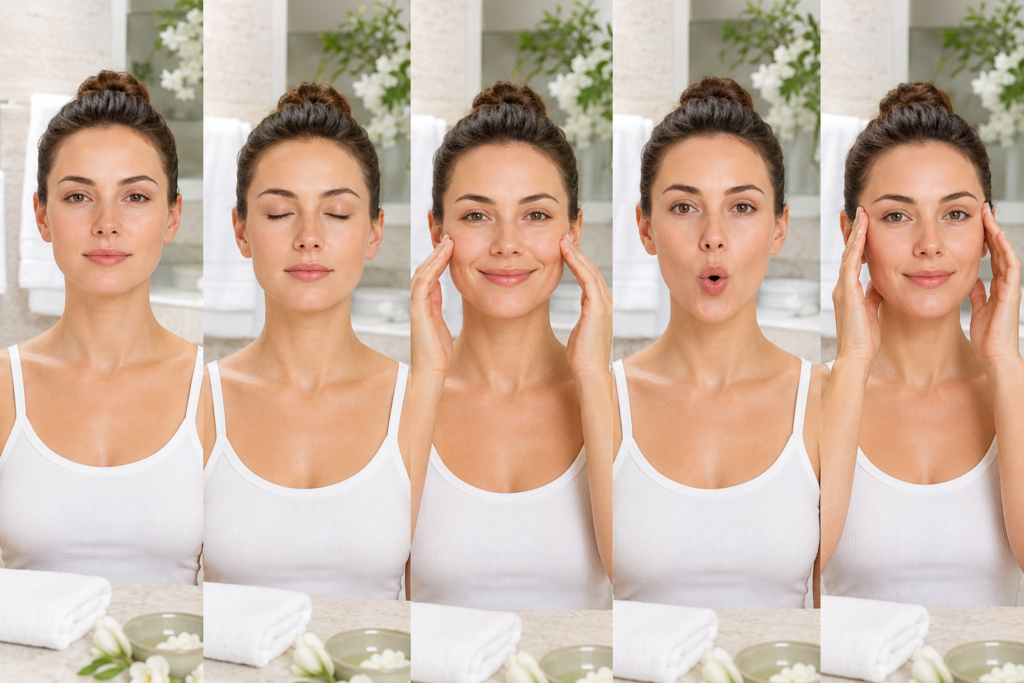
Step 1: Start With Good Posture
Sit comfortably with your shoulders relaxed and your neck long instead of letting your head lean forward. This position allows your facial muscles to work from better alignment and reduces unnecessary strain through the jaw and neck. Many people focus only on their face, but improving posture is often one of the easiest ways to create a naturally more defined profile.
Step 2: Relax Before You Strengthen
Before beginning any facial movements, take a few slow breaths and consciously relax your forehead, jaw, and around your mouth. Many people carry tension in these areas without realizing it, especially after long hours at a computer or looking down at a phone. Starting from a relaxed position helps you activate the intended muscles instead of making already tight areas work even harder.
Step 3: Practice Gentle Cheek Lifts
Smile softly without squinting your eyes, then imagine lifting your cheeks upward rather than pulling them outward. Hold the position for a few seconds before relaxing completely and repeating the movement several times. The goal is controlled muscle engagement, not creating the biggest smile possible or forcing the muscles to work until they feel tired.
Step 4: Activate the Muscles Around Your Mouth
Form a small, relaxed “O” shape with your lips while keeping your chin, forehead, and neck as relaxed as possible. It’s common for beginners to tense their entire face during this exercise, but concentrating on one muscle group at a time produces better control and makes the routine feel much more comfortable.
Step 5: Finish With Gentle Massage
Use clean fingertips to lightly massage your temples, cheeks, and jawline for one or two minutes after completing the exercises. This helps release any remaining muscle tension and leaves your face feeling relaxed instead of tight. Finishing with gentle massage also encourages you to slow down, making the routine feel more like self-care than a workout.
Pro Tip: Five to ten minutes most days of the week is usually more effective than one long session once or twice a week. Consistency matters much more than intensity when it comes to facial exercises.
Where Pilates Face Fits Into Your Skincare Routine
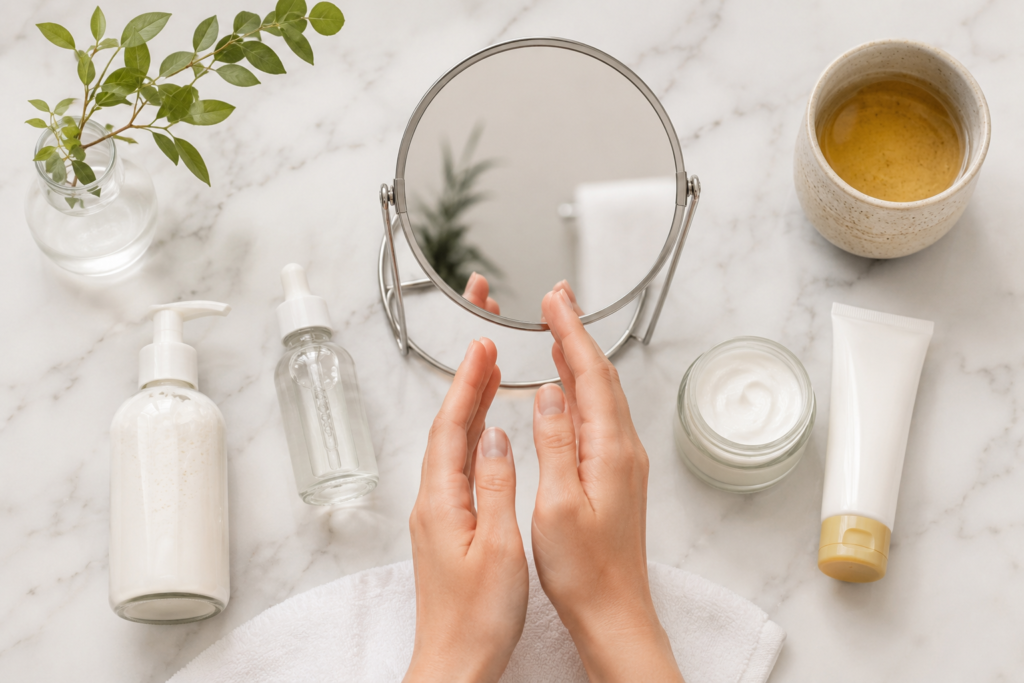
Pilates Face works best alongside a consistent skincare routine rather than replacing one. Perform the exercises after cleansing while your skin has a little slip from a lightweight hydrating serum or moisturizer if desired. Once you’ve finished, apply your moisturizer and always follow with sunscreen during the day to help protect the collagen you’re trying to preserve.
If you use strong exfoliating acids or retinoids at night, it’s usually more comfortable to complete your facial exercises before applying those products. Rubbing or stretching freshly treated skin isn’t necessary and may increase irritation in people with sensitive skin.
How Long Does It Take to See Results?
Most people notice changes in how their face feels before they notice changes in how it looks. Reduced jaw tension and better muscle awareness can develop within the first couple of weeks, while subtle improvements in facial definition generally require consistent practice over several weeks or months. Results also depend on age, genetics, lifestyle, and how much muscle tension you carry to begin with.
It’s worth remembering that Pilates Face isn’t designed to deliver dramatic transformations. Think of it as a long-term habit that supports healthy facial movement in the same way stretching supports flexibility throughout the rest of your body.
Who Is Most Likely to Benefit?
Pilates Face tends to suit people who want a natural addition to their skincare routine and are comfortable with gradual improvements instead of dramatic changes. It can be especially helpful if you regularly clench your jaw, notice tension headaches related to facial muscles, or simply want to become more aware of everyday facial habits.
If your main concern is significant skin laxity or deep wrinkles, facial exercises alone probably won’t meet your expectations. In those situations, it’s important to understand their limitations rather than expecting them to replace professional treatments.
Watch Out: Stop the exercises if they cause pain, headaches, or increased jaw discomfort. Facial movements should feel controlled and comfortable, not strained or painful.
Is Pilates Face Worth Trying?
For most healthy adults, Pilates Face is a reasonable trend to explore as long as expectations stay realistic. It encourages better posture, helps many people reduce unnecessary facial tension, and can become a relaxing part of a daily self-care routine. Those benefits may seem subtle, but small improvements often add up when practiced consistently.
What makes the biggest difference isn’t chasing dramatic lifting claims but building habits that support healthy skin over the long term. Pairing facial exercises with sunscreen, a balanced skincare routine, good sleep, and hydration will always have a greater impact than relying on exercises alone.