
Most people think glass skin comes from using one magical serum. I used to believe that too.
After trying countless routines over the years, I learned that the signature Korean glow has surprisingly little to do with one hero product. It’s the result of consistent habits that keep your skin hydrated, calm, and healthy enough to reflect light naturally.
That’s also why so many glass skin routines disappoint people. They copy the product list but miss the reason behind each step. Layering ten products won’t help if your skin barrier is irritated or you’re skipping sunscreen every morning.
The Korean Glass Skin Routine That Actually Works isn’t about perfection. It’s about giving your skin exactly what it needs—no more, no less.
Quick Answer
The Korean Glass Skin Routine That Actually Works focuses on building healthy, deeply hydrated skin through gentle cleansing, layered hydration, barrier support, and daily sun protection. Rather than chasing instant shine, these seven steps help improve texture, moisture, and brightness over time, creating the smooth, light-reflecting finish often called “glass skin.”
What Makes Glass Skin Different?
Glass skin isn’t oily skin.
It isn’t glittery makeup either.
The goal is skin that looks naturally smooth, hydrated, even-toned, and healthy enough to reflect light without appearing greasy. That usually comes from improving your skin barrier rather than chasing temporary shine.
If your skin feels tight after washing, flakes around your nose, or becomes irritated easily, your first priority isn’t adding another serum. It’s rebuilding hydration
The Korean Glass Skin Routine That Actually Works: 7 Steps
Step 1. Start With a Gentle Cleanser—Not a Squeaky-Clean Face
Every good glass skin routine starts with clean skin, but there’s a difference between clean and stripped.
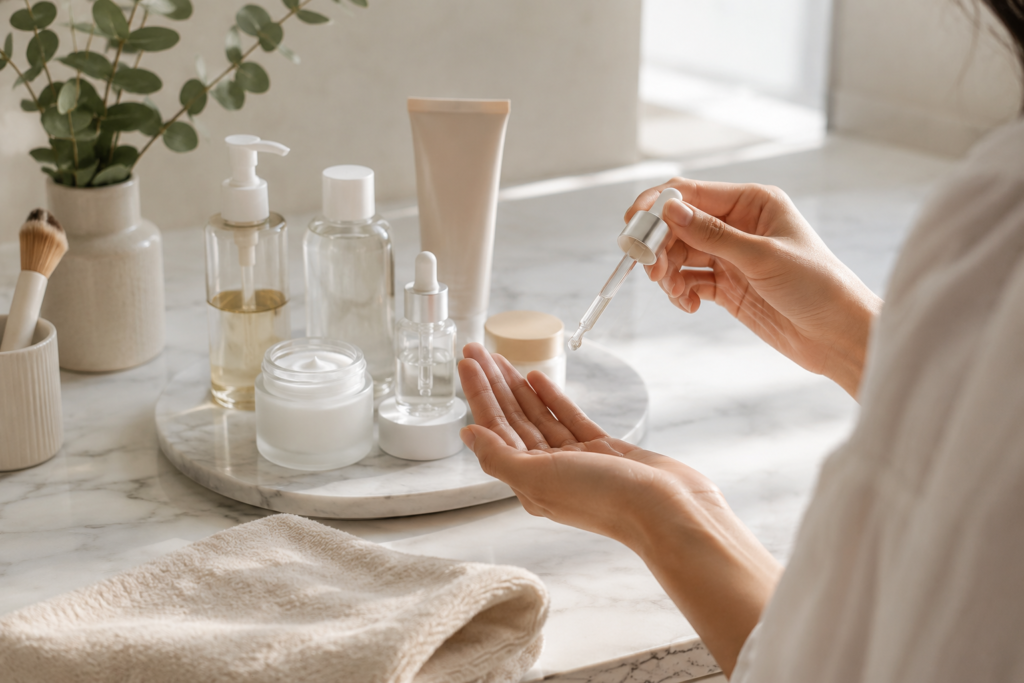
Choose a gentle, low-foaming cleanser that removes dirt, sunscreen, and excess oil without leaving your face feeling tight afterward. If you wore heavy makeup or water-resistant sunscreen, begin with an oil-based cleanser before your regular cleanser in the evening.
Many people mistake that “tight” feeling for cleanliness. In reality, it’s often a sign you’ve removed too much of your skin’s natural protective oils.
Good to Know: If your skin feels comfortable after cleansing—not dry or squeaky—you’ve probably found the right cleanser.
Step 2. Rehydrate Immediately With a Hydrating Toner
This is where Korean skincare starts to feel different.
A hydrating toner isn’t meant to clean leftover dirt. Its job is to replace the water your skin loses during cleansing and prepare it for the next layers.
Look for ingredients that attract water, such as humectants, while avoiding formulas that contain a high amount of drying alcohol.
One trick I’ve learned over the years is timing. Don’t wait until your face is completely dry. Applying toner to slightly damp skin helps lock in more hydration before moisture evaporates.
If your home has very dry air, follow with moisturizer fairly quickly. Humectants work best when there’s moisture available to hold onto.
Step 3. Layer a Hydrating Serum Instead of Chasing Strong Actives
The biggest mistake I made early on was assuming stronger ingredients meant faster results.
Glass skin usually comes from hydration first, not aggressive exfoliation.
Choose a lightweight hydrating serum that supports moisture and the skin barrier. Ingredients that attract water or help strengthen the barrier tend to work well for most skin types.
Apply one or two thin layers rather than one heavy application.
Thin layers absorb more evenly and reduce the sticky feeling that often comes from applying too much product at once.
Pro Tip: If your serum starts pilling under moisturizer, you’re probably using more than your skin can absorb.
Step 4. Exfoliate Just Enough to Reveal Smooth Skin
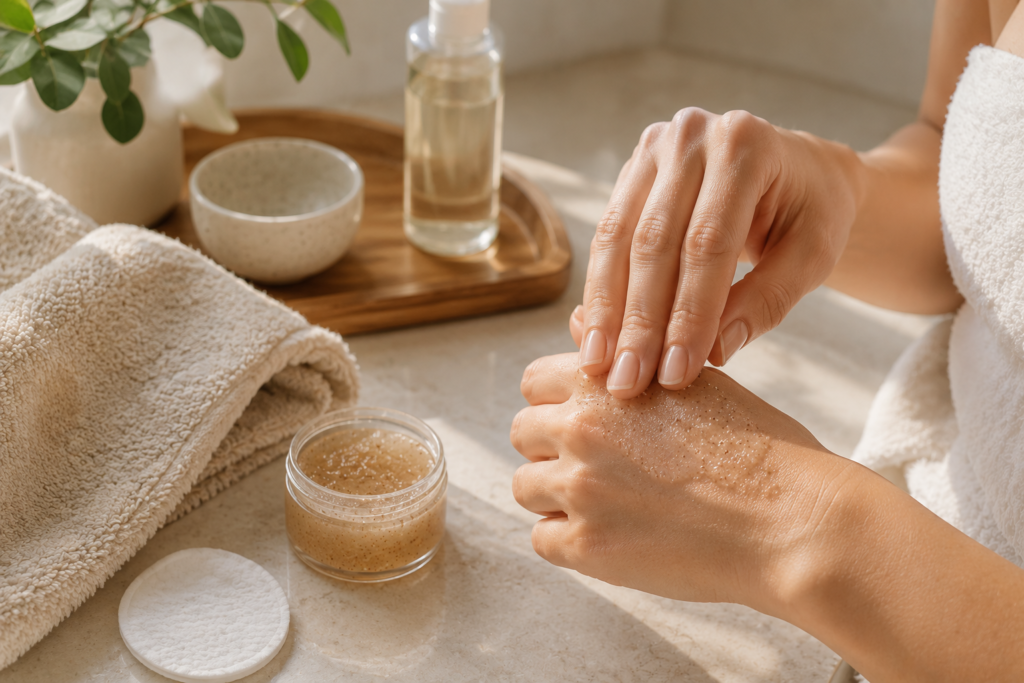
Smooth skin reflects light better.
That’s one reason gentle exfoliation plays a role in the Korean Glass Skin Routine That Actually Works—but only when it’s done carefully.
Removing dead skin cells helps improve texture and allows hydrating products to penetrate more evenly. If you’re unsure about the safest technique, read our How to Exfoliate Your Face For Glowing Skin guide before adding exfoliation to your routine.
Most people don’t need daily exfoliation. Once or twice a week is enough for many skin types, while sensitive skin often benefits from even less.
Over-exfoliation is one of the fastest ways to lose that healthy glow. Instead of smooth skin, you end up with redness, irritation, and dehydration.
Watch Out: If your skin suddenly burns when applying products that never bothered you before, reduce or pause exfoliation until your skin feels comfortable again.
Step 5. Seal Everything In With a Barrier-Supporting Moisturizer
Hydration without moisturizer is like pouring water into a bucket with holes.
A moisturizer helps reduce water loss while supporting your skin barrier throughout the day or overnight.
Look for a fragrance-free formula that contains barrier-supporting ingredients and matches your skin type.
If your skin is oily, a lightweight gel texture often feels more comfortable.
If it’s dry, a richer cream usually provides longer-lasting hydration.
Many people skip moisturizer because they think it causes oily skin. Ironically, dehydrated skin sometimes produces even more oil trying to compensate.
Step 6. Never Skip Daily Sunscreen
This step matters more than any expensive serum.
Ultraviolet exposure gradually breaks down collagen, contributes to uneven pigmentation, and slows the improvements you’re trying to achieve with the rest of your routine.
Use a broad-spectrum sunscreen every morning as the final skincare step before makeup.
A lightweight formula usually encourages better daily consistency than one that feels heavy or greasy.
I’ve tested routines where everything stayed the same except sunscreen. The difference after a few months was surprisingly noticeable—not overnight, but in overall skin clarity and evenness.
No glass skin routine stays successful for long without daily sun protection.
Step 7. Stay Consistent Instead of Constantly Switching Products
This might be the least exciting step, but it’s probably the most important.
Healthy skin changes slowly.
Most hydrating routines need several weeks before texture improvements become noticeable, while changes in overall brightness and smoothness often take longer.
Constantly replacing products every few days makes it nearly impossible to know what’s helping—or irritating—your skin.
Introduce new products one at a time whenever possible.
That way, if your skin reacts, you’ll know exactly what caused it.
Patience rarely goes viral on social media, but it’s one of the biggest reasons Korean skincare routines actually succeed.
Why This Routine Works Better Than Complicated 10-Step Routines
The original Korean skincare philosophy has often been misunderstood.
People focused on the number of products instead of the purpose behind them.
The Korean Glass Skin Routine That Actually Works isn’t about owning a crowded bathroom shelf. It’s about layering lightweight hydration, protecting your skin barrier, and staying consistent long enough to see real changes.
Some people naturally enjoy using more products, while others get excellent results with just these seven steps. Both approaches can work if every product has a clear purpose.
What Results Can You Realistically Expect?
A healthy glass skin look develops gradually.
You may notice improved hydration within the first week if your skin was dehydrated.
Smoother texture often becomes more noticeable after several weeks of consistent care.
Pigmentation, acne marks, and uneven tone generally improve more slowly and may require additional targeted ingredients beyond this basic routine.
Glass skin doesn’t mean poreless skin.
It doesn’t erase scars.
And it won’t permanently change your skin type.
What it can do is support healthier-looking skin that feels softer, appears more even, and reflects light naturally.
Who Should Modify This Routine?
If your skin is very sensitive, introduce one new product at a time and patch test before applying it to your entire face.
If you have persistent acne, painful cysts, eczema, rosacea, or another ongoing skin condition, a personalized treatment plan from a qualified skincare professional is often more helpful than adding extra hydrating products alone.
💬 Common Doubts Cleared
How long does the Korean glass skin routine take to work?
Most people notice improved hydration within one to two weeks, while smoother texture and a healthier-looking complexion often develop over several weeks of consistent use. Long-term improvements depend on your starting skin condition and how consistently you follow the routine.
Can oily skin follow the Korean Glass Skin Routine That Actually Works?
Yes. Oily skin still needs hydration. The key is choosing lightweight, non-greasy textures instead of heavy creams. Keeping your skin properly hydrated may even help reduce the feeling of excess oil over time.
Do I need all seven steps every morning and night?
Not necessarily. Exfoliation is usually done only once or twice a week. Sunscreen belongs in the morning routine only, while the remaining steps can be adjusted depending on your skin’s needs and how much makeup or sunscreen you’re removing.
Is glass skin possible if I have acne?
Yes, but active breakouts may require additional treatment beyond hydration alone. Focus first on maintaining a healthy skin barrier while using acne treatments carefully so you don’t create unnecessary irritation or dryness.
Can I get glass skin naturally without expensive products?
Absolutely. Consistency matters far more than price. A gentle cleanser, hydrating toner, simple serum, moisturizer, exfoliant used appropriately, and daily sunscreen can support healthier-looking skin without requiring luxury products.
The Korean Glass Skin Routine That Actually Works isn’t built on trends or endless product layering.
It’s built on consistency.
Take care of your skin barrier, hydrate thoughtfully, protect your skin every day, and give your routine enough time to work before chasing the next viral product. That’s usually where the real difference happens.