
If you have oily skin with large pores, exfoliation can be a game-changer in your skincare routine. The right exfoliator helps unclog pores, reduce excess oil, and prevent blackheads—common concerns for those with this skin type. However, choosing the best exfoliator for oily skin requires understanding your skin’s unique needs and selecting products that can deeply clean without causing irritation. In this guide, we’ll walk you through the science of exfoliation, which exfoliators are best for oily skin with large pores, how often to use them, and how to safely incorporate them into your routine.
Who May Benefit & Who Should Avoid:
Ideal Candidates:
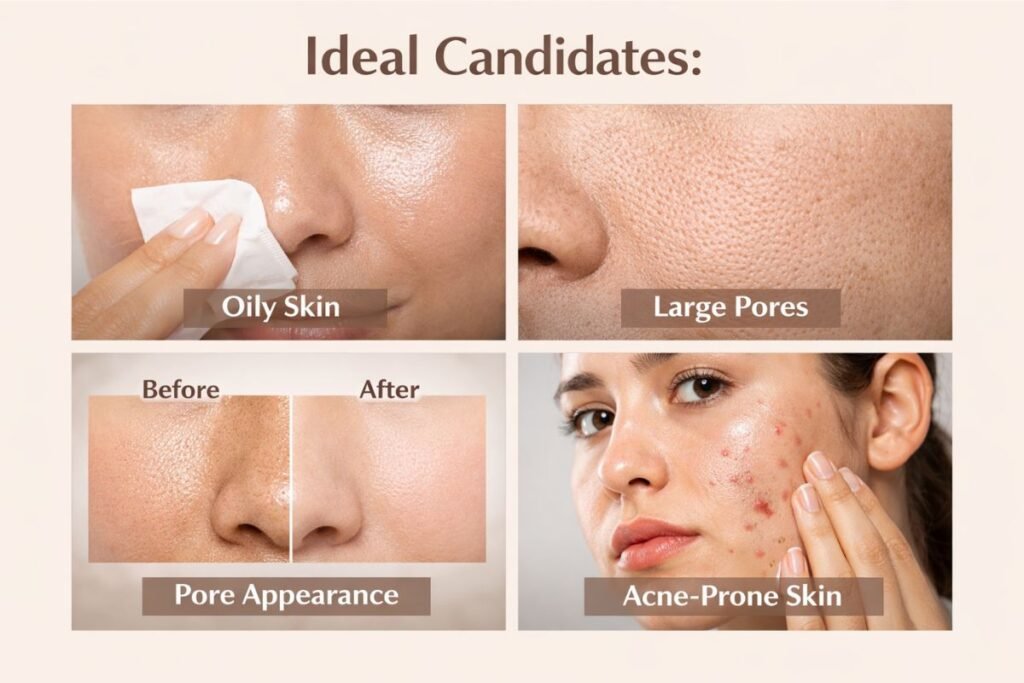
- Oily skin: If your skin is prone to excess sebum production, exfoliating can help remove dead skin cells and control oil levels.
- Large pores: Regular exfoliation can minimize the appearance of large pores by clearing out buildup and promoting cell turnover.
- Acne-prone skin: Exfoliators can help with acne by preventing clogged pores, which is often the root cause of breakouts.
Who Should Avoid:
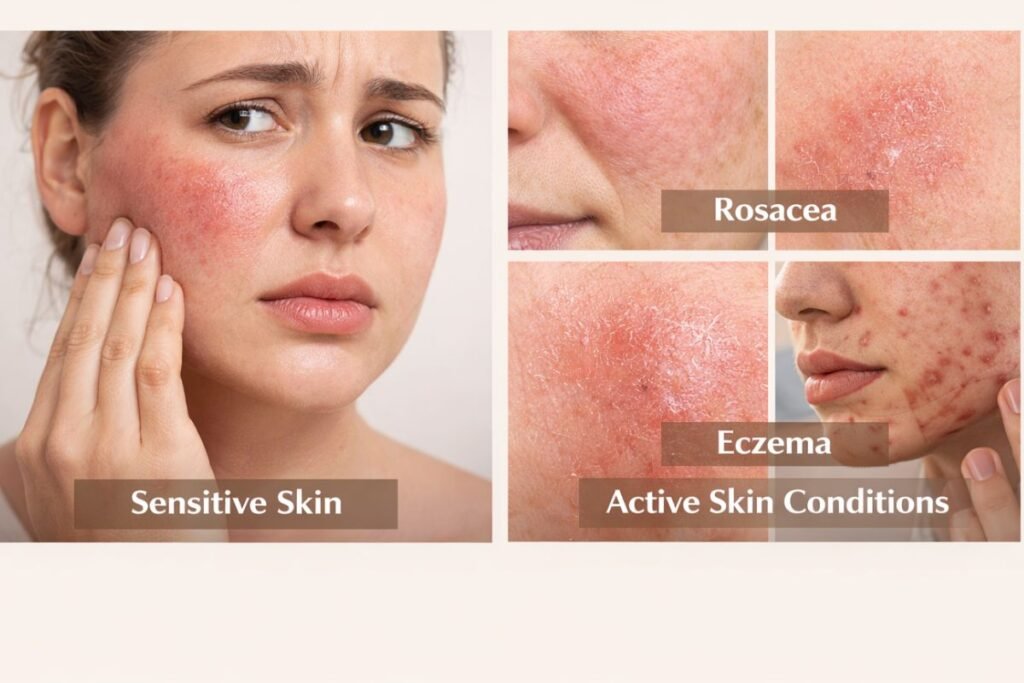
- Sensitive skin: If your skin is easily irritated, harsh exfoliators (especially physical ones) may cause redness or a flare-up of conditions like rosacea or eczema.
- Active skin conditions: Those with conditions like eczema, broken capillaries, or severe acne should consult a dermatologist before using exfoliators.
How Exfoliation Works: The Science Behind It:
Exfoliation removes dead skin cells from the surface, which helps clear pores and promotes the production of fresh, healthy skin. When you exfoliate, you’re encouraging your skin to turn over faster—revealing smoother, more even-toned skin. For oily skin, this process is crucial, as it prevents clogged pores that can lead to blackheads and acne.
There are two main types of exfoliators:
- Physical exfoliators: These contain gritty particles that scrub away dead skin cells. Examples include scrubs or brushes. However, they can be harsh and may irritate sensitive skin or cause micro-tears if overused.
- Chemical exfoliators: These use active ingredients like AHAs (alpha-hydroxy acids) and BHAs (beta-hydroxy acids) to dissolve dead skin cells. BHAs, like salicylic acid, are particularly beneficial for oily skin as they penetrate deep into pores to clear out oil and dirt.
Short-Term vs. Long-Term Effects:
- Short-term: The immediate effect of exfoliation is smoother, clearer skin. You’ll see a reduction in oiliness and a brighter complexion.
- Long-term: Consistent exfoliation can help reduce the appearance of pores, prevent acne, and promote healthier skin over time. It also helps with hyperpigmentation and uneven skin tone.
The Role of Exfoliating Ingredients
- Salicylic Acid (BHA)
- What It Does: Salicylic acid is oil-soluble, meaning it can penetrate deep into pores, breaking down the sebum and dead skin cells that clog them.
- Why It’s Ideal for Oily Skin: It works effectively to clear blackheads, reduce acne, and minimize the appearance of large pores.
- Dermatologist Recommendation: BHA is a staple for those with oily or acne-prone skin, as it helps to control oil without causing dryness or irritation.
- Use: 2–3 times a week for maintenance; daily for acne-prone or oily skin, if tolerated.
- Glycolic Acid (AHA)
- What It Does: Glycolic acid exfoliates the surface of the skin by breaking down the bonds between dead skin cells.
- Why It’s Ideal for Oily Skin: By removing the outermost layer of skin, it helps refine texture and smooth the appearance of pores. It’s also effective for uneven skin tone or post-acne scars.
- Dermatologist Recommendation: Glycolic acid is ideal for improving skin texture and surface-level exfoliation, but it should be used cautiously, as it can increase sun sensitivity.
- Use: Once or twice a week, depending on skin tolerance.
- Lactic Acid (AHA)
- What It Does: Like glycolic acid, lactic acid exfoliates the skin, but it is milder, making it suitable for more sensitive oily skin types.
- Why It’s Ideal for Oily Skin: It provides gentle exfoliation while also offering hydration, making it a good choice for those who may struggle with dry patches.
- Use: 1–2 times per week or as recommended by your dermatologist.
- PHAs (Polyhydroxy Acids)
- What It Does: PHAs are similar to AHAs but have larger molecules, which makes them gentler and slower to exfoliate.
- Why It’s Ideal for Oily Skin: PHAs are better for sensitive or combination skin types but still help in improving texture and pore appearance.
- Use: As needed, especially for those with sensitive skin.
Product Recommendations for Oily Skin with Large Pores
- Paula’s Choice Skin Perfecting 2% BHA Liquid Exfoliant
- Why It Works: This is one of the most recommended products by dermatologists for oily skin and large pores. It contains salicylic acid that effectively targets deep pore congestion and reduces acne breakouts.
- How to Use: Apply once daily or every other day, depending on your skin’s sensitivity. Ideal for use at night.
- The Ordinary AHA 30% + BHA 2% Peeling Solution
- Why It Works: This is a chemical peel that combines glycolic acid (AHA) and salicylic acid (BHA). It’s a more intense treatment for those seeking deeper exfoliation.
- How to Use: Apply once a week for 10–15 minutes. This product should not be used on sensitive skin or in combination with other strong actives like retinol.
- CeraVe Renewing SA Cleanser
- Why It Works: This salicylic acid-based cleanser is gentle enough for daily use but still effective in keeping pores clear and reducing oil buildup.
- How to Use: Use as a daily cleanser for oily skin. You can also use it as a spot treatment for areas prone to congestion.
- Neutrogena Oil-Free Acne Wash Pink Grapefruit Foaming Scrub
- Why It Works: While this has a physical scrub, the active ingredient is salicylic acid, which helps exfoliate and control acne, making it great for oily skin types with large pores.
- How to Use: Use once a day or as needed. Avoid excessive scrubbing to prevent irritation.
- Mario Badescu Glycolic Acid Toner
- Why It Works: A glycolic acid-based toner that helps to refine texture and balance oil production. It’s a great option for oily skin that needs gentle, effective exfoliation.
- How to Use: Apply with a cotton pad after cleansing, 2–3 times a week.
Best Time and Frequency to Use:
Exfoliation is important, but moderation is key. For oily skin with large pores, it’s best to exfoliate 2–3 times per week or as tolerated. Over-exfoliating can strip the skin’s natural oils, leading to dryness and irritation, which can worsen acne.
Routine Placement:
- AM or PM: Exfoliating in the evening is often preferred, as it allows your skin to repair itself overnight. However, if you exfoliate in the morning, follow up with sunscreen to protect your skin from UV damage.
- After cleansing: Exfoliating should be done after cleansing your face to remove dirt, oil, and makeup.
Targeting Top Concerns:
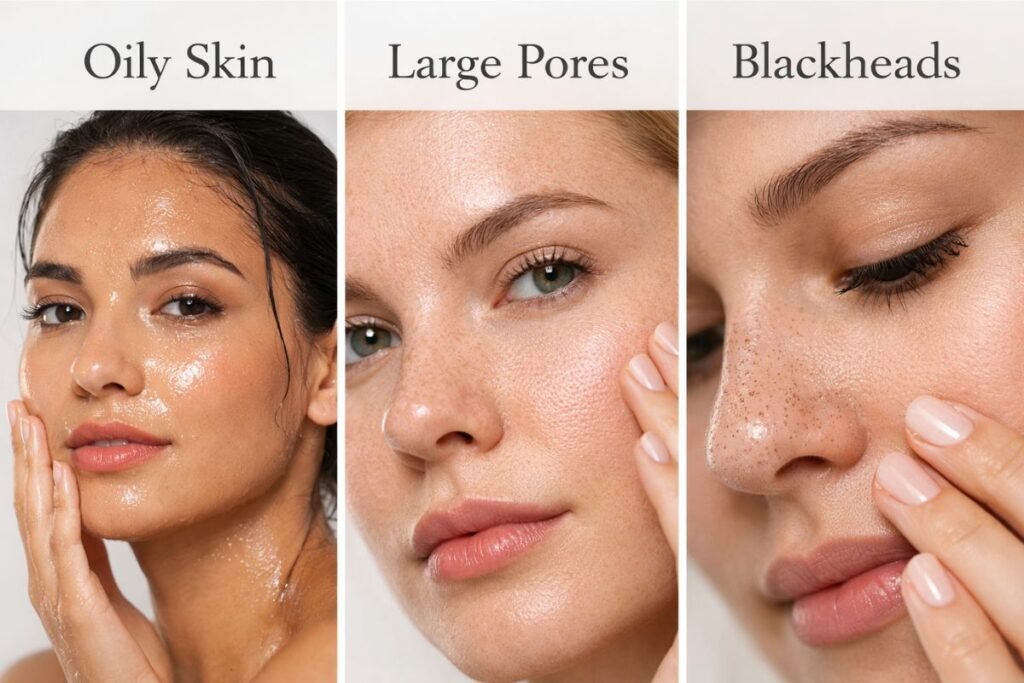
1. Oily Skin
Exfoliating regularly helps remove excess oil, preventing shine and breakouts. Look for products with salicylic acid (BHA) for deep pore cleansing.
2. Large Pores
Large pores are often caused by clogged pores and excess oil. Exfoliation helps clear out these blockages and promotes smoother, tighter skin. AHAs, like glycolic acid, can improve skin texture, while BHAs work deep inside the pores.
3. Blackheads
By keeping your pores clean and unclogged, exfoliating reduces the likelihood of blackhead formation. BHAs like salicylic acid are particularly effective for this purpose.
Safety Rules & Warning Signs:
While exfoliation can offer great benefits, it’s important to be aware of any adverse reactions. Here are a few safety rules to follow:
- Start slow: If you’re new to exfoliation, start with once a week and gradually increase frequency.
- Avoid over-exfoliating: This can lead to irritation, dryness, and a damaged skin barrier. Signs of over-exfoliation include redness, stinging, and excessive dryness.
- Stop if irritation occurs: If you experience excessive dryness, redness, or a burning sensation, reduce your exfoliation frequency and consult a dermatologist if necessary.
Realistic Results Timeline:
- Week 1–2: You may notice smoother skin and a reduction in excess oil, but larger changes like smaller pores and fewer blackheads may take time.
- Month 1: With consistent use, expect clearer skin, and a reduction in the appearance of large pores.
- Month 3: Long-term effects include more even skin tone, smaller pores, and fewer acne breakouts.
Common Mistakes & How to Fix Them:
- Over-exfoliating: Exfoliating too frequently can cause dryness and irritation. Fix It: Stick to 2–3 times per week.
- Using harsh physical scrubs: Physical scrubs can cause micro-tears in the skin. Fix It: Opt for chemical exfoliants, like BHAs or AHAs, which are gentler.
- Not following up with sunscreen: Exfoliation makes the skin more sensitive to the sun. Fix It: Always use broad-spectrum sunscreen in the AM.
- Skipping moisturizer: Exfoliating can leave your skin vulnerable to dryness. Fix It: Use a hydrating moisturizer after exfoliating.
FAQs:
1. Can exfoliation shrink pores permanently?
Exfoliation can help reduce the appearance of large pores by keeping them clear of debris and oil. However, it cannot permanently shrink them. Results are temporary, but consistent exfoliation can lead to smoother, clearer skin.
2. How often should I exfoliate oily skin with large pores?
For oily skin with large pores, exfoliate 2–3 times per week or as tolerated. Over-exfoliating can damage your skin, so start slow and adjust as needed.
3. What’s the difference between AHAs and BHAs for exfoliation?
AHAs, like glycolic acid, exfoliate the skin’s surface and are great for improving skin texture. BHAs, like salicylic acid, penetrate deeper into the pores to remove oil and debris, making them ideal for oily, acne-prone skin.
4. Can exfoliation cause acne?
Exfoliation can cause irritation if overdone, but when used correctly, it can help reduce acne by preventing clogged pores. Make sure to choose gentle exfoliants and avoid aggressive scrubbing.