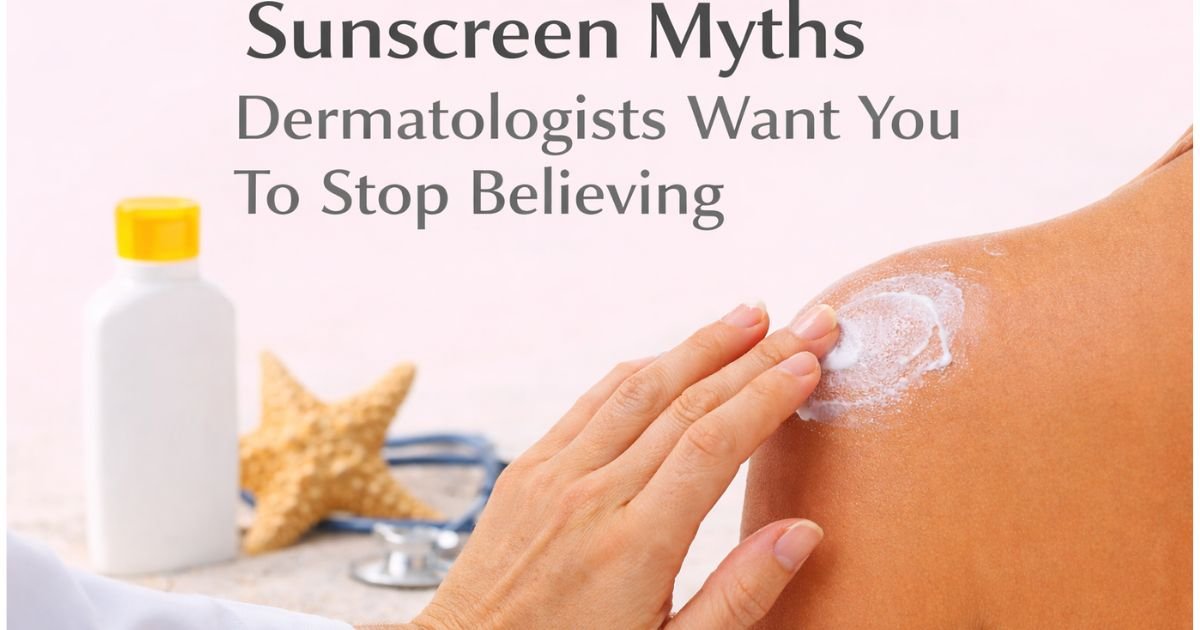
Sunscreen isn’t optional—and it’s not as simple as “SPF 50 once a day.” Dermatologists agree on this core truth: daily, correctly used sunscreen is one of the most effective tools we have to reduce skin cancer risk and slow visible photoaging. Many popular beliefs—like “I don’t need sunscreen indoors,” “dark skin doesn’t burn,” or “higher SPF means all-day protection”—are misleading and can quietly undermine your skin health. This guide clears up the most common sunscreen myths with evidence-based explanations, practical routines, and safety-first advice so you can protect your skin confidently, without fear-mongering or gimmicks.
Myth 1: “I Don’t Need Sunscreen If I’m Indoors or It’s Cloudy:”
Why people believe it: UV exposure feels linked to heat and sunburn outdoors.
What dermatology says: UVA rays (the main drivers of premature aging and a contributor to skin cancer) penetrate clouds and window glass. If you work near windows, drive often, or sit by bright daylight, your skin is still exposed.
Clinical reality:
- Short-term: You may not feel anything—no redness or warmth.
- Long-term (evidence-backed): Cumulative UVA exposure contributes to wrinkles, pigment irregularities, and collagen breakdown.
Bottom line: If daylight hits your face, apply a broad-spectrum sunscreen to exposed skin.
Myth 2: “Higher SPF Means I Can Apply Once and Forget It:”
Why people believe it: SPF numbers sound like time multipliers.
What dermatology says: SPF measures UVB protection under laboratory conditions, applied at a generous thickness (2 mg/cm²). Real-life application is thinner, and sunscreen breaks down with time, sweat, and oil.
Clinical reality:
- SPF 30 blocks ~97% of UVB; SPF 50 blocks ~98%. The jump isn’t dramatic.
- Reapplication is what maintains protection.
Bottom line: Use SPF 30–50, apply enough, and reapply every 2 hours outdoors (or after sweating/swimming).
Myth 3: “People With Dark Skin Don’t Need Sunscreen”:
Why people believe it: Melanin offers some natural UV protection.
What dermatology says: Melanin reduces—but does not eliminate—UV damage. Skin cancers in deeper skin tones are often diagnosed later and can be more dangerous.
Clinical reality:
- Short-term: Less visible sunburn does not equal no damage.
- Long-term: Photoaging, hyperpigmentation, and cancer risk still exist.
Bottom line: All skin tones need sunscreen for health and even tone.
Myth 4: “Makeup With SPF Is Enough:”
Why people believe it: Convenience.
What dermatology says: Makeup is rarely applied thickly or evenly enough to provide labeled SPF.
Clinical reality:
- Temporary cosmetic effect: Some added protection.
- Evidence-backed: Not sufficient as your only sunscreen.
Bottom line: Use a dedicated sunscreen first; makeup SPF is a bonus, not a replacement.
Myth 5: “Chemical Sunscreens Are Toxic:”
Why people believe it: Online fear-based headlines.
What dermatology says: Approved sunscreen filters are regulated and considered safe at recommended concentrations. Absorption studies do not equal harm; toxicity has not been demonstrated at real-world use levels.
Clinical reality:
- Some people may experience irritation or stinging, especially with sensitive skin.
- Mineral sunscreens (zinc oxide, titanium dioxide) are good alternatives if you’re reactive.
Bottom line: Choose the formula your skin tolerates and you’ll actually use.
Who May Benefit Most—and Who Should Be Cautious:
Ideal Candidates:
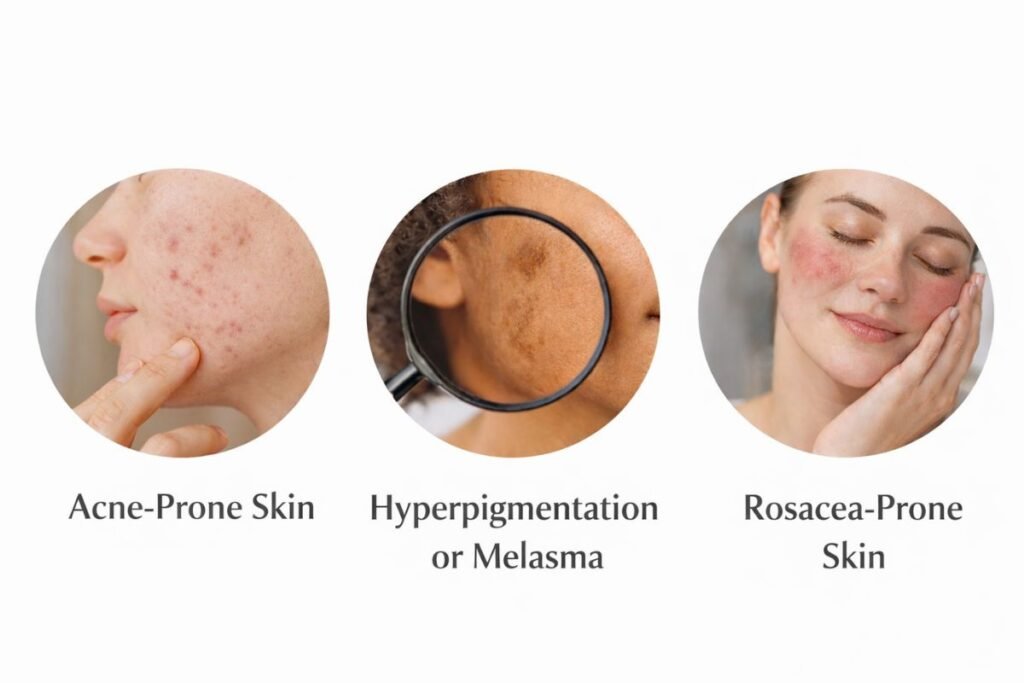
- Acne-prone skin (with non-comedogenic formulas)
- Hyperpigmentation or melasma
- Rosacea-prone skin (with gentle, mineral-based options)
- Anyone concerned about aging or skin cancer prevention
Use Caution or Consult First If You Have:
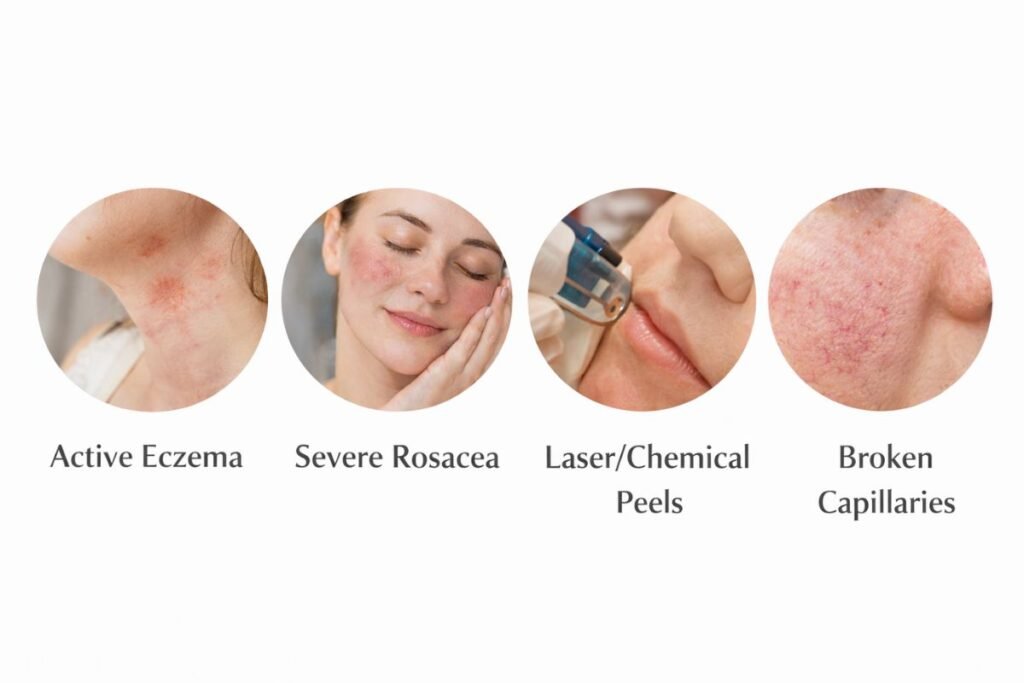
- Active eczema flares or broken skin
- Severe rosacea with frequent flushing
- Known sunscreen ingredient allergies
- Recent laser procedures or chemical peels
- Vascular fragility or broken capillaries (avoid aggressive rubbing during application)
How Sunscreen Works: The Science (Without the Jargon):
Think of sunscreen like a protective window tint for your skin.
- Chemical filters absorb UV rays and convert them into harmless heat.
- Mineral filters reflect and scatter UV like tiny mirrors.
Short-term effects: Prevents sunburn and visible redness.
Long-term, evidence-backed effects: Reduces DNA damage, lowers skin cancer risk, and slows collagen degradation.
Safe Frequency & Routine Placement
- Daily: Every morning, rain or shine
- Amount: Two finger-lengths for face and neck
- Reapply: Every 2 hours outdoors; once midday if mostly indoors
- Order: Cleanser → moisturizer → sunscreen → makeup
- Sensitive skin: Start 1x daily, increase to full use as tolerated
Products & Ingredients Dermatologists Trust:
Affordable, widely available options:
- La Roche-Posay Anthelios SPF 50 – High UVA protection; elegant texture
- CeraVe Hydrating Mineral SPF 30 – Ceramides support barrier repair
- Neutrogena Sheer Zinc SPF 50 – Good for rosacea-prone skin
- Cetaphil Daily Facial Moisturizer SPF 35 – Simple, non-irritating
- The Ordinary Mineral UV Filters SPF 30 – Minimalist formula
Why these work: Balanced filters, good tolerability, and strong safety profiles.
Targeting Top Sunscreen Concerns:
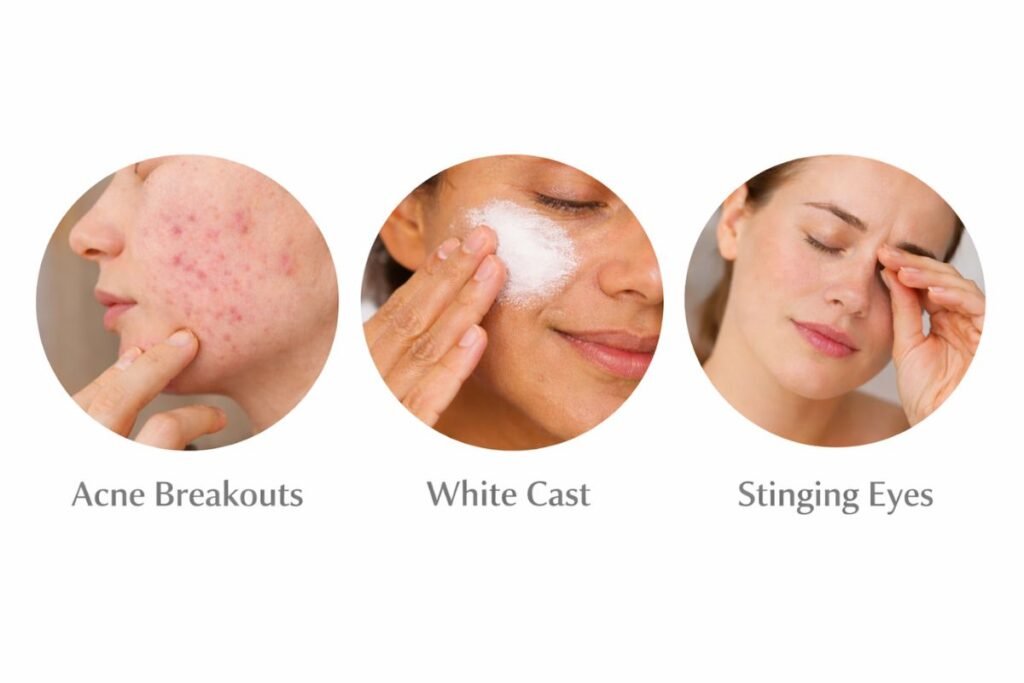
1. Acne Breakouts:
- Choose “oil-free” or “non-comedogenic”
- Gel or fluid textures help
- Double cleanse gently at night
2. White Cast:
- Look for micronized zinc or tinted formulas
- Apply in thin layers, allow to set
3. Stinging Eyes:
- Avoid applying too close to lash line
- Use mineral sticks around eyes
Safety Rules & Warning Signs (Important):
Stop using a product and consult a dermatologist if you notice:
- Persistent stinging or burning
- Rosacea flare-ups or increased flushing
- New eczema patches or itching
- Broken capillaries worsening
- Swelling or hives (possible allergy)
Specific risks to note:
- Rubbing sunscreen aggressively can worsen vascular fragility
- Fragranced formulas may irritate sensitive or eczema-prone skin
Realistic Results Timeline:
- Week 1–2: Fewer sunburn episodes, improved comfort
- Month 1: Reduced redness, more even tone
- Month 3: Noticeable stabilization of pigmentation and slower aging signs
(Sunscreen prevents damage—you won’t “see” dramatic changes, but you’ll avoid future ones.)
Common Mistakes & How to Fix Them:
- Using too little → Measure two fingers
- Skipping reapplication → Set a phone reminder
- Relying on SPF makeup → Layer properly
- Avoiding sunscreen due to breakouts → Switch textures, not protection
- Only using it on sunny days → UV doesn’t take days off
FAQs:
Q1: Is SPF 100 better than SPF 50?
Not significantly. Proper application and reapplication matter more.
Q2: Can sunscreen cause vitamin D deficiency?
Limited evidence suggests normal use does not cause deficiency; diet and supplements can compensate if needed.
Q3: Do kids need different sunscreen?
Yes—use mineral, fragrance-free formulas designed for sensitive skin.
Q4: Can I skip sunscreen if my moisturizer has SPF?
Usually no—most people don’t apply enough moisturizer to reach labeled protection.