

Skin icing is a viral skincare technique that uses cold therapy to temporarily reduce puffiness, calm inflammation, and boost skin glow—and dermatologists agree it can be helpful when done correctly. From ice rollers to chilled spoons and ice cubes wrapped in cloth, this trend promises tighter-looking pores and refreshed skin in just minutes.
But skin icing isn’t magic, and it’s not for everyone. While the glow can be instant, most benefits are short-term, and improper use may irritate sensitive skin. Understanding when, how, and how often to ice your skin makes the difference between a healthy glow and unnecessary damage.
In this guide, we break down what skin icing really does, what science supports, who should avoid it, and how to use it safely for visible results.
1. Why Skin Icing Is Everywhere
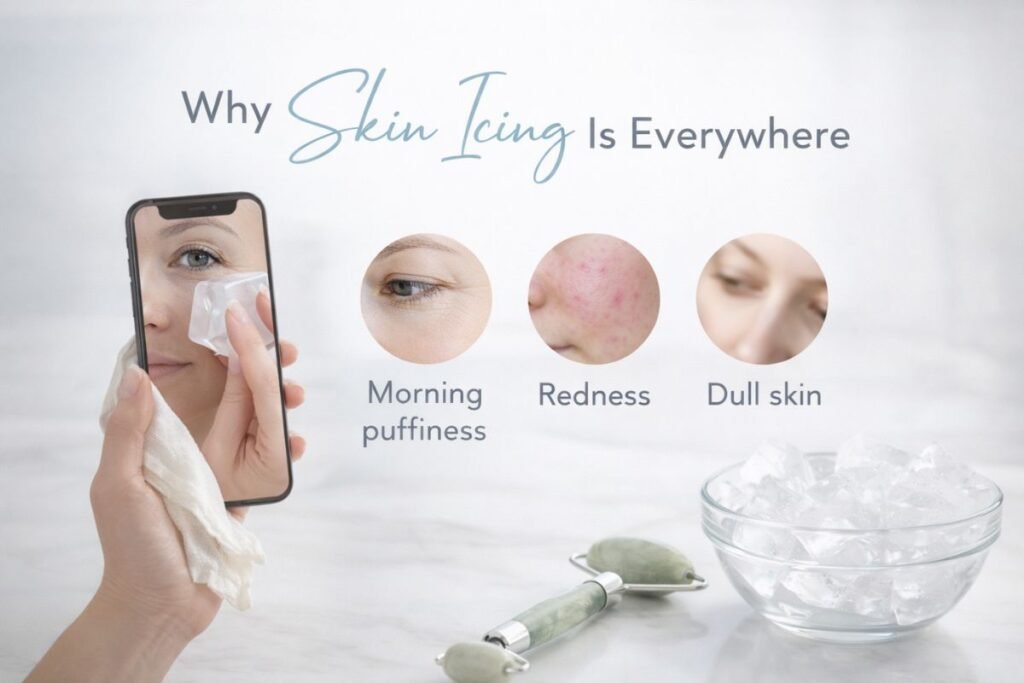
Mornings with puffiness, dull skin, and makeup that never stays put are common issues. Social media popularized skin icing by promising a quick glow with just ice. As a dermatologist and skincare coach with over 20 years of experience, I can say this clearly: it offers temporary benefits, but it’s not a miracle.
When done properly, skin icing can calm the skin and refresh your face. Done wrong, however, it may lead to irritation, broken capillaries, or flare-ups of existing skin issues. This guide will explain how skin icing works, who should use it, who should avoid it, and how to do it safely.
2. Who Should Try Skin Icing and Who Should Avoid It
Skin types that may benefit
• Oily skin that looks greasy by midday
• Acne-prone skin with temporary redness
• Morning facial puffiness or under-eye swelling
• Heat-related flushing after exercise
• Makeup prep for short-term tightening
People who should avoid or be cautious
• Rosacea or chronic facial redness
• Eczema, psoriasis, or impaired skin barrier
• Broken capillaries or visible blood vessels
• Cold sensitivity or vascular disorders
• Neuropathy or nerve-related conditions
Anyone with a medical skin condition should consult a dermatologist before trying skin icing.
3. How Skin Icing Works (Temporary vs Evidence-Backed Effects)
Temporary effects
Skin icing works through cold-induced vasoconstriction. Blood vessels narrow briefly, which may reduce redness and swelling. Nerve activity slows, giving a calming sensation. Skin may appear firmer and smoother for a short time.
These effects fade within minutes to hours.
Evidence-backed effects (limited)
Scientific studies support cold therapy for short-term inflammation control. Skin icing may temporarily reduce oil appearance and calm irritation after heat exposure. However, evidence for long-term benefits is limited.
What skin icing does not do
- It doesn’t permanently shrink pores
- It doesn’t treat acne causes
- It won’t fade pigmentation
- It doesn’t reverse aging
- It supports appearance, not skin structure.
4. Safe Frequency and Routine
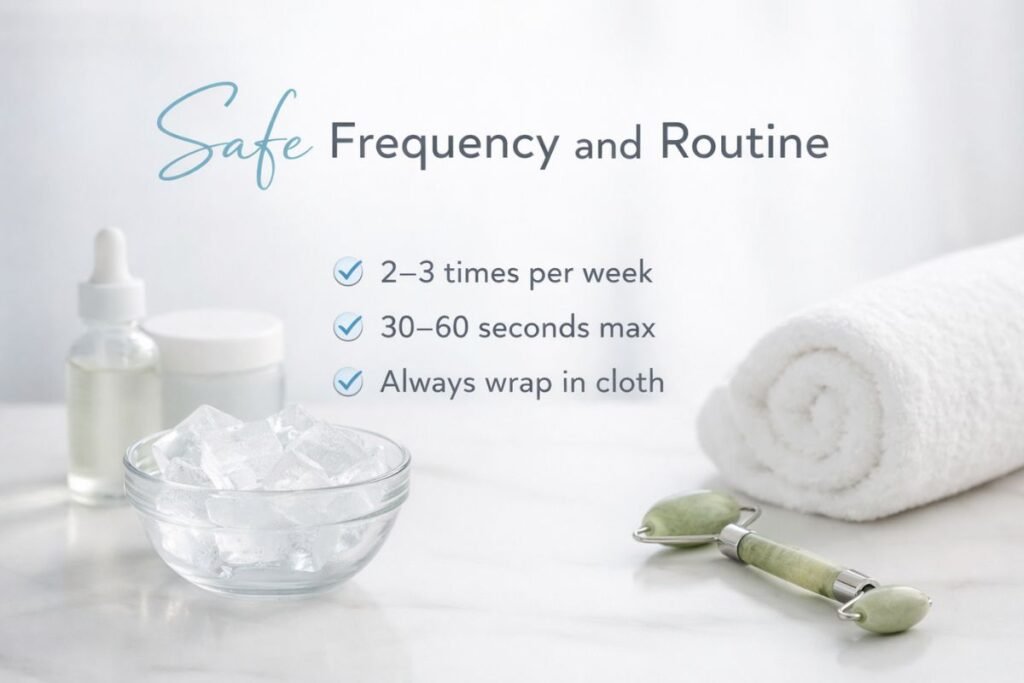
Recommended frequency: 2–3 times per week or as tolerated
Morning routine
Cleanse gently
Ice for 30–60 seconds using wrapped ice or a chilled tool
Apply hydrating serum
Finish with moisturizer and sunscreen
Evening routine (optional)
Use only if skin feels hot or inflamed
Keep duration short
Avoid after exfoliation or retinoids
Never exceed one minute total per session.
5. Products and Ingredients That Work Well
After cold exposure, skin needs hydration and barrier support.
Good options include products from CeraVe, The Ordinary, Neutrogena, Cetaphil, and La Roche-Posay in the $10–30 range.
Helpful ingredients:
• Hyaluronic acid for hydration
• Ceramides to protect the skin barrier
• Low-strength niacinamide for calming
Avoid applying strong acids, retinoids, or exfoliants immediately after icing.
6. Common Concerns
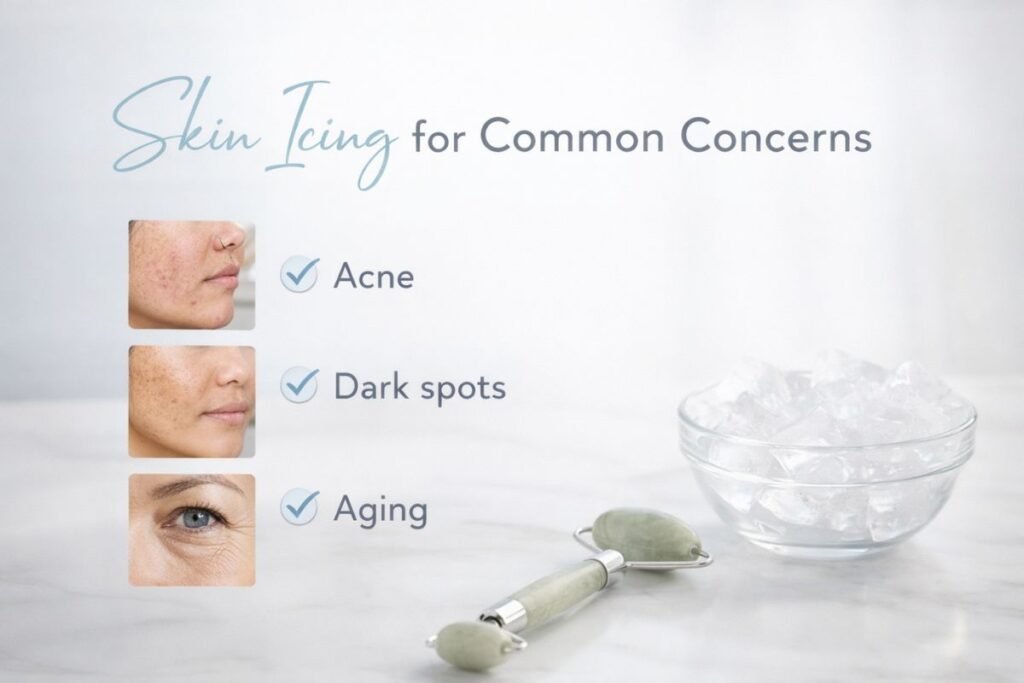
Acne
Skin icing may temporarily reduce redness and swelling. It does not treat acne bacteria or prevent breakouts.
Dark spots and pigmentation
There is no evidence that skin icing fades dark spots. Sun protection and proven actives are required.
Aging and fine lines
Any tightening effect is temporary. Long-term improvement requires sunscreen, retinoids, and collagen-supporting ingredients.
7. Safety Rules and Risks (Very Important)
Possible risks if done incorrectly:
•Ice burn or frost-like injury
• Rosacea flare-ups
• Broken capillaries
• Worsening eczema
• Nerve irritation
Stop immediately if you experience stinging, numbness, intense redness, or blotchy discoloration.
Safety rules:
• Never apply ice directly to skin
• Always wrap ice in cloth
• Keep sessions under one minute
• Avoid daily use if sensitive
• Do not use on broken or inflamed skin
Consult a dermatologist if symptoms persist.
8. Realistic Timeline
Week 1–2
Instant glow and reduced puffiness after each session
Month 1
Better control of occasional redness when combined with proper skincare
Month 3
No permanent change from this alone
Long-term results depend on a complete skincare routine.
9. Five Common Mistakes and How to Fix Them
Mistake 1: Applying ice directly
Fix: Always wrap in soft cloth
Mistake 2: Holding ice in one spot
Fix: Glide continuously
Mistake 3: Overusing daily
Fix: Reduce to 2–3 times weekly
Mistake 4: Using on rosacea
Fix: Avoid or consult dermatologist
Mistake 5: Skipping moisturizer
Fix: Always hydrate after this
10. Frequently Asked Questions
Is skin icing good for acne?
It may reduce redness temporarily but does not treat acne.
Can skin icing shrink pores permanently?
No. Any pore-tightening effect is temporary.
Is skin icing safe for sensitive skin?
Sometimes, but only briefly and infrequently.
Can I do it every day?
Not recommended. Use 2–3 times per week or as tolerated.