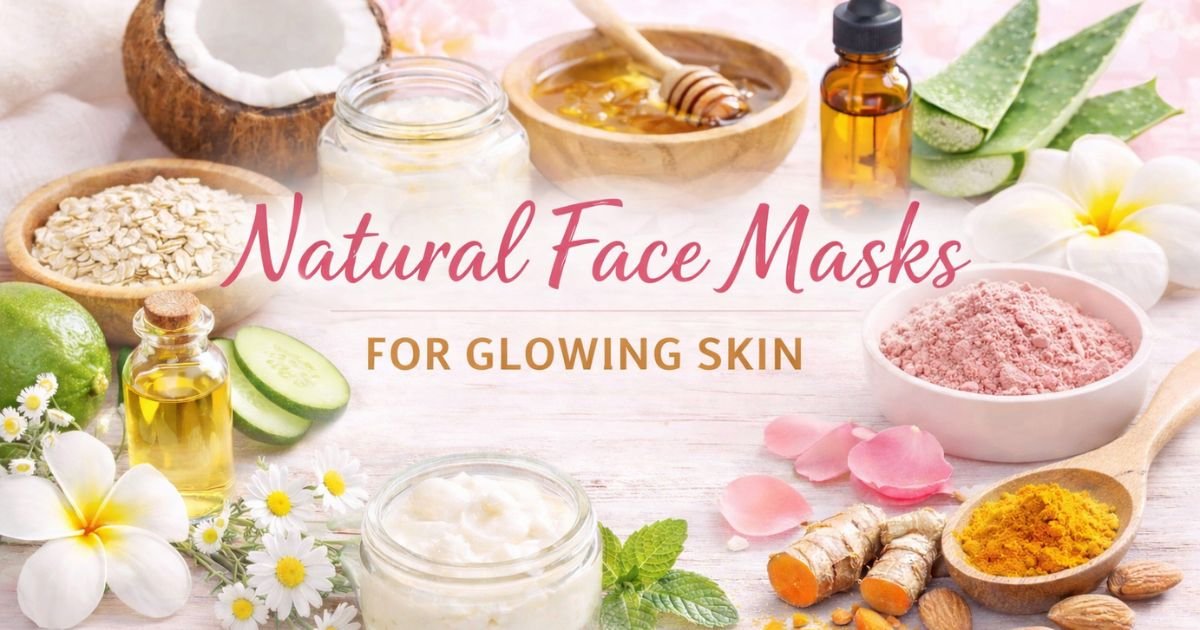
Achieving glowing, radiant skin is something we all desire, but it often feels out of reach due to expensive treatments and complicated skincare routines. However, natural face masks offer a simple, affordable, and effective solution. Using ingredients straight from your kitchen, you can nourish, hydrate, and rejuvenate your skin, promoting a healthy glow. This guide will walk you through everything you need to know about natural face masks—how they work, the best ingredients to use, and how to incorporate them into your skincare routine.
Who May Benefit & Who Should Avoid Natural Face Masks
Ideal Skin Types:
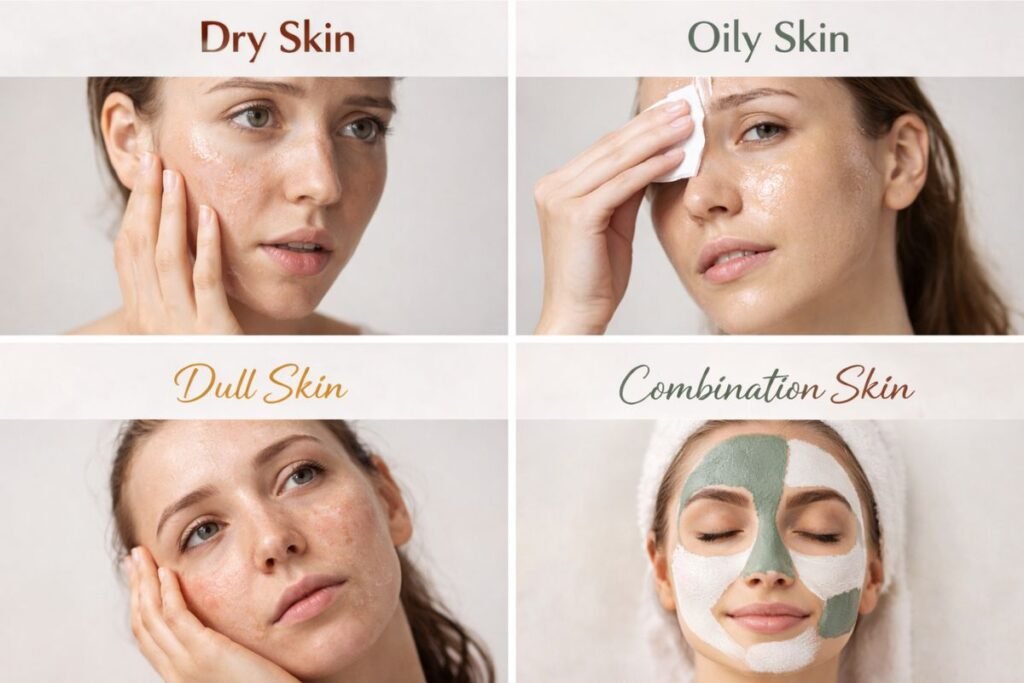
1. Dry Skin:
- Natural face masks with ingredients like honey, avocado, and yogurt provide deep hydration. Honey draws moisture into the skin, while avocado is rich in nourishing fatty acids, perfect for combating dryness.
2. Oily Skin:
- Clay, green tea, and lemon juice are great for controlling excess oil production and balancing the skin. These ingredients absorb oils, tighten pores, and prevent breakouts.
3. Dull Skin:
- Ingredients like turmeric, honey, and aloe vera can brighten the complexion. Turmeric, in particular, has natural anti-inflammatory properties that can reduce redness and give your skin a healthy glow.
4. Combination Skin:
- Combination skin needs a mix of ingredients that can address both oily areas (like the T-zone) and dry patches. A combination of hydrating ingredients (such as honey or avocado) for the dry areas and oil-absorbing ingredients (like clay or green tea) for the oily areas works well. Using a multi-mask approach (different masks for different areas of the face) can also be effective.
Who Should Avoid:
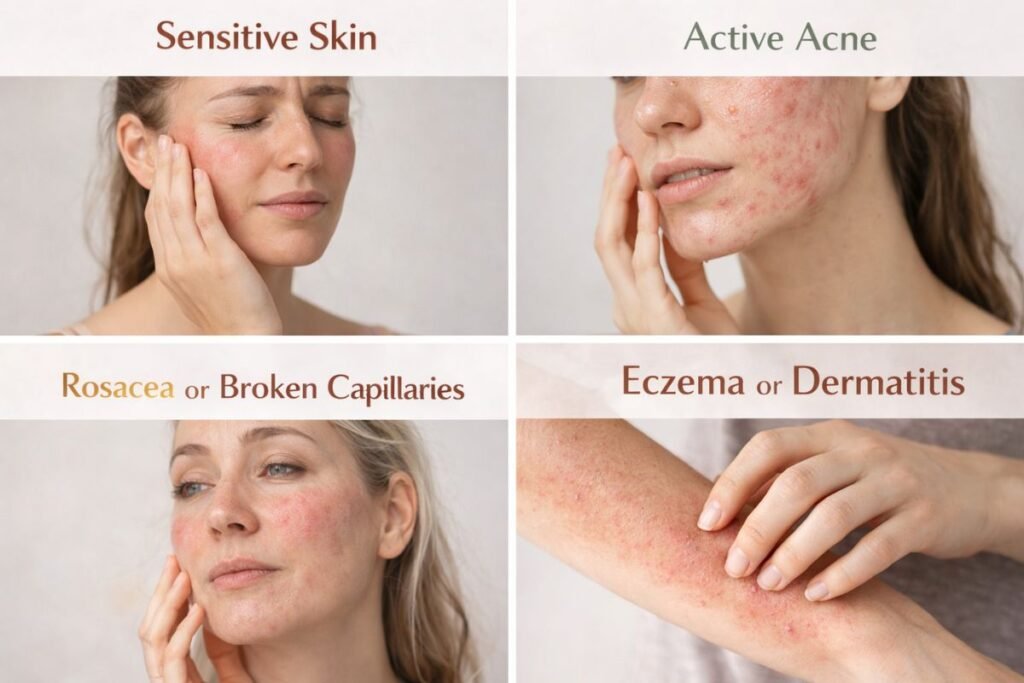
- Sensitive Skin: Avoid harsh ingredients such as lemon, cinnamon, or raw honey, which can cause irritation or an allergic reaction.
- Active Acne: While some natural ingredients like honey or turmeric may help with acne, masks with heavy oils or sticky substances might clog pores and worsen breakouts.
- Rosacea or Broken Capillaries: Strong ingredients like citrus, mint, or hot spices such as cinnamon may trigger flare-ups. Stick to calming ingredients like aloe vera or chamomile.
- Eczema or Dermatitis: Some exfoliating or acidic ingredients might exacerbate irritation in sensitive skin conditions.
How It Works: The Science Behind Natural Face Masks
Short-Term Effects:
Natural face masks provide instant benefits by delivering hydration, exfoliating dead skin cells, and soothing irritation. The immediate effects are often visible within the first use—skin looks brighter, smoother, and feels softer. For example, honey has humectant properties that draw moisture into the skin, giving you an instant glow.
Long-Term Effects:
With regular use, natural face masks can improve the overall health of your skin. For instance, masks with ingredients like turmeric and aloe vera can reduce inflammation, boost collagen production, and promote skin regeneration over time. These long-term effects may take a few weeks to notice but can lead to healthier, more youthful-looking skin.
Metaphor to Simplify the Science:
Think of natural face masks like a healthy meal for your skin. The immediate effects are like the burst of energy you get from eating nutrient-rich food—your skin feels hydrated, and it radiates a healthy glow. Over time, just like how a balanced diet strengthens your body, a consistent skincare routine with natural masks strengthens your skin, enhancing its resilience and overall appearance.
Safe Frequency & Routine Placement
For optimal results, natural face masks should be used 2–3 times per week. Start slowly if you have sensitive skin, and increase the frequency based on how your skin reacts. Apply the mask after cleansing, leave it on for 10–15 minutes, and then rinse with lukewarm water. Follow up with a moisturizer to lock in hydration.
Sample Weekly Routine:
- Monday & Thursday: Brightening mask (e.g., turmeric + honey)
- Wednesday & Saturday: Hydrating mask (e.g., avocado + honey)
- Daily: Cleanse, tone, hydrate, and protect with SPF.
Best Natural Ingredients for Glowing Skin
Here are some natural, dermatologist-approved ingredients that you can use in your face masks to achieve glowing skin:
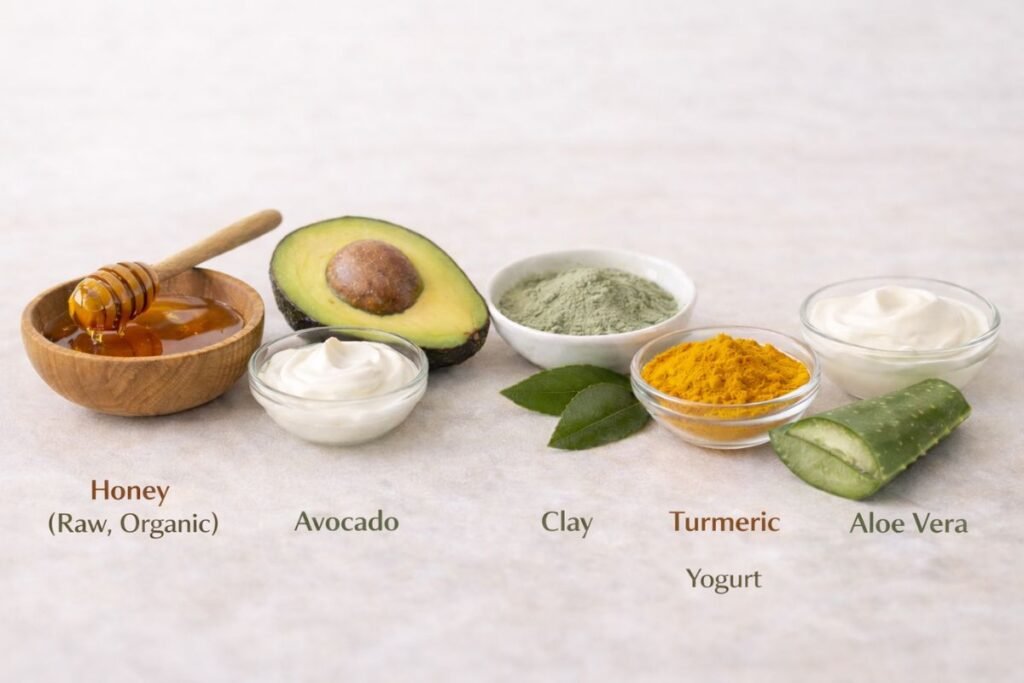
1. Honey (Raw, Organic)
- Why It’s Great: Honey is a natural humectant, meaning it draws moisture into your skin and keeps it hydrated. It also has anti-inflammatory properties that can calm irritated skin and promote healing.
- How to Use: Mix with turmeric for brightening or with yogurt for hydration.
- Recommended Brand: Manuka Honey (available online or in health stores).
2. Avocado
- Why It’s Great: Avocado is packed with healthy fats, vitamins, and antioxidants, which help nourish and hydrate dry skin. It also contains compounds that help repair skin and boost elasticity.
- How to Use: Mash it up and apply directly or mix with honey for added moisture.
- Recommended Brand: Fresh avocado or avocado oil (available in stores like Whole Foods).
3. Clay (Bentonite or Kaolin)
- Why It’s Great: Clay masks are excellent for absorbing excess oil and drawing out impurities from your pores. They also help detoxify and purify the skin.
- How to Use: Mix with water or apple cider vinegar to make a paste, then apply for 10–15 minutes.
- Recommended Brand: Aztec Secret Indian Healing Clay.
4. Turmeric
- Why It’s Great: Turmeric has anti-inflammatory and antioxidant properties. It can brighten your skin, reduce redness, and even out skin tone.
- How to Use: Mix with honey or yogurt for a brightening mask.
- Recommended Brand: Any organic turmeric powder (ensure it’s pure and high quality).
5. Yogurt
- Why It’s Great: Yogurt contains lactic acid, a gentle exfoliant that removes dead skin cells and improves skin texture. It’s also packed with probiotics, which help balance your skin’s microbiome.
- How to Use: Apply plain, unsweetened yogurt to your face or mix with honey for extra hydration.
- Recommended Brand: Fage or Stonyfield.
6. Aloe Vera
- Why It’s Great: Aloe vera is soothing, hydrating, and anti-inflammatory. It helps calm irritated skin, reduce redness, and promote healing.
- How to Use: Apply fresh aloe vera gel directly or mix with honey for added hydration.
- Recommended Brand: Lily of the Desert 100% Aloe Vera Gel.
Targeting Common Skin Concerns
1. Dullness and Uneven Skin Tone:
- Best Mask Ingredients: Turmeric, honey, yogurt.
- Additional Tip: Consider using a gentle exfoliating scrub once a week to slough off dead skin cells that contribute to dullness.
2. Dry and Dehydrated Skin:
- Best Mask Ingredients: Avocado, honey, aloe vera.
- Additional Tip: Follow up with a rich, nourishing moisturizer to lock in the hydration from your mask.
3. Oily Skin and Acne-Prone Skin:
- Best Mask Ingredients: Clay, turmeric, green tea.
- Additional Tip: Don’t forget sunscreen. Even oily skin needs protection to avoid sun damage.
4. Combination Skin:
- Best Mask Ingredients: A combination of hydrating ingredients (such as honey or avocado) for the dry areas and oil-absorbing ingredients (like clay or green tea) for the oily T-zone.
- Additional Tip: Use a multi-mask approach—apply one mask to the T-zone and a more hydrating one to the cheeks and other dry areas.
Safety Rules & Warning Signs
While natural face masks are generally safe, there are some precautions you should take:
Common Risks:
- Irritation: Some ingredients, especially citrus or spicy ingredients like cinnamon, can irritate sensitive skin.
- Allergic Reactions: Always patch-test new ingredients on a small area of skin 24 hours before using them on your face.
- Rosacea Flare-Ups: Avoid masks with strong ingredients (e.g., citrus, alcohol) that may exacerbate rosacea symptoms.
- Eczema Irritation: Avoid using harsh exfoliating masks if you have eczema or other sensitive skin conditions.
When to Stop:
- Redness or irritation lasting more than an hour.
- Any signs of allergic reactions (itching, swelling).
- Dryness or tightness that doesn’t subside with moisturizer.
Realistic Results Timeline
- Week 1-2: You may see an immediate improvement in hydration and texture. Skin will appear more refreshed and radiant.
- Month 1: With consistent use, you’ll start noticing smoother skin, reduced dullness, and an overall brighter complexion.
- Month 3: Expect long-term benefits such as improved elasticity, reduced pigmentation, and healthier skin overall.
Common Mistakes & How to Fix Them
- Mistake: Using masks too frequently.
- Fix It: Limit mask use to 2–3 times per week to avoid overwhelming your skin.
- Mistake: Not moisturizing afterward.
- Fix It: Always follow up with a moisturizer to lock in the hydration from the mask.
- Mistake: Using ingredients that are too harsh for your skin type.
- Fix It: Tailor your masks to your skin type and needs. For example, use gentle masks for sensitive skin.
- Mistake: Leaving masks on too long.
- Fix It: Stick to the recommended time of 10–15 minutes for optimal results without irritation.
FAQs
1. Can I use natural face masks every day?
It’s best to use natural face masks 2–3 times a week to avoid overdoing it. More frequent use can lead to irritation or clogged pores.
2. How do I know which mask is right for my skin type?
Choose masks based on your skin’s specific needs: hydrating masks for dry skin, oil-absorbing masks for oily skin, brightening masks for dull skin.
3. Do natural face masks really work?
Yes, they work, but results are typically temporary. With consistent use, you’ll notice smoother, more radiant skin over time.
4. Are natural face masks safe for sensitive skin?
Yes, but always patch-test new ingredients before using them on your face to avoid irritation.