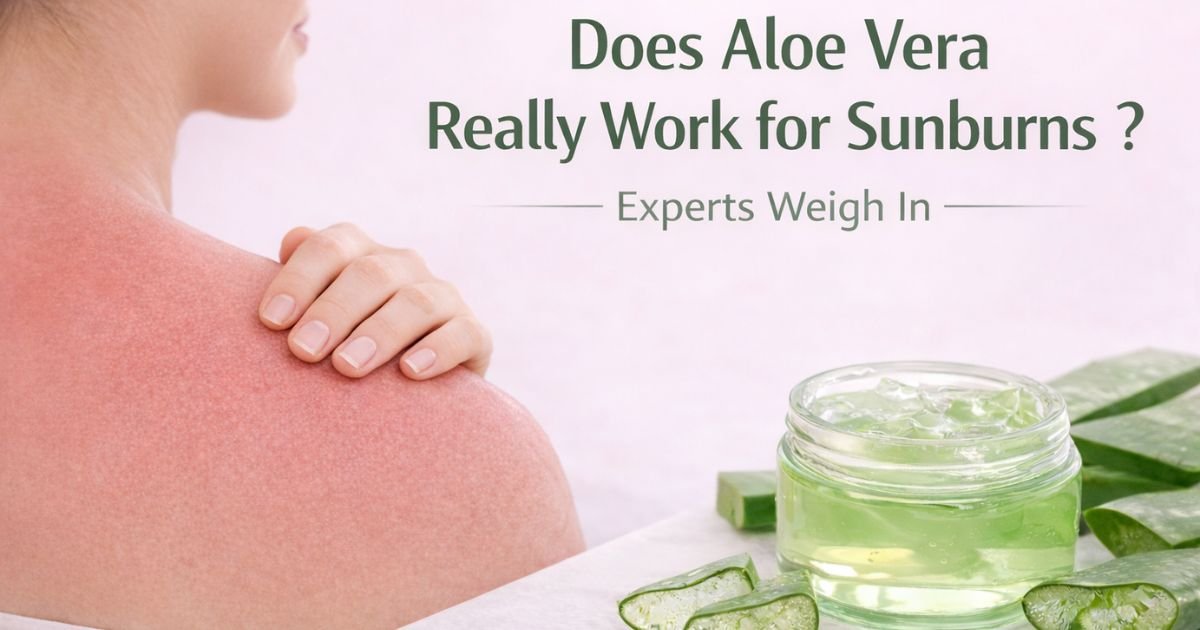
Yes—aloe vera can help sunburns, but not in the way many people expect. From a dermatologist’s perspective, aloe vera may temporarily soothe pain, cool inflamed skin, and support surface-level healing, especially in mild sunburns. Its benefits come from hydration, anti-inflammatory compounds, and a gentle cooling effect—not from reversing sun damage or “healing” burned skin overnight. Used correctly, aloe can be a helpful first-aid support, not a cure. Used incorrectly, it can actually irritate already-injured skin. Understanding when, how, and for whom aloe vera works makes all the difference.
Who May Benefit — and Who Should Avoid Aloe Vera for Sunburn:
Who May Benefit:
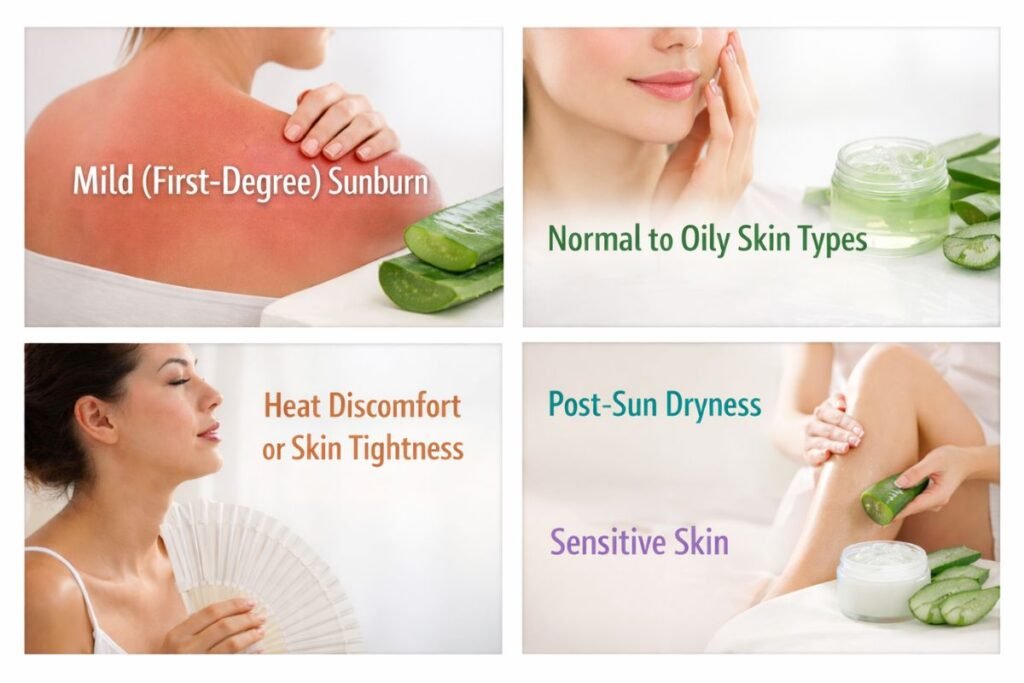
Aloe vera may be helpful if you have the following skin concerns after sun exposure:
- Mild (first-degree) sunburn, including redness, warmth, and mild tenderness
- Normal to oily skin types that benefit from lightweight, non-greasy hydration
- Heat discomfort or skin tightness after sun exposure
- Post-sun dryness without blistering or open skin
- Sensitive skin, provided the aloe product is fragrance-free and alcohol-free
Who Should Avoid or Use With Caution:
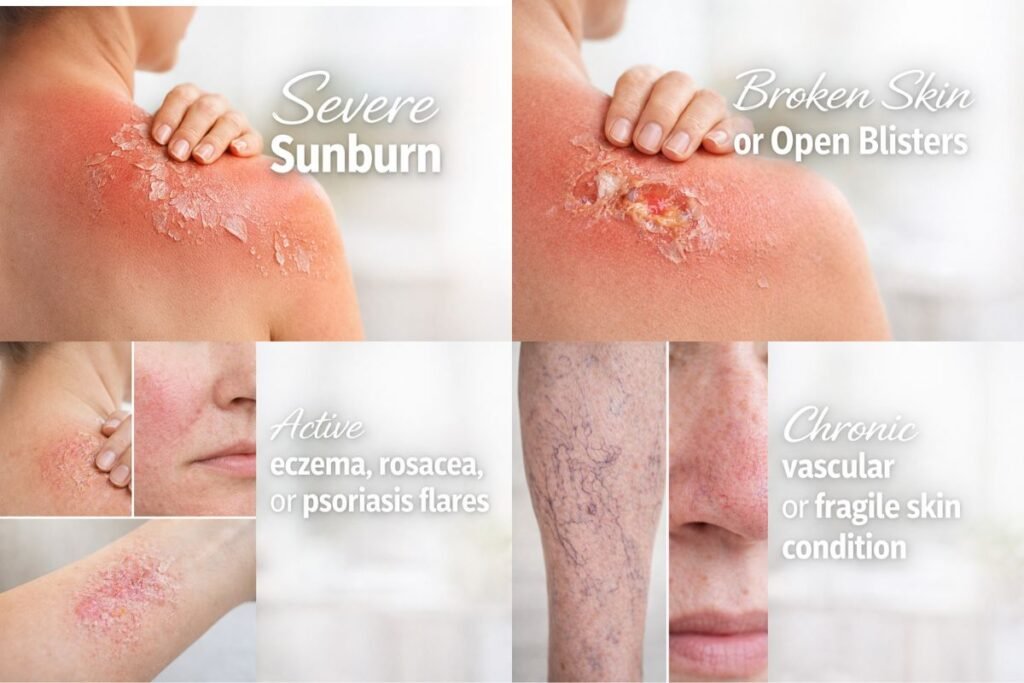
Aloe vera is not suitable for all skin conditions. Avoid using aloe vera, or consult a board-certified dermatologist first, if you experience any of the following:
- Severe sunburn, including blistering, oozing, fever, or chills
- Broken skin or open blisters, which increase the risk of irritation and infection
- Active eczema, rosacea, or psoriasis flares, as aloe may worsen inflammation
- Known allergy to aloe vera or latex sensitivity
- Chronic vascular or fragile skin conditions, such as broken capillaries or couperose skin
Aloe vera should not replace medical evaluation or treatment for moderate to severe sunburns or other inflammatory skin conditions.
How Aloe Vera Works: The Science (Short-Term vs. Long-Term):
The Simple Metaphor:
Think of sunburned skin like a house after a fire. Aloe vera doesn’t rebuild the house—but it can cool the walls, calm the smoke, and prevent further damage while healing happens.
Short-Term Effects (What Aloe Can Do):
Evidence suggests aloe vera may:
- Cool the skin via water content and evaporation
- Reduce redness temporarily through anti-inflammatory compounds (like aloin and acemannan)
- Improve hydration, reducing tightness and peeling
- Provide mild antimicrobial protection on intact skin
These are cosmetic and comfort-based benefits, not structural repair.
Long-Term Effects (What Aloe Cannot Do):
There is limited evidence that aloe vera:
- Repairs UV-induced DNA damage
- Prevents skin cancer
- Reverses photoaging
- Heals deep burns
Long-term recovery depends on time, barrier repair, sun avoidance, and SPF—not aloe alone.
Best Time and Frequency to Use:
How Often to Use Aloe Vera:
- 1–2 times daily for mild sunburn
- Up to 3 times per day for short-term soothing if tolerated
- Stop once redness and discomfort resolve (usually 2–5 days)
How to Apply (Dermatologist-Approved Method);
- Gently cleanse with lukewarm water
- Pat dry—don’t rub
- Apply a thin, even layer of aloe
- Follow with a ceramide-based moisturizer after 10–15 minutes
- Avoid sun exposure completely until healed
Do not occlude with petroleum jelly on the first day—it traps heat.
Best Aloe-Based Products Dermatologists Actually Recommend:
Look for aloe as a supporting ingredient, not the only one.
CeraVe After-Sun Repair Cream:
- Aloe, ceramides, and niacinamide
- Helps repair the skin barrier
- Excellent for sensitive or compromised skin
La Roche-Posay Cicaplast Baume B5:
- Aloe, panthenol, and madecassoside
- Ideal for redness and post-sun inflammation
Neutrogena Hydro Boost Gel (Fragrance-Free):
- Lightweight hydration with aloe
- Best for oily or acne-prone skin
Cetaphil Soothing Gel Cream:
- Aloe and allantoin
- Low irritation risk
Use Caution With:
- Alcohol-heavy “cooling gels”
- Menthol, camphor, eucalyptus
- DIY aloe straight from the plant (risk of latex irritation)
Targeting Top Sunburn Concerns:
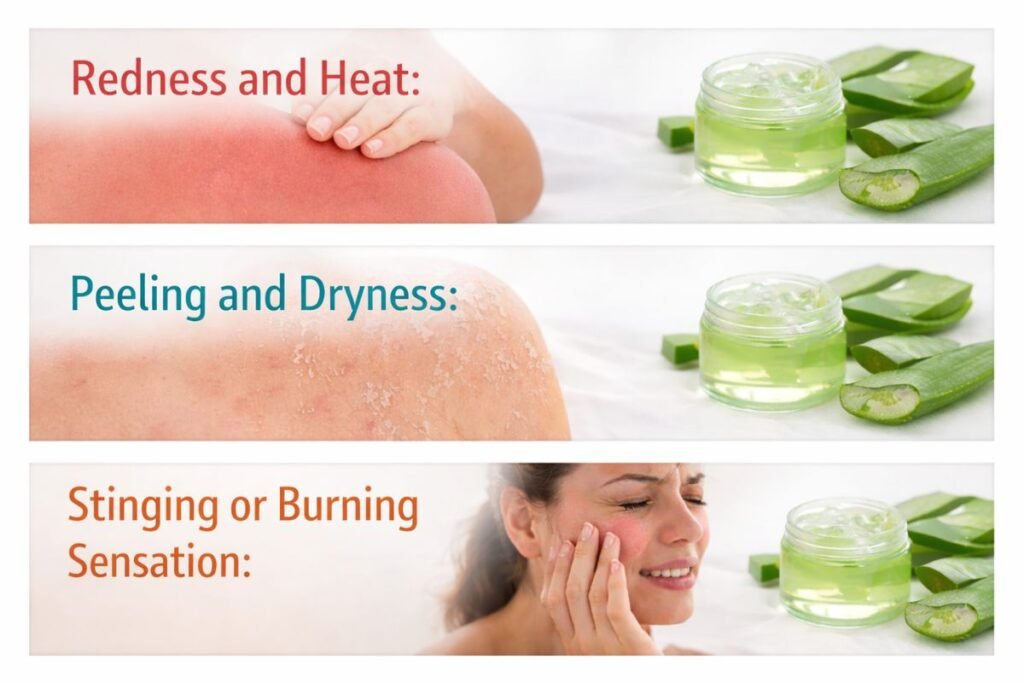
Redness and Heat:
Aloe may temporarily reduce redness by calming surface inflammation—but it does not reverse capillary dilation.
Pro tip: Pair aloe with niacinamide (2–4%) once skin calms.
Peeling and Dryness:
Aloe hydrates but does not seal moisture.
Fix: Always layer a gentle moisturizer after aloe to prevent peeling.
Stinging or Burning Sensatio:
If aloe stings, stop immediately. This may signal:
- Barrier disruption
- Allergy
- Alcohol or fragrance irritation
Detailed Risks & Side Effects (Important):
Potential risks include:
- Contact dermatitis (itching, redness, rash)
- Rosacea flare-ups due to vasodilation
- Eczema irritation on compromised skin
- Broken capillaries with excessive rubbing
- Ice burns if aloe is frozen before application
- Delayed medical care in severe burns
Never apply ice-cold aloe directly from the freezer.
When to Stop Using Aloe & Seek Help:
Stop aloe immediately if you notice:
- Increased redness or burning
- Blistering or swelling
- Fever or chills
- Oozing or crusting
- Pain lasting longer than 48 hours
Seek medical care for moderate to severe sunburns.
Realistic Results Timeline:
Week 1–2
- Cooling relief
- Reduced tightness
- Temporary redness calming
Month 1
- Skin barrier normalizes
- Peeling resolves
- Pigmentation may still linger
Month 3
- Sun damage outcomes depend on SPF habits
- Aloe offers no lasting photoprotection
Common Mistakes & How to Fix Them:
Mistake 1: Using Aloe as the Only Treatment:
Fix: Combine with moisturizer and sun avoidance
Mistake 2: Applying Too Often;
Fix: Limit to 1–3 times daily maximum
Mistake 3: Using Alcohol-Based Gels:
Fix: Choose fragrance- and alcohol-free formulas
Mistake 4: Applying to Blistered Skin:
Fix: Seek medical care instead
Mistake 5: Skipping Sunscreen After Healing:
Fix: Resume SPF 30+ daily once skin recovers
(FAQs):
Can aloe vera heal sunburn overnight?
No. Aloe may soothe symptoms, but healing takes time.
Is pure aloe gel better than store-bought?
Not necessarily. Store-bought dermatologist-tested formulas are often safer.
Can aloe prevent peeling?
It may reduce dryness, but peeling depends on burn severity.
Is aloe safe for kids?
Generally yes for mild burns—but always patch test first.