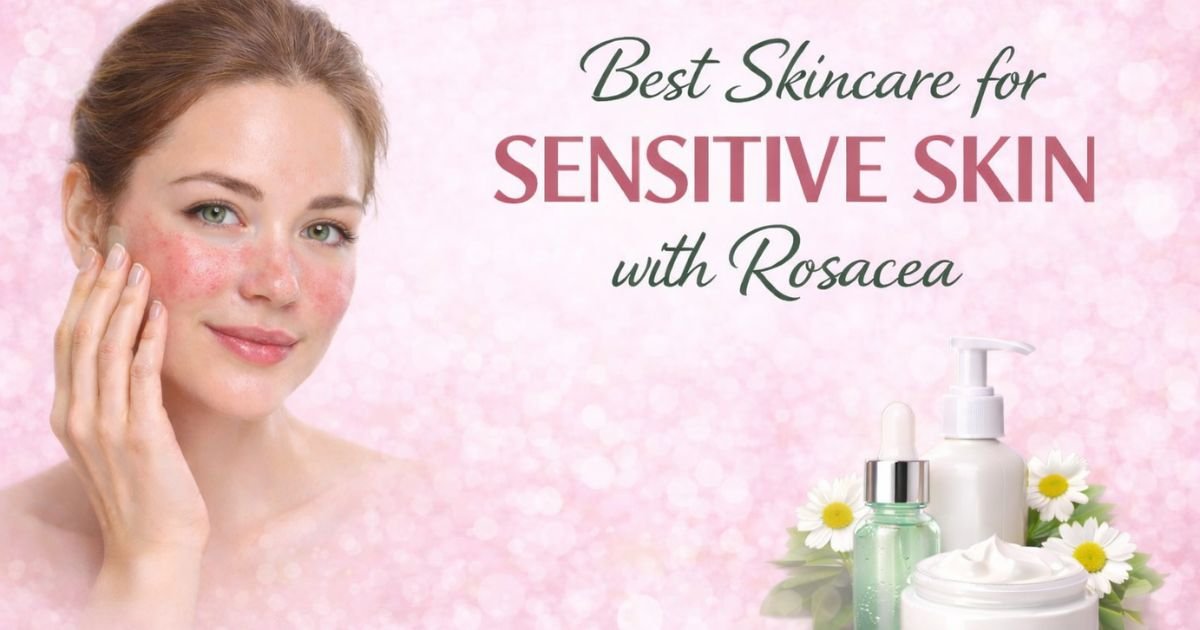
Sensitive skin with rosacea can feel like walking a tightrope—one wrong product and you’re dealing with burning, redness, or a full flare-up. But don’t worry, you’ve got this! In this guide, we’ll cover everything you need to create a soothing, dermatologist-approved routine that will help calm your rosacea, restore hydration, and bring back your radiant glow. Whether you’re a beginner or a seasoned skincare enthusiast, these steps will help you navigate your skincare journey with confidence.
Who Needs This?
This guide is perfect for anyone with rosacea or sensitive skin. Whether you’re just starting to explore skincare or you’re looking for a simpler routine, we have you covered.

Here’s who will benefit the most from this guide:
- Rosacea Sufferers: If you have rosacea, your skin is naturally more sensitive, prone to irritation and flare-ups. This guide offers gentle, soothing steps to calm your skin.
- Sensitive Skin: If your skin reacts to harsh products, ingredients, or environmental triggers, this is for you. It provides gentle skincare products from dermatologists’ favorites.
- Busy Professionals: If you’re juggling a busy schedule, the goal here is simplicity! We’ve created a practical, easy-to-follow routine that fits into any hectic lifestyle.
- Budget-Conscious Shoppers: Most of the recommendations are from affordable drugstore brands (around $10–30 USD) like CeraVe, Vanicream, Neutrogena, and La Roche-Posay.
This guide aims to offer a gentle yet effective skincare routine without the overwhelming complexity of multiple active ingredients or expensive products.
3 Core Principles for Rosacea-Friendly Skincare:
To effectively manage rosacea and achieve healthy skin, we focus on these three core principles:
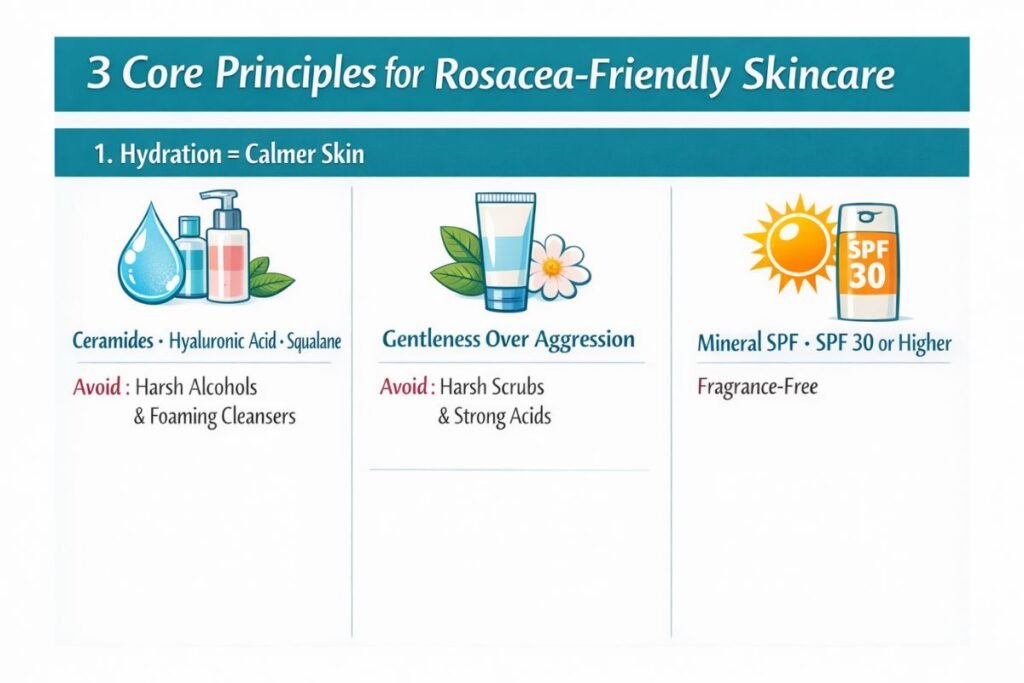
1. Hydration = Calmer Skin:
Rosacea-prone skin is often very dry and sensitive, making hydration essential. When the skin is well-hydrated, it holds moisture like a sponge, which reduces irritation and makes your skin feel less tight and more comfortable.
What to Look for:
- Ceramides: Help restore the skin barrier and prevent water loss.
- Hyaluronic Acid: Draws moisture into the skin for lasting hydration.
- Squalane: Lightweight but effective hydration that soothes.
Ingredients to Avoid:
- Harsh Alcohols: Dry out the skin and worsen redness.
- Foaming Cleansers: Often too harsh and can strip the skin of natural oils.
Client Example:
Sarah, who struggled with redness and dryness due to rosacea, noticed significant improvement after introducing a hydrating serum and a gentle moisturizer. In two weeks, her skin felt less irritated and more balanced.
2. Gentleness Over Aggression:
When it comes to rosacea, less is more. Harsh scrubs, strong exfoliants, or high-potency actives can strip the skin, inflame it, and trigger a flare-up. Rosacea-prone skin requires gentle products and techniques to avoid irritation.
What to Look for:
- Fragrance-Free: Fragrance is a common irritant for rosacea.
- Non-Foaming Cleansers: Cream or gel formulas are soothing and not harsh on the skin.
- Sulfate-Free Products: Avoid products that contain sulfates, as they can be too harsh.
Ingredients to Avoid:
- Physical Scrubs: Can be too abrasive for sensitive skin.
- Strong Acids (AHAs, BHAs): Not suitable for rosacea unless directed by a dermatologist.
Client Example:
John switched from a foaming, harsh cleanser to a gentle cream cleanser and noticed less irritation and dryness. His rosacea flares became less frequent and milder over time.
3. Sun Protection Every Day:
Sun exposure is one of the most common triggers for rosacea flare-ups. Even if it’s cloudy or you’re inside, UV rays can cause damage to your sensitive skin and worsen redness. That’s why daily SPF is essential for protecting your skin.
What to Look for:
- Mineral Sunscreens: Zinc oxide and titanium dioxide are gentle and provide physical protection.
- SPF 30 or Higher: Ensure you’re fully protected.
- Fragrance-Free: Look for sunscreens labeled as fragrance-free to minimize irritation.
Client Example:
Lisa found that applying a broad-spectrum SPF 50 every morning kept her rosacea under control. When she forgot her sunscreen, she immediately noticed an increase in redness and irritation.
Daily Rosacea-Safe Routine (with Product Recommendations):
Here’s a detailed, step-by-step routine that uses dermatologist-approved products that work well for rosacea and sensitive skin. We’ve included budget-friendly options and adjustments for oily/dry skin types.
| Time | Step | Main Option (Sensitive/Rosacea-Friendly) | Budget Alt (Approx. 10–20 USD) | Oily/Dry Skin Adjustment |
|---|---|---|---|---|
| AM | Cleanser | La Roche-Posay Toleriane Hydrating Cleanser | CeraVe Hydrating Cleanser | Oily: Cetaphil Daily Facial Cleanser (Gel) Dry: CeraVe Hydrating Cleanser |
| Serum | CeraVe Hydrating Hyaluronic Acid Serum | Neutrogena Hydro Boost Serum | Oily: The Ordinary Niacinamide Serum Dry: Vanicream Moisturizing Serum | |
| Moisturizer | EltaMD Intense Moisturizer | Vanicream Moisturizing Lotion | Oily: Vanicream Moisturizing Lotion (oil-free) Dry: La Roche-Posay Toleriane Sensitive | |
| SPF | EltaMD UV Clear SPF 46 | Neutrogena Sheer Zinc SPF 50 | Oily: La Roche-Posay Anthelios Oil-Free SPF Dry: La Roche-Posay Toleriane SPF 50 | |
| PM | Cleanser | La Roche-Posay Toleriane Hydrating Cleanser | CeraVe Hydrating Cleanser | Same as AM |
| Serum | The Ordinary Niacinamide Serum | Vanicream Gentle Serum | Oily: The Ordinary Niacinamide Serum Dry: Neutrogena Hydro Boost Serum | |
| Moisturizer | CeraVe PM Facial Moisturizing Lotion | Cetaphil Redness Relief Night Cream | Oily: Vanicream Moisturizing Lotion (oil-free) Dry: La Roche-Posay Toleriane Sensitive Night Cream |
Product Breakdown: 5 Essential Steps for Rosacea:
1. Cleanser
- How to Use: Massage a pea-sized amount gently for 30–60 seconds.
- Good Options:
- La Roche-Posay Toleriane Hydrating Cleanser
- CeraVe Hydrating Cleanser
- Cetaphil Daily Facial Cleanser (Gel) (for oily skin)
2. Serum
- How to Use: Apply 2-3 drops on damp skin and gently pat in.
- Good Options:
- CeraVe Hydrating Hyaluronic Acid Serum
- Neutrogena Hydro Boost Serum
- The Ordinary Niacinamide Serum (great for oil control)
3. Moisturizer
- How to Use: Apply pea-to-nickel-sized amount, massaging gently for about 30 seconds.
- Good Options:
- CeraVe PM Facial Moisturizing Lotion
- Vanicream Moisturizing Lotion
- La Roche-Posay Toleriane Sensitive (ideal for dry, sensitive skin)
4. SPF 30–50 (Every Day)
- How to Use: Apply two fingers’ worth for face and neck, and reapply every 2–3 hours.
- Good Options:
- EltaMD UV Clear SPF 46
- Neutrogena Sheer Zinc SPF 50
- La Roche-Posay Anthelios SPF 50
5. Night Cream
- How to Use: Apply a slightly richer amount than daytime cream.
- Good Options:
- CeraVe PM Facial Moisturizing Lotion
- Cetaphil Redness Relief Night Cream
- La Roche-Posay Toleriane Sensitive Night Cream
Skin Nutrition for Rosacea:

Skincare isn’t just about what you put on your face—it’s also about what you feed your skin from within. Incorporating antioxidants, omega-3 fatty acids, and hydration into your diet can help promote healthy, glowing skin.
Sample 3-Day Skin-Boosting Meal Plan:
- Day 1: Spinach, banana, chia seed smoothie; grilled chicken with quinoa.
- Day 2: Oats with walnuts and strawberries; baked fish with brown rice.
- Day 3: Avocado toast; lentil soup with salad.
FAQ:
1. What is rosacea?
Rosacea is a common inflammatory skin condition that causes persistent facial redness, small bumps, and visible blood vessels, most often on the cheeks, nose, and forehead.
2. What triggers rosacea flare‑ups?
Flare‑ups are often triggered by sun exposure, hot drinks, spicy foods, alcohol, stress, and temperature changes, which dilate blood vessels and worsen redness.
3. Can rosacea be cured?
There is no known cure, but symptoms can be effectively managed long‑term with gentle skincare, trigger avoidance, and medical treatments if needed.
4. How do I treat rosacea flare‑ups?
Treatments include gentle skincare, daily SPF, avoiding triggers, and sometimes dermatologist‑prescribed creams or medications to reduce redness and inflammation.
Call to Action:
Start your simple routine today, and stick with it for at least 6–8 weeks. Track your progress with photos or a skin diary. Your skin is a delicate canvas, and when you treat it with patience and care, it will reflect a calm, glowing radiance. You’ve got this!