
As a board-certified dermatologist and skincare coach with over 20 years of clinical experience, I’ve treated thousands of patients across different ages, skin tones, climates, and skin conditions. When it comes to the best face skincare routine for glowing skin, one truth never changes: healthy glow comes from skin health, not shortcuts.
Many people search for glowing skin hoping for fast fixes—ice cubes, harsh scrubs, viral DIY masks, or layering too many actives. While some of these may create a temporary cosmetic effect, they often compromise the skin barrier and lead to irritation, sensitivity, or long-term damage.
This guide explains the best face skincare routine for glowing skin, exactly as dermatologists recommend—rooted in skin biology, clinical evidence, and real-world experience.
What Dermatologists Mean by “Glowing Skin”

Medically speaking, glowing skin reflects well-functioning skin, not perfection.
True glow usually indicates:
- A healthy, intact skin barrier
- Balanced hydration (not oiliness)
- Minimal inflammation
- Smooth surface texture that reflects light evenly
Glowing skin does not mean:
- Zero pores
- Unreal shine
- Filter-like smoothness
Those effects are often temporary, makeup-based, or digitally altered.
Who May Benefit From This Routine
This dermatologist-recommended routine may benefit:
- Normal, dry, combination, or oily skin
- Dehydrated or dull-looking skin
- Uneven skin tone or texture
- Early signs of aging
- Post-acne marks (not inflamed acne)
Who Should Be Extra Cautious or Modify Steps
- Rosacea-prone skin
- Active eczema or dermatitis
- Broken capillaries or facial redness
- Severe acne or cystic acne
- Very sensitive or allergy-prone skin
- Vascular conditions or thin skin
Important: If you have a diagnosed skin condition, consult a dermatologist before changing routines.
How Glowing Skin Works: Science-Based Explanation
Short-Term Effects (Temporary)
Some skincare practices may give immediate but temporary improvement, such as:
- Increased blood circulation
- Reduced puffiness
- Surface hydration
- Temporary tightening
These effects usually last hours, not days.
Long-Term Effects (Evidence-Backed)
True glow develops over weeks to months through:
- Skin barrier repair
- Controlled cell turnover
- Reduced inflammation
- Consistent sun protection
- Improved hydration balance
Dermatologists prioritize long-term skin function, not quick fixes.
Dermatologist-Recommended Daily Skincare Routine

Morning (AM Routine)
| Step | Purpose | What to Look For | How Often | Examples |
|---|---|---|---|---|
| 1. Gentle Cleanser | Removes sweat, oil, and environmental residue without stripping the skin | • Non-foaming or low-foaming formula • pH-balanced • Fragrance-free for sensitive skin | Every morning | CeraVe Hydrating Cleanser Cetaphil Gentle Skin Cleanser |
| 2. Antioxidant Serum (Optional) | May help brighten dull skin, support collagen, and improve uneven tone over time | • Stable Vitamin C formula • Lightweight, non-irritating | Daily or every other morning if sensitive | La Roche-Posay Vitamin C10 The Ordinary Ascorbic Acid 8% |
| 3. Moisturizer | Improves light reflection and supports skin barrier health | • Ceramides • Hyaluronic acid • Niacinamide (2–5%) | Every morning | Neutrogena Hydro Boost CeraVe Moisturizing Lotion |
| 4. Sunscreen (Most Important Step) | Protects against pigmentation, collagen loss, and premature aging | • Broad-spectrum protection • SPF 30 or higher | Every morning, even indoors | La Roche-Posay Anthelios SPF Neutrogena Ultra Sheer SPF |
Night (PM Routine)
| Step | Purpose | Key Notes | Frequency | Examples |
|---|---|---|---|---|
| 1. Cleanse | Removes sunscreen, makeup, pollution, and oil | • Gentle cleansing • Avoid harsh scrubbing | Every night | Same cleanser as morning |
| 2. Treatment Step (Choose One Only) | Supports cell turnover and long-term glow | • Retinoids = gold standard • AHA/BHA for exfoliation • Do not combine initially | 2–3× per week or as tolerated | The Ordinary Retinol 0.2–0.5% CeraVe Resurfacing Retinol |
| 3. Barrier-Repair Moisturizer | Supports nighttime skin repair and recovery | • Ceramides • Cholesterol • Fatty acids | Every night | Same or slightly richer moisturizer |
Common Skin Concerns This Routine Addresses
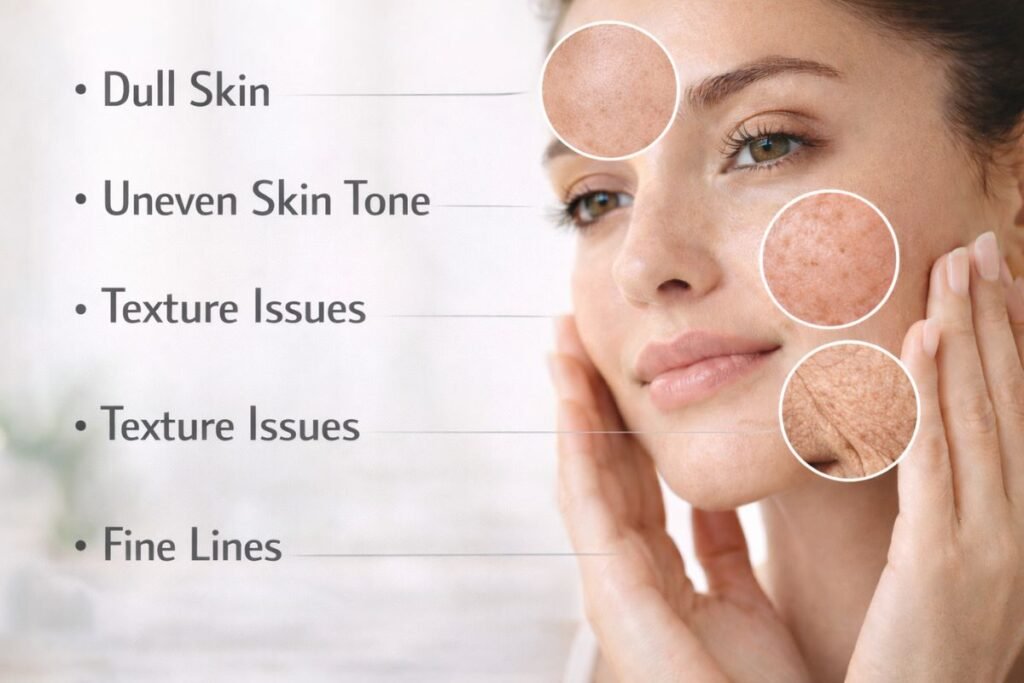
Dull Skin
Often due to dehydration, sun damage, or barrier disruption.
Uneven Skin Tone
Vitamin C, sunscreen, and retinoids may help gradually.
Texture Issues
Gentle exfoliation improves smoothness over time.
Fine Lines
Retinoids and sun protection have the strongest evidence.
DETAILED RISKS & SAFETY WARNINGS (NON-NEGOTIABLE)
Ice Burn
- Caused by direct ice application
- May lead to blistering or pigmentation
Rosacea Flares
- Cold exposure and exfoliation may worsen redness
Broken Capillaries
- Aggressive rubbing, suction tools, or cold shock increase risk
Eczema & Barrier Damage
- Over-cleansing and strong actives strip natural oils
Vascular Issues
- Extreme temperature changes may worsen sensitivity
Stop immediately if you notice
- Burning or stinging
- Persistent redness
- New visible blood vessels
- Worsening irritation
Realistic Results Timeline:
Week 1–2
- Improved hydration
- Temporary brightness
Week 4–6
- More even tone
- Smoother texture
Month 3+
- Sustainable glow
- Stronger skin barrier
- Reduced sensitivity
Common Mistakes & How to Fix Them:
Using too many products
Simplify and be consistent
Chasing instant glow trends
Focus on long-term skin health
Skipping sunscreen
Use daily without exception
Copying influencer routines
Follow dermatologist guidance
FAQs:
1. Can glowing skin be achieved naturally?
Yes, through hydration, barrier repair, and sun protection.
2. How often should I exfoliate?
2–3x per week or less if sensitive.
3. Is glowing skin possible with acne?
Yes, once active inflammation is controlled.
4. When should I see a dermatologist?
If irritation, pigmentation, or acne persists.