

When it comes to managing oily, acne-prone skin, the right cleanser can be a game-changer. Best Cleansers for Oily, Acne-Prone Skin are designed to target oil and breakouts without causing irritation. Not all cleansers are created equal, and choosing the wrong one may worsen breakouts or leave your skin feeling too dry or irritated. In this guide, we’ll help you navigate the world of cleansers, showing you what works best for oily, acne-prone skin and how to avoid common mistakes. Whether you’re new to skincare or a seasoned pro, we’ll break down the science and recommendations in a way that’s easy to understand and actionable.
Who May Benefit and Who Should Avoid:
Ideal Skin Types:

- Oily skin with frequent breakouts (blackheads, whiteheads, cystic acne)
- Combination skin with excess oil in the T-zone and acne flare-ups
- Individuals with acne-prone skin looking for gentle yet effective treatments
Who Should Avoid:

- Dry and sensitive skin: Cleansers with strong exfoliants or harsh active ingredients (like salicylic acid) can strip your skin of natural moisture, leading to irritation or redness.
- Rosacea-prone skin: Harsh ingredients can trigger flare-ups, so it’s best to stick to calming, non-foaming cleansers.
- Eczema sufferers: Opt for fragrance-free, hydrating formulas to prevent flare-ups.
How It Works: The Science Behind Oily, Acne-Prone Skin Cleansers:
Cleansers for oily, acne-prone skin generally target two primary concerns: controlling excess sebum (oil) and unclogging pores. The right cleanser should help balance oil production without over-drying your skin.
Short-Term Effects:
- Oil removal: Most acne cleansers contain ingredients like salicylic acid or benzoyl peroxide, which dissolve oil and unclog pores.
- Gentle exfoliation: Exfoliating ingredients such as AHAs or BHAs (like glycolic and salicylic acid) can help prevent clogged pores and reduce breakouts.
- Anti-inflammatory properties: Ingredients like niacinamide soothe redness and inflammation, improving the overall appearance of your skin.
Long-Term Effects:
- Consistent use of the right cleanser can reduce acne severity by keeping pores clear of oil and dead skin cells.
- Prevent future breakouts by controlling bacteria and excess oil.
- Help improve skin texture and tone over time.
Metaphor: Think of a good cleanser as a traffic controller for your pores. It clears away the buildup (oil, dirt, dead skin) so your pores can function properly without traffic jams (breakouts!).
Proper Timing and Frequency:
Frequency:
- Daily Use: Most people with oily, acne-prone skin should cleanse twice a day (morning and night).
- Occasional Exfoliation: Depending on your skin’s tolerance, you may want to exfoliate 2-3 times a week to help prevent clogged pores.
Routine Placement:
- Morning: Cleanse to remove excess oil and sweat that accumulates overnight.
- Evening: Cleanse to remove makeup, sunscreen, pollutants, and the day’s grime.
- Post-Workout: If your skin tends to break out after sweating, a quick cleanse post-exercise can help prevent clogged pores.
Best Products & Ingredients for Oily, Acne-Prone Skin:
When selecting a cleanser, aim for formulas that gently cleanse without stripping. Here are some of the top recommendations:
- CeraVe Foaming Facial Cleanser
Why It’s Great: Formulated with ceramides and niacinamide, this gentle cleanser removes excess oil while restoring the skin’s barrier. It’s perfect for sensitive, acne-prone skin. - The Ordinary Squalane Cleanser
Why It’s Great: Although more hydrating, this squalane-based cleanser gently removes makeup and excess oil without disrupting your skin’s natural moisture balance, making it great for combination skin. - Neutrogena Oil-Free Acne Wash
Why It’s Great: A go-to for acne-prone skin, it contains salicylic acid, which penetrates pores to clear away excess oil and acne-causing bacteria. - La Roche-Posay Effaclar Purifying Foaming Gel
Why It’s Great: This soap-free gel is ideal for oily, acne-prone skin, with zinc to help reduce excess sebum and prevent irritation. It also has a gentle, non-drying formula. - Cetaphil Daily Facial Cleanser
Why It’s Great: Mild enough for daily use, it’s designed to cleanse without stripping moisture. Ideal for those who need a more basic but effective routine.
Focusing on Major Skin Concerns:
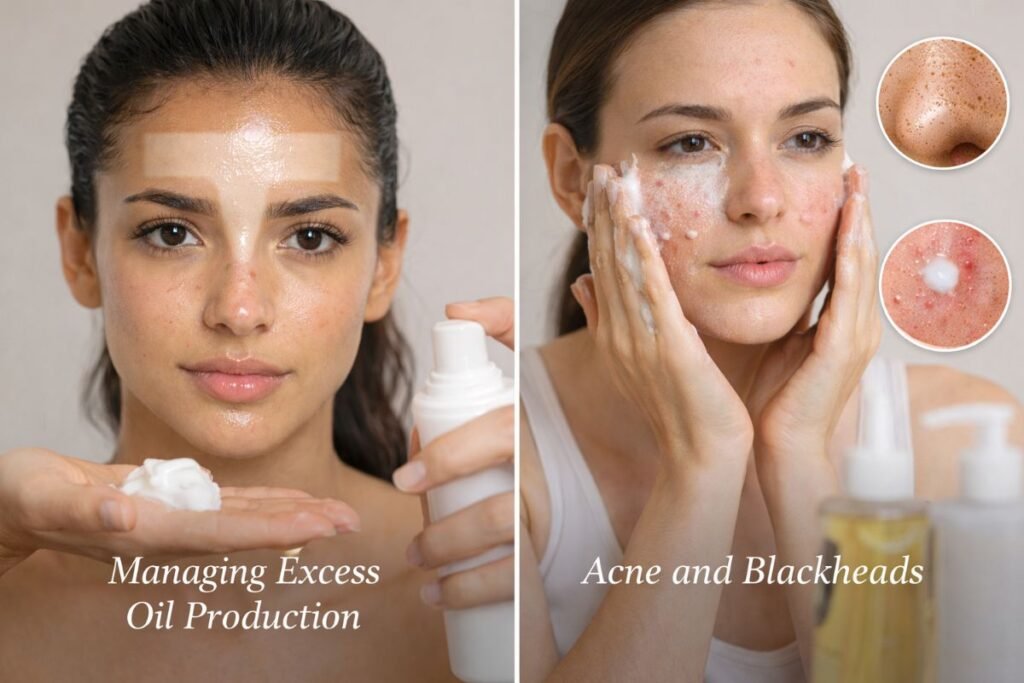
1. Managing Excess Oil Production:
Over-cleansing can actually cause more oil production. Use a gentle foaming or gel cleanser designed to balance oil production. Opt for cleansers with niacinamide, which helps regulate oil production over time.
2. Acne and Blackheads:
For persistent acne, look for cleansers with salicylic acid (a BHA) or benzoyl peroxide. These active ingredients help prevent clogged pores and treat acne at the source. However, be cautious not to over-exfoliate.
Safety Rules & Warning Signs:
When to Stop:
- Excess dryness: If your skin feels tight, itchy, or overly dry after using a cleanser, switch to a gentler formula.
- Irritation or redness: Redness or stinging could indicate that your cleanser is too harsh for your skin.
- Breakouts worsening: If breakouts worsen, it may be due to an ingredient causing irritation or clogging pores. Consider switching to a more hydrating formula or reducing exfoliation frequency.
How to Mitigate Side Effects:
- Avoid excessive scrubbing: Gentle massaging with your fingertips is enough. Avoid physical exfoliants like scrubs with beads, which can damage your skin.
- Hydrate afterward: Follow up with an oil-free moisturizer to help lock in hydration and prevent the skin from compensating by producing more oil.
Realistic Results Timeline:
Week 1-2:
- What to Expect: Your skin may feel smoother and less oily immediately after use. However, improvements in acne take time.
- Actionable Step: Stick with your new routine consistently. If irritation occurs, reduce frequency.
Month 1:
- What to Expect: You’ll begin seeing a reduction in breakouts, and your skin may feel more balanced. The cleanser should help keep oil at bay without drying out the skin.
Month 3:
- What to Expect: A significant reduction in acne and clearer skin. Texture should improve, with fewer clogged pores and blackheads.
Common Mistakes & How to Fix Them:
1. Using Harsh Scrubs or Over-Exfoliating:
Fix It: Stick to chemical exfoliants (like BHAs or AHAs) and limit their use to 2-3 times per week.
2. Skipping Moisturizer:
Fix It: Even oily skin needs moisture! Use a lightweight, non-comedogenic moisturizer to balance oil production.
3. Not Removing Makeup Before Cleansing:
Fix It: Always remove makeup and sunscreen first with a gentle makeup remover or micellar water.
4. Over-Cleansing:
Fix It: Don’t cleanse more than twice daily, as over-cleansing can trigger more oil production.
FAQs:
1. Can I use a cleanser with salicylic acid every day?
Yes, you can use a salicylic acid-based cleanser daily if your skin tolerates it. However, start with every other day or 2-3 times per week if you’re new to salicylic acid to avoid irritation.
2. What’s the difference between a gel cleanser and a foam cleanser for acne?
Gel cleansers are usually gentler and more hydrating, while foam cleansers can remove more oil. Choose based on your skin’s needs—if you’re oily, a foam cleanser may be better for oil control.
3. How long will it take to see results from my new cleanser?
Expect to see visible results within 2-4 weeks. Patience is key, as consistent use is essential for long-term improvement.
4. Can I use a cleanser with benzoyl peroxide if I have sensitive skin?
Benzoyl peroxide can be irritating for sensitive skin. If irritation occurs, switch to a gentler cleanser or reduce frequency.