
Sensitive skin is a common concern that many people face. Whether it’s redness, irritation, dryness, or even allergic reactions, taking care of sensitive skin often feels like walking a tightrope. Fortunately, managing sensitive skin doesn’t need to break the bank. With the right products, a thoughtful skincare routine, and an understanding of how different ingredients affect your skin, you can maintain a calm, healthy complexion—affordably. In this guide, we’ll explore how to create an effective skincare routine that soothes your sensitive skin, providing both short-term comfort and long-term benefits.
Who May Benefit & Who Should Avoid:
Ideal Skin Types:
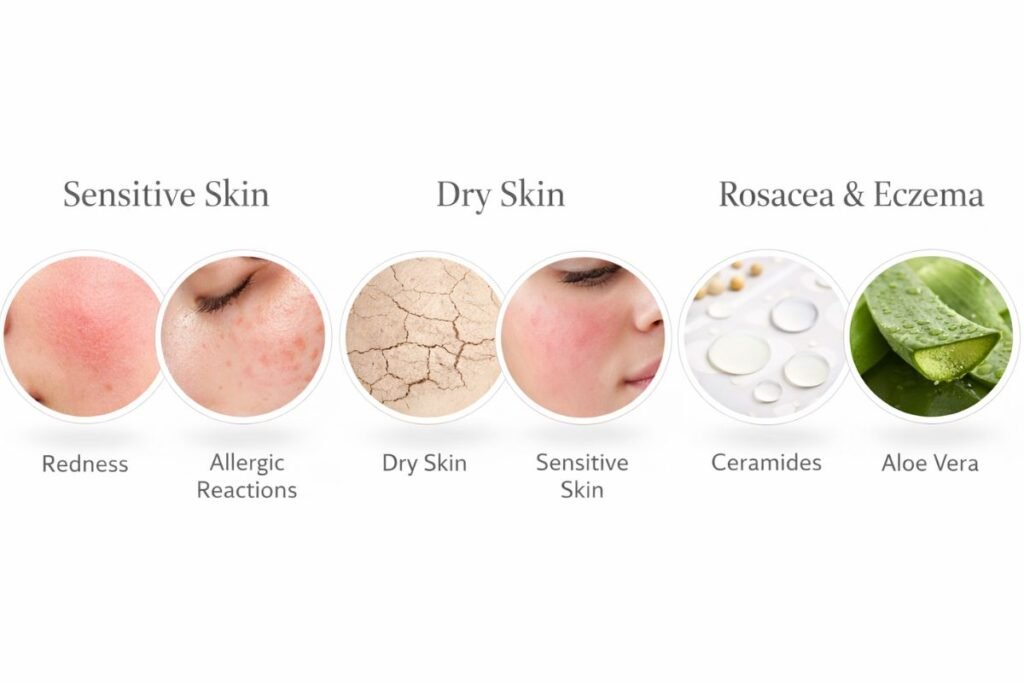
- Sensitive Skin: Naturally prone to irritation, redness, and allergic reactions. Ingredients like fragrances, alcohols, and harsh exfoliants may trigger flare-ups.
- Dry Skin: Often accompanies sensitive skin, leading to tightness, flaking, and irritation. Hydration-focused products can help maintain moisture balance.
- Rosacea & Eczema: These conditions require extra care and gentle, non-inflammatory products. Look for soothing ingredients like ceramides, niacinamide, and aloe vera.
Contraindications:
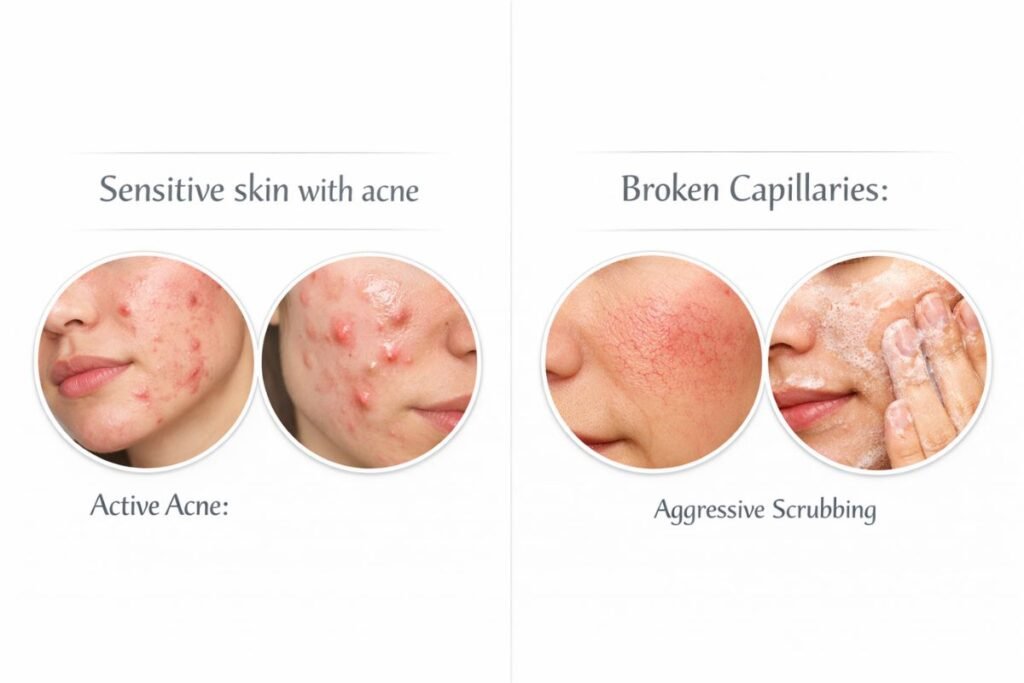
- Active Acne: Sensitive skin with acne may need specific care with acne-targeting ingredients like benzoyl peroxide or salicylic acid. However, these should be used cautiously, as they can be harsh.
- Broken Capillaries: Avoid overly hot water, aggressive scrubbing, and certain exfoliants, as these can further irritate skin with visible blood vessels.
Affordable Skincare for Sensitive Skin: Products & Ingredients to Look For
Managing sensitive skin requires choosing the right products that help calm irritation, restore balance, and maintain hydration without causing harm. Here’s a breakdown of the most effective products and ingredients to include in your budget-friendly skincare routine.
1. Cleansers: Gentle and Hydrating
Cleansers are essential for removing dirt, oil, and impurities, but they must not strip the skin’s natural moisture, especially if you have sensitive skin. Look for cleansers that are hydrating and free from harsh ingredients like alcohol or sulfates.
Recommended Products:
- CeraVe Hydrating Cleanser
Why it’s good: Contains ceramides and hyaluronic acid to restore the skin’s barrier and retain moisture. Fragrance-free and non-foaming, making it ideal for sensitive skin.
How to use: Massage onto damp skin morning and evening, rinse with lukewarm water. - Cetaphil Daily Facial Cleanser
Why it’s good: Mild formula cleanses without stripping natural oils. Non-irritating and perfect for sensitive skin.
How to use: Apply to damp skin, massage gently, rinse with lukewarm water. - La Roche-Posay Toleriane Hydrating Gentle Cleanser
Why it’s good: Soap-free with prebiotic thermal water that restores the skin’s microbiome while maintaining hydration.
How to use: Massage onto damp skin, rinse off, suitable for daily use.
2. Moisturizers: Hydration and Barrier Repair
Moisturizers are essential for sensitive skin to maintain hydration and repair the skin’s natural barrier. Look for products that are rich in soothing, non-irritating ingredients like ceramides, hyaluronic acid, and niacinamide.
Recommended Products:
- Neutrogena Hydro Boost Water Gel
Why it’s good: Contains hyaluronic acid to hydrate the skin. Non-comedogenic and fragrance-free, ideal for sensitive skin.
How to use: Apply to face and neck morning and evening after cleansing. - La Roche-Posay Toleriane Double Repair Face Moisturizer
Why it’s good: Contains ceramides and niacinamide to restore the skin’s barrier and calm irritation. Perfect for sensitive skin.
How to use: Apply morning and evening after cleansing. - CeraVe Moisturizing Cream
Why it’s good: Rich in ceramides and hyaluronic acid, this cream helps restore moisture and keep the skin hydrated.
How to use: Apply generously to face and body, especially after cleansing or showering.
3. Sunscreen: Daily Protection
Sensitive skin is more prone to sun damage, which can lead to irritation and inflammation. Using a gentle, broad-spectrum sunscreen is crucial for daily protection.
Recommended Products:
- Neutrogena Hydro Boost Water Gel SPF 50
Why it’s good: Offers broad-spectrum protection with SPF 50, hydrates with glycerin and hyaluronic acid, and is lightweight.
How to use: Apply 15 minutes before sun exposure and reapply every 2 hours. - La Roche-Posay Anthelios Mineral Sunscreen SPF 50
Why it’s good: Uses titanium dioxide and zinc oxide for sun protection, with antioxidants to soothe the skin.
How to use: Apply each morning and reapply every 2 hours. - EltaMD UV Physical Broad-Spectrum SPF 41
Why it’s good: A mineral sunscreen with zinc oxide and titanium dioxide, ideal for sensitive skin.
How to use: Apply each morning and reapply as needed throughout the day.
4. Targeted Treatments: Redness and Irritation
For specific issues like redness, irritation, or dryness, targeted treatments are essential. Look for products containing niacinamide, aloe vera, and ceramides, which help calm inflammation and strengthen the skin’s barrier.
Recommended Products:
- The Ordinary Niacinamide 10% + Zinc 1%
Why it’s good: Niacinamide reduces redness and irritation, while zinc helps regulate oil production. Ideal for calming sensitive skin.
How to use: Apply a few drops to your face after cleansing, allow it to absorb before moisturizing. - Avene Antirougeurs Redness Relief Soothing Cream
Why it’s good: Infused with Avene Thermal Spring Water, this cream is known for its soothing properties, making it ideal for redness or rosacea.
How to use: Apply to affected areas after cleansing and moisturizing. - First Aid Beauty Ultra Repair Cream
Why it’s good: Contains colloidal oatmeal, shea butter, and ceramides to hydrate and soothe dry, irritated, or eczema-prone skin.
How to use: Apply generously to dry or irritated areas, especially after cleansing or during flare-ups.
5. Masks and Exfoliants: Gentle Exfoliation
Exfoliating sensitive skin requires a delicate approach. Choose mild exfoliants that slough off dead skin without irritating or damaging the skin barrier.
Recommended Products:
- The Ordinary AHA 30% + BHA 2% Peeling Solution (Use with Caution)
Why it’s good: This chemical exfoliant refines skin texture and unclogs pores, with soothing aloe vera to reduce irritation. Use sparingly.
How to use: Apply to clean, dry skin for no more than 10 minutes, then rinse with lukewarm water. Avoid using on broken or irritated skin. - Avène Soothing Moisture Mask
Why it’s good: Hydrating and soothing, this mask helps reduce irritation and redness while providing long-lasting moisture.
How to use: Apply generously to the face, leave on for 10-15 minutes, and wipe off excess or leave it on overnight for deeper hydration.
Best Routine & Safe Usage Tips:
Creating a consistent but gentle skincare routine is key. Here’s a plan to follow::
- Morning Routine:
- Cleanser: Use a mild, hydrating cleanser (e.g., Cetaphil Daily Facial Cleanser or CeraVe Hydrating Cleanser) to wash away impurities without stripping moisture.
- Moisturizer: Apply a calming moisturizer (such as La Roche-Posay Toleriane Double Repair Face Moisturizer) to lock in hydration.
- SPF: Finish with a gentle sunscreen (e.g., Neutrogena Hydro Boost Water Gel SPF 50) to protect from sun damage, which can exacerbate sensitivity.
- Evening Routine:
- Cleanser: Use the same gentle cleanser as in the morning.
- Moisturizer: Reapply your calming moisturizer to nourish the skin overnight.
- Treatment (Optional): If your skin tolerates it, you can add a serum with soothing ingredients like niacinamide or aloe vera (e.g., The Ordinary Niacinamide 10% + Zinc 1%) a few times a week.
Frequency Tips:
- Cleanse twice daily (morning and night).
- Moisturize morning and evening.
- SPF every morning, even indoors.
- Treatment serums or masks can be used 2–3 times a week or as tolerated.
Targeting Top Concerns:
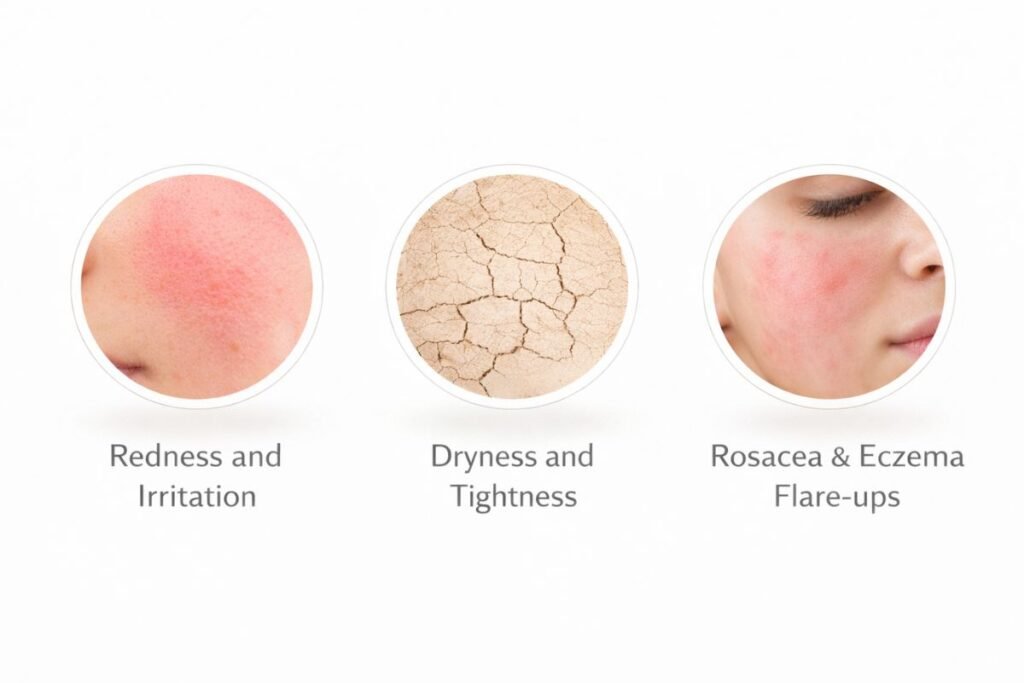
- Redness and Irritation:
- Ingredients to Look For: Niacinamide, aloe vera, and ceramides are anti-inflammatory and help reduce redness. Avoid fragrances and alcohol-based products, which can exacerbate irritation.
- Dryness and Tightness:
- Ingredients to Look For: Hydrating ingredients like hyaluronic acid, glycerin, and ceramides replenish the skin’s moisture barrier, preventing water loss and dryness.
- Rosacea and Eczema Flare-ups:
- Ingredients to Look For: Choose gentle, calming products with niacinamide, calendula, or colloidal oatmeal, which soothe the skin and reduce inflammation.
Safety Rules & Warning Signs:
It’s important to listen to your skin. If irritation persists or worsens, here’s when to stop:
- Discontinue if you experience:
- Persistent burning, stinging, or itching after applying a product.
- Swelling or redness that doesn’t subside within 24 hours.
- Dry patches that worsen despite moisturizing.
Mitigation Tips:
- Always patch-test new products on a small area of skin before applying them to your face.
- Avoid products with known irritants, such as fragrances, alcohol, and harsh exfoliants.
Realistic Results Timeline:
Managing sensitive skin doesn’t offer instant gratification—but with patience, you’ll see improvements:
- Week 1-2: You may notice a reduction in redness, tighter skin, and less irritation.
- Month 1: Skin feels smoother and less reactive, with improved hydration.
- Month 3: Your skin’s protective barrier should be restored, leading to overall calmer, healthier skin.
Common Mistakes & How to Fix Them:
- Using Harsh Products Too Frequently
Fix It: Stick to mild, hydrating products and limit exfoliation to 1–2 times per week. - Skipping Sunscreen
Fix It: Make sunscreen part of your daily routine. It’s non-negotiable for sensitive skin. - Overloading on Active Ingredients
Fix It: Introduce one active ingredient at a time and give your skin time to adjust. - Not Moisturizing Enough
Fix It: Apply moisturizer immediately after cleansing to lock in hydration.
5. DIY Skincare:
- Oatmeal Face Mask: Mix ground oats with water or honey for a soothing mask.
- Aloe Vera Gel: Apply fresh aloe vera gel for cooling relief.
- Cucumber Slices: Place cucumber slices on irritated skin to reduce swelling.
6. Things to Avoid:
- Fragrances and Dyes: These can irritate sensitive skin.
- Alcohol: Can dry out and aggravate skin.
- Harsh Exfoliants: Avoid abrasive scrubs; opt for mild chemical exfoliants.
- Harsh Cleansers: Choose sulfate-free cleansers to preserve moisture.
FAQs:
- Can I use Vitamin C on sensitive skin?
Yes, but choose a gentle, stable form like ascorbic acid or sodium ascorbyl phosphate. Start with a low concentration to avoid irritation. - How can I treat eczema on my face?
Use fragrance-free, hydrating moisturizers and topical steroids prescribed by a dermatologist for flare-ups. Avoid known triggers like hot water and harsh scrubs. - Are there any natural ingredients that help with sensitive skin?
Aloe vera, chamomile, and calendula are known for their calming and anti-inflammatory properties. - How do I build a routine for sensitive skin?
Focus on a gentle cleanser, a hydrating moisturizer, and sunscreen. Gradually introduce other products as your skin tolerates them.