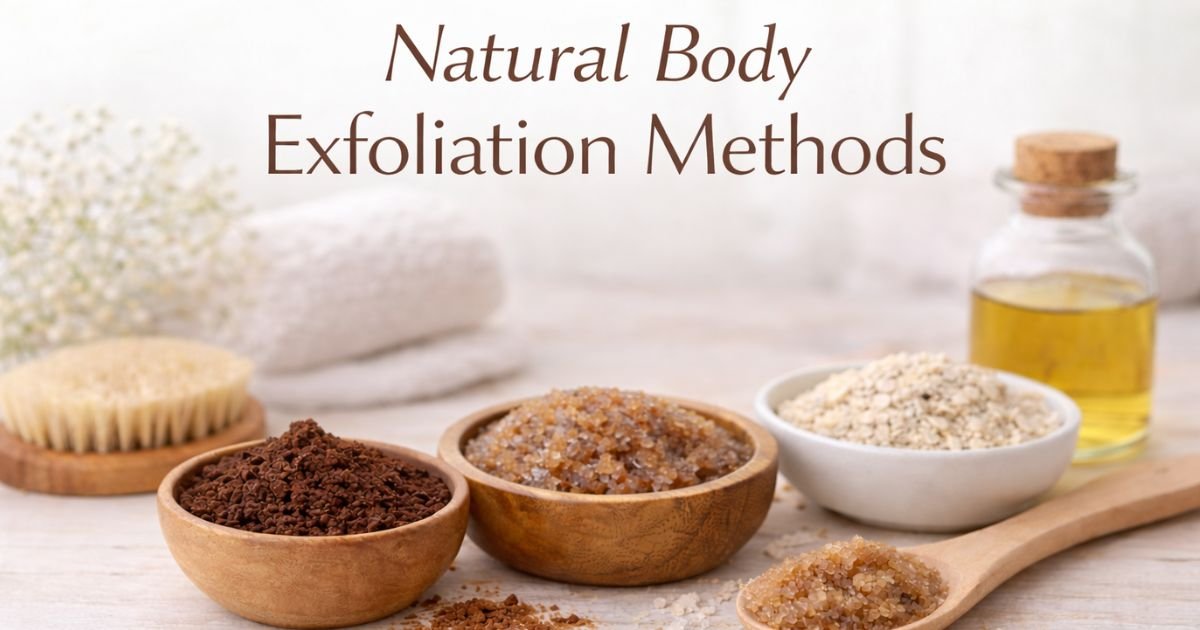
Rough patches on elbows, dull-looking legs, or uneven skin texture are common concerns—especially when body care gets less attention than facial skincare. Natural body exfoliation methods offer a gentle, affordable way to refresh the skin by removing dead surface cells and supporting healthy skin turnover. When done correctly, these methods can temporarily improve smoothness, enhance moisturizer absorption, and give skin a healthier glow.
As a board-certified dermatologist with over 20 years of clinical experience, I always emphasize one thing: exfoliation should support the skin barrier, not damage it. This guide explains expert-recommended natural exfoliation methods with clear science, safety rules, realistic expectations, and routines you can actually follow. You’ll learn what works, what’s temporary, and how to exfoliate safely—no myths, no extreme claims.
1. What Is Natural Body Exfoliation?

Natural body exfoliation refers to using physical or plant-based materials to remove dead skin cells from the surface of the body. Unlike strong chemical peels or aggressive scrubs, natural methods focus on gentle mechanical action.
Evidence-backed benefits include:
- Temporary smoothing of rough skin
- Improved appearance of dull skin
- Better absorption of moisturizers
Limited evidence benefits include:
- Improved circulation claims
- Lymphatic drainage benefits
- Long-term skin renewal effects
Important: Exfoliation improves how skin looks and feels, not its permanent structure.
2. Who Should Use Natural Body Exfoliation (and Who Should Avoid It)
Suitable for:
- Normal to dry skin with rough patches
- Keratosis pilaris–prone areas (arms, thighs)
- Ingrown hairs after shaving (gentle use)
- Dull or flaky body skin
Avoid or use caution if you have:
- Active eczema or psoriasis
- Rosacea or visible broken capillaries
- Diabetes or vascular disease
- Open wounds, infections, or sunburn
If you have a medical skin condition, consult a dermatologist before exfoliating.
3. How Natural Exfoliation Works (Science Explained Simply)
The outermost layer of skin, the stratum corneum, is made of dead skin cells. Natural exfoliation removes these cells through mild friction.
Temporary effects (evidence-backed):
- Smoother skin texture
- Brighter appearance
- Reduced surface flaking
Long-term effects (limited evidence):
- Improved skin appearance with consistency
- No proven permanent pigment or anti-aging changes
Over-exfoliation damages the skin barrier, causing dryness, irritation, and sensitivity. This is why technique matters more than the ingredient.
4. How Often to Exfoliate
For most people, natural body exfoliation should be done:
2–3 times per week or as tolerated
- Sensitive skin: once weekly
- Thick areas (heels, elbows): up to 3 times weekly
- Never exfoliate daily
Simple Body Exfoliation Routine
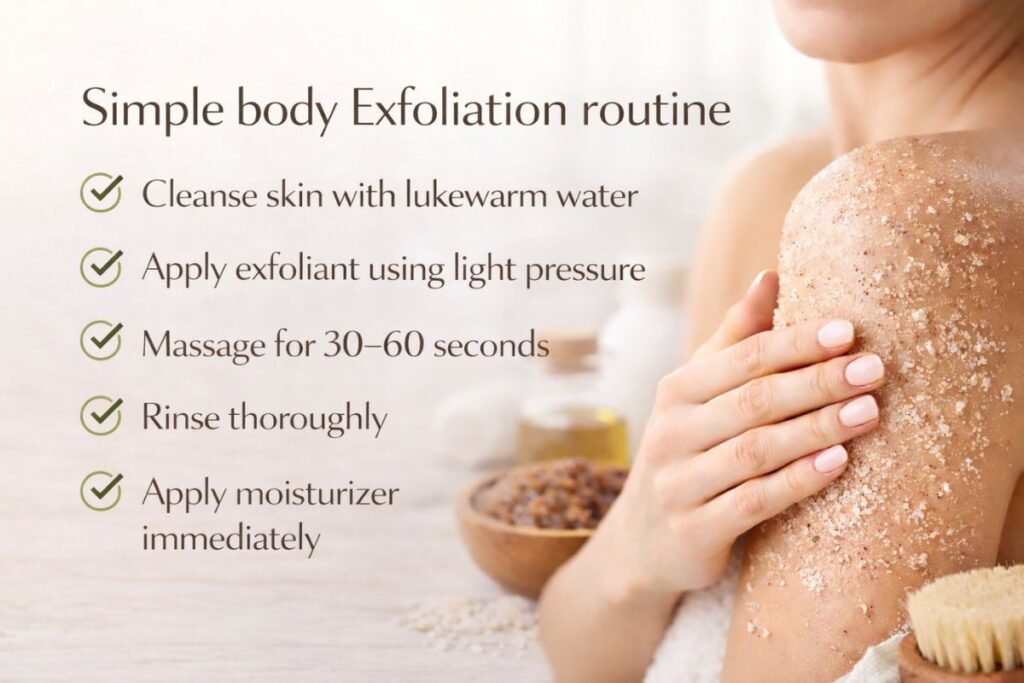
- Cleanse skin with lukewarm water
- Apply exfoliant using light pressure
- Massage for 30–60 seconds
- Rinse thoroughly
- Apply moisturizer immediately
5. Expert-Recommended Natural Body Exfoliation Methods
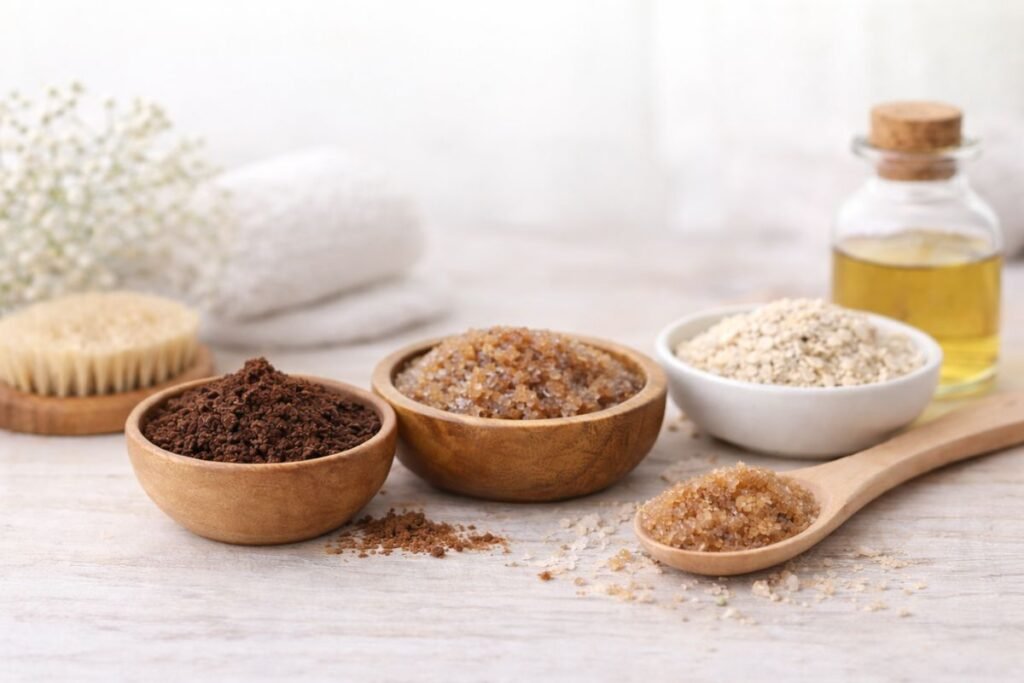
1. Sugar Scrubs (Fine Grain)
- Gentle physical exfoliation
- Best for normal to dry skin
- Mix with honey or oil for cushioning
Avoid: coarse sugar or harsh scrubbing.
2. Coffee Grounds (Used)
- Mild exfoliating action
- Temporary tightening appearance
- Should be finely ground
Evidence note: cosmetic smoothing only; effects are temporary.
3. Oatmeal (Ground or Colloidal)
- Extremely gentle
- Ideal for sensitive or dry skin
- Soothing and anti-inflammatory
Best mixed with water or milk to form a paste.
4. Dry Brushing (Soft Bristles)
- Removes surface dead skin
- May improve temporary smoothness
- Limited evidence for lymphatic benefits
Use soft brushes only and avoid broken skin.
5. Washcloth or Muslin Cloth
- Controlled exfoliation
- Beginner-friendly
- Safer than harsh scrubs
This is one of the safest options for most skin types.
6. Products That Support Natural Exfoliation
Exfoliation must always be followed by barrier-repair moisturizers. Affordable, dermatologist-recommended options include:
- CeraVe – ceramides support the skin barrier
- Cetaphil – gentle, fragrance-free hydration
- Neutrogena – lightweight body lotions
- La Roche-Posay – sensitive-skin friendly formulas
- The Ordinary – simple hydrating ingredients
Moisturizing after exfoliation is essential, not optional.
7. Top Skin Concerns
1. Body Acne and Ingrown Hairs
- Helps unclog surface debris
- Avoid exfoliating inflamed acne
- Gentle methods only
2. Dark Spots and Uneven Tone
- Improves brightness temporarily
- Does not treat pigmentation alone
- Sun protection is critical
3. Aging and Rough Texture
- Smooths surface irregularities
- Long-term improvement depends on moisturizers
8. Safety Rules and Risks
Stop exfoliation immediately if you experience pain, burning, or redness lasting more than 24 hours.
Potential risks include:
- Ice burn from ice rubbing
- Rosacea flare-ups
- Broken capillaries from harsh pressure
- Eczema worsening
- Skin injury in vascular disease or diabetes
Safety essentials:
- Never exfoliate broken or infected skin
- Use light pressure only
- Avoid daily exfoliation
- Moisturize immediately after
Consult a dermatologist for medical conditions.
9. Realistic Timeline for Results
Week 1–2:
- Skin feels smoother
- Moisturizer absorbs better
Month 1:
- Improved texture on rough areas
Month 3:
- Maintained smoothness with consistency
- Results plateau if overused
10. Common Mistakes and How to Fix Them
- Exfoliating too often → Reduce to once or twice weekly
- Using harsh grains → Switch to oatmeal or cloth
- Skipping moisturizer → Apply immediately after
- Scrubbing inflamed skin → Pause exfoliation
- Expecting permanent results → Focus on maintenance
11. Frequently Asked Questions
Can natural body exfoliation remove tan permanently?
No. It may temporarily brighten skin, but sun protection is required for lasting results.
Is dry brushing safe every day?
No. 2–3 times per week or as tolerated is safer for most skin types.
Which is better: sugar or coffee scrub?
Neither is superior. Gentle technique matters more than the ingredient.
Can I exfoliate if I have keratosis pilaris?
Yes, gently. Pair exfoliation with rich moisturizers and avoid harsh scrubs.