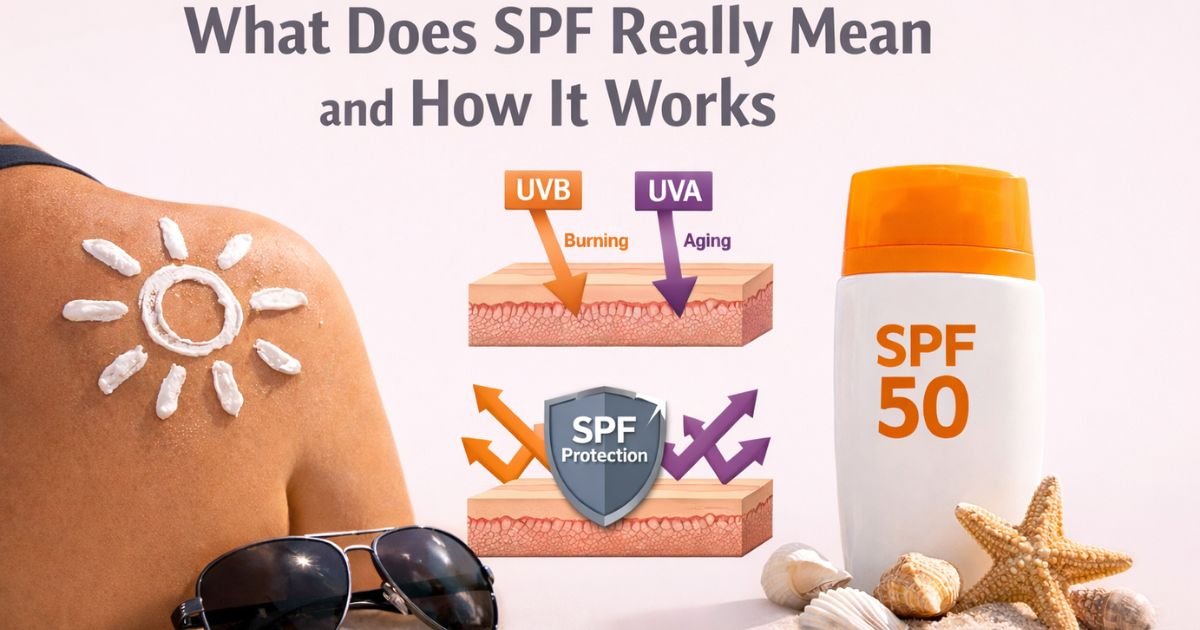
Sun Protection Factor is a rating that shows how well a sunscreen shields your skin from UVB rays—the main cause of sunburn and long-term skin damage. Higher ratings offer greater defense; for instance, a level of 30 filters out around 97% of UVB rays, while 50 blocks about 98%. Still, no sunscreen can block all UV rays, and sun safety goes beyond just one product. Knowing how sun protection works and applying it correctly plays a key role in preventing premature aging, dark spots, and skin cancer.
Who May Benefit & Who Should Avoid SPF?
Ideal Skin Types:
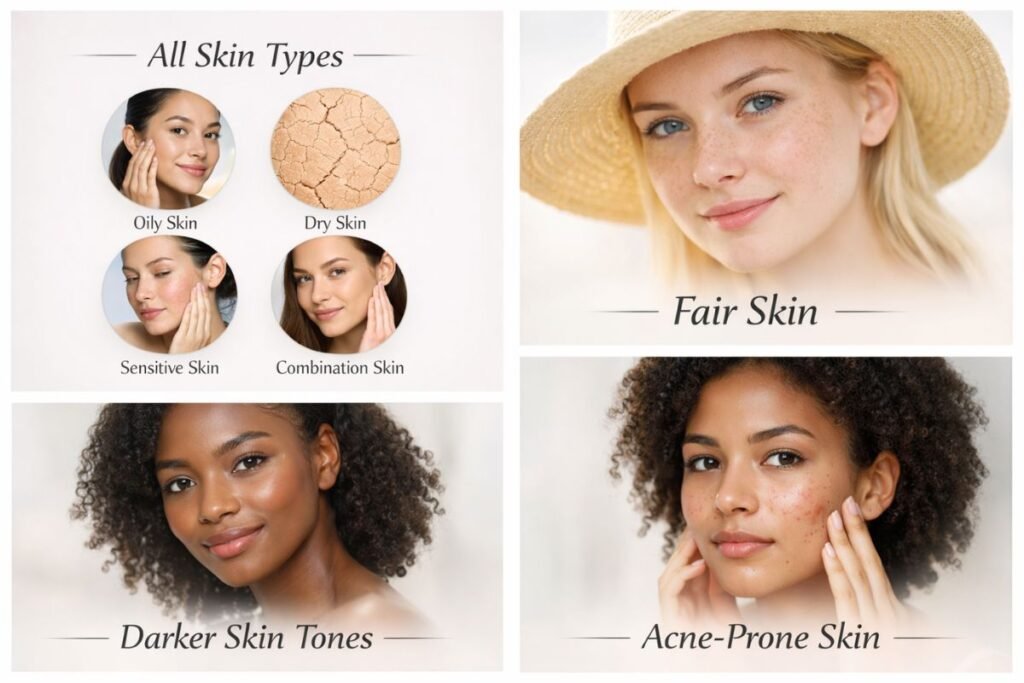
- All Skin Types: Everyone, regardless of skin type, should use daily to protect against UV damage. This includes those with oily, dry, sensitive, or combination skin.
- Fair Skin: People with fair skin are more prone to sunburns and should use higher SPF (50 or above) for optimal protection.
- Darker Skin Tones: While those with darker skin are less prone to sunburn, they still need to prevent long-term damage like hyperpigmentation and skin cancer.
- Acne-Prone Skin: Oil-free sunscreens or those labeled “non-comedogenic” work best to prevent breakouts.
Who Should Avoid Certain SPFs:
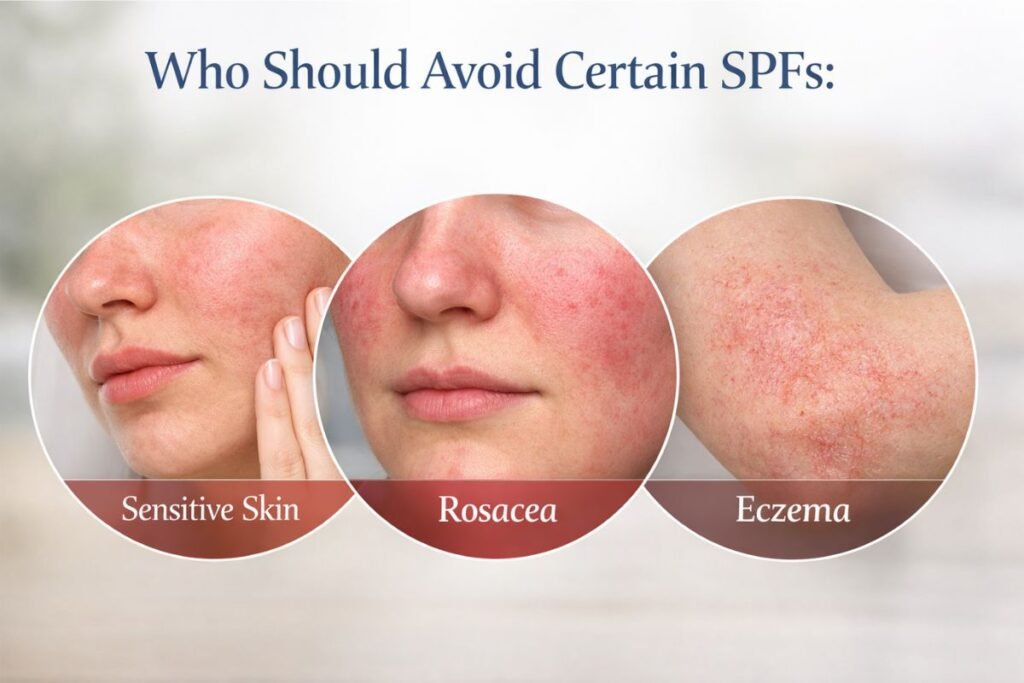
- Sensitive Skin: Avoid sunscreens with high alcohol content or fragrances that may irritate sensitive skin.
- Rosacea or Eczema: Choose sunscreens with minimal ingredients and avoid those with high chemical sunscreen ingredients.
How SPF Works: The Science Explained:
Short-Term vs. Long-Term Effects:
- Short-Term Effects: primarily protects against sunburns by absorbing or reflecting harmful UVB rays. After applying, it works almost immediately to start blocking UV exposure.
- Long-Term Effects: Consistent use may help reduce the risk of premature aging (wrinkles, sagging) and skin cancer, though it requires long-term adherence for the best results.
A Simple Metaphor to Understand SPF:
Think of as a shield for your skin. Each number (SPF 30, SPF 50) represents the size of the shield. It gives you a larger shield that blocks more UV rays. However, just like a shield, it wears down with time and must be reapplied regularly to stay effective.
Safe Frequency & Routine Placement:
How Often Should You Apply SPF?
- Daily Use: Apply every morning, even on cloudy days. UV rays can penetrate through clouds.
- Reapplication: Reapply every 2 hours, especially if you’re sweating, swimming, or wiping your face.
- For Sensitive Skin: Start with 2–3x per week if you’re new to avoid irritation, then increase as tolerated.
Where Does SPF Fit in Your Skincare Routine?
- After Cleansing: Apply your sunscreen as the last step in your skincare routine, before any makeup.
- Before Makeup: Allow the sunscreen to absorb into your skin for at least 15 minutes before applying makeup for maximum effectiveness.
Products & Ingredients: What to Look for in SPF:
Recommended Sunscreens:
- CeraVe Hydrating Mineral Sunscreen SPF 30/50: Ideal for dry skin. Contains ceramides and niacinamide to help strengthen the skin’s barrier while protecting from UV damage.
- Neutrogena Ultra Sheer Dry-Touch Sunscreen SPF 55: Lightweight, non-greasy, and ideal for those who have oily skin or prefer a matte finish.
- La Roche-Posay Anthelios Melt-in Milk Sunscreen SPF 60: Great for sensitive skin, this sunscreen is designed to prevent irritation while providing high UV protection.
- The Ordinary Mineral UV Filters SPF 30 with Antioxidants: A budget-friendly mineral sunscreen that also protects against free radicals with antioxidants like Vitamin E.
Key Ingredients to Look For:
- Zinc Oxide: Offers broad-spectrum protection and is ideal for sensitive skin.
- Avobenzone: Protects against UVA rays, which penetrate deeper into the skin and are associated with aging.
- Titanium Dioxide: Often combined with zinc oxide in physical sunscreens, it reflects UV radiation.
Targeting Top Concerns:
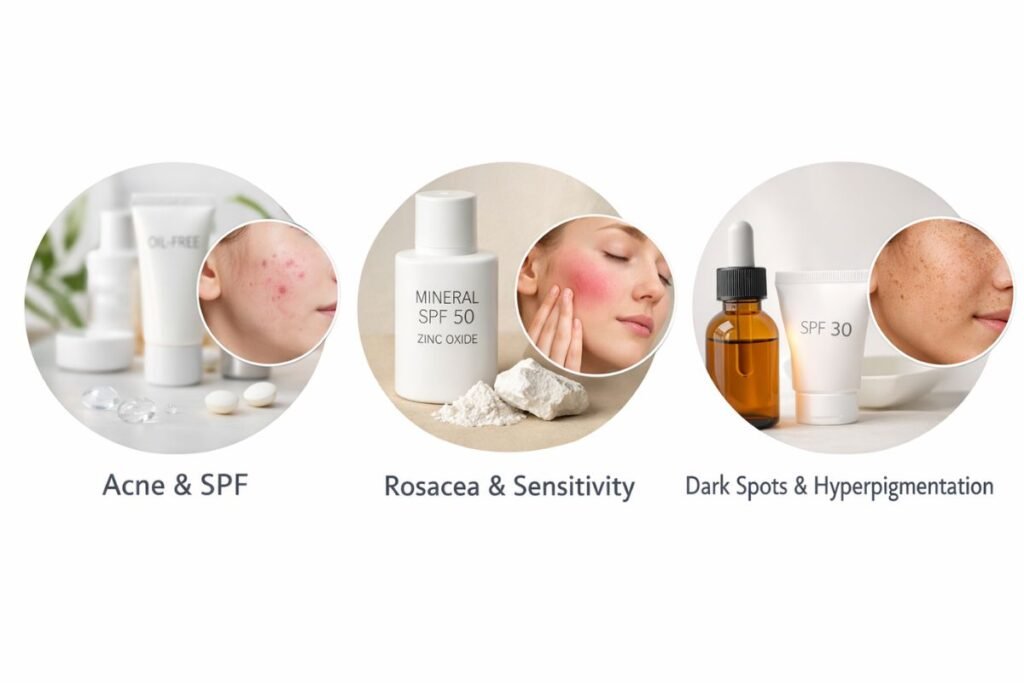
1. Acne
Many sunscreens contain oils that may aggravate acne. For acne-prone skin, choose non-comedogenic formulas like those from Neutrogena and La Roche-Posay. These sunscreens don’t clog pores and often contain added skin-soothing ingredients like niacinamide.
2. Rosacea and Sensitivity
Rosacea-prone skin requires extra care. Opt for physical sunscreens with zinc oxide or titanium dioxide, as they are less likely to irritate the skin compared to chemical sunscreens. Avoid high-alcohol formulas.
3. Dark Spots and Hyperpigmentation
It prevents further dark spots from forming by protecting against UV exposure. But it won’t erase existing pigmentation. For that, consider adding a brightening serum with Vitamin C, along with your SPF for enhanced protection.
Safety Rules & Warning Signs:
When to Stop Using Sunscreen:
- Irritation: If you notice redness, stinging, or excessive dryness, stop using the product and switch to a gentler, hypoallergenic sunscreen.
- Breakouts: If acne worsens, opt for a non-comedogenic option and test for irritation on a small patch of skin before full application.
How to Mitigate Side Effects:
- Hydrate: Ensure your skin is properly moisturized before applying sunscreen.
- Patch Test: Always do a patch test for any new sunscreen to avoid allergic reactions.
Realistic Results Timeline:
Week 1-2:
You will begin noticing protection from sunburns and reduced redness from UV exposure.
Month 1:
With consistent use, you may see a decrease in new dark spots or signs of premature aging.
Month 3:
After long-term use, you should see improvements in overall skin tone and protection from UV-induced skin damage.
Common Mistakes & How to Fix Them:
1. Not Applying Enough Sunscreen
- Fix It: Use about a nickel-sized amount for your face and more for your body. Reapply every 2 hours.
2. Relying on Makeup SPF
- Fix It: Makeup with it provides some protection, but it’s not enough. Layer it over your sunscreen for added defense.
3. Only Using SPF on Sunny Days
- Fix It: UV rays penetrate through clouds and reflect off surfaces. Use it every day, even when it’s cloudy.
4. Not Reapplying After Swimming or Sweating
- Fix It: Reapply sunscreen every 2 hours or after swimming or sweating, regardless of the .
FAQs:
1. What SPF should I use for everyday wear?
For everyday use, SPF 30 to 50 is sufficient for most people. If you spend extended periods in direct sunlight, consider SPF 50+.
2. Can I use SPF in my moisturizer instead of applying sunscreen separately?
Yes, if your moisturizer has at least 30, but you still need to apply it generously. However, separate sunscreen may offer more reliable protection.
3. Does higher SPF last longer?
Higher SPF offers more protection from UVB rays, but you still need to reapply every 2 hours for optimal protection.
4. Is SPF needed on cloudy days?
Yes, UV rays can still reach your skin through clouds. Always apply daily, even when it’s cloudy or overcast.