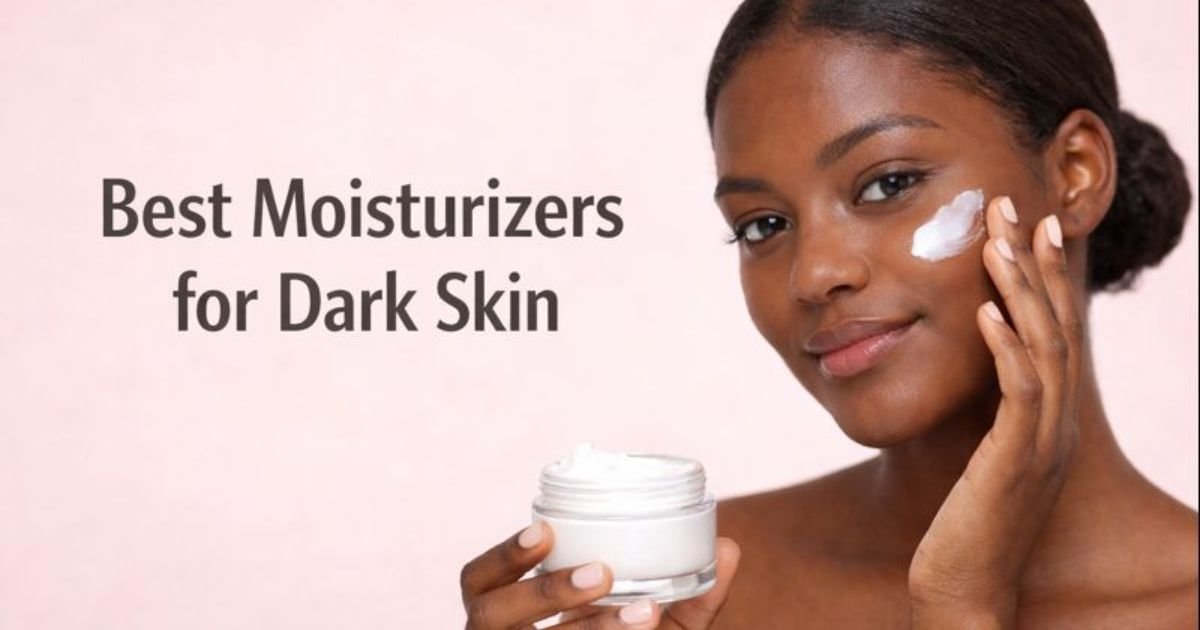
If you have dark skin, finding the right moisturizer is key to maintaining hydration, enhancing your skin’s natural glow, and addressing specific concerns like hyperpigmentation. Dark skin is prone to dryness, uneven tone, and dehydration, making it important to choose a moisturizer that nourishes without irritation. The best moisturizers for dark skin are formulated to provide long-lasting hydration, improve skin texture, and support skin health without leaving an oily residue. In this guide, we’ll dive into what makes an ideal moisturizer for dark skin, key ingredients to look for, and common mistakes to avoid.
Who May Benefit & Who Should Avoid:
Who May Benefit:
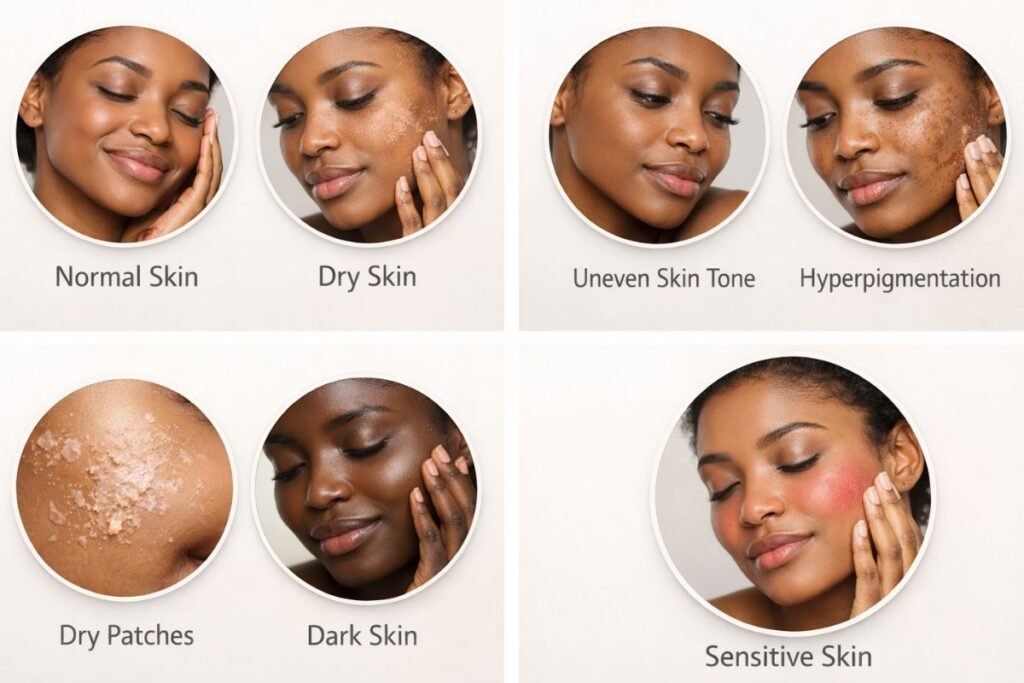
- Individuals with dry to normal skin looking to lock in moisture and enhance the skin’s natural barrier.
- Those with uneven skin tone or hyperpigmentation, as certain moisturizers can help brighten the skin over time.
- People dealing with dry patches, as dark skin can be more prone to dehydration and rough textures.
- Those with sensitive skin who need a gentle formula free from harsh ingredients.
Who Should Avoid:
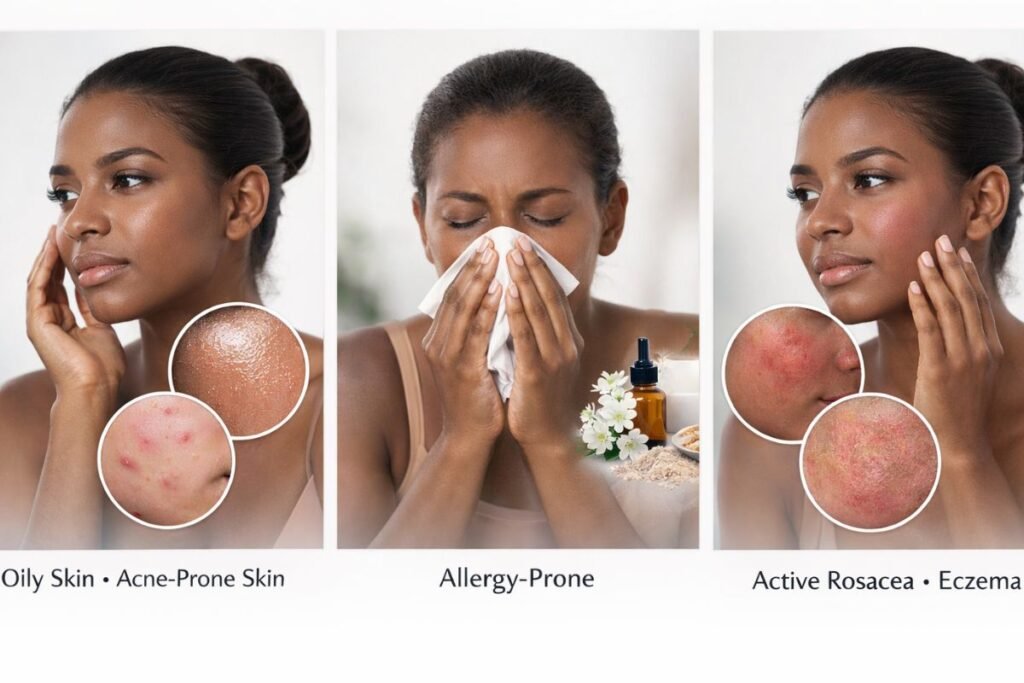
- If you have oily or acne-prone skin, you may need to be cautious with heavier creams that can clog pores.
- Allergy-prone individuals should avoid products containing fragrances or known irritants.
- Active rosacea or eczema may require specific dermatologist-recommended moisturizers tailored to soothe the condition.
How It Works (The Science):
Moisturizers work by adding water to the skin (hydrating) and trapping it to keep it from evaporating (sealing moisture in). Dark skin tends to produce more melanin, but this also means that the skin’s natural barrier can sometimes be compromised, leading to increased dryness or uneven skin tone. Some moisturizers contain ingredients like humectants (e.g., glycerin, hyaluronic acid) that draw moisture into the skin, while emollients (e.g., shea butter, ceramides) smooth and soften the skin, and occlusives (e.g., petroleum jelly, dimethicone) prevent moisture loss.
Short-term effects:
- Immediate hydration and smoother texture.
- Reduction in visible dry patches.
- Temporary brightening due to improved moisture balance.
Long-term effects:
- Enhanced skin barrier function.
- Reduced fine lines from improved moisture retention.
- Possible lightening of dark spots over time (depending on ingredients).
Metaphor: Think of moisturizers as the walls and roof of your house, protecting the inside (your skin) from environmental damage, but also ensuring that the warmth and energy (hydration) stay within.
Safe Frequency & Routine Placement:
How often should you apply moisturizer?
For optimal hydration, moisturize twice a day, morning and night. You can adjust depending on your skin’s needs—more frequent use may be beneficial for those with extremely dry skin. If your skin feels oily by mid-afternoon, a lighter moisturizer or a gel-based formula may work better.
Routine Placement:
- Cleansing: Start with a gentle, hydrating cleanser to remove dirt without stripping moisture.
- Toning (Optional): If you use a toner, look for alcohol-free options to prevent dryness.
- Moisturizer: Apply moisturizer while the skin is still damp (after cleansing or toning) to lock in maximum moisture.
- SPF: In the morning, finish with sunscreen to protect your skin from UV damage.
Best Moisturizers for Dark Skin:
1. CeraVe Moisturizing Cream
- Why it’s good: Packed with ceramides and hyaluronic acid, this moisturizer is great for restoring the skin’s natural barrier and boosting hydration. It’s perfect for dry or sensitive skin.
2. The Ordinary Natural Moisturizing Factors + HA
- Why it’s good: This lightweight, affordable moisturizer hydrates with hyaluronic acid and a blend of natural moisturizing factors that mimic the skin’s natural lipids. It’s ideal for normal to dry skin.
3. Neutrogena Hydro Boost Water Gel
- Why it’s good: Offers instant hydration with hyaluronic acid and is a gel formula, making it ideal for oily skin that needs hydration without the heaviness of a cream.
4. La Roche-Posay Toleriane Double Repair Face Moisturizer
- Why it’s good: Excellent for sensitive skin, this moisturizer contains ceramides, niacinamide, and glycerin to restore the skin barrier while calming irritation. It helps even skin tone and texture over time.
5. Cetaphil Daily Hydrating Lotion
- Why it’s good: Known for being gentle on sensitive skin, this lotion uses glycerin and hyaluronic acid to provide long-lasting moisture and prevent skin from feeling tight or dry.
Targeting Top Concerns:
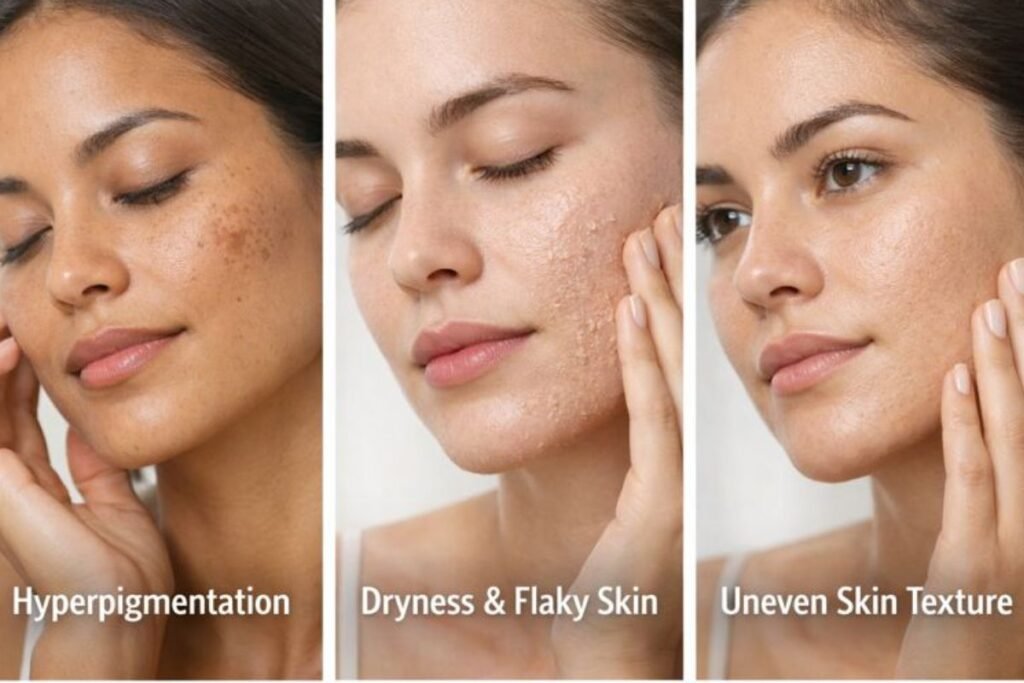
1. Hyperpigmentation
If you have dark spots, consider adding a moisturizer with ingredients like niacinamide or vitamin C, which can help brighten and even skin tone over time. Niacinamide also helps reduce redness and improve the skin’s barrier.
2. Dryness and Flaky Skin
Look for a moisturizer with shea butter, squalane, or ceramides, which deeply hydrate and restore the skin’s natural moisture balance. These ingredients help seal moisture into the skin and smooth out dry patches.
3. Uneven Skin Texture
For smoother skin, a moisturizer with alpha hydroxy acids (AHAs) or lactic acid can help gently exfoliate and smooth the skin’s surface. Use these 2-3 times per week to avoid irritation.
Safety Rules & Warning Signs:
When to stop:
- If you notice redness, burning, or itching, discontinue use immediately and consult a dermatologist.
- Breakouts may signal that the product is too heavy for your skin, especially if you have oily or acne-prone skin.
- Excessive dryness or flakiness could indicate that the product isn’t hydrating enough, or you might be using it too frequently.
How to mitigate side effects:
- Start with a patch test for any new product to rule out sensitivities.
- Use a lighter moisturizer if you notice breakouts or irritation.
Realistic Results Timeline:
- Week 1-2: Expect an immediate improvement in moisture levels. Skin will feel softer and smoother, and you may notice reduced dryness or flaky patches.
- Month 1: If you’re targeting hyperpigmentation or uneven texture, you may start seeing subtle changes in tone and smoothness. Dryness will likely be significantly reduced.
- Month 3: With consistent use, you should see more noticeable improvements in skin tone, texture, and overall hydration. Hyperpigmentation may lighten, and skin should feel plumper and more balanced.
Common Mistakes & How to Fix Them:
- Mistake: Over-moisturizing
Fix it: Apply the moisturizer 1-2 times per day. Using too much product can leave your skin feeling greasy and prone to breakouts. - Mistake: Using the wrong moisturizer for your skin type
Fix it: Choose a product suited for your skin—gel-based for oily skin, creamy formulas for dry skin. - Mistake: Skipping sunscreen
Fix it: Always apply SPF after moisturizing, even if you’re inside. UV exposure can worsen hyperpigmentation and dry skin. - Mistake: Switching products too often
Fix it: Give your skin at least 3-4 weeks to adjust to a new product before deciding to switch.
FAQs:
1. Can a moisturizer help with dark spots on dark skin?
Yes, moisturizers with niacinamide, vitamin C, and alpha hydroxy acids (AHAs) can help lighten dark spots over time. Look for these ingredients for long-term improvement in hyperpigmentation.
2. Is it safe to use moisturizers with fragrance on dark skin?
It depends on your skin type. If you have sensitive skin, fragrance-free moisturizers are recommended, as fragrance can cause irritation and make skin conditions worse.
3. Can moisturizers cause breakouts on dark skin?
Yes, some moisturizers, especially heavy ones, can clog pores and cause breakouts. If you’re acne-prone, choose non-comedogenic moisturizers that are lightweight and oil-free.
4. How can I improve skin texture and appearance with dark skin?
Incorporate hydrating and exfoliating moisturizers containing ingredients like glycerin, hyaluronic acid, and AHAs. These ingredients help improve texture, smoothness, and tone.