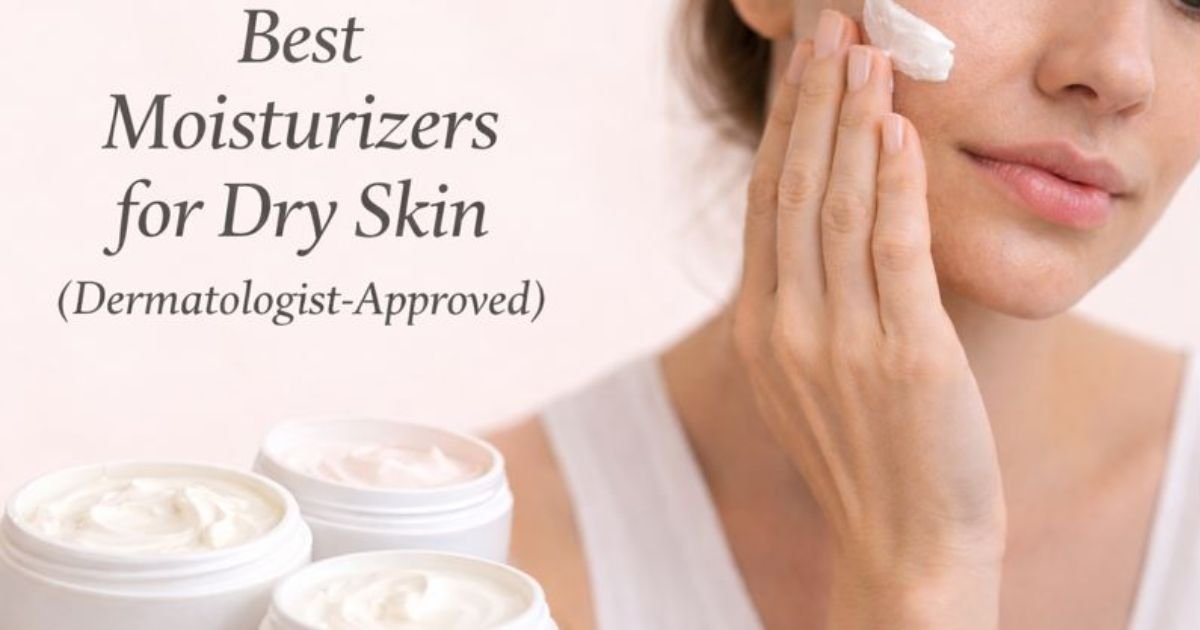
Dry skin can feel uncomfortable, tight, and irritated, but finding the right moisturizer can transform your skincare routine. As a dermatologist with over 20 years of experience, I’ve seen how choosing the right moisturizer can make a noticeable difference. The best moisturizers for dry skin not only hydrate but also repair the skin barrier, preventing moisture loss and soothing irritation. But with so many products on the market, where do you begin? This guide will help you navigate the options and find the perfect moisturizer tailored to your skin’s needs.
Who May Benefit & Who Should Avoid:
Ideal for:
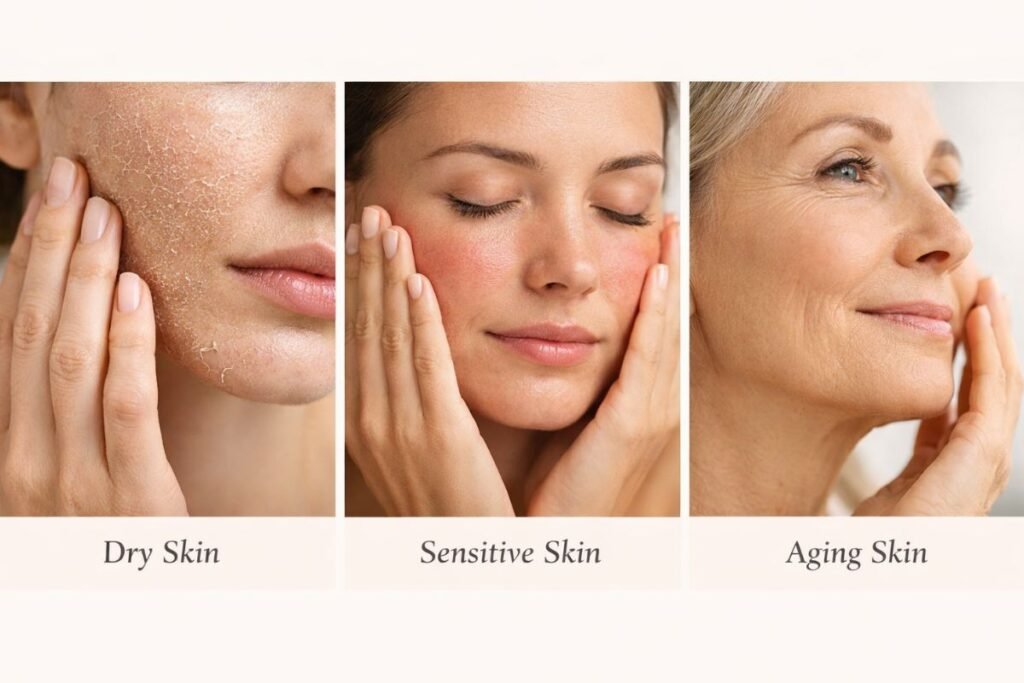
- People with dry skin: If your skin feels tight, rough, or flaky, you likely have dry skin that needs additional hydration and barrier repair.
- Sensitive skin: If your skin reacts easily to products, gentle moisturizers with soothing ingredients can calm irritation.
- Aging skin: As we age, skin becomes thinner and loses moisture more quickly. Moisturizers with anti-aging ingredients like peptides and ceramides can provide both hydration and barrier support.
Avoid if:
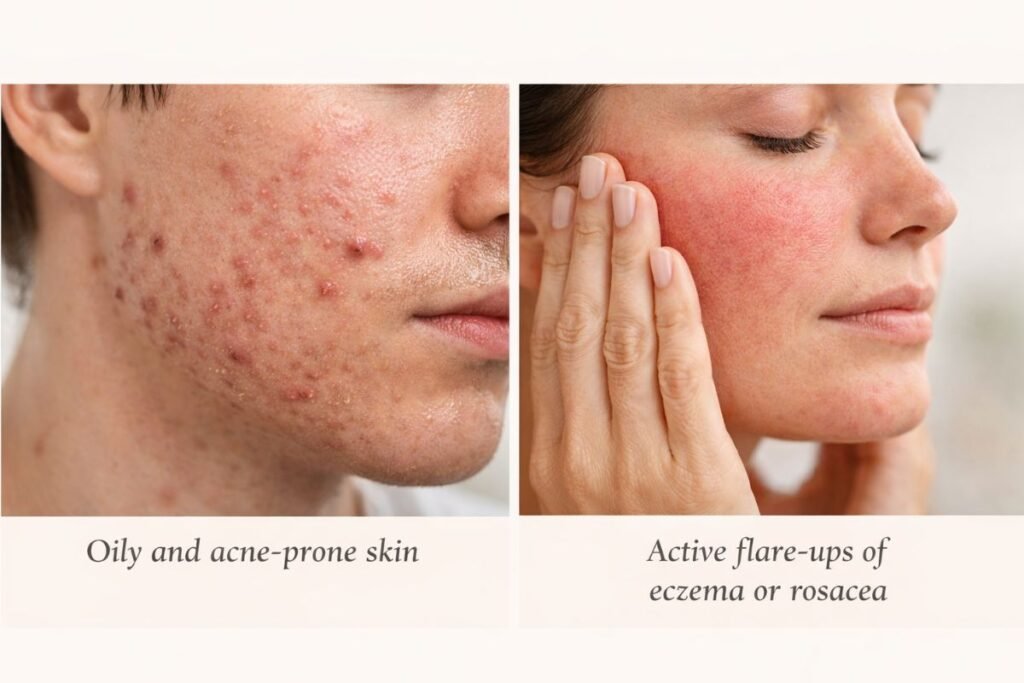
- Oily and acne-prone skin:Rich moisturizers can sometimes clog pores. If you have oily or acne-prone skin, opt for lighter, non-comedogenic formulations.
- Active flare-ups of eczema or rosacea: While moisturizers are essential for these conditions, it’s important to choose formulations that are specifically recommended for your skin condition, as certain ingredients may irritate or cause flare-ups.
How It Works (The Science):
Moisturizers are designed to replenish and lock in water, which is critical for maintaining a healthy skin barrier. The skin barrier protects against environmental factors and prevents dehydration. Moisturizers typically work in one of three ways:
- Occlusives: These ingredients, like petrolatum or dimethicone, form a physical barrier on the skin’s surface, reducing water loss. They’re especially beneficial in dry, cold climates.
- Humectants: These ingredients, like glycerin and hyaluronic acid, attract water from the environment or deeper layers of the skin and pull it into the outer layers for hydration.
- Emollients: These softening agents, like fatty acids and oils, fill in gaps in the skin barrier, making skin feel smooth and reducing roughness.
Short-term vs. Long-term Effects:
- Short-term: You may notice immediate softness and hydration. Your skin will feel smoother and more comfortable.
- Long-term: Consistent use will improve your skin’s moisture retention and barrier function, which can reduce dry patches, redness, and sensitivity.
Safe Frequency & Routine Placement:
To achieve lasting hydration, use your moisturizer daily, preferably right after cleansing to lock in moisture. Follow these guidelines for optimal results:
- Frequency: Apply your moisturizer 1-2 times daily, depending on how dry your skin feels. In winter or during a dry climate, you may need more frequent application.
- Morning: After cleansing, apply a light moisturizer that also includes SPF. This will protect your skin from UV damage while keeping it hydrated.
- Night: At night, choose a richer moisturizer that focuses on repair and hydration. You can even use a heavier product as a hydrating mask.
Products & Ingredients:
Here are some dermatologist-approved, affordable moisturizers that work wonders for dry skin:
- CeraVe Daily Moisturizing Lotion
Why it’s great: Contains both ceramides and hyaluronic acid, which help repair the skin barrier and hydrate the skin. It’s fragrance-free, non-comedogenic, and perfect for sensitive skin. - Neutrogena Hydro Boost Water Gel
Why it’s great: This lightweight gel contains glycerin and hyaluronic acid to deeply hydrate and plump the skin without feeling heavy. It’s great for normal to dry skin. - La Roche-Posay Toleriane Double Repair Face Moisturizer
Why it’s great: Enriched with ceramides, glycerin, and niacinamide, it strengthens the skin barrier and provides long-lasting hydration while soothing any irritation. - The Ordinary Natural Moisturizing Factors + HA
Why it’s great: A budget-friendly option that contains natural moisturizing factors like amino acids, fatty acids, and ceramides to keep the skin’s moisture levels balanced. Plus, it includes hyaluronic acid for added hydration. - Cetaphil Daily Hydrating Lotion
Why it’s great: A fragrance-free, gentle formula that uses hyaluronic acid to draw moisture into the skin and lock it in for up to 24 hours. It’s ideal for those with sensitive skin or conditions like eczema.
Targeting Top Concerns:
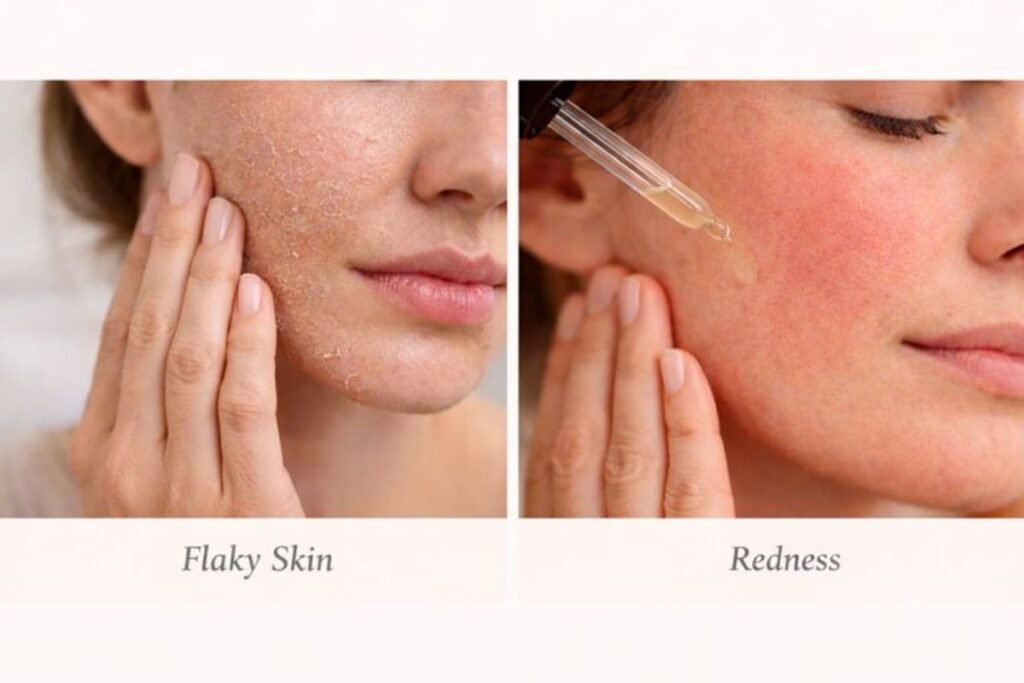
- Flaky Skin: If you experience flakes along with dryness, look for moisturizers with exfoliating ingredients like alpha hydroxy acids (AHAs) or gentle exfoliants to smooth skin texture while replenishing moisture.
- Redness: For skin prone to redness, choose a moisturizer with calming ingredients like niacinamide or aloe vera to reduce inflammation and irritation.
Safety Rules & Warning Signs:
While moisturizers are generally safe for dry skin, here are some important safety precautions:
- Patch Test: If you’re trying a new product, apply a small amount on your inner wrist to ensure you don’t have a reaction.
- Watch for Irritation: If your skin becomes red, stings, or feels excessively tight after applying a moisturizer, stop using it and consult with a dermatologist.
- Avoid Fragrances: If you have extremely sensitive skin or conditions like eczema or rosacea, avoid moisturizers with fragrances, as they can trigger flare-ups.
Realistic Results Timeline:
- Week 1-2: You’ll notice immediate improvement in skin softness and comfort. The moisturizers will help replenish lost moisture, giving your skin a more hydrated appearance.
- Month 1: By now, your skin barrier will be strengthened, and you may see a reduction in dry patches and irritation. Consistency is key at this stage.
- Month 3: Long-term results will be visible, such as improved skin elasticity, reduced redness, and a more youthful glow.
Common Mistakes & How to Fix Them:
- Using the wrong product for your skin type
Fix it: Choose a moisturizer that matches your skin’s needs—lighter, gel-based products for oily skin and thicker, cream-based ones for dry skin. - Not applying immediately after cleansing
Fix it: To lock in moisture, always apply your moisturizer while your skin is still slightly damp from cleansing. - Overusing heavy moisturizers
Fix it: Avoid applying too thick a layer, which can clog pores and lead to breakouts. Use a thin, even layer, and adjust as needed. - Skipping SPF
Fix it: Always apply sunscreen with your moisturizer during the day to prevent further moisture loss and protect against UV damage.
FAQs:
- Can moisturizers fix cracked, dry skin?
While moisturizers can hydrate and help repair the skin barrier, cracked skin may require additional treatment like an ointment or prescription medication. Consult a dermatologist if you have deep cracks or cuts. - Can I use a thick moisturizer every day?
Yes, but ensure it’s suited to your skin type. If you have oily or acne-prone skin, opt for a lightweight, non-comedogenic moisturizer. - How often should I apply moisturizer to dry skin?
For dry skin, apply moisturizer 1-2 times daily, with extra applications during harsh weather conditions or if your skin feels particularly parched. - Can moisturizers help with rosacea?
Some moisturizers with calming ingredients like niacinamide and ceramides can help soothe rosacea, but always consult with a dermatologist for personalized advice.