
When it comes to skincare for darker skin tones, it’s crucial to recognize that skincare is not a one-size-fits-all solution. Skin tone plays a significant role in how your skin responds to different ingredients, environmental factors, and treatments. While darker skin tones often have more melanin, providing natural protection against sun damage, they are also more prone to certain concerns like hyperpigmentation, acne scars, and dryness. By customizing your skincare routine with the right products and practices, you can improve your skin’s health and radiance. This guide will provide actionable tips and expert advice for maintaining healthy, glowing skin designed specifically for darker skin tones.
Find Your Fit: Who Can Benefit and Who Should Skip This Routine
Who May Benefit:
Targeted Concerns for Darker Skin Tones:
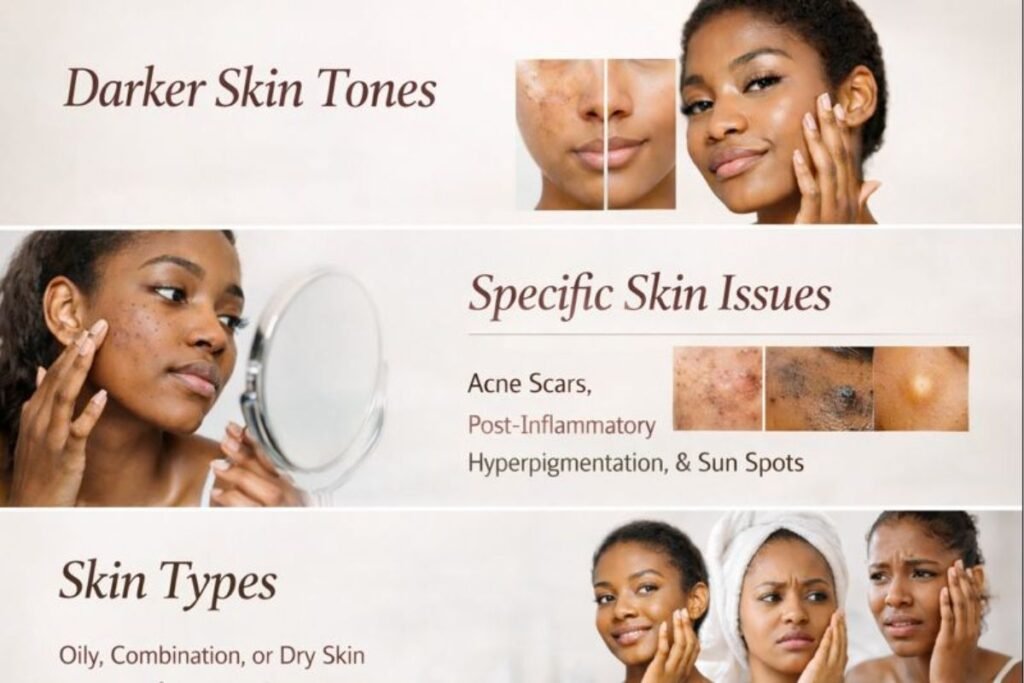
Darker skin tones can benefit from skincare routines that specifically address common concerns such as uneven skin tone, hyperpigmentation, and dryness.
Specific Skin Issues:
If you struggle with acne scars, post-inflammatory hyperpigmentation (PIH), or sun spots, this guide is designed with you in mind.
Skin Types:
Individuals with oily, combination, or dry skin, including those prone to sensitivity or eczema, will also find these tips helpful.
Who Should Avoid:

Skin Conditions Requiring Caution:
If you have specific skin conditions like active eczema, rosacea, or certain vascular issues, it’s important to consult a dermatologist before starting any new skincare routine.
Sensitivity to Strong Ingredients:
Those with known sensitivities to strong ingredients, such as glycolic acid or benzoyl peroxide, may need to avoid or limit their use to prevent irritation or adverse reactions.
Skincare Tips for Darker Skin Tones:
1. Cleansing: Start with Gentle Hydration:
Why It’s Important:
Cleansing is the first step to remove impurities without damaging your skin’s protective barrier. Darker skin can be sensitive to harsh cleansers, leading to dryness and irritation.
Recommended Products:
- CeraVe Hydrating Cleanser: A gentle, non-foaming cleanser that removes dirt and oil without stripping the skin’s natural moisture. It contains ceramides and hyaluronic acid, which help maintain hydration and support the skin’s natural barrier.
How to Use:
- Use a gentle cleanser both morning and night to keep your skin clean and hydrated. Apply with your fingertips in circular motions, avoiding scrubbing.
2. Moisturizing: Lock in Hydration:
Why It’s Important:
Dark skin tones can often feel dry, especially in colder climates. Moisturizing helps maintain the skin’s hydration balance, keeping it smooth and preventing premature aging.
Recommended Products:
- Neutrogena Hydro Boost Water Gel: A lightweight, non-comedogenic gel moisturizer that hydrates the skin without clogging pores. Perfect for darker skin, especially those prone to acne or dryness.
How to Use:
- Apply a generous amount after cleansing, morning and night. Focus on areas where your skin tends to be driest (cheeks, around the eyes).
3. Sun Protection: Don’t Skip Sunscreen:
Why It’s Important:
While melanin offers some natural protection against UV rays, sunscreen is still crucial. Sunscreen helps prevent sunburn, pigmentation, and long-term skin damage. Without sunscreen, dark spots and hyperpigmentation can worsen.
Recommended Products:
- La Roche-Posay Anthelios Sunscreen SPF 50: A broad-spectrum sunscreen that protects against both UVA and UVB rays. It’s lightweight and doesn’t leave a white cast, making it suitable for darker skin tones.
How to Use:
- Apply sunscreen every morning, even on cloudy days. Reapply every two hours if you’re outdoors or sweating. Don’t forget areas like your neck and ears.
4. Exfoliation: Renew and Brighten:
Why It’s Important:
Exfoliating helps remove dead skin cells and allows newer, healthier skin to surface. It is especially effective for tackling hyperpigmentation and acne scars, which are common concerns for darker skin.
Recommended Products:
- The Ordinary Glycolic Acid 7% Toning Solution: This gentle chemical exfoliant targets uneven skin tone and helps fade dark spots, leaving the skin smoother and more radiant.
How to Use:
- Apply 2-3 times a week after cleansing. Use a cotton pad to apply the product to your face, avoiding the eye area. Start slowly if you’re new to chemical exfoliants, and always follow with a moisturizer.
5. Targeted Treatments: Focus on Specific Concerns:
Why It’s Important:
Darker skin tones often deal with hyperpigmentation, dark spots, and acne scars. Targeted treatments such as serums and spot treatments can help treat these issues directly, providing faster results.
Recommended Products:
- Vitamin C (ascorbic acid): A powerful antioxidant that brightens skin, helps with pigmentation, and fades dark spots.
- Niacinamide 10% + Zinc 1%: Niacinamide helps reduce hyperpigmentation, regulates oil production, and evens out skin tone.
How to Use:
- Apply serums containing vitamin C in the morning and niacinamide at night. These serums are best used after cleansing and before moisturizing.
6. Hydrating Masks: Revitalize and Replenish:
Why It’s Important:
Hydrating masks provide deep moisture and soothe skin, making them ideal for individuals with dryness, especially during seasonal changes or when skin feels parched.
Recommended Products:
- Neutrogena Hydro Boost Water Gel Mask: A hydrating mask that replenishes moisture, leaving the skin plump and glowing.
How to Use:
- Apply the mask once or twice a week for 10–15 minutes. Leave it on for extra hydration, then gently massage the remaining product into the skin.
The Science Behind It: How Skincare Works for Darker Skin
Skincare for darker skin tones focuses on balancing melanin production and addressing inflammation-related concerns. Melanin, which gives skin its color, also provides protection from the sun’s harmful rays. However, it can also lead to darker spots, especially after acne, cuts, or other skin trauma (post-inflammatory hyperpigmentation or PIH).
Short-term Effects:
Immediate improvements are often seen with treatments that target dryness, acne, or pigmentation. For example, moisturizers and exfoliants can instantly make skin look smoother and more hydrated.
Long-term Effects:
Over time, with consistent care, you can expect improvements in overall skin texture, clarity, and brightness. Some treatments, such as chemical exfoliants or vitamin C serums, can help even out pigmentation and fade dark spots, but results may take weeks or months to appear.
Targeting Top Concerns:
1. Hyperpigmentation (Dark Spots):
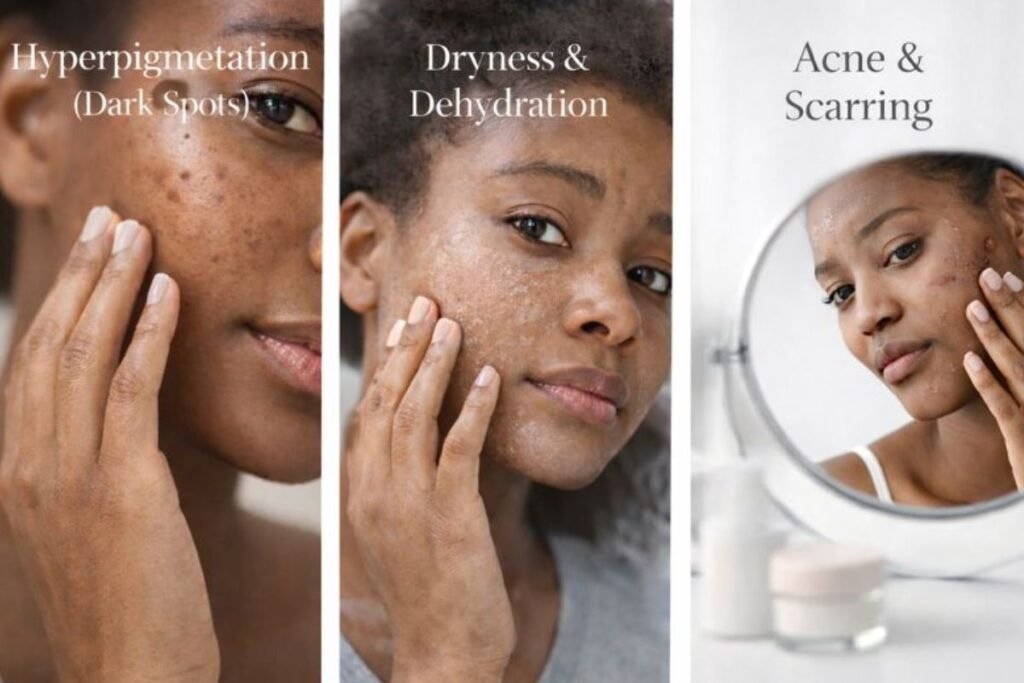
Hyperpigmentation is a common concern for darker skin tones, often exacerbated by sun exposure, acne, and skin trauma. The key to managing this is incorporating ingredients like vitamin C, niacinamide, and retinoids into your routine. These can help brighten the skin and even out tone over time.
2. Dryness and Dehydration:
Dry skin can be more prominent in darker skin tones, especially in colder weather. Make sure to use a hydrating moisturizer that supports the skin’s barrier. Look for products with ingredients like hyaluronic acid and ceramides.
3. Acne and Scarring:
Darker skin tones are often more prone to scarring post-acne. To prevent scars, don’t pop pimples. Instead, treat the acne gently with non-comedogenic products and use gentle exfoliants to fade scars over time.
Safety Rules & Warning Signs:
When to Stop:
- If you experience excessive redness, irritation, or peeling, reduce the frequency of exfoliation.
- If your skin becomes excessively dry or flaky, you may need to switch to a gentler, more hydrating routine.
- If you notice any signs of allergic reaction (itching, swelling, rash), stop using the product immediately and consult your dermatologist.
Realistic Results Timeline:
- Week 1-2:
Expect slight improvements in texture and hydration. If you’re using new products, your skin may look brighter, but noticeable fading of dark spots or hyperpigmentation takes time. - Month 1:
Improvement in overall skin texture should be visible. Your skin may feel smoother, and acne scars or dark spots may begin to lighten. - Month 3:
You should see more significant changes. With consistent use of sunscreen, vitamin C, and exfoliants, hyperpigmentation should visibly decrease, and overall skin tone may appear more even.
Common Mistakes & How to Fix Them:
1. Over-Exfoliating:
Exfoliating too frequently can lead to irritation, dryness, or even worsened pigmentation.
Fix It: Stick to 2–3 times per week, and always follow up with moisturizer.
2. Skipping Sunscreen:
Dark skin tones still need protection from UV rays. Without it, hyperpigmentation will worsen.
Fix It: Apply SPF 30 or higher daily, even on cloudy days.
3. Using Harsh Products:
Harsh products can irritate darker skin and cause inflammation, making pigmentation worse.
Fix It: Opt for gentle products like those with niacinamide, vitamin C, and gentle exfoliants.
4. Not Consistent:
Consistency is key to achieving long-term results.
Fix It: Stick to your routine, and be patient with results.
5. Ignoring Skin Type Needs:
Not every product works for every skin type.
Fix It: Understand your skin type (oily, dry, combination) and choose products accordingly.
FAQs:
1. What ingredients should I look for in products for darker skin?
Look for products with ingredients like vitamin C, niacinamide, retinoids, and gentle exfoliants like AHAs and BHAs to help with hyperpigmentation and acne scars.
2. Can darker skin tones get sunburned?
Yes, while darker skin offers more protection, it’s still susceptible to UV damage. Always wear sunscreen to prevent sunburn and further darkening of spots.
3. How can I reduce dark spots on darker skin?
Using ingredients like vitamin C, retinoids, and niacinamide can help fade dark spots. Make sure to exfoliate 2–3 times a week to remove dead skin cells and encourage skin renewal.
4. Is it safe to use chemical exfoliants on darker skin?
Yes, chemical exfoliants like glycolic acid and salicylic acid can be very effective in treating hyperpigmentation, but use them sparingly to avoid irritation. Always patch-test new products.