

Learning how to control oily skin naturally is one of the most empowering skincare journeys you can take. Oily skin is not a flaw—it’s a signal. Your skin is communicating imbalance, stress, dehydration, or overstimulation. When you listen instead of fight, oil production calms down, pores appear refined, acne reduces, and trueglowing skin emerges.
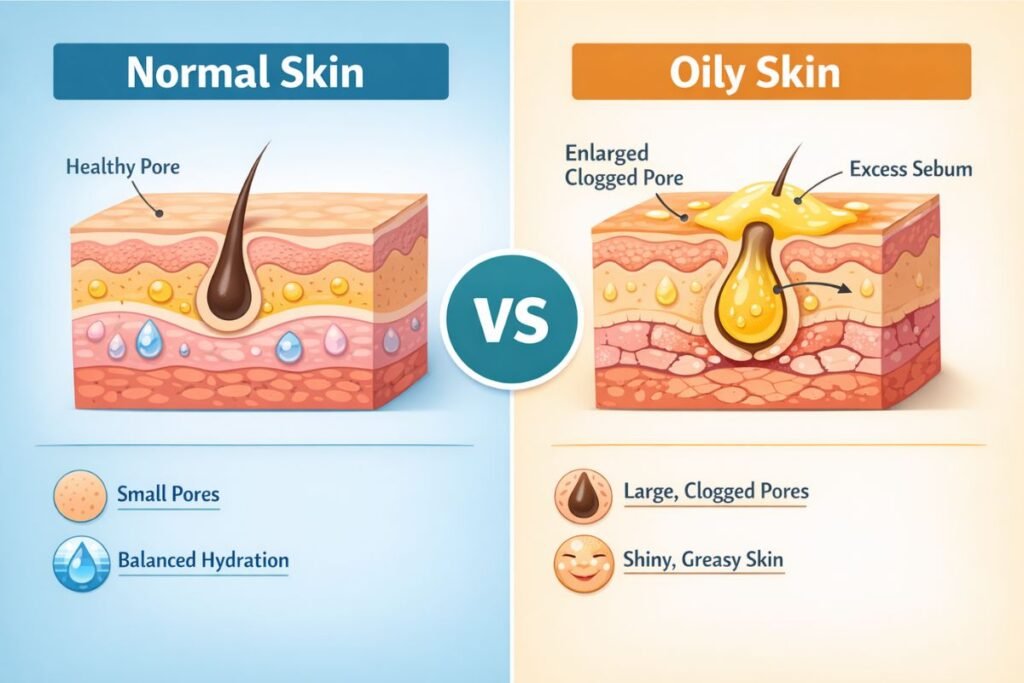
This guide is built from 20+ years of dermatology practice, thousands of real patient cases, and science-backed skincare principles. No shortcuts. No harsh stripping. Just balance, consistency, and results you can actually see and feel.
Why Oily Skin Feels Like an Endless Struggle
You cleanse. You blot. You powder.
Still shiny by noon.
This is the reality for millions of people with oily skin. The mistake? Treating oil as the enemy.
Oily skin behaves like an overworked employee. Push it harder, and it rebels. Calm it, nourish it, and it starts cooperating. When oil glands sense irritation, dehydration, or barrier damage, they respond with—you guessed it—more oil.
Understanding how to control oily skin naturally means understanding why oil exists in the first place. Sebum protects your skin. It prevents premature aging. It strengthens the skin barrier. The goal is not to eliminate oil—but to teach it moderation.
Who This Guide Is For
This comprehensive guide is ideal if you are:
- A skincare beginner overwhelmed by advice
- Someone with oily or acne-prone skin
- Between 25–40 years, when oil + stress peak
- A busy professional who needs low-effort routines
- On a budget and prefers affordable skincare products
- Living in hot, humid, or polluted environments
Whether your skin is oily, combination, or sensitive-oily, these strategies adapt to you.
The 3 Core Principles of Natural Oil Control
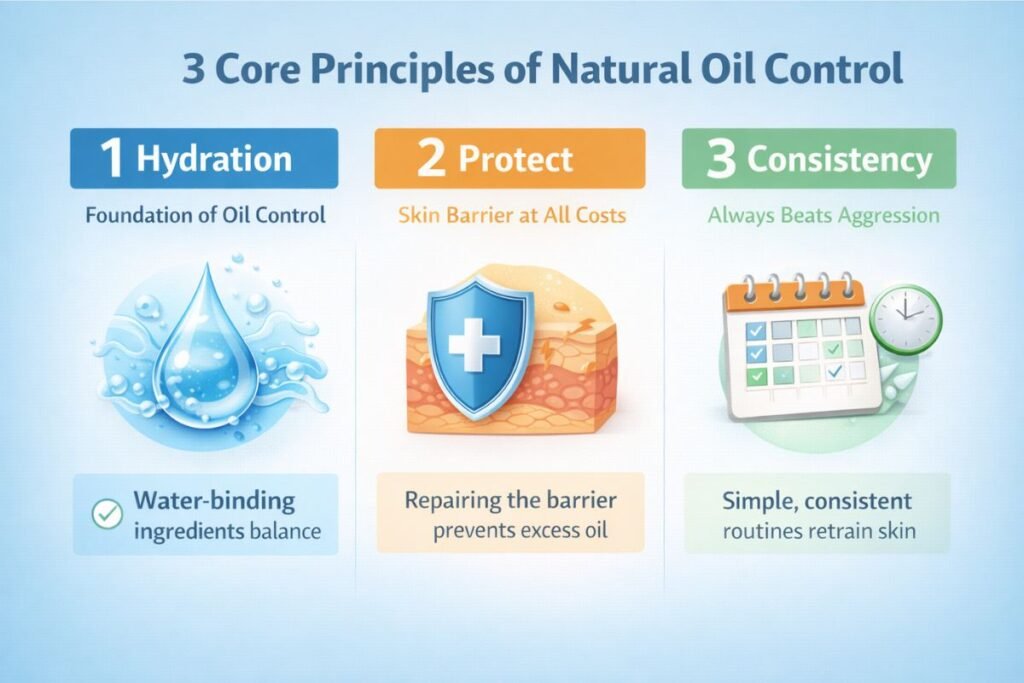
1. Hydration Is the Foundation of Oil Control
This surprises most people: oily skin is often water-deprived.
When skin lacks hydration, oil glands compensate aggressively. Introducing water-binding ingredients restores balance and reduces shine naturally.
Clinical observation:
Patients who introduced a lightweight hydrating serum saw reduced oil production within 2–3 weeks, even without changing cleansers.
Hydrated skin = calm oil glands.
2. Protect the Skin Barrier at All Costs
Your skin barrier is your oil regulator.
Over-cleansing, alcohol toners, harsh scrubs, and frequent exfoliation damage this barrier. Once compromised, inflammation increases, oil production spikes, and acne worsens.
Barrier repair is non-negotiable in any effective skincare routine.
3. Consistency Always Beats Aggression
Skin operates on cycles. Oil regulation doesn’t happen overnight.
Jumping between products, trends, or DIY hacks disrupts progress. A simple routine followed consistently for 8–12 weeks produces real, lasting change.
Daily Skincare Routine for Oily Skin (Dermatologist-Approved)
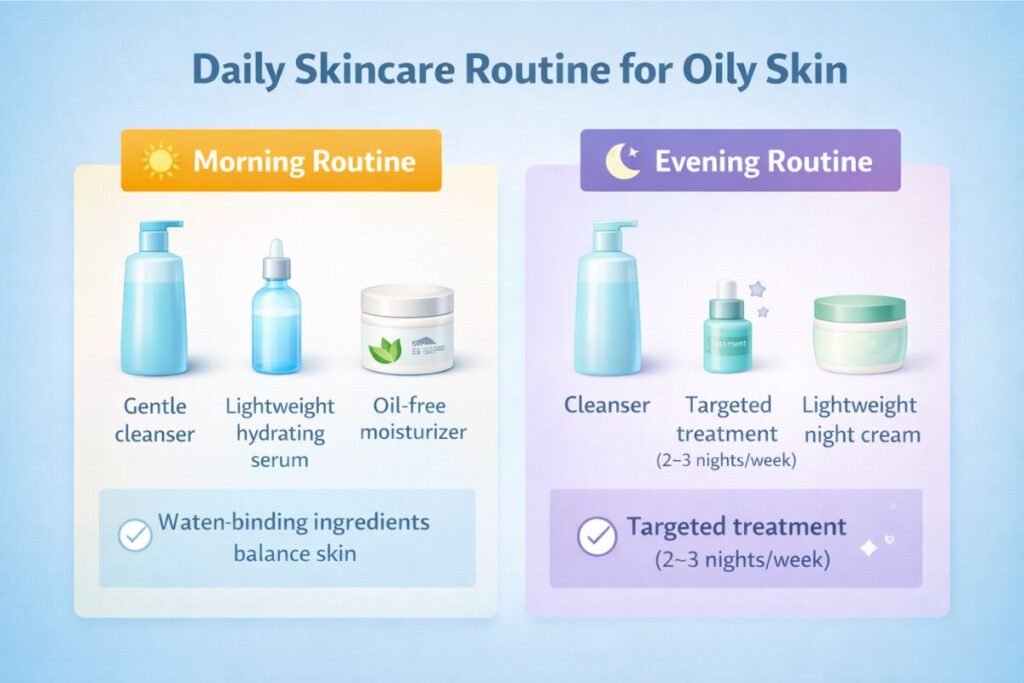
Morning Routine
- Gentle cleanser
- Lightweight hydrating serum
- Oil-free moisturizer
- Broad-spectrum SPF 50
Evening Routine
- Cleanser
- Targeted treatment (2–3 nights/week)
- Lightweight night cream
Seasonal Adjustments
- Summer / humid climate: Gel textures only
- Winter / dry climate: Add ceramides and humectants
This daily skincare routine trains oil glands to normalize.
In-Depth Product Breakdown (5 Essentials)
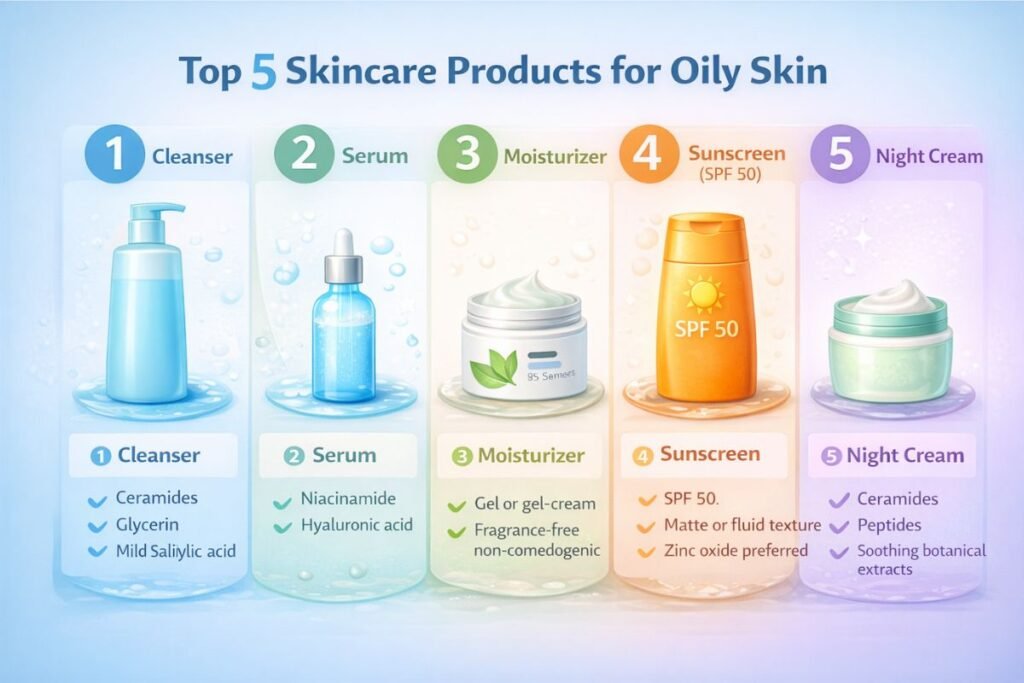
1. Cleanser
Cleansing should remove excess oil—not strip protection.
How to use:
Pea-sized amount. Massage gently for 60 seconds. Lukewarm water only.
Key ingredients:
Ceramides, glycerin, mild salicylic acid
Avoid sulfates and harsh foaming agents
2. Serum
Serums deliver targeted actives without clogging pores.
Best serums for oily skin:
- Niacinamide: Controls oil, minimizes pores
- Hyaluronic acid: Hydrates without shine
Apply 2–3 drops on damp skin.
3. Moisturizer
Skipping moisturizer is one of the biggest skincare mistakes.
Dehydration triggers oil overproduction.
Choose:
Gel or gel-cream textures, fragrance-free, non-comedogenic.
4. Sunscreen (SPF 50)
Sun exposure worsens oiliness, acne, and pigmentation.
Ideal sunscreen for oily skin:
- SPF 50
- Matte or fluid texture
- Zinc oxide preferred
Daily SPF is essential for glowing skin and long-term oil control.
5. Night Cream
Night is repair time.
Look for:
Ceramides, peptides, soothing botanical extracts.
Avoid heavy occlusives unless skin is very dry.
Top 3 Concerns in Oily Skin & How to Fix Them
| Concern | Cause | Fix/Strategy |
|---|---|---|
| Acne | Oil + clogged pores + inflammation | AM: Cleanser → Niacinamide → SPF PM: Cleanser → Salicylic acid → Gel moisturizer |
| Hyperpigmentation | Inflammation + sun exposure | Daily sunscreen Vitamin C in the morning Gentle exfoliation |
| Fine Lines | Dehydration + oily skin | Hydration first Retinol 2–3 nights/week Always moisturize |
Environmental Defense: Pollution, Sweat & Climate
Environmental stress increases oil production.
Climate-proof tips:
- Humid climates: Oil-free gel sunscreen
- Polluted cities: Thorough night cleansing
- Cold winters: Barrier-repair products
- Environmental care is a hidden pillar of effective oily skin care.
Skin Nutrition: Control Oil from the Inside
Your oil glands respond to diet, hydration, and hormones.
Best foods for oily skin:
- Berries (antioxidants)
- Walnuts & flaxseeds (omega-3)
- Spinach, kale (vitamin E)
- Green tea (anti-inflammatory)
3-Day Skin-Boost Meal Plan
Day 1
Breakfast: Eggs + avocado
Lunch: Chicken salad
Dinner: Salmon + greens
Day 2
Breakfast: Oatmeal + berries
Lunch: Lentils
Dinner: Stir-fried vegetables
Day 3
Breakfast: Greek yogurt
Lunch: Quinoa bowl
Dinner: Grilled fish
Hydration throughout the day supports oil balance better than any topical product.
Recovery Rules: Sleep, Stress & Skin Healing
- Sleep 7–8 hours (oil resets overnight)
- Reduce stress—cortisol increases oil
- During breakouts: simplify routine
- Never pick acne (causes scars + more oil)
Skin heals fastest in calm conditions.
Results Timeline (Realistic Expectations)
- Week 1–2: Reduced midday shine, calmer skin
- Month 1: Fewer breakouts, smoother texture
- Month 3: Balanced oil, refined pores, clearer tone
Natural control lasts longer than aggressive shortcuts.
5 Common Skincare Mistakes & Fixes
- Over-washing → Cleanse twice daily only
- Skipping moisturizer → Use gel formulas
- Alcohol toners → Choose hydrating toners
- No sunscreen → Apply SPF 50 daily
- Product hopping → Stick to one routine for 90 days
Fixing these dramatically improves oil control tips effectiveness.
Frequently Asked Questions (People Also Ask)
How do I identify my skin type?
Cleanse, wait one hour. Visible shine = oily skin.
What is the best SPF for oily skin?
SPF 50, lightweight, matte or fluid texture.
Can I use vitamin C and retinol together?
Yes. Vitamin C in the morning, retinol at night.
How often should oily skin exfoliate?
Once or twice weekly only.
Final Dermatologist & Coach Message
Learning how to control oily skin naturally is not about fighting your skin—it’s about retraining it. Support the barrier. Hydrate consistently. Protect daily. Stay patient.
Your skin already knows how to balance itself.
Now you know how to guide it.