

You wash, condition, and style your hair carefully, then wake up with tangled ends, flattened curls, or a ponytail crease that won’t cooperate. Before adding another treatment, consider what happens between your evening shower and your morning brush.
A night hair care routine for better hair health should make your hair easier to manage while reducing unnecessary pulling and rough handling. It doesn’t require nightly washing, expensive silk bedding, or a scalp covered in oil.
The most useful routine depends on your hair’s texture, how quickly your scalp gets oily, and whether you’re protecting natural curls, color-treated lengths, or a short cut. Start with a few gentle habits, then add products only where they solve a specific problem.
What Nighttime Hair Care Can—and Can’t—Do
Evening care can help you manage tangles, preserve a hairstyle, and avoid habits that contribute to breakage. However, a bedtime routine cannot permanently mend split ends or treat every cause of thinning.
There’s also a difference between hair breakage and hair shedding. Breakage happens along the strand, leaving shorter pieces. Shedding involves hairs coming away from the follicle. Changing how you handle your hair may help with mechanical damage, but unexplained hair loss deserves a separate assessment.
If you notice widening areas of thinning, bald patches, or persistent scalp symptoms, a dermatologist can help identify the cause rather than leaving you to experiment with more products.
Your Night Hair Care Routine for Better Hair Health
Follow the washing steps when your hair needs cleansing. On other evenings, move straight to gentle styling and protection.
1. Release Your Daytime Hairstyle
Begin by removing clips, elastics, and pins carefully. Unwind a hair tie instead of pulling it down the length of your ponytail.
If your hair has been held tightly all day, choose a relaxed arrangement for sleep. Avoid recreating a slick bun or tightly pulling back the delicate hairs around your temples.
A style that causes pain, stinging, or visible pulling needs loosening. Repeated tension can contribute to traction alopecia, a form of hair loss associated with pulling on the follicles.
2. Wash According to Your Scalp’s Needs
Bedtime isn’t a reason to shampoo automatically. Decide based on oil, sweat, dirt, and product buildup.
Fine, straight hair with an oily scalp may need frequent washing. Dry, coarse, curly, or coily hair often needs a different schedule. Your scalp’s comfort and cleanliness are more useful guides than a universal wash-day rule.
When you shampoo, concentrate on the scalp. Gently work the cleanser through the roots, then rinse thoroughly rather than vigorously scrubbing the lengths. Follow with conditioner suited to your hair type.
If evenings are your only convenient wash time, start early enough to finish drying and styling without rushing.
3. Detangle at the Right Stage for Your Texture
Straight hair and tightly curled hair don’t always respond well to the same detangling method.
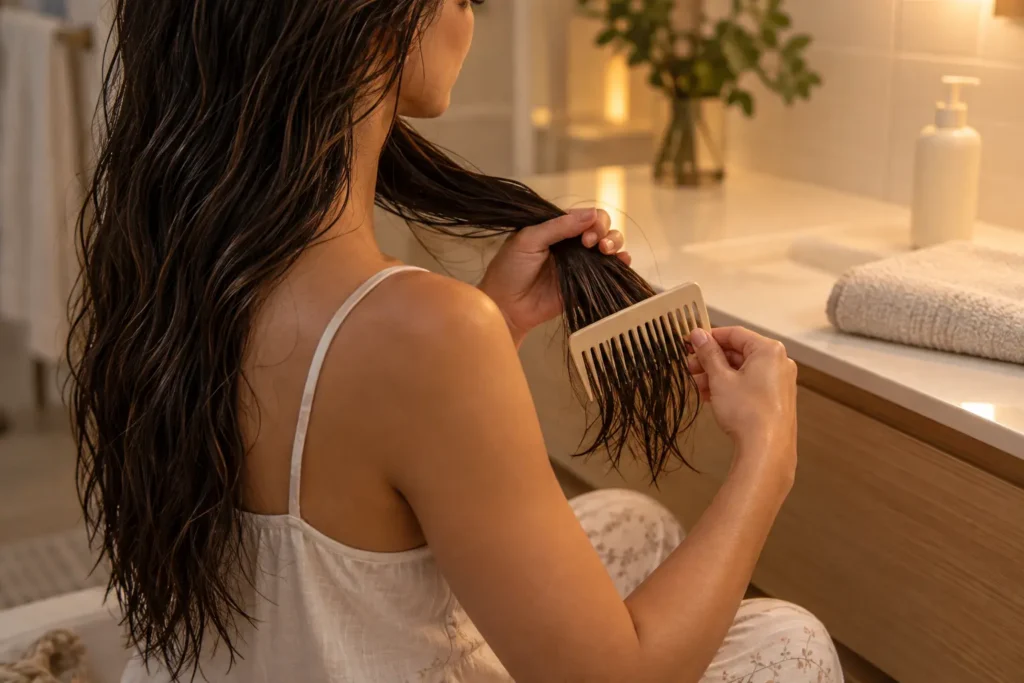
For straight hair, let it dry partially before gently working through it with a wide-tooth comb. For thick curls and coils, detangling while damp and coated with conditioner can provide the slip needed to ease through knots.
Start at the ends and gradually move upward. Support the section with your hand so you aren’t transferring every tug to the scalp.
You don’t need to brush your hair repeatedly before bed. Once the necessary tangles are removed, extra passes add handling without a clear benefit.
4. Dry Gently Before Settling Into Bed
After washing, press out excess water with a soft T-shirt or towel. Avoid twisting the lengths tightly or rubbing them back and forth.
Air-dry when practical. If you need a dryer, use a low or medium setting and a heat-protectant product according to its instructions. Excessive heat can damage hair, so aim for comfortable drying rather than a nightly polished blowout.
Avoid tightly bundling wet hair into a bun. As a practical bedtime habit, allow your hair and scalp to dry before covering them for the night. There’s no need to panic over an occasional damp strand; the goal is to avoid rough handling and an uncomfortable, wet sleeping setup.
5. Add Leave-In Conditioner Only Where Needed
A leave-in conditioner is optional. It makes sense when your lengths still feel difficult to manage after your usual wash-and-condition routine.
Use a product intended to remain in the hair, following the label’s amount and application directions. Begin with less than you think you need.
For fine hair, concentrate a lightweight product on the ends. For coarse or tightly textured hair, a richer formula may be more practical. Assess the result the next morning: hair should feel manageable, without an unwanted coating or loss of volume.
Don’t keep adding product every evening simply because it’s part of a routine. If your hair already feels soft and detangles comfortably, skip this step.
6. Choose a Comfortable, Low-Tension Sleep Style
The best bedtime hairstyle is one you can wear without pulling, pressure, or discomfort.
Long hair may suit a loose braid secured with a fabric-covered tie. Curls may fit comfortably in a loose bonnet or a gently gathered arrangement. Short hair may need no securing at all.
Leave the hairline relaxed and avoid fastening the same section tightly night after night. If you use rollers or a heatless curling tool, check that the setup doesn’t tug at the roots or press painfully against your head.
The American Academy of Dermatology includes frequently wearing tight overnight rollers among styles that can contribute to traction-related damage.
7. Use a Smooth Covering If It Helps
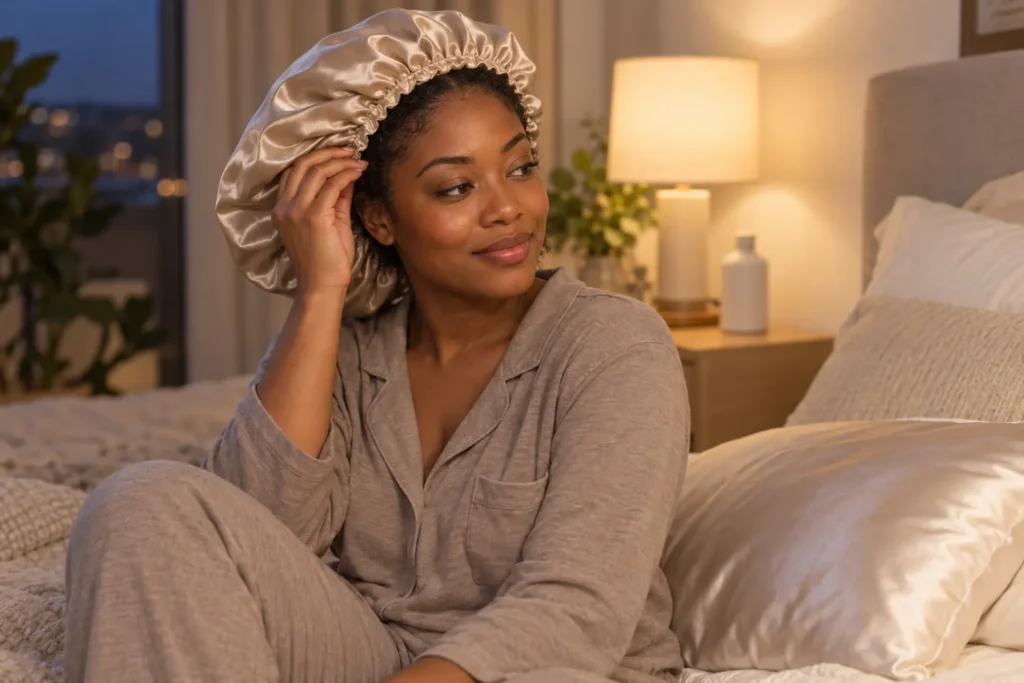
A silk or satin scarf or bonnet can be a useful way to contain hair gently. The AAD identifies these materials as gentler choices for hair coverings. Fit still matters: the band should feel comfortable, and the hair underneath should remain loosely arranged.
A smooth pillowcase is another optional choice if you dislike sleeping in a covering. Choose something comfortable, washable, and within your budget.
Neither option should be presented as a hair-growth treatment. Evaluate it by practical results: whether it stays in place, feels comfortable, and makes your morning styling easier.
Adjust the Routine to Your Hair Type
Keep the basic routine consistent while changing the amount of product and the way you secure your hair.
| Hair type or concern | Useful nighttime adjustment | What to reconsider |
|---|---|---|
| Fine or easily flattened hair | Use minimal leave-in product and keep roots free of heavy coatings | Rich creams applied automatically every night |
| Wavy hair | Arrange loosely to preserve the pattern | Brushing out waves when no detangling is needed |
| Curly or coily hair | Detangle at an appropriate damp stage and use a comfortable covering if helpful | Tight bands or repeated pulling at the hairline |
| Color-treated or bleached lengths | Keep handling gentle and follow the treatment product’s instructions | Assuming extra heat or multiple masks will improve results |
| Oily scalp with dry ends | Make separate decisions for scalp cleansing and length conditioning | Treating the entire head as either oily or dry |
| Short hair | Keep the routine minimal | Buying overnight accessories without a clear need |
Introduce one change at a time. It’s easier to judge a new leave-in or bonnet when you haven’t changed five other things that week.
Do You Need to Oil Your Hair Overnight?
No. Overnight oiling is an optional practice, not a requirement for healthy-looking hair.
Some people like a small amount of hair oil on dry lengths, while others find it leaves their hair heavy or difficult to wash. If you use one, follow the product’s directions and judge whether it improves manageability enough to justify the extra step.
Keep scalp concerns separate from dry ends. Flaking doesn’t automatically mean the scalp needs oil. Dandruff can be associated with several factors, including oily skin, and may respond to an appropriate dandruff shampoo.
Follow the shampoo’s directions, including its contact time and recommended frequency. Seek assessment if symptoms are severe or don’t improve with suitable care. aad.org
Save Rinse-Out Masks for Their Intended Use
A conditioner labeled for a brief treatment isn’t automatically suitable for sleeping in.
Use rinse-out masks for the time stated on the packaging. Choose a specifically labeled leave-in product when you want something that can remain on the hair.
More treatment time doesn’t necessarily mean a better result. It can also make a simple routine harder to maintain, especially if you need an extra morning wash to remove everything.
If you use a prescribed scalp treatment, follow its directions rather than changing the timing or covering it with oil as part of a cosmetic routine.
What Results Should You Expect?
A looser hairstyle may feel more comfortable immediately. A well-chosen conditioner may make the lengths easier to comb after the next wash. Preserving a style overnight may also reduce how much restyling you need in the morning.
Reducing breakage is a longer-term goal. Look for a routine that requires less tugging and repeated manipulation, rather than expecting visible length gains after a few nights.
For an ordinary non-wash evening, the routine can stay brief: release your hairstyle, deal gently with any tangles, add a small amount of leave-in if needed, and arrange your hair comfortably for sleep.