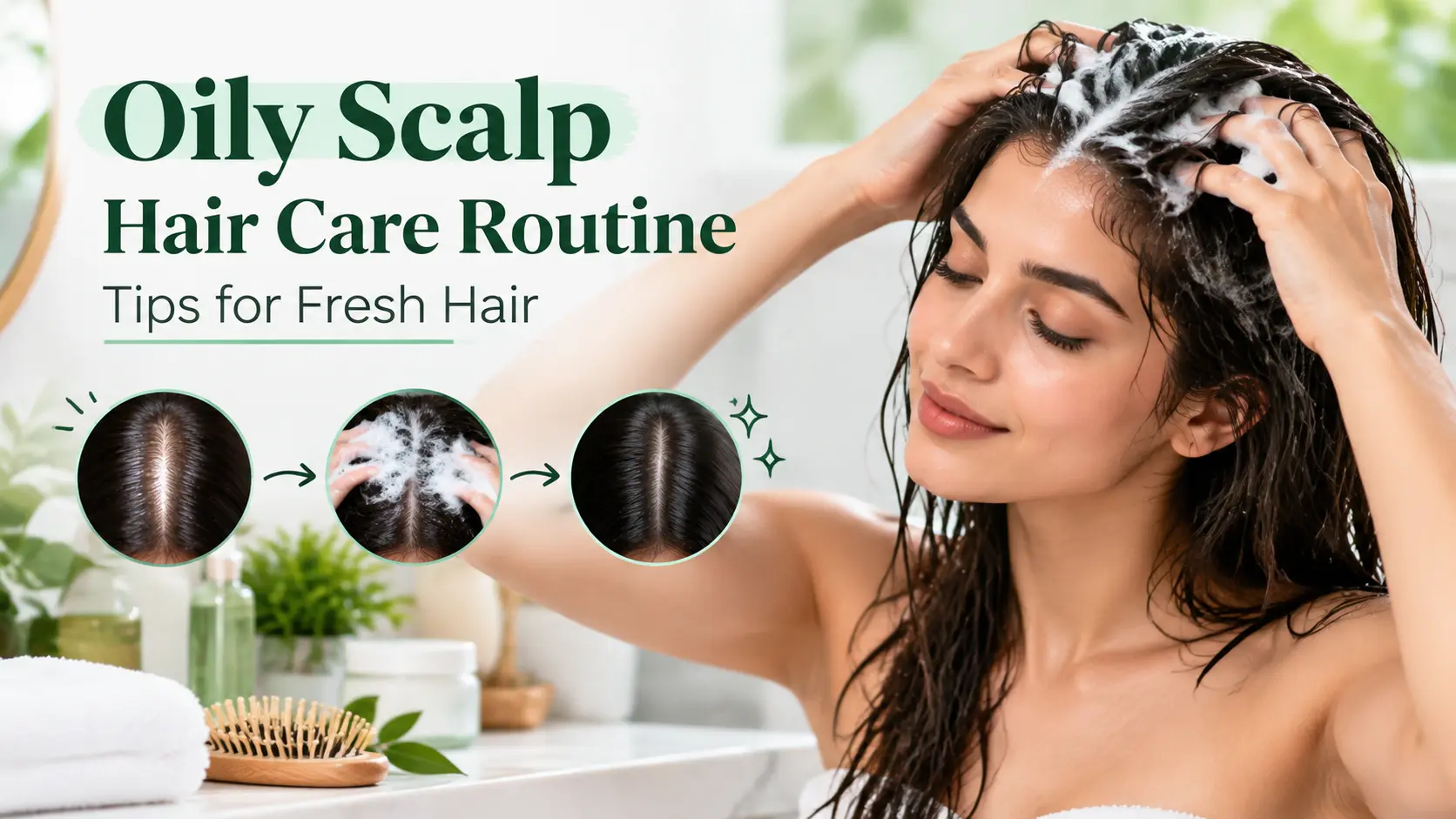
You wash your hair in the morning, enjoy clean, bouncy roots for a few hours, and then notice that familiar greasy feeling returning by evening. Your lengths might still look perfectly fine, but your scalp seems ready for another wash.
If this sounds familiar, your hair care routine may need a few adjustments. An oily scalp doesn’t necessarily mean you’re washing incorrectly or using the wrong products. Your scalp naturally produces sebum, and some people produce more than others.
The solution isn’t to strip away every trace of oil or buy an entire collection of scalp treatments. A well-designed oily scalp hair care routine focuses on effective cleansing, lightweight conditioning, sensible wash frequency, and targeted treatments when needed.
From double shampooing to gentle scalp exfoliation, here’s how to build a routine that helps your hair feel fresher without leaving the lengths dry or uncomfortable.
Why Does Your Scalp Get Oily So Quickly?
Your scalp contains sebaceous glands that produce sebum, a natural oil that helps protect the skin and lubricate the hair.
Sebum is necessary, but excess oil can collect around the roots and mix with sweat, dead skin cells, and styling-product residue. This combination can make freshly washed hair appear flat or greasy sooner than expected.
Several factors influence how quickly your scalp becomes oily:
- Genetics: Some people naturally have more active sebaceous glands.
- Hormonal changes: Oil production can increase during puberty and other hormonal shifts.
- Hair texture: Fine, straight hair often shows oil more quickly because sebum can spread along the strands more easily.
- Styling products: Rich creams, waxes, and oils may leave roots looking heavier.
- Climate and activity: Heat, humidity, and sweating can affect how quickly hair feels dirty or uncomfortable.
One popular misconception is that avoiding shampoo will eventually train an oily scalp to stop producing excess sebum.
There isn’t strong evidence that extending the time between washes permanently changes your natural oil production. You may become more comfortable with a different washing schedule, but that isn’t the same as retraining your sebaceous glands.
The American Academy of Dermatology recommends washing according to how oily or dirty your scalp becomes. For people with straight hair and an oily scalp, daily shampooing can be appropriate.
The Best Oily Scalp Hair Care Routine: 7 Essential Steps
A successful routine doesn’t need to be complicated. These seven steps cover everyday cleansing, conditioning, and maintenance while leaving room for your individual hair needs.
Step 1: Choose a Shampoo That Cleans Without Leaving Hair Stripped
The foundation of an effective oily scalp routine is a shampoo that removes excess sebum without making your hair feel rough or tangled.
Look for a formula designed for oily hair, frequent washing, or lightweight cleansing.
Helpful shampoo features include:
- Effective cleansing ingredients that remove oil and product residue
- A lightweight formula that rinses clean
- Conditioning ingredients that don’t leave fine hair feeling coated
- Fragrance-free options if your scalp is easily irritated
You don’t automatically need a sulfate-free shampoo. Sulfates are cleansing agents, and some formulas containing them work well for oily hair. A shampoo’s overall formulation matters more than the presence or absence of one ingredient.
Similarly, a shampoo marketed as natural isn’t necessarily gentler.
If you wash frequently, choose a formula your scalp tolerates comfortably. If your hair becomes stiff, tangled, or excessively dry after every wash, consider a gentler cleanser or more conditioning for the lengths.
Step 2: Apply Shampoo Directly to the Scalp
Many people focus on washing the hair strands while missing areas of the scalp where oil and buildup collect.
For more effective cleansing:
- Wet your hair and scalp thoroughly with lukewarm water.
- Apply shampoo to your fingertips or palms.
- Separate thick hair into sections if necessary.
- Distribute the shampoo across the scalp, including the crown, hairline, and behind the ears.
- Massage gently with your fingertips.
- Rinse thoroughly until the shampoo is removed.
Avoid scratching with your nails or rubbing the lengths aggressively.
Shampoo is primarily needed at the roots. As you rinse, the diluted lather travels down the strands and helps remove surface residue.
Pro Tip: If you have very thick hair, parting it into sections before shampooing can make it easier to reach the scalp evenly. This simple technique may improve cleansing without requiring more product.
Step 3: Try Double Shampooing When One Wash Isn’t Enough
Double shampooing, sometimes called a two-pass shampoo technique, involves washing the scalp twice during the same shower.
It can be useful when your scalp has accumulated substantial oil, dry shampoo, or styling-product residue.
How to double shampoo:
- First wash: Apply a modest amount of shampoo, massage gently, and rinse. This begins removing surface oil and residue.
- Second wash: Apply shampoo again, concentrating on areas that still feel coated or greasy. Massage gently and rinse thoroughly.
The second wash may create more lather because some surface oil has already been removed. However, lather alone doesn’t prove that your scalp is cleaner.
Double shampooing is optional, not a requirement for every wash.
If your scalp feels comfortable and clean after one shampoo, a second application is unlikely to provide much additional benefit. Frequent double cleansing may also be too drying for sensitive scalps or fragile, color-treated lengths.
Use it when your hair genuinely needs extra cleansing rather than automatically adding another step.
Step 4: Condition the Lengths Without Weighing Down Your Roots
An oily scalp and dry hair ends can exist at the same time.
Skipping conditioner entirely may leave your hair tangled, rough, or harder to manage, especially if you shampoo frequently.
Choose a lightweight conditioner that suits your hair texture.
For fine or straight hair, concentrate conditioner from the mid-lengths to the ends. For curly, coily, or very dry hair, conditioning more of the length may be necessary.
Avoid applying large amounts of rich conditioner directly to oily roots unless the product is specifically intended for scalp use.
Rinse according to the product directions, and pay attention to how your hair feels after drying.
If your ends still feel dry, consider a small amount of leave-in conditioner applied only where needed. You don’t have to sacrifice comfortable, manageable lengths to keep your scalp clean.
Step 5: Dry and Style Your Hair Without Adding Unnecessary Buildup
Your styling routine can affect how quickly freshly washed hair looks greasy.
Start by gently squeezing excess water from your hair. Use a soft towel or T-shirt to absorb moisture instead of rubbing vigorously.
If you blow-dry, use a low or medium heat setting when possible. Excessive heat can damage the hair shaft, even though it doesn’t directly explain every case of oily roots.
For styling products, use the smallest amount that gives you the result you want.
Fine hair may feel weighed down by heavy creams, waxes, and pomades. Lightweight mousses, sprays, or serums can be easier to manage, depending on the formula.
Keep richer products on the lengths when possible.
Also, avoid repeatedly adding styling products throughout the day without eventually washing them out. Layers of residue can make roots appear greasy even when sebum isn’t the only issue.
Step 6: Use Dry Shampoo for a Temporary Root Refresh
Dry shampoo can help absorb visible oil between washes, making hair look fresher and sometimes adding temporary volume.
But it doesn’t clean the scalp.
According to the American Academy of Dermatology, dry shampoo should supplement regular shampooing with water, not replace it.
For better results:
- Start with dry hair.
- Apply a small amount only to oily areas.
- Follow the product’s instructions for application distance and waiting time.
- Distribute or brush out the product as directed.
- Wash your scalp with regular shampoo when cleansing is needed.
Using too much dry shampoo can leave a powdery or gritty feeling, visible residue, and sometimes irritation.
A practical approach is to use it for an occasional refresh rather than repeatedly layering it onto the scalp for several days.
The AAD suggests returning to regular shampooing after one or two dry-shampoo applications.
Step 7: Set a Washing Schedule Based on Your Scalp
There is no single washing schedule that suits everyone with oily hair.
Your ideal frequency depends on scalp oil production, hair texture, styling habits, and how your hair responds to cleansing.
For fine, straight hair that becomes oily quickly, washing daily or every other day may be appropriate.
For curly, coily, or dry hair, the lengths may need more protection, even when the scalp produces excess oil.
Pay attention to these signals:
- Roots become noticeably oily or coated.
- Your scalp feels uncomfortable between washes.
- Styling products have accumulated.
- The lengths become dry or difficult to detangle after frequent shampooing.
If your scalp needs frequent cleansing but your ends feel dry, improve your conditioning routine and keep shampoo concentrated at the roots.
The goal is to find a sustainable balance rather than follow a strict rule about how many days you must wait.
Advanced Scalp Care Techniques Worth Considering
Once your basic routine is working, a few targeted techniques may help with specific concerns.
Not every oily scalp needs exfoliating acids, clarifying shampoos, or leave-on serums. Choose additions based on the problem you’re trying to solve.
Clarifying Shampoo for Stubborn Scalp Buildup
A clarifying shampoo is designed to remove more stubborn residue from styling products, oils, and other deposits.
It may be helpful if your hair feels coated even after washing or if you regularly use waxes, gels, heavy creams, or dry shampoo.
Cleveland Clinic suggests that people who use many styling products may consider clarifying shampoo once or twice a month.
This is a starting point, not a universal schedule.
If your regular shampoo already removes buildup effectively, you may not need a separate clarifying product.
For dry, bleached, or color-treated hair, choose a suitable formula and avoid excessive use. Some clarifying shampoos can leave the lengths feeling dry.
Good to Know: Clarifying shampoo removes residue. It doesn’t permanently reduce the amount of sebum your scalp produces.
Salicylic Acid Scalp Exfoliation for Flakes and Scale
Salicylic acid is a beta hydroxy acid used in skincare and certain scalp treatments.
On the scalp, it can help loosen and remove accumulated dead skin cells and scale. That’s why it appears in some dandruff shampoos.
A salicylic acid scalp treatment may be worth considering when oily roots are accompanied by stubborn flakes or visible scaling.
However, oiliness alone doesn’t mean your scalp needs exfoliation.
If you decide to use a salicylic acid product:
- Choose a formula specifically intended for scalp use.
- Follow the manufacturer’s application and contact-time instructions.
- Start conservatively and monitor for dryness or irritation.
- Avoid combining several exfoliating scalp treatments unnecessarily.
- Stop if persistent burning, redness, or discomfort develops.
Salicylic acid isn’t a substitute for antifungal treatment when dandruff or seborrheic dermatitis requires it.
There is also limited evidence that routine cosmetic scalp exfoliation meaningfully reduces natural sebum production over time.
Physical scalp scrubs aren’t essential either. Rough particles and aggressive rubbing can irritate sensitive skin.
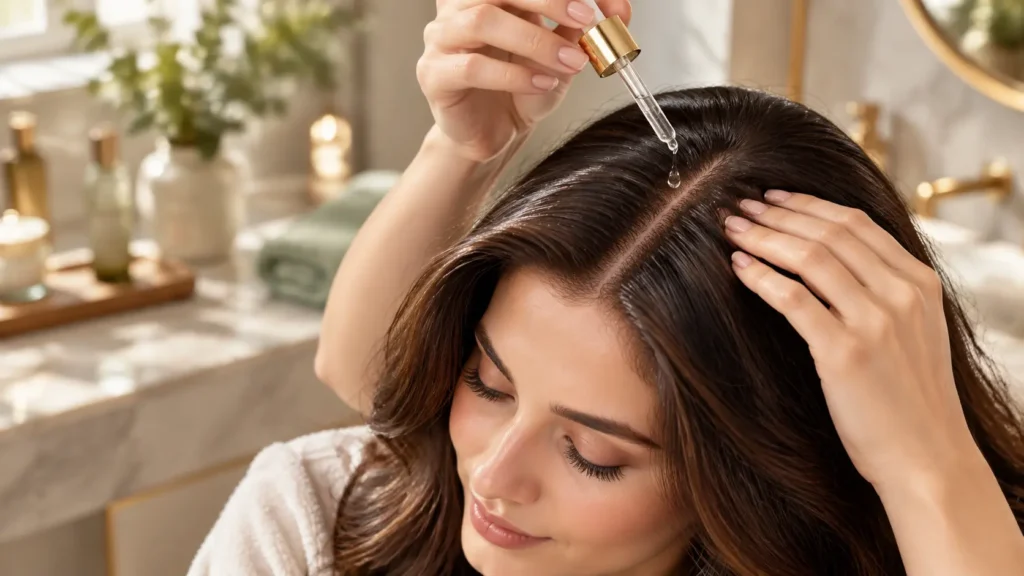
Do Niacinamide and Zinc PCA Scalp Serums Really Control Oil?
Leave-on scalp serums containing niacinamide, zinc PCA, and other skincare-inspired ingredients have become increasingly common.
Their appeal is understandable: people want scalp products that feel as targeted as facial skincare.
But ingredient popularity shouldn’t be confused with proven scalp benefits.
Niacinamide: Research on facial skin suggests topical niacinamide may reduce certain measures of oiliness. However, those findings cannot automatically be applied to the scalp. Evidence that niacinamide scalp serums reliably control excess sebum remains limited.
Zinc PCA: This ingredient appears in products marketed for oily skin and scalp care, but strong independent clinical evidence supporting lasting scalp oil reduction is limited.
A lightweight serum may still feel comfortable or provide cosmetic benefits, depending on its formulation.
If you want to try one, introduce it separately from other new scalp treatments and patch-test according to product guidance.
Don’t expect a serum to replace regular shampooing, and don’t feel pressured to purchase one if your scalp is already comfortable.
How to Personalize Your Oily Scalp Hair Care Routine
The best routine depends on more than oil production. Your hair texture, length, and chemical treatments affect how much cleansing and conditioning your hair can tolerate.
| Hair type or concern | Suggested approach |
|---|---|
| Fine, straight, oily hair | Consider daily or every-other-day shampooing as needed, with lightweight conditioner on the ends. |
| Thick hair with oily roots | Section hair during washing, cleanse the scalp thoroughly, and condition the lengths. |
| Curly or coily hair with an oily scalp | Wash according to scalp needs while protecting the lengths with appropriate conditioning. |
| Color-treated hair | Choose products suitable for treated hair and avoid unnecessary repeated cleansing. |
| Sensitive, oily scalp | Use a gentle, well-tolerated shampoo and introduce new treatments one at a time. |
These are starting points rather than fixed rules. Adjust your routine based on comfort, dryness, and how quickly residue accumulates.
What About Sweaty Hair After Exercise?
Sweat can make roots feel damp, sticky, or flat, but sweating doesn’t always mean you need another full shampoo.
If your scalp feels comfortable, you may be able to follow your usual washing schedule.
If sweat, oil, and styling residue leave your scalp feeling dirty, cleansing may be more useful than covering the roots with additional dry shampoo.
For people who exercise frequently, a gentle shampoo that works with their normal washing schedule can be more practical than repeated deep-cleansing treatments.
Oily Scalp With Dandruff: When Regular Shampoo Isn’t Enough
Oily roots accompanied by persistent itching, flakes, or greasy scales may need more than a cosmetic hair care routine.
Dandruff is common, and seborrheic dermatitis can affect oil-rich areas of the skin, including the scalp.
According to Mayo Clinic, seborrheic dermatitis can cause stubborn flakes, inflammation, and oily patches with white or yellow scales.
For mild dandruff, over-the-counter medicated shampoos may help.
Common active ingredients include:
- Ketoconazole: An antifungal ingredient used in certain dandruff shampoos.
- Selenium sulfide: Helps manage dandruff and related scalp symptoms.
- Salicylic acid: Helps loosen and remove scale.
Follow the product label carefully. Some medicated shampoos require several minutes of contact with the scalp before rinsing.
The frequency also varies by formula and hair type. Using a medicated shampoo more often than directed isn’t necessarily more effective and may increase dryness or irritation.
If flakes persist despite appropriate care, or you develop significant redness, pain, swelling, sores, or unusual hair loss, consult a qualified dermatologist.
Why Your Hair May Still Look Greasy After Washing
Sometimes the problem isn’t simply excess sebum. Product residue, incomplete cleansing, or heavy conditioning can create a similar appearance.
| What you’re noticing | What to adjust |
|---|---|
| Roots feel coated immediately after washing | Concentrate shampoo on the scalp and rinse thoroughly. |
| Hair feels heavy after conditioner | Try a lighter formula or apply less near the roots. |
| Hair looks dull after frequent styling | Consider occasional clarifying shampoo if buildup is present. |
| Scalp becomes itchy after dry shampoo | Stop the irritating product and return to regular cleansing. |
| Roots are oily but ends are dry | Keep cleansing focused on the scalp and increase conditioning on the lengths. |
Make one change at a time so you can tell what actually helps.
For example, if your hair feels coated after washing, first check whether you’re distributing shampoo evenly and rinsing thoroughly before purchasing a new treatment.
If you change shampoo, conditioner, scalp serum, and styling products simultaneously, it becomes harder to identify which product improves or worsens your results.
How Long Does It Take to Notice Fresher Hair?
Some changes can make a difference after the very first wash.
Using shampoo more effectively, rinsing thoroughly, and keeping heavy products away from the roots may improve how clean and lightweight your hair feels immediately.
Other adjustments take longer to evaluate.
Give a new routine several washes to judge whether it suits your hair. If you’re testing a leave-on scalp product, follow its directions and watch for irritation rather than expecting dramatic changes overnight.
Dandruff treatments may require repeated use over several weeks, depending on the product and underlying condition.
Most importantly, remember that fresher-looking roots aren’t the same as permanently reducing sebum production.
Your scalp will continue producing natural oil. A successful routine manages that oil comfortably rather than attempting to eliminate it.
Keep Your Scalp Routine Simple and Consistent
An effective oily scalp hair care routine doesn’t require expensive tools, daily exfoliation, or a shelf full of scalp serums.
Start with a shampoo that cleans effectively, a conditioner suited to your hair texture, and a washing schedule based on your actual needs.
Use double shampooing when buildup makes it useful. Add clarifying shampoo occasionally if styling residue becomes a problem. Consider targeted scalp treatments when you have flakes or another specific concern, rather than treating every oily scalp as if it needs exfoliation.
Most people benefit more from consistent, well-chosen basics than from constantly switching products.
The goal is straightforward: a comfortable scalp, manageable hair, and roots that look and feel clean for a reasonable amount of time between washes.