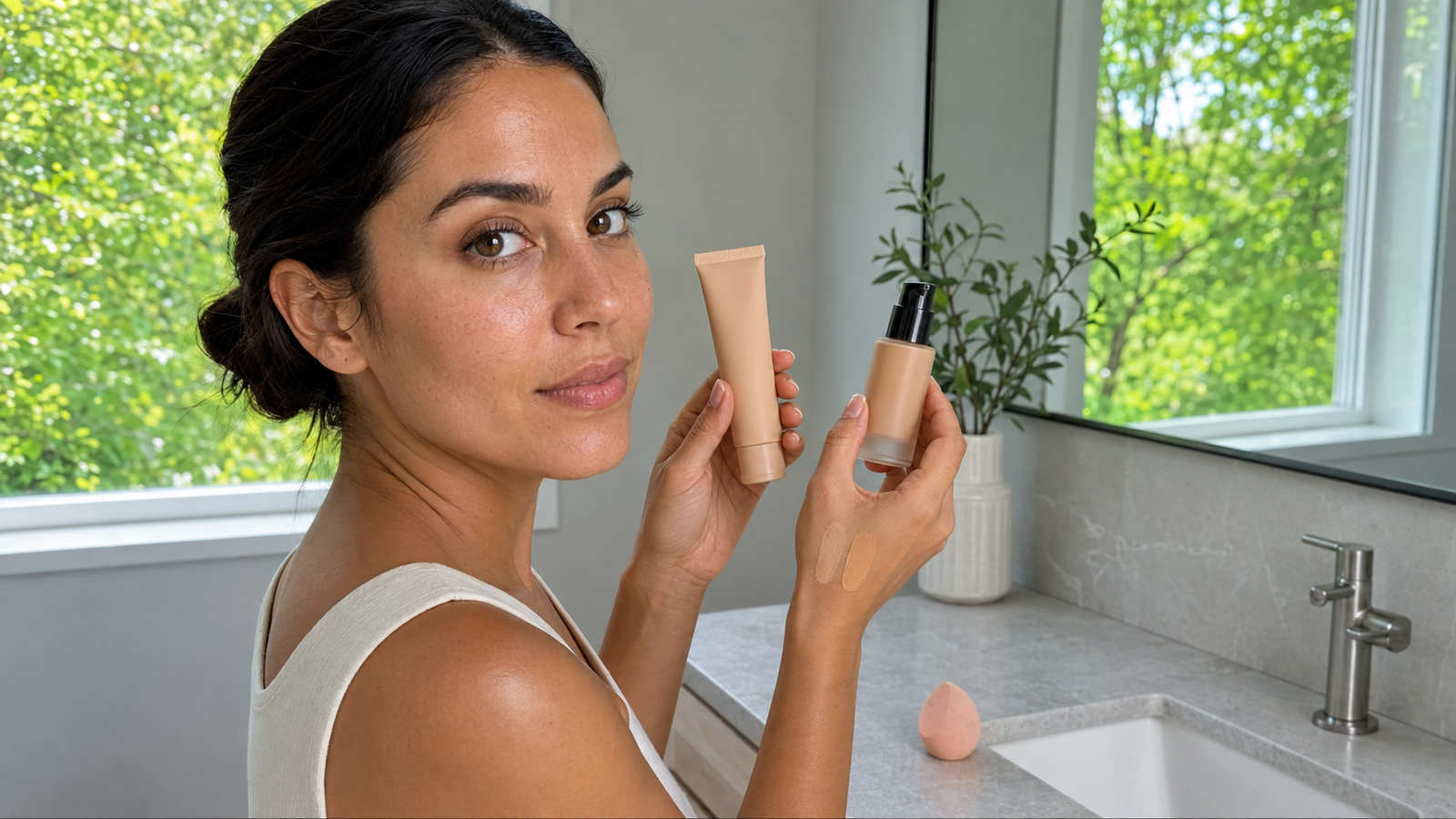
Your makeup can look smooth in an air-conditioned bedroom and start separating before you reach the car. Heat increases sweat and oil, while repeated blotting gradually removes both makeup and sunscreen. That’s why the tinted sunscreen vs foundation decision matters more on hot days than it does in mild weather.
Neither option wins every category. Tinted sunscreen is usually the smarter daytime base when sun protection and lightweight coverage matter most, while foundation gives you better control over coverage, finish and color matching. The right choice depends on where you’re going, how much you’ll sweat and how much discoloration you want to cover.
Direct answer: Tinted sunscreen works best for casual hot days because it combines broad-spectrum protection with light, skin-like coverage. Foundation is better when you need medium-to-full coverage or a carefully controlled finish, but it should sit over a separate sunscreen. For long outdoor exposure, prioritize a water-resistant SPF 30 or higher regardless of which makeup you wear.
Tinted Sunscreen vs Foundation at a Glance
| Factor | Tinted Sunscreen | Foundation |
|---|---|---|
| Main purpose | Sun protection with sheer tint | Cosmetic coverage and finish |
| Typical coverage | Sheer to light | Light to full |
| UV protection | Reliable when labeled broad-spectrum and applied properly | SPF is often under-applied; use separate sunscreen |
| Hot-weather feel | Usually lighter, depending on formula | Can feel heavier as layers build |
| Sweat performance | Look for 40- or 80-minute water resistance | Varies; long-wear doesn’t automatically mean UV protection |
| Reapplication | Necessary outdoors; pigment may build up | Foundation alone doesn’t replace sunscreen reapplication |
| Shade selection | Often limited | Usually broader and more precise |
| Best for | Errands, beach days and light everyday coverage | Events, photography and visible discoloration |
| Main drawback | Limited coverage and shade flexibility | Can separate, crease or feel heavy in heat |
What Tinted Sunscreen Actually Does
Tinted sunscreen is sunscreen first, with pigments added to reduce white cast and lightly even the complexion. A good hot-weather option should state broad-spectrum SPF 30 or higher and water resistance for either 40 or 80 minutes. You still need to apply the full labeled amount because using a few makeup-sized dots won’t provide the tested protection. If applying that amount looks thick or orange, the shade or formula isn’t right for you.
Many tinted sunscreens contain iron oxides, the pigments that create beige, brown or red tones. Iron oxides can add protection against visible light, which may worsen hyperpigmentation and melasma, particularly in deeper skin tones. The American Academy of Dermatology’s sunscreen guidance recommends a tinted broad-spectrum SPF 30 or higher when visible-light-related darkening is a concern. Regular foundation contains pigment too, but that doesn’t turn it into a dependable sunscreen unless it carries tested SPF labeling and you apply enough.
What Foundation Does Better
Foundation is designed to change how your complexion looks, so it offers more control over coverage, undertone and finish. You can choose sheer, medium or full coverage and target redness, acne marks or melasma more precisely than most tinted sunscreens allow. Long-wear foundation can also hold its color better through an event, especially when applied in thin layers and set only where you become oily. Its main weakness is that cosmetic coverage doesn’t automatically provide adequate UV protection.
Even foundation labeled with SPF shouldn’t be your only sunscreen on a hot day. Most people apply a thin makeup layer because using a sunscreen-sized amount of foundation would look heavy and mask-like. The amount applied directly affects protection, and the FDA explains that sunscreen quantity and reapplication are critical to limiting UV exposure. Treat SPF in foundation as extra support over dedicated sunscreen, not permission to skip it.
Good to Know: “Long-wear,” “transfer-resistant” and “water-resistant SPF” describe different things. A foundation may resist rubbing without maintaining tested sun protection during swimming or sweating.
Which One Handles Heat Better?
Tinted sunscreen often feels better in heat because it can replace one makeup layer, but the product category alone doesn’t guarantee a lightweight finish. A rich mineral cream may feel heavier than a thin long-wear foundation applied over fluid sunscreen. Look at the entire formula, including texture, water resistance and how much you must apply, rather than assuming every tint will feel breathable. A formula that remains comfortable at the correct dose is more useful than one that looks beautiful only when under-applied.
Foundation usually wins when appearance must remain polished for several hours indoors or during a formal event. Flexible film-forming ingredients can help makeup resist oil and movement, but sweat may still collect around the nose, upper lip and hairline. I’ve had “matte” foundations break apart faster than natural-finish formulas because the dry layer cracked when oil came through underneath. Thin application and strategic setting usually survive heat better than piling powder over a heavy base.
Coverage Changes the Answer
Choose tinted sunscreen when you want to soften mild redness, blur small marks and make your overall tone look more even. It won’t reliably conceal inflamed blemishes, strong discoloration or pronounced under-eye darkness, and applying extra layers for coverage can create a thick sunscreen film. A better method is to apply the full sunscreen amount evenly, let it settle and add a small amount of concealer only where needed. This keeps the base light without sacrificing protection.
Choose foundation when coverage is the main goal, but wear a separate broad-spectrum sunscreen underneath it. Apply the sunscreen evenly over your face, ears, hairline and exposed neck, then give the film several minutes to settle before adding foundation. Use a damp sponge or brush with light pressure so you don’t repeatedly drag across the sunscreen layer. Concentrate foundation in the center of the face and blend outward instead of applying the same heavy amount everywhere.
The Shade Problem Is Real
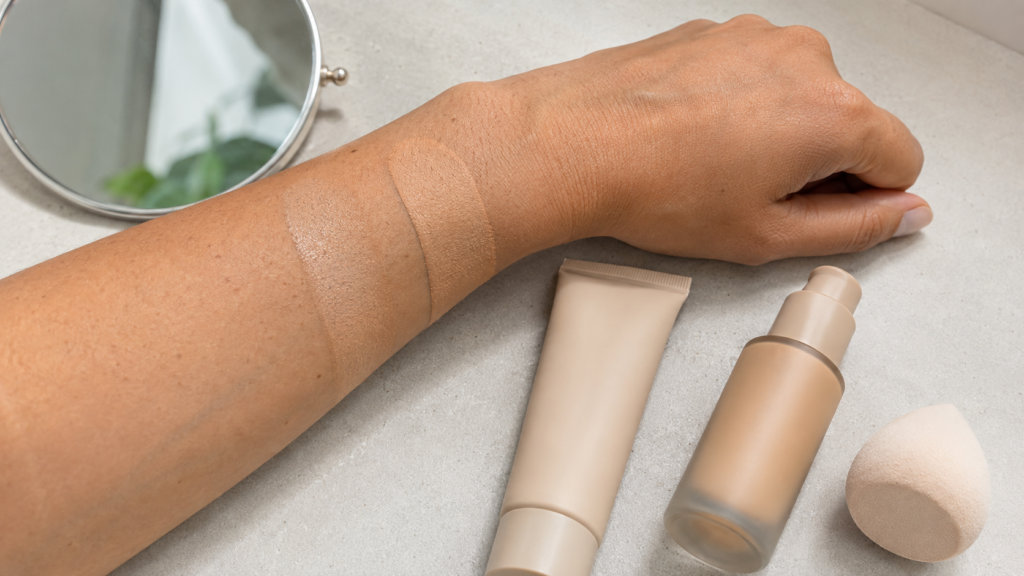
Foundation nearly always offers more undertones and depth options than tinted sunscreen. A tint that looks acceptable in a thin layer may become too orange, gray or pink when applied at the amount required for sun protection. Check the shade in daylight after it has dried for at least ten minutes because mineral pigments and the base formula can change slightly as water evaporates. Don’t buy a poor match simply because the product promises to adapt to every skin tone.
You can apply correctly matched foundation over an untinted sunscreen if no tinted SPF suits your complexion. Another option is a sheer tinted sunscreen followed by targeted concealer, provided the sunscreen itself doesn’t leave a visible mismatch. Don’t mix foundation into sunscreen in your palm to create a custom tint because this can disturb the sunscreen’s tested film and produce uneven coverage. Layering separate products gives you more control over both protection and color.
Watch Out: Tinted sunscreen drops or pigment mixers shouldn’t be added to sunscreen unless the manufacturer specifically designed and tested the products to work together. A homemade mixture may look better while creating an uneven protective layer.
The Best Choice for Your Skin Type
Oily or Acne-Prone Skin
Look for a fluid, gel-lotion or lightweight tinted sunscreen that dries down without leaving a thick oily film. “Non-comedogenic” can be a helpful starting point, but it doesn’t guarantee that every acne-prone person will tolerate the formula. If you prefer foundation, use a lightweight sunscreen underneath and apply oil-controlling makeup only through the center of your face. Blot sweat with a clean tissue instead of repeatedly adding powder, which can turn oil and makeup into a visible paste.
Dry or Dehydrated Skin
A moisturizing tinted sunscreen often looks smoother on dry skin because it reduces the number of base layers. Apply a simple fragrance-free moisturizer first if needed, but allow it to settle so the sunscreen doesn’t slide or pill. Matte foundation can catch on flaky areas and exaggerate texture, particularly when paired with a dry-touch sunscreen. In my experience, a natural-finish base with targeted powder looks fresher in heat than forcing dry skin into a completely matte finish.
Sensitive Skin
Sensitive skin may prefer a fragrance-free tinted mineral sunscreen, but mineral filters aren’t automatically irritation-proof. Botanical extracts, fragrance, high alcohol content and even certain pigments can trigger discomfort regardless of the UV filter type. Patch-test the product along your jaw for several days before wearing it across your entire face during a hot outdoor event. Stop if you develop persistent burning, swelling, itching or a rash rather than trying to “build tolerance.”
Melasma or Persistent Dark Marks
A tinted sunscreen containing iron oxides is usually the more useful starting layer because it addresses UV exposure and visible light. Apply it generously, then add foundation or concealer only if you want more coverage over the discolored areas. The AAD’s melasma recommendations specifically suggest tinted SPF 30 or higher because visible light can worsen melasma. Seek professional guidance if pigmentation changes quickly, resists consistent care or appears alongside other unusual skin changes.
How to Layer Both Without Pilling
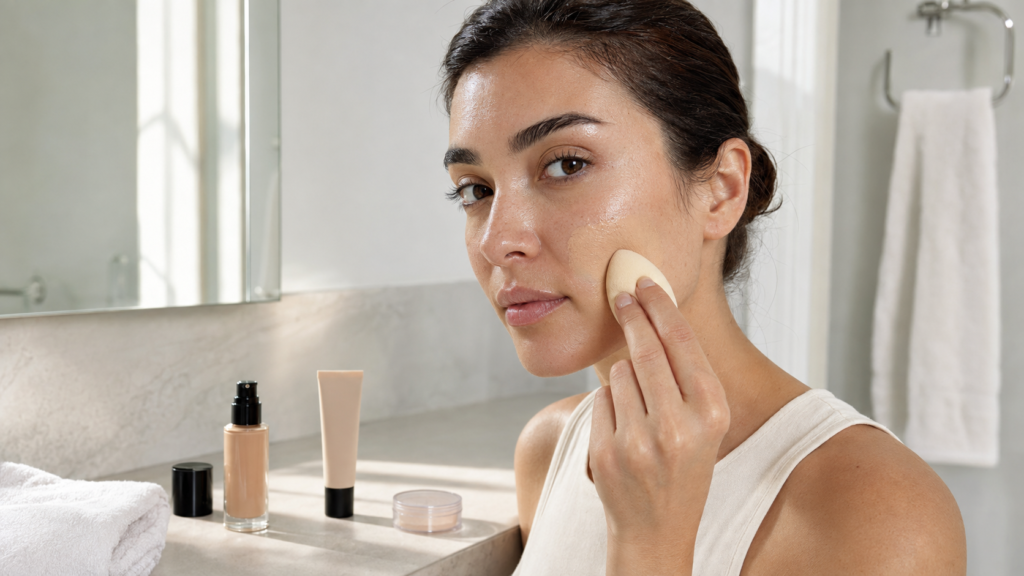
Start with the fewest skincare layers you need, since multiple serums, moisturizer, sunscreen, primer and foundation can create an unstable stack. Apply sunscreen evenly rather than rubbing it continuously, then let it form a settled film before using makeup. Press on a thin foundation layer with a sponge or brush and set only the forehead, sides of the nose and other areas that become oily. If the combination rolls into small flakes, reduce the number of layers before blaming one product.
Primer is optional, not an automatic hot-weather requirement. A gripping primer may improve makeup wear, but applying it over a tacky sunscreen can also cause bunching or patchiness. Test the complete routine before an important day because two good formulas can still be incompatible when their film-forming systems meet. I prefer testing a base during a grocery run before trusting it at an outdoor wedding.
Reapplying Without Destroying Your Base
Outdoor protection still requires reapplication, even when your makeup looks intact. The FDA advises reapplying sunscreen at least every two hours and more often after swimming or sweating, while water-resistant labels indicate whether tested protection lasts through 40 or 80 minutes of water exposure. Gently blot sweat first, then press on a compatible sunscreen in thin, overlapping sections instead of rubbing aggressively. Your makeup may need a small concealer touch-up afterward, but maintaining protection matters more than preserving a perfect finish.
Tinted sunscreen can become deeper or heavier when reapplied because every layer adds pigment. An untinted fluid sunscreen may disturb the color less, although any adequate reapplication can affect makeup. SPF powders and mists are convenient for touch-ups, but it’s difficult to know whether you’ve applied enough for reliable standalone protection. Use shade, a wide-brimmed hat and protective clothing alongside sunscreen when you’ll spend hours outside.
Tinted Sunscreen vs Foundation: The Final Verdict
For errands, commuting, beach visits and casual outdoor days, tinted sunscreen usually offers the better balance of protection, comfort and light coverage. For weddings, photography, visible acne marks or occasions requiring a precise finish, foundation performs better over a separate sunscreen. If you want both, use sunscreen at the correct amount first and add a thin layer of foundation or concealer after it settles. The best hot-day base is the one you can apply properly, tolerate comfortably and maintain throughout the day.
Bottom Line
The tinted sunscreen vs foundation debate has a simple answer: sunscreen wins for protection, while foundation wins for customizable coverage. Hot weather doesn’t change those jobs, but it makes heavy layering, poor shade matches and skipped reapplication more obvious. Save this comparison before your next warm-weather event, and choose your base according to the day you’re actually having.