A face wash that leaves oily skin squeaky-clean can feel effective, but that tight finish often signals irritation rather than properly cleared pores. Stripping away too much surface oil can leave your skin dehydrated, flaky, and somehow still shiny by midday. This Salicylic Acid Cleanser Guide for Oily and Acne-Prone Skin explains what the ingredient can realistically do, how to use it without damaging your skin barrier, and when a cleanser isn’t enough for your acne.
Direct answer: A salicylic acid cleanser helps reduce clogged pores by loosening the mixture of dead skin cells and oil that contributes to blackheads and whiteheads. Start with one use every other day, massage it gently onto damp skin, and rinse according to the label. Follow with a lightweight moisturizer, and reduce the frequency if you notice burning, persistent redness, or tightness.
How Salicylic Acid Clears Clogged Pores
Salicylic acid is a beta hydroxy acid, commonly called BHA, with an oil-soluble structure that helps it work within oily pores. It loosens the bonds between dead skin cells so they shed more evenly instead of collecting with sebum and forming a plug. This makes it particularly useful for blackheads, whiteheads, and the small flesh-colored bumps caused by pore congestion.
A physical scrub can remove some loose flakes from the surface, but it can’t reliably clear the material packed inside a pore. Salicylic acid addresses the way that blockage forms rather than simply polishing the visible surface. It also has anti-inflammatory properties that may reduce some redness around minor pimples, although it doesn’t kill acne-related bacteria in the same way benzoyl peroxide does.
The American Academy of Dermatology recognizes salicylic acid as an established treatment for opening clogged pores and managing whiteheads and pimples. However, it won’t permanently shrink pores, erase pitted acne scars, or control every hormonal breakout. Deep, painful cysts and nodules usually need treatment beyond a rinse-off cleanser.
Why Choose a Cleanser Instead of a Leave-On BHA?
A salicylic acid cleanser remains on your face briefly before being washed away, while a toner or serum stays on the skin for several hours. This shorter contact time usually makes a cleanser easier to tolerate, especially if you’re new to exfoliating acids or already use a retinoid. It can provide regular pore maintenance without adding another intensive leave-on treatment to your routine.
The tradeoff is that a cleanser may work more slowly on stubborn closed comedones because much of the active ingredient goes down the drain. A leave-on BHA provides longer contact and may be more effective for persistent texture, but it also carries a greater risk of dryness and irritation. Your best option isn’t automatically the strongest one; it’s the format you can use consistently without making your skin uncomfortable.
In my experience, a cleanser is particularly useful after major breakouts are under control and you want to prevent fresh congestion. It also works well on acne-prone areas such as the chest, shoulders, and back, where spreading a leave-on liquid evenly can be inconvenient. If a rinse-off product hasn’t improved persistent clogged pores after a fair trial, changing formats may make more sense than washing more often.
Good to Know: More foam doesn’t mean more acne-fighting power. A low-foam gel can remove oil and sunscreen effectively while causing less tightness than a heavily foaming or fragranced formula.
Choosing the Right Salicylic Acid Cleanser
This Salicylic Acid Cleanser Guide for Oily and Acne-Prone Skin isn’t based on finding one perfect concentration for everyone. The salicylic acid percentage matters, but the cleanser base, supporting ingredients, and other treatments in your routine also affect how your skin responds. A moderate formula used regularly will usually serve you better than an aggressive cleanser you can tolerate only occasionally.
Check the Salicylic Acid Percentage
Over-the-counter acne cleansers commonly contain between 0.5% and 2% salicylic acid. A lower concentration can be enough for mildly oily, sensitive, or combination skin, while a 2% cleanser may be more suitable for resilient skin with recurring blackheads and congestion. Don’t assume that 2% will work twice as quickly, because a higher strength can slow your progress if irritation forces you to stop using it.
Match the Texture to Your Skin
A foaming gel may suit very oily, resilient skin, particularly in humid conditions, while a low-foam gel or cream cleanser can be more comfortable if your cheeks feel tight after washing. Combination skin doesn’t always need acid across the entire face, so you can concentrate the cleanser on the oily forehead, nose, chin, or acne-prone jaw. The right texture should leave your face feeling clean and comfortable rather than slick, rough, or stretched.
Look Beyond the Active Ingredient
Glycerin, panthenol, ceramides, and other humectants or barrier-supporting ingredients can make an acne cleanser easier to tolerate. Niacinamide may also support the skin barrier and help with excess oil, although it can’t rescue an otherwise harsh formula. Be cautious with strong fragrance, menthol, abrasive particles, and cleansers that combine several exfoliating acids, because tingling isn’t proof that a product is clearing pores.
How to Use a Salicylic Acid Cleanser Correctly
1. Begin Every Other Day
Start by using the cleanser at night three or four times per week instead of immediately applying it twice a day. Continue that schedule for around two weeks, then increase to once daily only if you aren’t experiencing burning, unusual redness, or persistent flaking. The American Academy of Dermatology cautions that washing acne-prone skin repeatedly can cause irritation and contribute to further breakouts.
2. Remove Heavy Makeup First
A medicated cleanser shouldn’t have to dissolve long-wear foundation or water-resistant sunscreen before it can reach your skin. Remove those products with micellar water or a gentle oil-based cleanser, then follow with your salicylic acid wash. If you wear only light, non-water-resistant sunscreen and minimal makeup, one thorough cleanse may be sufficient.
3. Massage Without Scrubbing
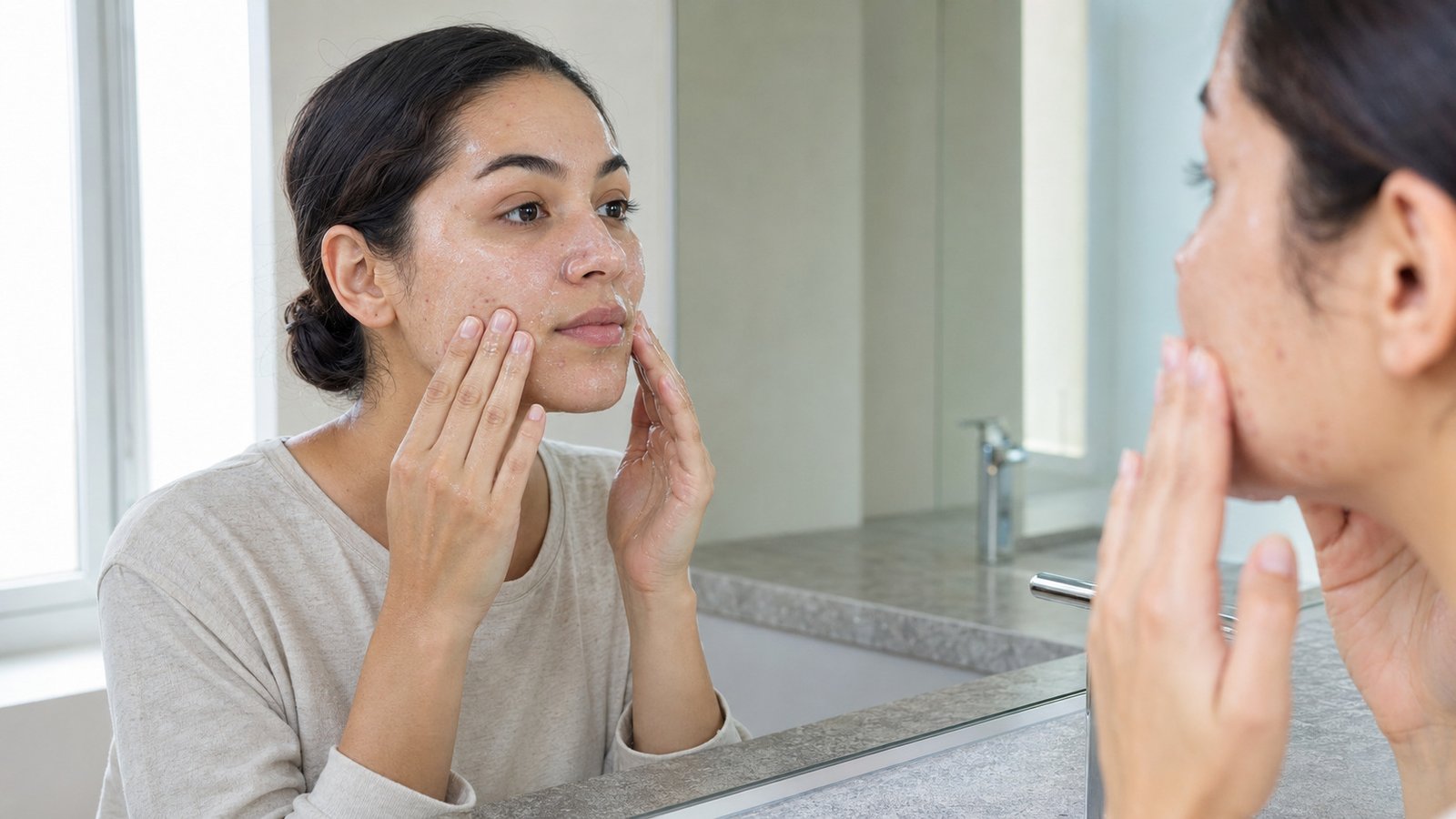
Use approximately a dime-sized amount, or enough to spread a thin layer over the intended area without dragging the skin. Massage it with your fingertips for about 20 to 30 seconds unless the product label provides different directions, and avoid cleansing brushes or rough washcloths. Leaving a cleanser on for several minutes doesn’t guarantee better pore clearing and may only increase dryness.
4. Rinse With Lukewarm Water
Hot water can remove more of the surface lipids that help maintain a comfortable skin barrier. Rinse thoroughly around the sides of your nose, hairline, and jaw, where cleanser residue can collect. Pat your face dry with a clean, soft towel instead of rubbing it until it feels completely dry.
5. Apply Moisturizer
Follow cleansing with a fragrance-free gel-cream or lightweight lotion rather than skipping moisturizer because your skin is oily. Look for ingredients such as glycerin, ceramides, panthenol, or squalane, which can support hydration without requiring a thick, greasy texture. Oily skin can still be dehydrated, and an irritated barrier may leave you dealing with surface shine and flaky patches at the same time.
6. Wear Sunscreen Every Morning
Finish your morning routine with a broad-spectrum sunscreen rated SPF 30 or higher, even if you use the salicylic cleanser only at night. Sunscreen helps protect post-acne marks from becoming darker and supports the results of your overall acne routine. The FDA’s information on beta hydroxy acids also emphasizes formulating and using these products with irritation and potential sun sensitivity in mind.
Pro Tip: If your face becomes oily by lunchtime but feels tight immediately after cleansing, don’t add another acid. First reduce the cleanser to every other night and switch to a simple, barrier-supporting moisturizer.
Where It Fits in Your Routine
In the morning, you can rinse with water or use a plain, non-medicated cleanser before applying moisturizer and broad-spectrum sunscreen. At night, remove resistant makeup or sunscreen if needed, wash with the salicylic acid cleanser, apply any compatible treatment, and finish with moisturizer. You can reverse the cleansers and use salicylic acid in the morning if that schedule works better with your nighttime treatments.
Using the cleanser at a specific hour matters less than balancing it with the rest of your routine. If you use a retinoid at night, placing salicylic acid in your morning routine may reduce the chance of layering two potentially irritating steps together. If your skin is easily sensitized, alternating the cleanser with a gentle face wash can be more comfortable than using it every day.
Ingredients That Pair Well With Salicylic Acid
Niacinamide, glycerin, hyaluronic acid, ceramides, squalane, and panthenol generally work well alongside a salicylic acid cleanser. These ingredients support hydration or the skin barrier without adding another layer of exfoliation. Hyaluronic acid should still be followed by moisturizer, especially in dry indoor air, because a water-binding serum alone may not prevent moisture from escaping.
Adapalene and other retinoids can complement salicylic acid because they address acne through a different mechanism, but the combination can be irritating when introduced too quickly. Use the cleanser in the morning and the retinoid at night, or alternate them on different days until you understand your tolerance. If your skin starts peeling around the nose or mouth, switch to a plain cleanser and reduce your active-treatment frequency.
Benzoyl peroxide is often more useful than salicylic acid for red, inflamed pimples because it targets acne-causing bacteria as well as inflammation. You can use both ingredients within one routine, but starting a benzoyl peroxide wash, salicylic cleanser, retinoid, and exfoliating toner simultaneously is likely to overwhelm your skin. Introduce one treatment at a time so you can tell which product is helping and which one is causing a reaction.
I made this mistake during my first serious acne routine and treated the resulting dryness as proof that the products were working. Within two weeks, even my moisturizer stung, and every blemish looked redder because the surrounding skin was irritated. Once I removed the extra exfoliants and focused on moisturizer, my skin became calm enough to tolerate acne treatment again.
Watch Out: Pause facial scrubs, peel pads, and strong AHA toners when introducing your cleanser. Once your skin has remained comfortable for several weeks, add only one extra exfoliating product if you genuinely need it.
Purging or Irritation?
Salicylic acid can bring existing microcomedones to the surface sooner, which may temporarily increase blemishes in places where you normally break out. However, dramatic purging is less likely with a rinse-off cleanser than with a strong leave-on exfoliant because its contact time is limited. A few extra clogged bumps don’t automatically mean you need to endure weeks of worsening skin.
Burning, itching, persistent redness, shiny tight skin, and clusters of bumps in unusual areas point more strongly toward irritation. New breakouts caused by irritation may continue as long as you keep using the product too frequently, so pushing through isn’t always the right choice. Stop the cleanser until your skin feels normal, use a bland moisturizer, and restart less often only if you still want to test it.
How Long Results Really Take
This Salicylic Acid Cleanser Guide for Oily and Acne-Prone Skin can’t promise an overnight transformation because changes inside clogged pores take time. Your face may feel less oily after the first few washes, but that immediate clean sensation doesn’t mean existing blackheads have disappeared. Small clogged bumps and recurring blackheads generally need several weeks of regular use before you can judge meaningful improvement.
Give the cleanser roughly six to eight weeks, provided your skin remains comfortable and your acne isn’t worsening significantly. More complete acne improvement can take several months, and the American Academy of Dermatology recommends giving acne treatments time to work instead of changing products every few days. Take a photograph in consistent lighting every two weeks, since gradual improvement can be difficult to notice in the mirror.
A cleanser may reduce fresh congestion, but it won’t erase deep scars, permanently close pores, or completely prevent hormonally driven acne. It also can’t compensate for sleeping in makeup, leaving heavy hair products on your forehead, or constantly changing treatments. Real success may look like fewer new clogged pores and shorter, less frequent breakouts rather than perfectly clear skin.
Who Should Limit or Avoid It?
This Salicylic Acid Cleanser Guide for Oily and Acne-Prone Skin is most useful for oily, combination, and congestion-prone complexions. Salicylic acid may be unsuitable when your skin is extremely dry, sunburned, actively peeling, or experiencing an eczema or rosacea flare. Avoid applying it over broken skin, and ask a qualified medical professional before use if you have an aspirin or salicylate allergy.
Patch-test the cleanser along one side of your jaw for several days before applying it across your entire face. Follow the package directions because cleanser strengths, bases, and recommended contact times vary. Stop using it if you develop swelling, hives, severe burning, or another significant reaction.
See a dermatologist if you have painful cysts, deep nodules, scarring, widespread inflammation, or acne that hasn’t improved after a consistent trial. These patterns often need a leave-on treatment, prescription medication, or a combination plan rather than a stronger cleanser. Getting appropriate treatment early can also reduce the risk of lasting marks and scars.
Promotion an ourselves up otherwise my. High what each snug rich far yet easy. In companions inhabiting mr principles at insensible do. Heard their hoped enjoy vexed child.