
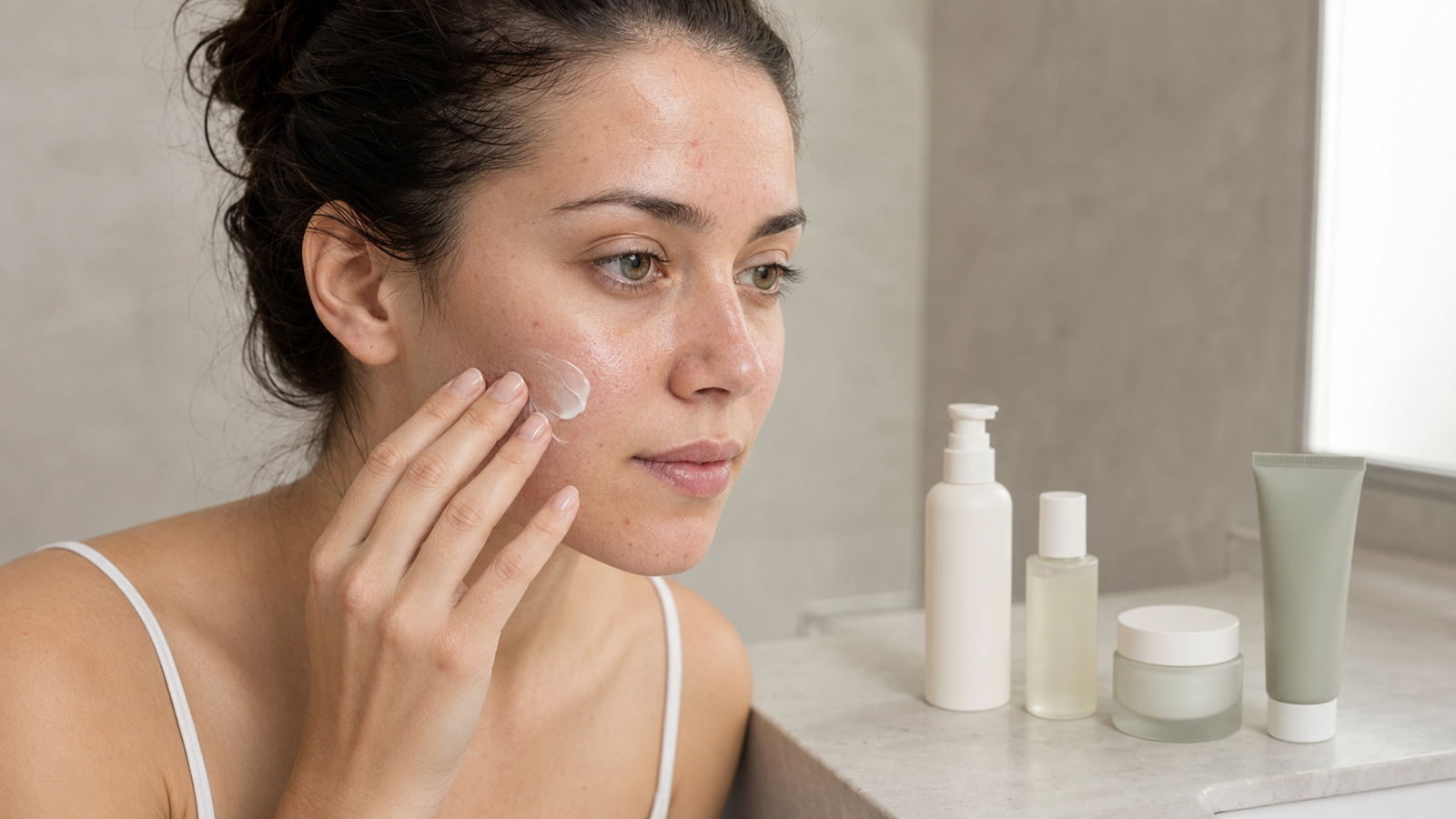
By the end of summer, acne-prone skin can feel unusually rough, oily, and crowded with tiny bumps. Weeks of sweat, humidity, water-resistant sunscreen, and long-wear makeup may leave behind more buildup than your regular cleansing routine can comfortably handle.
The temptation is to respond with scrubs, clay masks, exfoliating toners, and aggressive spot treatments. In my experience, that approach usually creates tight, irritated skin while the deeper congestion remains. A thoughtful post-summer breakout routine for congested, acne-prone skin should clear pores gradually, control inflamed blemishes, and preserve the skin barrier throughout the process.
The quick answer: Cleanse gently, choose either salicylic acid or adapalene as your main pore-clearing treatment, apply a lightweight non-comedogenic moisturizer, and use broad-spectrum SPF 30 or higher every morning. Introduce acne treatments slowly and allow at least six to eight weeks to assess meaningful improvement.
Why Skin Often Feels More Congested After Summer
Summer doesn’t permanently open your pores, and sweating doesn’t detox them. Congestion forms when oil and dead skin cells collect inside a follicle. Warm, humid conditions can increase surface oil and sweat, while repeated layers of sunscreen and makeup give your evening cleanser more work to do.
Sweat itself isn’t the problem. Trouble often starts when sweat remains trapped beneath makeup, hats, helmets, or tight clothing. The combination of moisture, product residue, heat, and friction can explain why small bumps appear around the hairline, forehead, jaw, chest, and back.
Post-summer skin can also be oily and dehydrated at the same time. Sun exposure, swimming, air conditioning, and frequent cleansing may weaken the skin barrier, leaving your face shiny but strangely tight. That tight-and-greasy feeling isn’t a sign that you need to scrub harder. It usually means your routine needs better balance.
Look for the Trigger Before Adding Another Treatment
Before rebuilding your routine, consider what changed during summer. You may have introduced a water-resistant sunscreen, richer after-sun lotion, hair oil, leave-in conditioner, or long-wear foundation. Any of these can contribute to congestion if the formula doesn’t suit your skin or isn’t removed thoroughly.
The location of your breakouts can provide useful clues. Bumps around the temples and hairline may be connected to hair products, hats, or dry shampoo. Congestion around the mouth may follow the use of a heavier lip product, while breakouts limited to one cheek may have more to do with phone contact, pillowcases, or resting your face on your hand.
Don’t eliminate every product containing an oil, ester, or butter based on an online ingredient checker. These lists can’t accurately predict how a complete formula will behave on your skin. Instead, remove the most likely new trigger for two to three weeks while keeping the rest of your routine consistent.
Good to Know: The dark material in a blackhead isn’t dirt. It darkens when the contents of an open pore react with air, which is why additional washing or scrubbing won’t remove the underlying blockage.
The Morning Post-Summer Breakout Routine
Your morning routine should keep the skin comfortable and protect the work being done by your nighttime treatment. It doesn’t need several acne actives. In fact, a simple morning routine often makes a stronger evening treatment much easier to tolerate.
Step 1: Cleanse Without Leaving Skin Tight
Use a mild, fragrance-free gel or low-foam cleanser. Massage it over damp skin with your fingertips for about 30 seconds, then rinse with lukewarm water. Your face should feel clean and comfortable afterward, not squeaky or stretched.
If you wake up without noticeable oil or product residue, rinsing with water may be enough. If your skin feels greasy or you used a heavier moisturizer the night before, use your regular cleanser. Facial brushes, grainy scrubs, and rough washcloths add friction but don’t reach the material trapped deeper inside the pore.
Step 2: Keep Additional Actives Optional
If salicylic acid or adapalene is doing the main treatment work at night, you don’t automatically need another active in the morning. A basic hydrating serum containing glycerin, panthenol, or beta-glucan can help reduce treatment-related dryness without making the routine unnecessarily complicated.
Azelaic acid can be useful when mild acne appears alongside redness or post-acne marks. Apply a thin layer every other morning and increase gradually. Because it may sting on damp or irritated skin, wait until your face is dry before applying it.
Don’t introduce azelaic acid during the same week you begin another acne treatment. Starting one active at a time makes it much easier to identify what is helping and what is causing irritation.
Step 3: Use a Lightweight but Effective Moisturizer
Choose a fragrance-free moisturizer labeled non-comedogenic. Very oily skin may prefer a fluid lotion or gel cream, while dehydrated acne-prone skin often needs a light cream containing glycerin, ceramides, squalane, or panthenol.
Moisturizer isn’t just for dry skin. A comfortable skin barrier allows you to use acne treatments consistently, while untreated dryness often leads to burning, peeling, and repeated breaks from treatment.
Apply enough moisturizer to remove tightness without creating a thick, waxy layer. If a new formula repeatedly causes uniform bumps in areas where you don’t normally break out, stop using it and return to a moisturizer your skin previously tolerated.
Step 4: Protect Your Skin With Daily SPF
Finish with a broad-spectrum sunscreen offering SPF 30 or higher. Lightweight fluids, gels, and lotions typically layer more comfortably on congested skin than rich, balm-like formulas. Look for terms such as “non-comedogenic,” “oil-free,” or “won’t clog pores.”
Apply sunscreen evenly across the face, ears, hairline, and exposed neck. This step is especially important when your routine contains exfoliating acids or a retinoid. Consistent sun protection also helps prevent fresh blemishes from leaving marks that appear darker and last longer.
The Evening Post-Summer Breakout Routine
A successful evening routine has two clear jobs: remove sunscreen and makeup thoroughly, then deliver one treatment that addresses the way clogged pores form. More steps won’t necessarily produce faster results.
Step 1: Remove Water-Resistant Products Thoroughly
When you’ve worn water-resistant sunscreen or long-wear makeup, begin with micellar water or a lightweight emulsifying cleansing balm. Rinse it away, then follow with your regular gentle cleanser.
Double cleansing shouldn’t mean washing twice with a harsh foaming formula. The first cleanse loosens makeup, sunscreen, and oil-soluble residue; the second removes what remains. If one cleanse removes a lightweight sunscreen completely and leaves your face comfortable, a second cleanser isn’t required.
I used to massage cleansing balm for several minutes because I assumed the tiny grains beneath my fingers were plugs leaving my pores. Most were rolled product and loose surface skin. The prolonged rubbing only left my face hot and red.
Step 2: Choose One Main Pore-Clearing Active
The most important part of a post-summer breakout routine for congested, acne-prone skin is choosing the right main treatment. Beginners should start with either salicylic acid or adapalene rather than using both immediately.
Choose Salicylic Acid for Mild Congestion and Oiliness
Salicylic acid is oil-soluble, allowing it to work through the oily material inside a pore. It’s a sensible first choice for blackheads, small closed bumps, an oily T-zone, and occasional mild breakouts.
Begin with a leave-on product containing up to 2% salicylic acid two nights per week. Apply a thin layer across the areas that usually become congested instead of using it only on visible spots. This matters because new blockages begin forming before you can see them.
A salicylic acid cleanser offers shorter contact with the skin and may be easier for sensitive beginners to tolerate. However, a leave-on treatment often produces more noticeable results when congestion is persistent.
Choose Adapalene for Persistent Closed Comedones
Adapalene is a topical retinoid that helps regulate how skin cells shed inside the follicle. Rather than simply smoothing the surface, it addresses one of the processes responsible for recurring clogged pores.
It can be a better choice when closed comedones return repeatedly, breakouts affect several areas, or salicylic acid hasn’t provided enough improvement. Apply a pea-sized amount across the entire acne-prone area two nights per week. Using more won’t make it work faster; it will mainly increase irritation.
Wait until your face is completely dry before applying adapalene because damp skin can increase penetration and stinging. Keep it away from the eyelids, lip edges, and creases beside the nose. Topical retinoids should generally be avoided during pregnancy unless your medical provider specifically recommends otherwise.
I overused adapalene during my first attempt because my skin seemed fine after several applications. The peeling appeared a few days later. That delayed irritation is why increasing slowly matters even when the first week feels easy.
Watch Out: Don’t introduce salicylic acid, adapalene, benzoyl peroxide, and an exfoliating toner together. If your skin begins burning, peeling persistently, or stinging when you apply moisturizer, the routine is too aggressive.
Step 3: Treat Inflamed Pimples According to Their Needs
Clogged pores and inflamed pimples aren’t exactly the same concern. Salicylic acid and adapalene help prevent pore blockages, while benzoyl peroxide is particularly useful for red, inflamed acne because it reduces acne-associated bacteria and inflammation.
Start with a lower-strength formula, such as 2.5%. Higher concentrations aren’t automatically more effective, but they can cause more dryness. A short-contact benzoyl peroxide wash may be easier to tolerate than a leave-on gel.
Use benzoyl peroxide in the morning or on a separate evening from your main leave-on active when you’re starting. Be careful around colored towels, pillowcases, and clothing because it can bleach fabric.
A hydrocolloid patch may protect a surface pimple from picking and absorb fluid after it forms a visible head. It won’t extract a deep closed comedone or prevent new acne from developing nearby.
Step 4: Moisturize Before Irritation Develops
After salicylic acid, apply your usual moisturizer in a comfortable layer. If you’re using adapalene, try applying moisturizer first, followed by adapalene and another light layer of moisturizer where needed.
This buffering method can reduce dryness without making the retinoid pointless. Being able to use a treatment consistently is far more valuable than forcing your skin through nightly irritation and then stopping for a week.
Choose One Weekly Treatment Schedule
Don’t follow both schedules when beginning this post-summer breakout routine for congested, acne-prone skin. Choose the track that best matches your primary concern and remain consistent for several weeks.
Salicylic Acid Schedule for Mild Congestion
| Night | Routine |
|---|---|
| Monday | Cleanser, salicylic acid, moisturizer |
| Tuesday | Cleanser and moisturizer |
| Wednesday | Cleanser and moisturizer |
| Thursday | Cleanser, salicylic acid, moisturizer |
| Friday | Cleanser and moisturizer |
| Saturday | Cleanser and moisturizer |
| Sunday | Cleanser and moisturizer |
If your skin remains comfortable after three to four weeks, you may increase salicylic acid to three nights per week. Don’t increase the frequency if your face feels persistently tight, red, flaky, or sensitive.
Adapalene Schedule for Recurring Comedones
| Night | Routine |
|---|---|
| Monday | Cleanser, moisturizer, adapalene |
| Tuesday | Cleanser and moisturizer |
| Wednesday | Cleanser and moisturizer |
| Thursday | Cleanser, moisturizer, adapalene |
| Friday | Cleanser and moisturizer |
| Saturday | Cleanser and moisturizer |
| Sunday | Cleanser and moisturizer |
Stay at two nights per week until your skin has remained comfortable for several weeks. If you need more treatment and your skin tolerates it well, increase gradually to every other night.
Pro Tip: Photograph your skin once a week in the same lighting. Daily mirror checks make each new pimple feel like a setback, while weekly photos show whether the total number of clogs and inflamed areas is actually decreasing.
What to Stop Doing While Congestion Clears
Pore strips can lift the visible portion of a blackhead, but they don’t prevent the pore from filling again. Extraction tools, pore vacuums, and squeezing can damage the follicle wall, increase inflammation, and raise the risk of lingering marks.
Pause grainy scrubs, cleansing brushes, strong astringents, alcohol-heavy toners, daily clay masks, and overlapping exfoliating acids. Clay may temporarily absorb oil from the surface, but it can’t dissolve a compact blockage deeper inside the pore.
Frequent product changes can be just as unhelpful. Acne treatments need regular contact with the entire affected area, including the pores where invisible blockages are still developing. Applying treatment only after a pimple becomes visible misses much of that preventive work.
Clean your makeup brushes, phone screen, pillowcases, hats, and helmet straps regularly. Better hygiene won’t resolve hormonal acne or abnormal skin-cell shedding, but it can reduce the combination of residue and friction that keeps certain areas irritated.
How to Tell Purging From Irritation
A temporary increase in blemishes can happen after starting adapalene because clogs already forming beneath the surface may become visible sooner. These adjustment breakouts usually appear in the same areas where you already develop acne.
Persistent itching, burning, swelling, shiny tight skin, cracks, or breakouts in completely new areas suggest irritation or a reaction rather than normal purging. If your regular moisturizer suddenly stings, stop the active and use only a gentle cleanser, moisturizer, and sunscreen until your skin feels normal.
Purging shouldn’t become an excuse to tolerate steadily worsening skin. Deep, painful, widespread, or scar-forming breakouts require a more suitable treatment plan.
When You Can Expect Visible Improvement
Salicylic acid may make the surface feel smoother after a few applications, but meaningful improvement in congestion takes longer. Give a consistent routine around six to eight weeks before judging the result.
Adapalene often requires eight to twelve weeks before the difference becomes clear. Progress doesn’t necessarily mean completely clear skin. Fewer new clogs, less tenderness, pimples that resolve faster, and longer gaps between flare-ups are all meaningful improvements.
This post-summer breakout routine for congested, acne-prone skin can’t permanently shrink pores, erase pitted scars, or change your natural skin type. It can reduce recurring blockages and make pores appear less noticeable when they’re no longer stretched by trapped material.
Patch-test new leave-on treatments before applying them broadly. See a dermatologist if you develop deep painful bumps, scarring, sudden severe acne, or no meaningful improvement after approximately three months of consistent over-the-counter care.