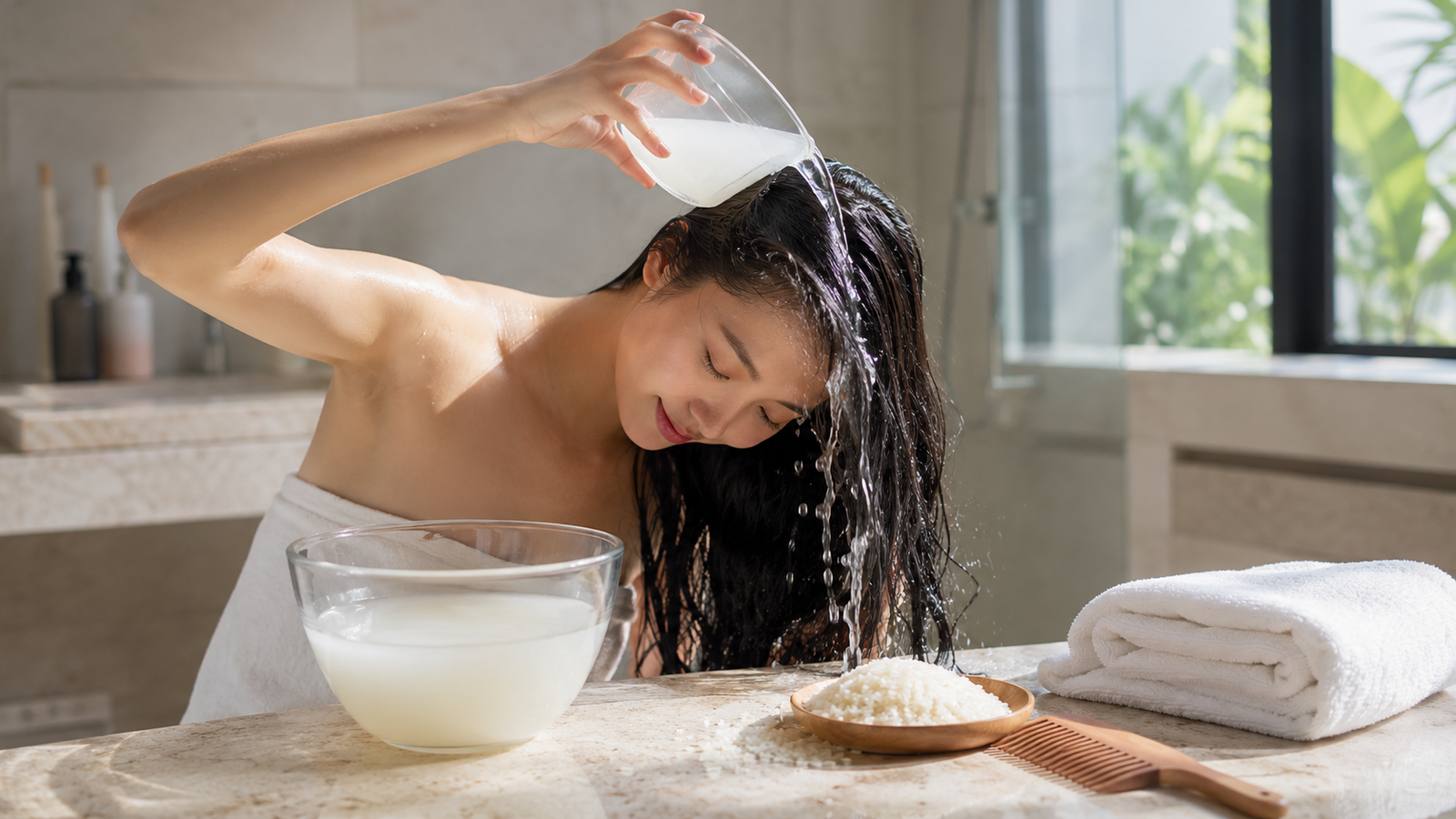
If you’ve spent even a few minutes scrolling through beauty videos, you’ve probably seen someone pouring cloudy rice water over their hair while promising dramatic growth. The Rice Water Hair Rinse the Asian Beauty Secret has become one of the internet’s favorite DIY treatments, but most tutorials skip the details that actually matter.
The truth sits somewhere between centuries of tradition and modern science. Rice water isn’t a miracle that will suddenly give you waist-length hair, but when it’s prepared correctly and used on the right hair type, it can leave hair feeling smoother, stronger, and easier to manage. I’ve experimented with homemade rice water more than once, and I learned the hard way that stronger isn’t always better. My first batch fermented for far too long, and instead of silky hair, I ended up with strands that felt surprisingly stiff.
Why Rice Water Became an Asian Beauty Secret
Rice water didn’t become popular because of a viral beauty trend. It earned its reputation through generations of practical use. In many Asian households, rice was prepared every day, and instead of pouring the leftover water down the drain, families found another use for it. Hair rinsing became one of those traditions because people noticed their hair felt softer, easier to comb, and less prone to tangling after regular use.
Over time, stories about exceptionally long, healthy hair became closely linked with rice water. While those traditions are fascinating, it’s important to remember that beautiful hair rarely comes from a single ingredient. Genetics, diet, gentle handling, scalp care, and overall health all play major roles. Rice water was simply one part of a much bigger routine.
That’s also where modern beauty content often gets it wrong. Many videos suggest rice water alone is responsible for dramatic hair growth, but the available research doesn’t support those claims. In my experience, treating it as a conditioning rinse rather than a miracle solution leads to much more realistic—and satisfying—results.
What Rice Water Actually Does to Your Hair
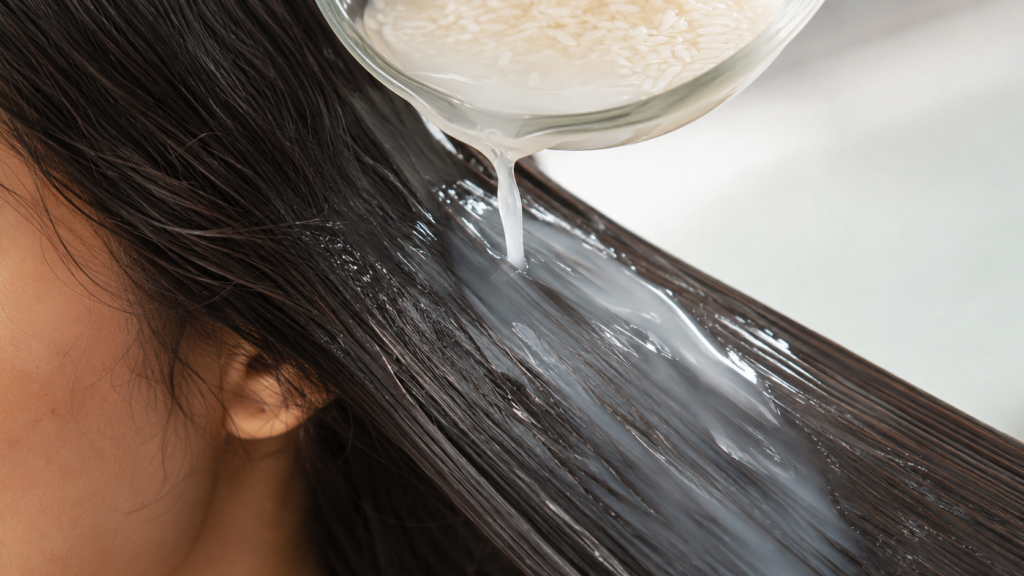
Most of rice water’s benefits happen on the surface of the hair rather than deep inside it. As the rinse dries, its natural starch creates a very light coating around each strand. This smooths rough cuticles, reduces friction between hairs, and helps light reflect more evenly, which is why hair often looks shinier after a treatment.
The rinse also contains amino acids and naturally occurring carbohydrates. One compound that receives the most attention is inositol, a carbohydrate that laboratory research suggests may temporarily remain inside damaged hair after rinsing. While scientists are still studying exactly how much this matters in everyday hair care, it’s one reason rice water is often associated with stronger-feeling strands rather than simply shinier ones.
That distinction is worth understanding because stronger hair isn’t the same as faster-growing hair. Hair grows from the follicle beneath your scalp, while rice water mainly interacts with the hair you can already see. If fewer strands snap during brushing or styling, your hair may appear to grow faster simply because you’re keeping more of its length.
What Benefits Can You Realistically Expect?
If you start using the Rice Water Hair Rinse the Asian Beauty Secret with realistic expectations, you’ll probably appreciate the results more. The improvements are usually gradual and cosmetic rather than dramatic, but they can still make a noticeable difference in your routine.
Smoother Hair After Washing
One of the first changes many people notice is how easily their hair glides through a comb. The light starch coating reduces friction between strands, so hair catches less during detangling. That doesn’t just feel nicer—it can also mean fewer broken hairs left behind on your brush.
Less Breakage Over Time
Rice water doesn’t stop hair from growing or force it to grow faster. What it may do is help reduce everyday mechanical damage caused by brushing, towel drying, and styling. When strands stay intact longer, your hair retains more length, creating the impression of faster growth.
More Natural Shine
Healthy hair reflects light evenly because its outer cuticle lies relatively flat. When the cuticle becomes rough from heat, coloring, or dryness, hair starts looking dull. Rice water can temporarily smooth that outer layer, giving hair a softer, healthier shine without relying on heavy oils.
Better Body for Fine Hair
Fine hair often struggles to hold volume because each strand is naturally thinner. Rice water lightly coats the hair shaft, which can make individual strands feel slightly thicker until the next shampoo. It’s a subtle effect, but one many people with fine hair appreciate.
Good to Know
If your hair is naturally very fine, use rice water before your conditioner rather than as the final step. Conditioner softens the slight stiffness that protein-rich treatments sometimes leave behind while still allowing your hair to keep some extra body.
What Rice Water Will Not Do
The internet has created expectations that no natural rinse can realistically meet. Rice water won’t permanently repair split ends because damaged ends can’t fuse back together. It also won’t reverse genetic hair loss or replace medical treatment if excessive shedding is caused by hormonal changes, nutritional deficiencies, or certain health conditions.
Another common misconception is that rice water can completely repair heavily bleached or severely damaged hair. While it may temporarily make rough strands feel smoother, it doesn’t rebuild missing protein structures inside hair that has been extensively processed. Those improvements usually require a combination of moisturizing treatments, protein when appropriate, and time.
Some people also expect immediate results after a single rinse. In reality, the biggest improvements tend to appear after several weeks of consistent but moderate use. Hair usually feels smoother first, while reduced breakage becomes more noticeable over time.
Which Hair Types Benefit the Most?
Rice water isn’t equally beneficial for everyone because hair behaves differently depending on its structure and condition. Understanding where your own hair falls can help you decide whether this treatment is worth adding to your routine.
Fine hair usually responds very well because the lightweight coating adds body without making strands greasy. If your hair often falls flat within hours of washing, rice water may provide just enough structure to help it look fuller.
Dry or curly hair can also benefit, but only if moisture stays balanced. Curly hair naturally struggles to retain moisture, so following rice water with a rich conditioner is often the difference between defined curls and hair that feels rough or crunchy.
Color-treated or chemically processed hair deserves a little more caution. Bleaching and frequent coloring already weaken the hair’s protein balance. Adding rice water too often can leave some people with hair that feels hard rather than healthy.
Watch Out
If your hair suddenly feels stiff, brittle, unusually tangled, or starts snapping more easily after using rice water, stop using it for a few weeks and focus on moisturizing treatments instead. Those are often early signs that your hair has reached its protein limit.
How to Make Rice Water Hair Rinse at Home
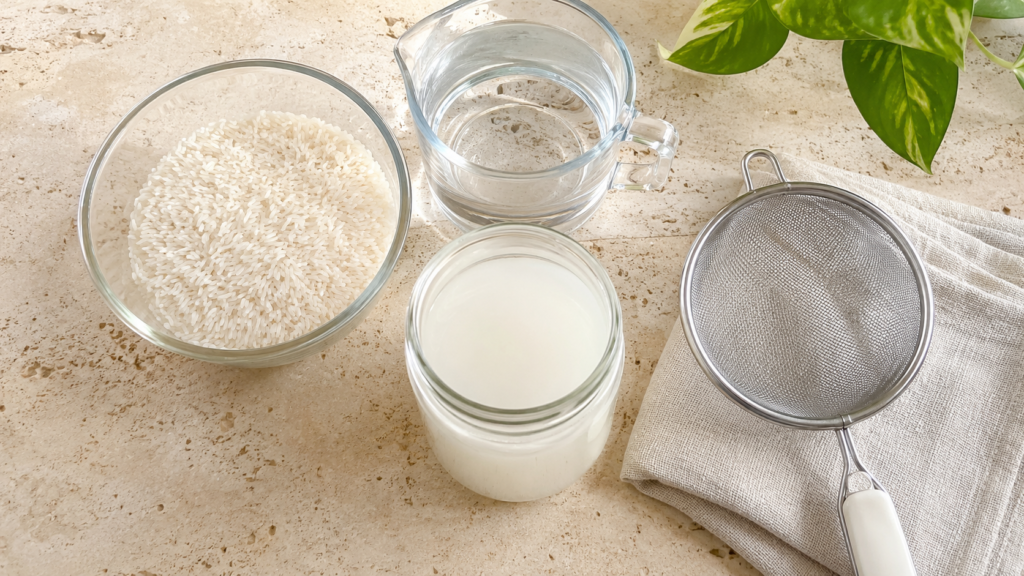
Making rice water is surprisingly simple, but the method you choose can change how your hair responds. Fresh rice water is usually the safest starting point because it’s mild and works well for most hair types. Fermented rice water is slightly more acidic and may leave some people with smoother hair, but it’s also more likely to cause stiffness if your hair is already dry or protein-sensitive.
To make fresh rice water, rinse ½ cup of uncooked white rice under running water to remove dust and impurities. Transfer the rice to a bowl, add about 2 cups of clean water, and let it soak for 30 to 60 minutes. Swirl the rice occasionally, then strain the cloudy liquid into a clean container. The resulting rinse can be used immediately or stored in the refrigerator for up to five days.
If you’d like to try fermented rice water, leave the freshly strained liquid at room temperature for around 24 hours before refrigerating it. It should develop a mild sour scent rather than a strong unpleasant odor. In my experience, lightly fermented rice water works well for healthy hair, while fresh rice water tends to be the better option for dry, curly, or color-treated hair because it’s less likely to leave strands feeling rigid.
How to Use Rice Water Correctly
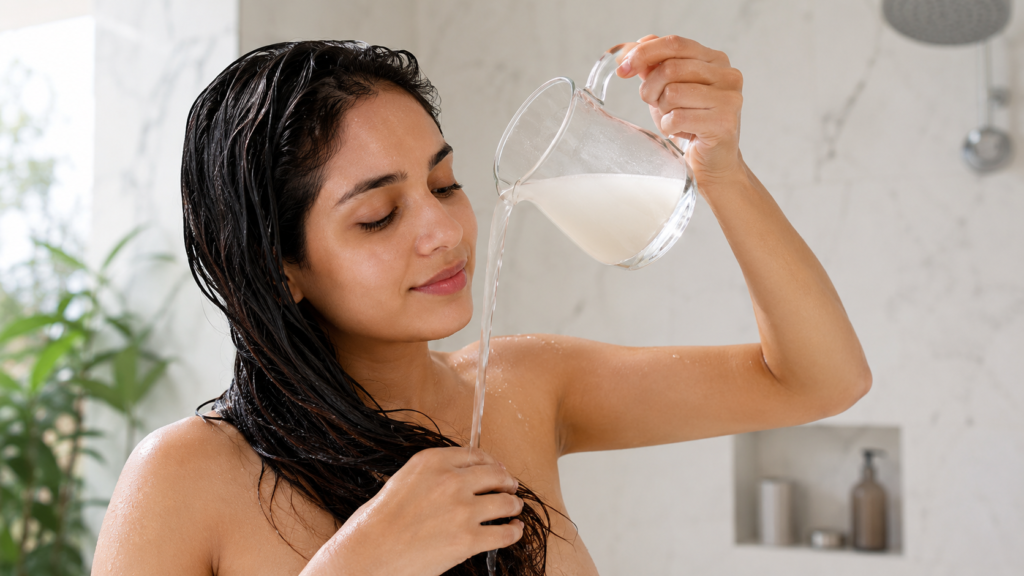
The way you apply rice water matters just as much as the recipe itself. Many online tutorials recommend leaving it on for long periods or using it as the final step of your routine, but that isn’t usually necessary. A shorter treatment followed by conditioner gives most people better results without increasing the risk of protein buildup.
Begin by washing your hair with your regular shampoo to remove oil, styling products, and buildup. Clean hair allows the rice water to coat the strands more evenly instead of sitting on top of residue. Slowly pour the rice water over your scalp and hair, making sure the mid-lengths and ends are fully saturated. Gently massage your scalp for about a minute if you enjoy the process, although the main benefits come from conditioning the hair itself rather than stimulating the scalp.
Leave the rinse on for five to ten minutes before rinsing thoroughly with cool or lukewarm water. Finish with your usual conditioner to restore moisture and soften the hair. This final step is often overlooked, yet it’s one of the easiest ways to keep hair smooth instead of stiff after a protein-rich treatment.
How Often Should You Use Rice Water?
One of the biggest misconceptions about rice water is that frequent use leads to better results. In reality, healthy hair responds best to balance rather than constant treatments. Using rice water too often can gradually leave strands feeling rough, especially if your hair already contains enough protein.
For most people, applying a rice water rinse once every one to two weeks is more than enough. Fine hair generally tolerates weekly use because the lightweight coating adds temporary body without weighing it down. Dry, curly, or chemically treated hair often benefits from using it every two or even three weeks, followed by a deeply moisturizing conditioner.
When I first experimented with rice water, I made the mistake of using it after nearly every wash because my hair looked shinier at first. Within a few weeks, the ends started feeling noticeably harder and became more difficult to detangle. Cutting back to twice a month and focusing on moisture instead completely changed the results. It’s a good reminder that consistency matters far more than frequency.
Rice Water Works Best as Part of a Complete Hair Routine
Rice water is best viewed as one supporting step rather than the foundation of your entire routine. It can improve how your hair looks and feels, but it won’t compensate for habits that regularly cause damage, such as excessive heat styling, harsh brushing, or skipping conditioner.
A balanced routine should still include a gentle shampoo that suits your scalp, a conditioner that restores moisture after every wash, and a heat protectant whenever you style with hot tools. Occasional deep-conditioning treatments also help maintain flexibility, particularly if you color your hair or use protein-based products regularly.
Think of rice water as something that enhances healthy hair care instead of replacing it. When paired with moisturizing products and gentle handling, it can contribute to smoother, stronger-looking hair over time without becoming the only treatment you rely on.
Common Mistakes to Avoid
Most disappointing experiences with rice water aren’t caused by the ingredient itself but by the way it’s used. Understanding a few common mistakes can help you avoid the stiffness and dryness that sometimes give this treatment an undeserved reputation.
Using It Too Frequently
Applying rice water after every wash doesn’t usually improve the results. Instead, repeated protein exposure can make hair feel rigid and increase breakage in people with protein-sensitive hair.
Skipping Conditioner
Rice water smooths the hair differently from a conditioner, but it doesn’t replace one. Following the rinse with a moisturizing conditioner helps maintain softness and prevents the strands from feeling rough.
Leaving It on for Too Long
Many social media tutorials recommend leaving rice water on for thirty minutes or even overnight. There’s very little evidence that longer treatments provide extra benefits, while they may increase the likelihood of protein overload.
Expecting Overnight Hair Growth
Rice water isn’t a shortcut to faster-growing hair. If your hair appears longer after several weeks, it’s usually because reduced breakage has helped you retain more of your natural growth.
Using Spoiled Rice Water
Homemade rice water doesn’t last forever. If it develops a strong unpleasant smell, changes color, or has been stored beyond a few days, it’s better to discard it and prepare a fresh batch.
Who Should Avoid Rice Water?
Although rice water is safe for many people, it isn’t the right choice for everyone. Hair that is highly protein-sensitive may become stiff or brittle even with occasional use, making moisturizing treatments a better option. Paying attention to how your hair feels after each application is more helpful than following someone else’s routine.
If you have an irritated scalp, eczema, psoriasis, or another inflammatory scalp condition, it’s wise to avoid experimenting with homemade treatments until the underlying issue has been addressed. Likewise, anyone experiencing sudden or significant hair loss should speak with a healthcare professional instead of relying on DIY remedies, as shedding can be linked to hormonal changes, nutritional deficiencies, medications, or medical conditions that require proper treatment.
The Rice Water Hair Rinse the Asian Beauty Secret has remained popular for generations because it offers simple, affordable support for healthier-looking hair. While it won’t magically transform hair growth or repair severe damage, it can improve smoothness, reduce breakage, and make hair easier to manage when it’s used correctly and in moderation.
The biggest takeaway is to treat rice water as one tool within a balanced routine rather than a miracle cure. Healthy hair is the result of consistent habits, gentle handling, proper moisture, and realistic expectations. If you decide to try this traditional rinse, start with a fresh batch, use it occasionally, and pay attention to how your own hair responds. That personalized approach will almost always produce better results than chasing viral promises.