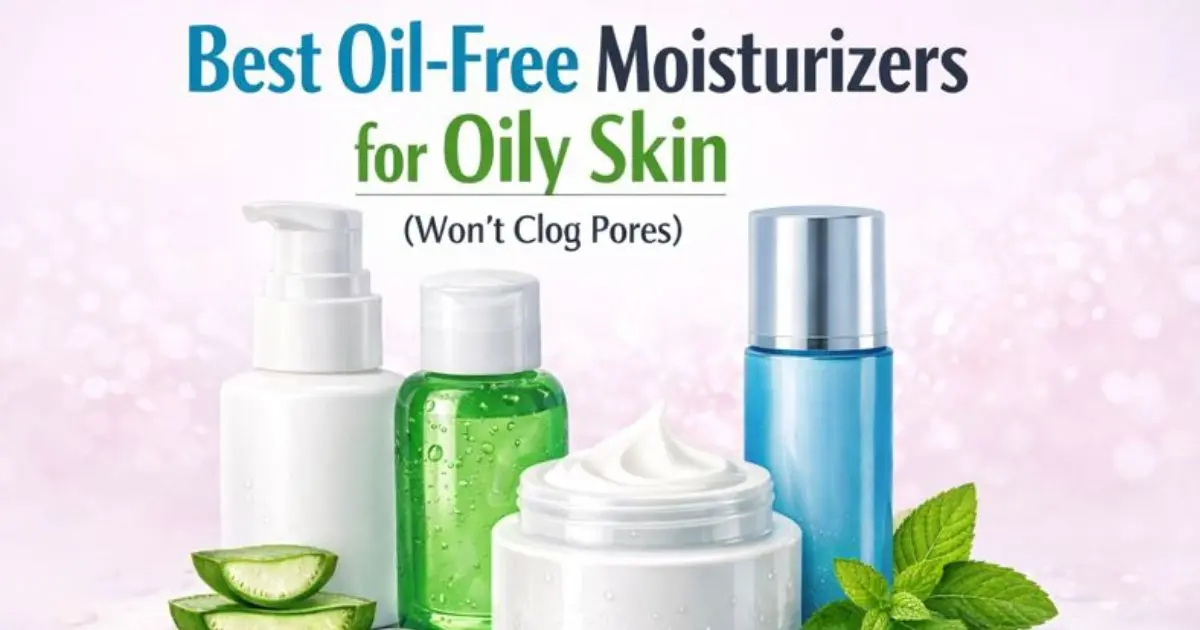
If you have oily or acne-prone skin, skipping moisturizer is outdated. The right oil-free moisturizer hydrates, balances oil, and prevents clogged pores without being greasy. Acne treatments require extra hydration to avoid tightness and flakiness. The best moisturizers are non-comedogenic, lightweight, and contain hyaluronic acid, glycerin, and niacinamide. Regular use promotes smoother, healthier skin by balancing oil and keeping pores clear.
Who May Benefit & Who Should Avoid Oil-Free Moisturizers:
Ideal Candidates:
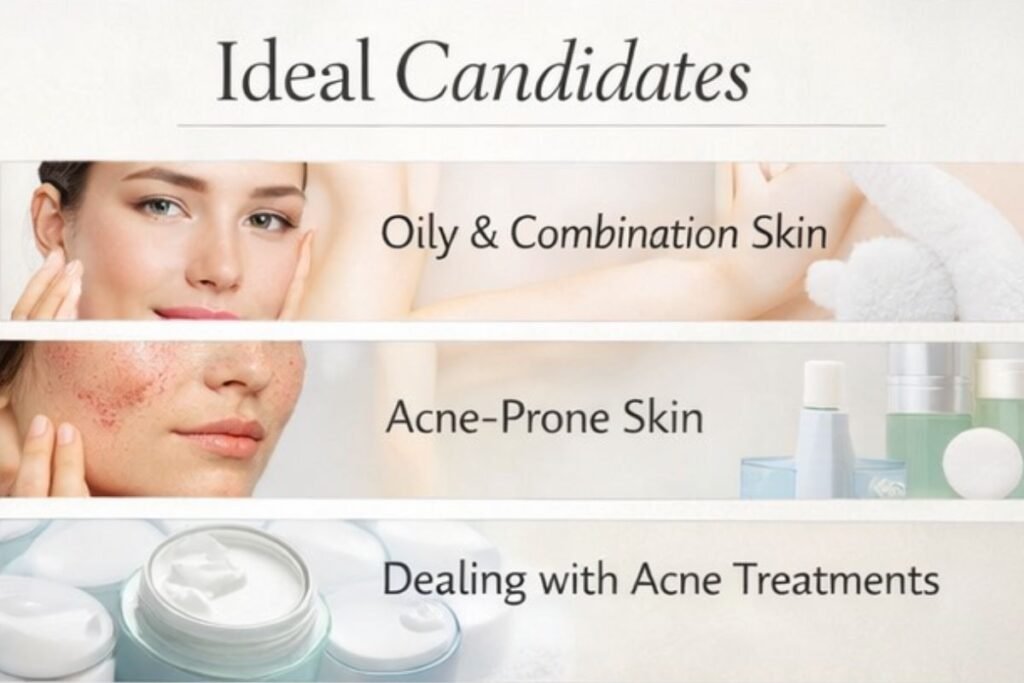
- Oily and combination skin types struggling with shine or clogged pores.
- Acne-prone individuals needing hydration without worsening breakouts.
- People experiencing seasonal dryness or irritation from acne treatments (benzoyl peroxide, retinoids, salicylic acid).
- Anyone wanting lightweight, non-greasy hydration that layers well under makeup or sunscreen.
Who Should Be Careful:
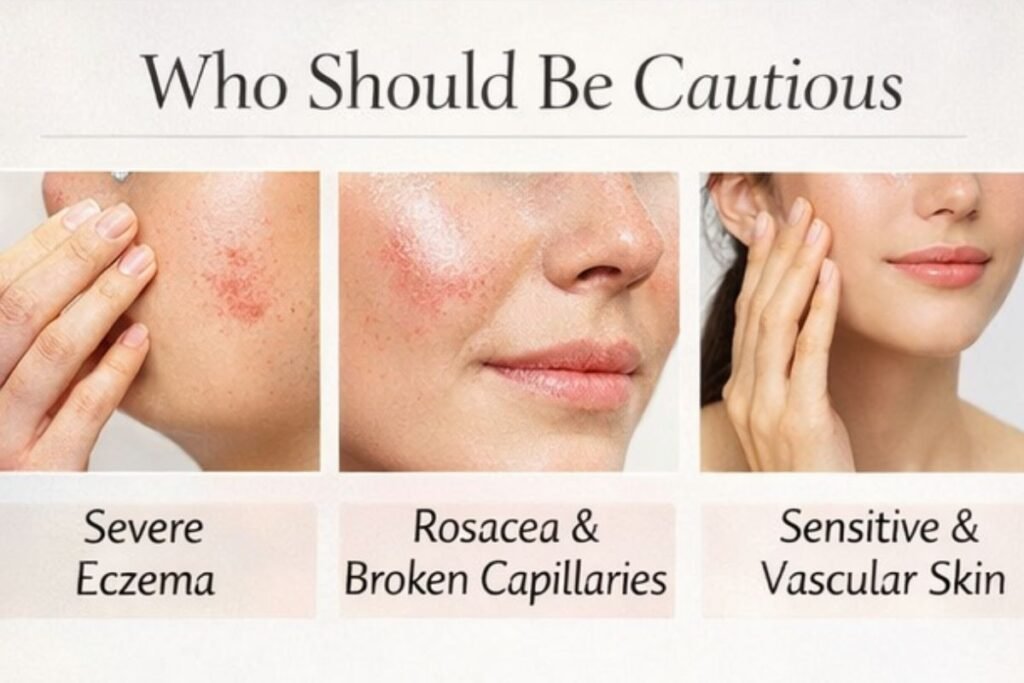
- Severe eczema oratopic dermatitis: Some oil-free formulas rely heavily on humectants and alcohols, which can aggravate dryness or irritation.
- Rosacea or broken capillaries: Formulations with strong alcohols, fragrance, or menthol can trigger flare-ups.
- Vascular or sensitive skin prone to stinging: Even non-comedogenic products may cause temporary irritation—patch test first.
How It Works: The Science Behind Oil-Free Moisturizers:
Moisturizers perform three primary roles:
- Humectants (e.g., hyaluronic acid, glycerin) draw water into the skin.
- Emollients smooth rough surfaces. Oil-free options often use lightweight silicones like dimethicone, which mimic oil without clogging pores.
- Occlusives prevent water loss. Oil-free products rely on barrier-supporting polymers rather than heavy oils.
Short-Term vs. Long-Term Effects:
- Short-term: Skin feels hydrated, smoother, and less tight; oil production may temporarily balance.
- Long-term: Regular use strengthens the skin barrier, reduces compensatory oil overproduction, and can improve the tolerance of active acne medications.
Think of it like watering a plant in the right pot: too much water (or the wrong type) clogs roots; the right hydration keeps everything healthy and balanced.
When and How to Apply Moisturizer:
- Daily use: Morning and night after cleansing and toning.
- Layering: Apply after lightweight serums (niacinamide, hyaluronic acid) but before sunscreen.
- Special treatments: If using chemical exfoliants or retinoids, moisturizer can be applied before or after, depending on tolerance (generally “sandwich” technique: cleanser → moisturizer → active → moisturizer if needed).
Top Oil-Free Moisturizers and Why They Work:
Here are dermatologist-trusted, widely available options:
| Brand & Product | Key Ingredients | Why It Works |
| CeraVe PM Facial Moisturizing Lotion | Niacinamide, ceramides, hyaluronic acid | Lightweight, non-comedogenic, supports barrier repair. Great for nightly use. |
| La Roche-Posay Effaclar Mat | Sebulyse technology, thermal spring water | Mattifying, controls shine, minimizes pores temporarily. |
| Neutrogena Hydro Boost Water Gel | Hyaluronic acid, glycerin | Gel texture absorbs quickly, provides hydration without greasiness. |
| The Ordinary Natural Moisturizing Factors + HA | Amino acids, fatty acids, hyaluronic acid | Non-oily barrier support, budget-friendly, fragrance-free. |
| Cetaphil PRO Oil Absorbing Moisturizer SPF 30 | Micropearl technology, niacinamide | Combines lightweight hydration with sun protection, reduces shine throughout the day. |
Targeting Top Concerns:
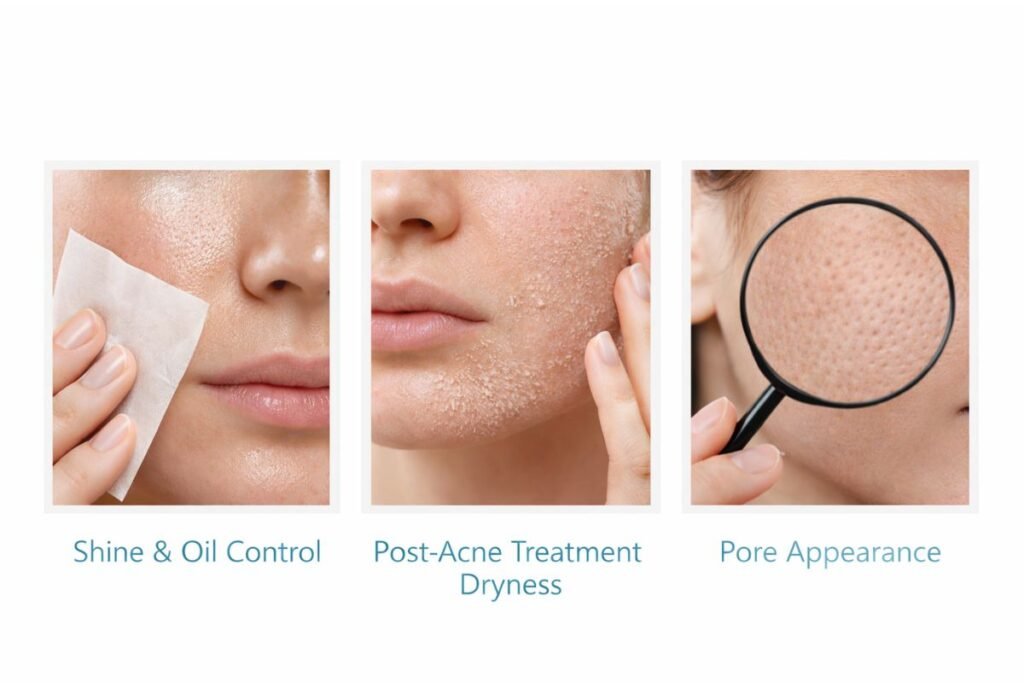
1. Shine and Oil Control:
Use lightweight, gel-based or water-based moisturizers. Humectants hydrate without adding excess oil. Some formulations include matte-finish powders or oil-absorbing polymers to reduce visible shine.
2. Post-Acne Treatment Dryness:
Oily skin isn’t immune to dryness, especially when using retinoids or exfoliating acids. Oil-free moisturizers with niacinamide and ceramides soothe irritation, reduce flaking, and improve tolerance of acne medications.
3. Pore Appearance:
Moisturizers that support barrier function help prevent the skin from overproducing sebum—a key factor in enlarged pores. Consistent hydration keeps pores less congested and minimizes temporary puffiness.
Safety Rules & Warning Signs:
When to stop or patch test:
- Persistent stinging, burning, or redness
- Worsening acne, irritation, or flaking
- Development of hives or rash
- Visible broken capillaries or rosacea flare
Other risks:
- Ice-cold or “soothing” gels: May cause ice burn or trigger rosacea.
- Fragrances or essential oils: Can provoke eczema or vascular irritation.
- Heavy layering with occlusives: Can clog pores despite being “oil-free” if overused.
Realistic Results Timeline:
| Timeline | What to Expect |
| Week 1–2 | Skin feels smoother, less tight. Oil may temporarily fluctuate. |
| Month 1 | Skin barrier strengthened, hydration balanced, less compensatory sebum. |
| Month 3 | Visible improvement in skin texture, fewer irritation-related breakouts, more controlled shine. |
Patience is key—hydration balance builds over weeks, not overnight.
Common Mistakes & How to Fix Them:
- Skipping moisturizer for oily skin
- Fix It: Use lightweight, oil-free options to prevent rebound oil production.
- Fix It: Use lightweight, oil-free options to prevent rebound oil production.
- Layering heavy products
- Fix It: Stick to one serum + oil-free moisturizer; avoid thick occlusives over oily areas.
- Fix It: Stick to one serum + oil-free moisturizer; avoid thick occlusives over oily areas.
- Ignoring sun protection
- Fix It: Choose SPF 30+ daily, even under makeup. Some oil-free moisturizers come with built-in SPF.
- Fix It: Choose SPF 30+ daily, even under makeup. Some oil-free moisturizers come with built-in SPF.
- Switching products too quickly
- Fix It: Allow 4–6 weeks to evaluate effects; changing products too often disrupts barrier recovery.
- Fix It: Allow 4–6 weeks to evaluate effects; changing products too often disrupts barrier recovery.
- Not patch testing
- Fix It: Apply a pea-sized amount on the jawline or inner arm for 24–48 hours before full-face use.
- Fix It: Apply a pea-sized amount on the jawline or inner arm for 24–48 hours before full-face use.
Frequently Asked Questions:
Q1: Can I use an oil-free moisturizer if I have acne?
Yes. Non-comedogenic, oil-free moisturizers help maintain barrier function, reduce irritation from acne medications, and may actually prevent certain breakouts caused by dryness and overproduction of sebum.
Q2: Will oil-free moisturizers dry out my skin?
If chosen correctly, no. Look for humectants (hyaluronic acid, glycerin) and barrier-supporting ingredients (ceramides). Some formulas feel “matte” but still deliver essential hydration.
Q3: How do I layer oil-free moisturizers with acne treatments?
Apply moisturizer either before or after active ingredients, depending on sensitivity. “Sandwich” layering—moisturizer → active → moisturizer—can minimize irritation. Test and adjust frequency as tolerated.
Q4: Can I use an oil-free moisturizer under makeup?
Absolutely. Gel or lightweight lotion formulations absorb quickly, providing hydration and smooth application without making makeup slide off or look greasy.