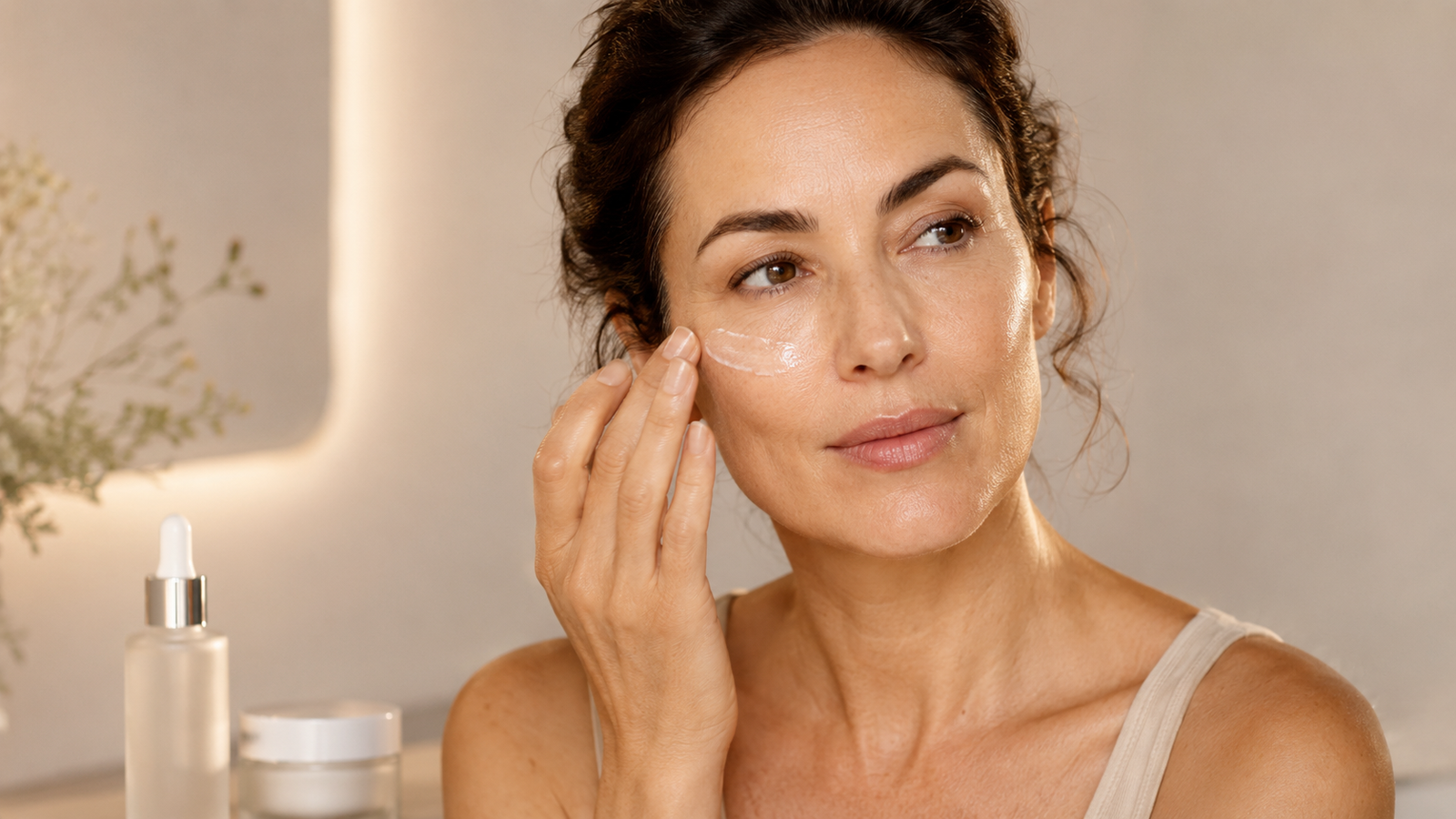
Retinol gets so much attention in anti-aging skincare that it can feel like you’re failing if your skin can’t tolerate it. In reality, repeatedly pushing through burning, peeling, and redness can leave your skin looking drier and more lined than it did before.
A peptide skincare routine anti aging without retinol offers a calmer option. Peptides won’t copy everything retinoids do, but a thoughtful routine can improve hydration, soften the appearance of fine lines, and support firmer-looking skin without making irritation part of the process.
I’ve had better results from a simple peptide serum, moisturizer, and sunscreen routine than from complicated active-heavy routines I couldn’t use consistently. The change wasn’t dramatic overnight, but my skin looked smoother because it was finally comfortable.
Quick Answer
A peptide skincare routine anti aging without retinol should include a gentle cleanser, a well-formulated peptide serum or cream, a barrier-supporting moisturizer, and broad-spectrum SPF 30 or higher. Apply peptides after cleansing and before moisturizer. Expect gradual improvements in hydration and fine texture, not the strong resurfacing effects associated with retinoids.
How Peptides Work Differently From Retinol
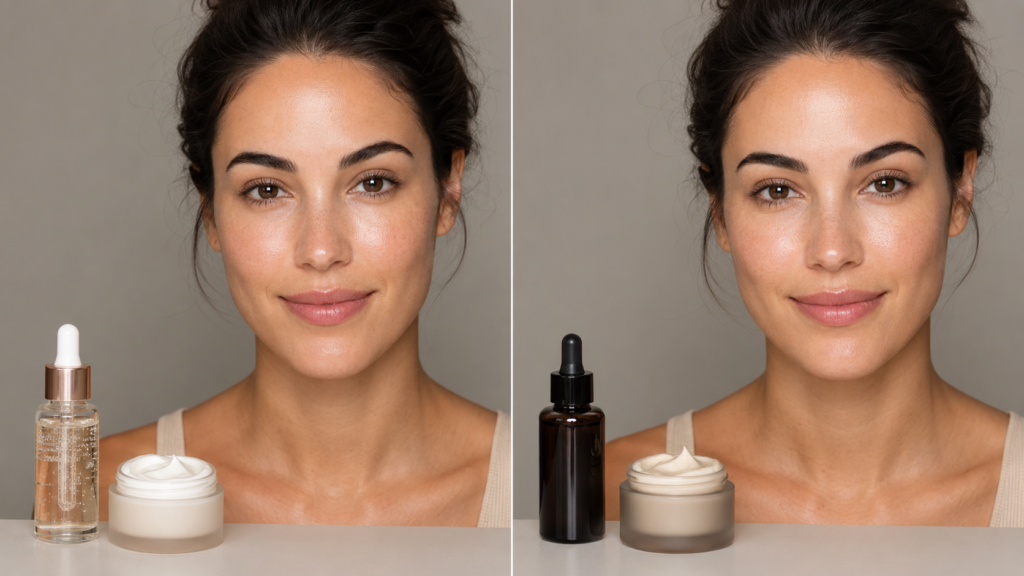
Peptides are short chains of amino acids. Some cosmetic peptides are designed to act as signals connected to processes involved in collagen, elastin, hydration, or barrier function.
Retinoids work through vitamin A receptors and influence skin-cell behavior, including epidermal renewal and the remodeling of photoaged skin. Peptides don’t follow that same pathway, so they shouldn’t be described as weaker or gentler versions of retinol. They are a separate category of ingredients with different strengths and limitations.
The main peptide categories you may see include:
- Signal peptides, often used to support firmer-looking skin
- Carrier peptides, which deliver trace elements such as copper
- Neurotransmitter-inhibiting peptides, used for the appearance of expression lines
- Enzyme-inhibiting peptides, designed to influence processes involved in collagen breakdown
That sounds impressive, but the name “peptide complex” tells you very little by itself. Results depend on the specific peptide, its concentration, stability, delivery system, and the rest of the formula.
A recent systematic review found that peptide products showed potential benefits for hydration and wrinkles, but the overall evidence was mixed, and much of the stronger data came from oral rather than topical peptides. That doesn’t make topical peptides useless. It means you should expect modest cosmetic improvement rather than a face-lifting effect from a serum.
Why Some Peptide Products Work Better Than Others
Peptides can be difficult to deliver through the skin’s outer barrier. Some are too large, water-loving, or unstable to penetrate easily without careful formulation.
Cosmetic chemists may modify peptides with fatty-acid chains, encapsulate them, or combine them with delivery systems that improve stability and skin contact. This is why buying a product with ten peptides isn’t automatically better than choosing one well-formulated product containing two.
The formula around the peptides matters just as much. Glycerin and hyaluronic acid can create immediate plumpness by increasing surface hydration. Silicones can temporarily smooth fine texture. Those effects are useful, but they shouldn’t be confused with newly produced collagen.
I’ve tested peptide serums that made my skin feel softer within one night but looked no different after three months. The instant result came from the hydrating base. A good peptide product should still feel pleasant, but texture alone isn’t proof that it is rebuilding your skin.
How to Choose a Peptide Serum or Cream
Ignore claims such as “liquid Botox” or “collagen replacement.” No topical peptide serum behaves like an injectable treatment, and topical collagen doesn’t simply travel through the skin and replace lost dermal collagen.
Instead, scan the ingredient list for established cosmetic peptide names such as:
- Palmitoyl tripeptide-1
- Palmitoyl tetrapeptide-7
- Palmitoyl pentapeptide-4
- Copper tripeptide-1
- Acetyl hexapeptide-8
You don’t need all of them. Look for a fragrance-free formula that suits your skin type and comes from a company that provides a complete ingredient list.
Serum or Cream: Which Format Is Better?
Choose a serum if you prefer lightweight layers, have combination or oily skin, or already own a moisturizer you like. Apply it after cleansing and before cream.
Choose a peptide cream if your skin is dry, sensitive, or easily overwhelmed by multiple products. A cream can combine peptides with barrier-supporting ingredients, allowing you to treat and moisturize in one step.
Packaging also matters. An opaque pump or airless container limits repeated exposure to air and light. A clear dropper bottle isn’t automatically ineffective, but delicate formulas generally benefit from protective packaging.
Good to Know: More peptides don’t guarantee better results. A short ingredient list with one properly formulated peptide blend may outperform a crowded serum filled with tiny amounts added mainly for marketing.
How to Build a Peptide Skincare Routine Anti Aging Without Retinol
A good peptide routine doesn’t need seven serums. Start with the steps that protect your skin and add only one targeted product at a time.
Morning Peptide Routine
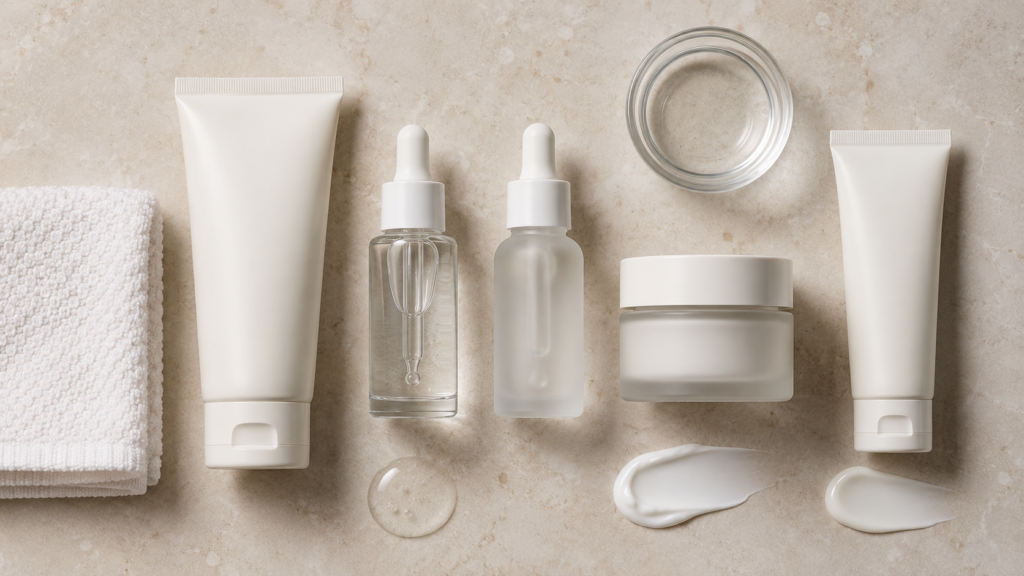
1. Cleanse Without Stripping Your Skin
Use a gentle, fragrance-free cleanser if you wake up oily, sweaty, or covered in a heavy overnight product. Dry skin may need only a lukewarm-water rinse in the morning.
Your face shouldn’t feel tight or squeaky after cleansing. That tight feeling usually signals that too much surface oil has been removed, not that your skin is unusually clean.
2. Apply an Optional Antioxidant
Vitamin C can support protection against oxidative stress and help improve the appearance of uneven tone. Niacinamide is another useful option for barrier support, redness, and uneven pigmentation.
You don’t need both. Choose one based on your main concern, and skip this step entirely if you’re sensitive or new to skincare.
Pure L-ascorbic acid can sting reactive skin because effective formulas are often acidic. A gentler vitamin C derivative or a lower-strength niacinamide product may be easier to use consistently.
3. Apply Your Peptide Product
Use two or three drops of a peptide serum for your face, followed by a little more for your neck. Apply it after watery products and before moisturizer.
Your face can be slightly damp, but it shouldn’t be dripping wet. Too much water may dilute the product, make it spread unevenly, or increase the chance of stinging from other ingredients in the formula.
You don’t need to pat the serum for several minutes. Spread it gently and allow it to settle for about 30 seconds if your products tend to pill.
4. Seal It With Moisturizer
Choose a moisturizer containing ingredients such as ceramides, glycerin, cholesterol, fatty acids, panthenol, or squalane.
Moisturizer creates the fastest visible improvement in many anti-aging routines because hydrated skin reflects light more evenly and makes fine dehydration lines look softer. It doesn’t erase wrinkles, but it can make skin appear smoother and more flexible.
5. Finish With Broad-Spectrum Sunscreen
Use a broad-spectrum sunscreen with SPF 30 or higher every morning. Apply it to your face, ears, neck, and any exposed chest area.
Peptides can’t compensate for repeated unprotected UV exposure. Daily sunscreen remains one of the most useful steps for limiting premature wrinkles, discoloration, and other visible signs of sun damage.
Reapply when you’re spending extended time outdoors, sweating, swimming, or wiping your face.
Night Peptide Routine
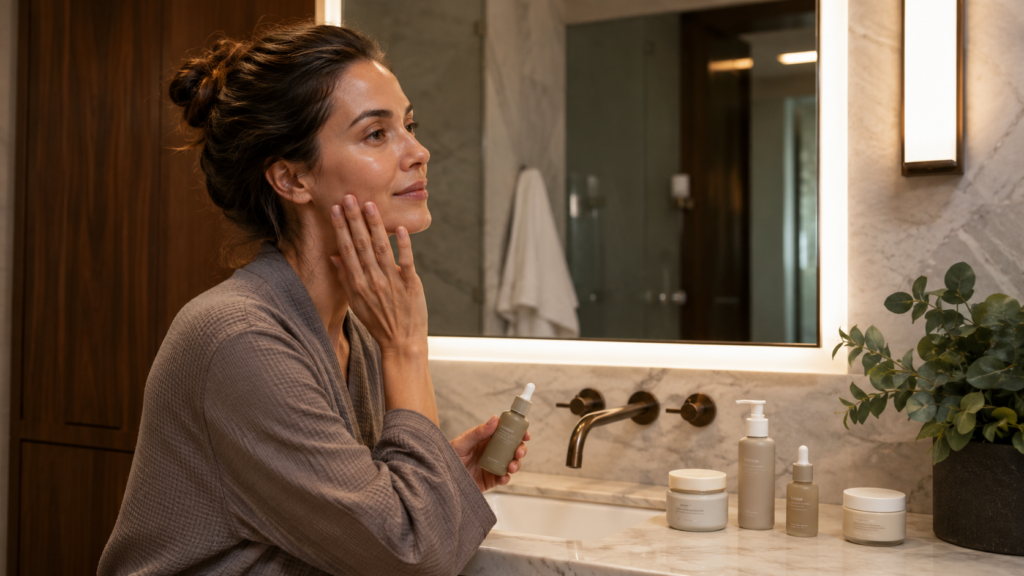
1. Remove Makeup and Sunscreen Gently
Use a cleansing balm, oil cleanser, or micellar water when you wear heavy makeup or water-resistant sunscreen. Follow with a gentle water-based cleanser if residue remains.
Double cleansing isn’t mandatory every night. If one cleanser removes everything without rubbing or leaving a film, a second cleanse may only add dryness.
2. Use Exfoliation Sparingly
Peptides don’t exfoliate, so you may still want a mild acid for rough texture or dullness. Lactic acid, mandelic acid, or a polyhydroxy acid can be easier to tolerate than an aggressive peel.
Start once weekly. Increase to twice weekly only if your skin stays comfortable.
I overdid this during my first peptide routine because the serum itself felt gentle. A daily acid toner, scrub, and cleansing brush still damaged my barrier. Your skin reacts to the total routine, not to each product in isolation.
Watch Out: Smooth, shiny skin that feels tight isn’t necessarily healthy skin. It can be an early sign of over-exfoliation, especially when moisturizer suddenly starts burning.
3. Apply Peptides After Cleansing
Apply your peptide serum to clean skin before moisturizer. If you use a hydrating toner, place the peptide serum after it.
Most peptide products can be used every night, but starting three or four nights per week makes it easier to identify irritation. Peptides themselves are often well tolerated, yet fragrance, botanical extracts, solvents, or preservatives in the formula can still cause a reaction.
4. Finish With a Barrier-Supporting Cream
At night, dry or mature skin may prefer a richer cream containing ceramides and emollients. Combination skin may need only a lightweight lotion.
For flaky areas around the nose or mouth, press a small amount of petrolatum or plain balm over your moisturizer. You don’t need to cover your whole face unless you already know your skin handles heavy occlusion well.
What Can You Use With Peptides?
Peptides generally fit easily into a simple skincare routine. They pair particularly well with ingredients that improve hydration and barrier comfort.
Easy Peptide Pairings
- Glycerin
- Hyaluronic acid
- Niacinamide
- Ceramides
- Panthenol
- Squalane
- Vitamin E
- Fragrance-free moisturizers
Azelaic acid can also work well when redness, blemishes, or uneven tone are your bigger concerns. Use it at a different time or on alternate nights if layering causes stinging.
Can You Use Vitamin C With Peptides?
There isn’t a proven universal rule saying all peptides and vitamin C must be separated. Compatibility depends on the particular peptide and finished formula.
Some manufacturers advise keeping certain peptide products away from low-pH L-ascorbic acid or strong direct acids. Others formulate peptides and vitamin C derivatives together.
Follow the instructions for your product. If no restriction appears and your skin tolerates the combination, you don’t need to separate the ingredients simply because of an internet mixing chart.
What About Copper Peptides?
Copper tripeptide-1 is used in formulas aimed at repair, firmness, and skin quality. Laboratory and early clinical evidence is interesting, but claims often run ahead of what topical consumer products have firmly proved.
You don’t automatically have to avoid vitamin C or acids forever. Follow the formula’s directions, and consider using copper peptides at night and stronger acidic products in the morning if separation reduces irritation or uncertainty.
How Long Peptides Take to Show Results
A hydrating peptide formula may make your skin feel softer within a few days. That early improvement usually comes from humectants and emollients in the product rather than rapid collagen formation.
Give a well-formulated peptide product around eight to twelve weeks before judging subtle changes in texture or fine lines. Take another look after three to six months if your skin tolerates it and you enjoy using it.
Some formulas may produce no visible change at all. That doesn’t necessarily mean peptides as a category are fake; it may mean the particular formula, concentration, delivery system, or peptide wasn’t effective for you.
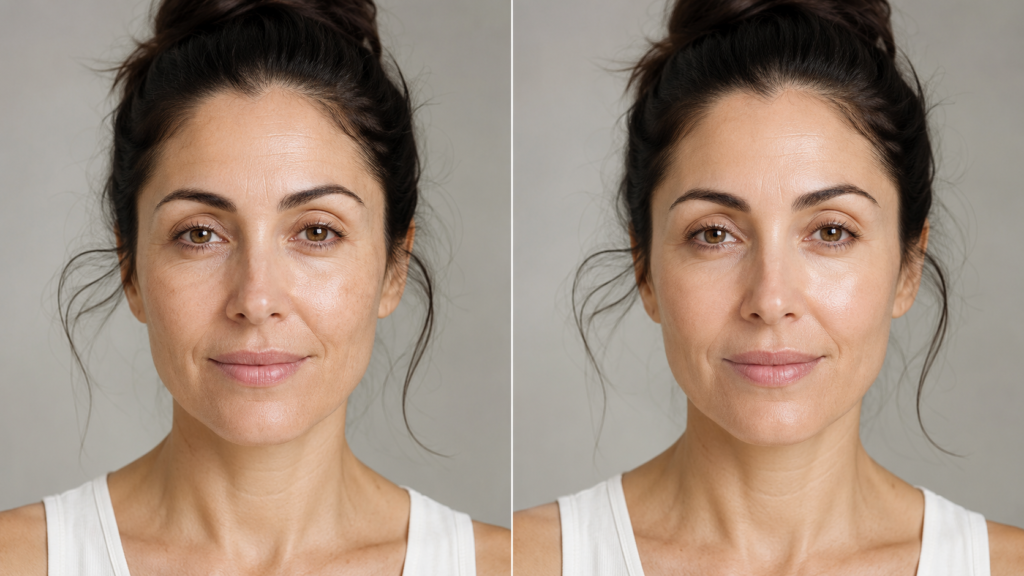
Pro Tip: Photograph your skin before starting. Use the same room, camera, angle, facial expression, and time of day. Changing bathroom lighting can make any serum look either miraculous or completely useless.
What Results Should You Realistically Expect?
A consistent peptide routine may help your skin look:
- Better hydrated
- Slightly smoother
- Less crepey
- More comfortable
- Subtly firmer
- Softer around fine dehydration lines
It probably won’t dramatically tighten sagging skin, remove deep wrinkles, clear significant acne, or correct years of sun damage by itself.
Retinoids have a longer and stronger evidence base for photoaging than cosmetic peptides. If you can’t or don’t want to use retinoids, peptides remain a reasonable supportive choice—but they shouldn’t be marketed as an equal one-for-one replacement.
Who Is This Retinol-Free Routine Best For?
A peptide skincare routine without retinol is most useful for dry, sensitive, easily irritated, or mature skin. It can also suit beginners who want to address early fine lines without starting with a strong active.
Rosacea-prone skin may tolerate peptides, but the complete formula matters. Choose fragrance-free products with minimal botanical extracts and patch test before applying them all over your face.
This routine may feel underwhelming if your main goals are treating persistent acne, deep pigmentation, pronounced sagging, or advanced sun damage. Those concerns often need more targeted ingredients or professional treatment.
Patch test a new peptide product near your jaw or behind your ear for several days. Stop using it if you develop ongoing burning, swelling, itching, or a spreading rash.
See a dermatologist if irritation keeps returning, you have a diagnosed skin condition, or you want to address changes that cosmetic skincare isn’t improving.
Can You Use Peptides During Pregnancy?
Peptides aren’t retinoids, but that doesn’t make every peptide product automatically suitable during pregnancy. A formula may contain additional ingredients that need separate consideration.
Topical retinoids are generally recommended to be avoided during pregnancy, including retinoids found in some over-the-counter products. Check the full ingredient list and discuss uncertain products with your obstetric clinician rather than relying only on a “retinol-free” label.
A Gentle Routine Still Counts as Serious Skincare
A peptide skincare routine anti aging without retinol won’t recreate every benefit of retinoids, and it won’t reverse deep wrinkles or loose skin. What it can do is support smoother, more comfortable, better-hydrated skin without forcing you through months of irritation.
The routine works best when peptides remain the supporting step—not the entire strategy. Gentle cleansing, enough moisturizer, and daily sunscreen will do much of the heavy lifting.
Save this routine before buying another active, and give your skin enough time to show whether simplicity works better.