
Spending time in the sun often feels refreshing, but your skin may tell a different story afterward. Tightness, warmth, redness, or dryness are signs that ultraviolet (UV) rays have stressed the skin, even if there is no visible sunburn. Many people assume that once they come indoors, the damage is already done. In reality, what you do after sun exposure plays a major role in how well your skin recovers. Cooling the skin, restoring hydration, repairing the skin barrier, and protecting it from further UV exposure can help support healthy skin and reduce long-term damage.
This guide explains the most effective and dermatologist-approved things to do after sun exposure for healthy skin, using safe, realistic, and evidence-based care.
Who Needs Post-Sun Care and Who Should Be Careful:
Post-sun care is important for everyone, but it is especially helpful for people with fair to medium skin tones, acne-prone skin, pigmentation issues such as melasma, or concerns about premature aging. Outdoor workers, travelers, and people who spend long hours in the sun also benefit greatly from proper after-sun routines.
Extra caution is needed if you have severe sunburn with blisters, active eczema or rosacea flares, recent chemical peels or laser treatments, or known vascular skin conditions. In these cases, it is best to consult a dermatologist before applying new products.
How Skin Reacts After Sun Exposure (The Science):
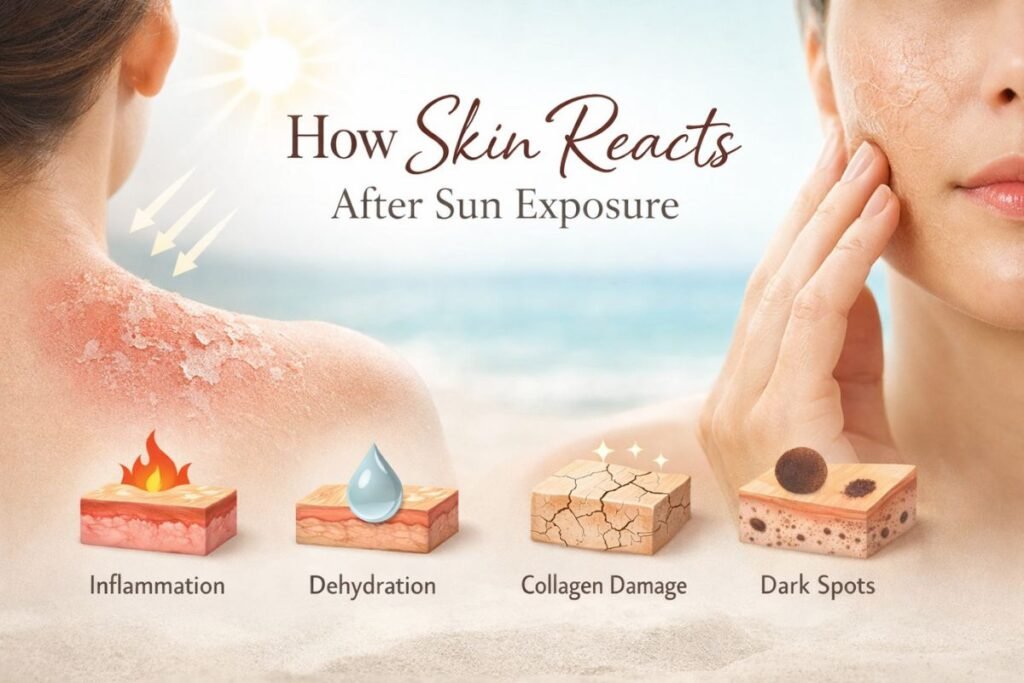
Sun exposure triggers inflammation, dehydration, and oxidative stress in the skin.
In the short term, the skin may feel hot, red, itchy, or tight. Cooling and moisturizing can temporarily relieve these symptoms.
In the longer term, UV radiation damages the skin barrier, increases water loss, and produces free radicals that contribute to dark spots, fine lines, and loss of elasticity. Antioxidants, barrier repair, and sun protection can support healing and help prevent further damage. There is limited evidence that topical products can reverse existing sun damage, but consistent after-sun care can support recovery and skin health over time.
Simple Routine:
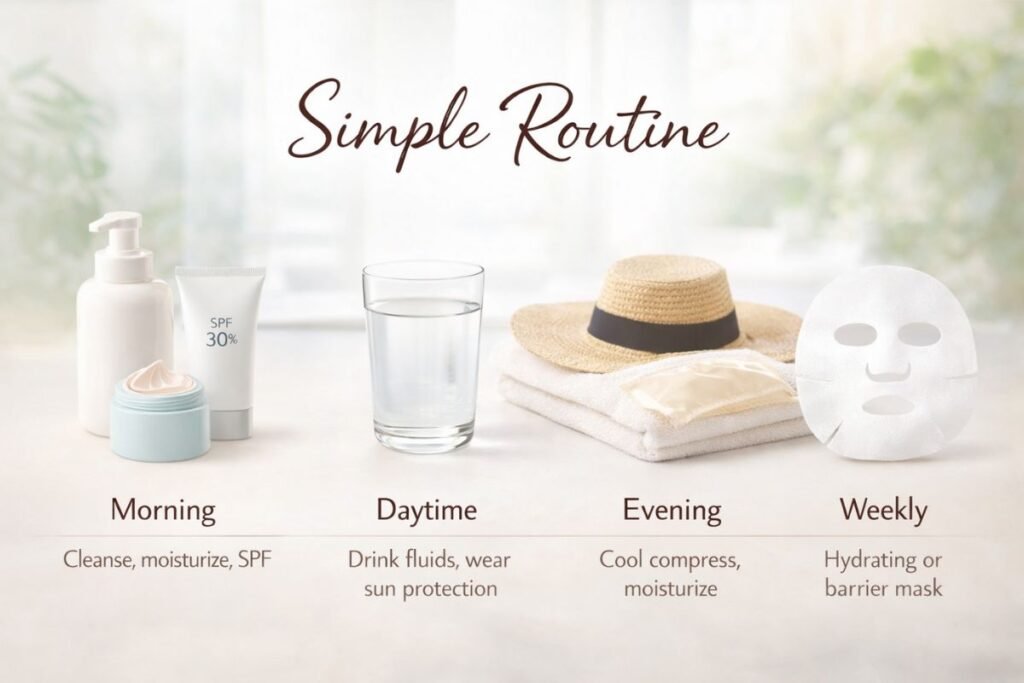
For the first 72 hours after sun exposure:
Morning:
Use a gentle cleanser, apply a lightweight moisturizer, and finish with a broad-spectrum sunscreen (SPF 30 or higher).
Daytime
Drink fluids, stay in shade when possible, and wear protective clothing.
Evening:
Use a cool compress if the skin feels warm, followed by a barrier-repair moisturizer.
Weekly
Use a hydrating or barrier-support mask 2–3 times per week or as tolerated.
Products and Ingredients That Help:
Choose fragrance-free products designed for sensitive or compromised skin. Helpful ingredients include ceramides, glycerin, hyaluronic acid, niacinamide, panthenol, colloidal oatmeal, and aloe vera.
Affordable, dermatologist-recommended brands in the $10–30 range include CeraVe, Cetaphil, Neutrogena, The Ordinary, and La Roche-Posay. Avoid alcohol-heavy, exfoliating, or strongly fragranced products immediately after sun exposure.
15 Things to Do After Sun Exposure;
1 Get out of the sun immediately:
Stopping further UV exposure is the most important first step. Shade, hats, and protective clothing matter just as much as sunscreen.
2 Cool the skin gently:
Apply a cool, damp cloth for 5–10 minutes. Avoid direct ice, which can cause ice burns and broken capillaries.
3 Take a lukewarm shower:
Hot water increases irritation and dryness. Keep showers short and gentle.
4 Cleanse with a mild cleanser:
Use a fragrance-free, non-foaming cleanser. Avoid scrubs, brushes, or exfoliating tools.
5 Apply soothing ingredients:
Aloe vera, panthenol, or colloidal oatmeal may help calm irritation and discomfort.
6 Moisturize while the skin is slightly damp:
This helps seal in moisture and supports barrier repair.
7 Increase water intake:
Hydration supports normal skin function, though it does not instantly repair sun damage.
8 Pause active ingredients:
Avoid retinoids, chemical exfoliants, benzoyl peroxide, and strong vitamin C for several days.
9 Use antioxidants after redness settles:
Once the skin feels calm, antioxidants such as niacinamide or vitamin C may support recovery from oxidative stress.
10 Apply sunscreen daily:
Sun protection remains essential even after sun exposure to prevent additional damage.
11 Wear loose, breathable clothing:
Tight fabrics trap heat and increase friction on sensitive skin.
12 Do not peel or pick
Peeling skin is part of the natural healing process. Picking increases the risk of infection and scarring.
13 Sleep on clean, soft fabrics:
Cotton pillowcases reduce irritation and help support overnight recovery.
14 Monitor your skin closely:
Blisters, swelling, fever, nausea, or chills require medical attention.
15 Adjust future sun habits:
Consistent sunscreen use, shade breaks, and protective clothing help prevent repeated damage.
Top Skin Concerns After Sun Exposure:
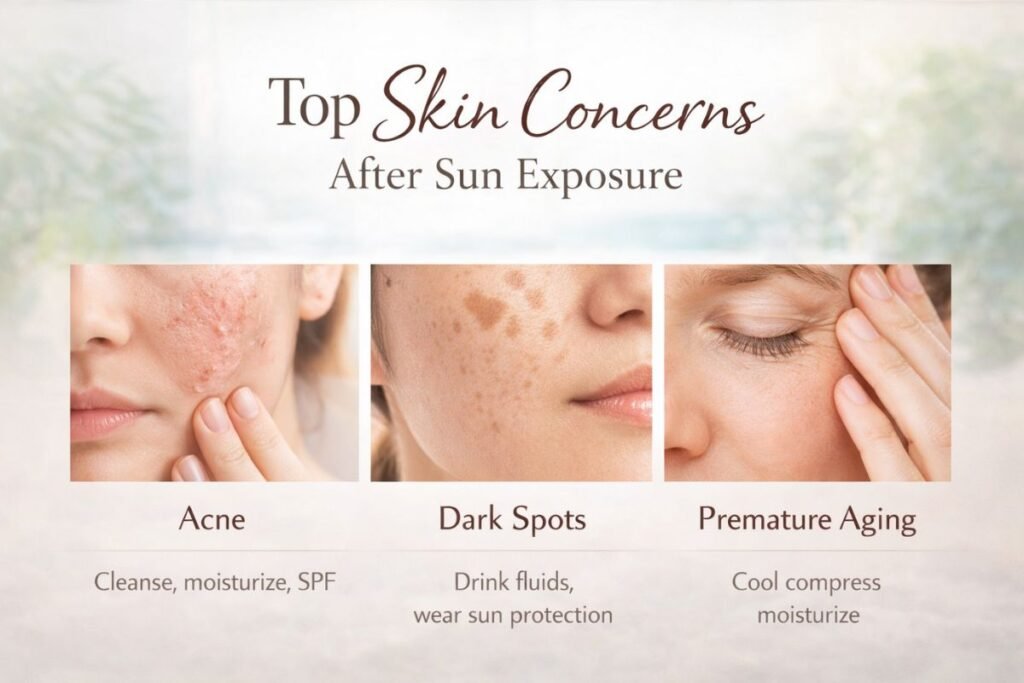
Acne:
Heat and sweat increase oil production and clogged pores. Use lightweight, non-comedogenic moisturizers.
Dark spots;
UV exposure stimulates pigment-producing cells. Strict sun protection helps prevent worsening pigmentation.
Premature aging
Repeated UV exposure breaks down collagen. Consistent after-sun care supports long-term skin resilience.
Safety Rules and Risks :
After-sun care is generally safe, but certain practices can cause harm.
Potential risks include ice burns from direct ice use, rosacea flares from temperature extremes, broken capillaries from aggressive rubbing, eczema flares from fragranced products, and worsening vascular conditions.
Stop using products and seek medical care if you experience blistering sunburn, severe pain, swelling, fever, dizziness, or signs of infection.
Realistic Healing Timeline:
Week 1–2
Redness, tightness, and discomfort gradually improve with gentle care.
Month 1
Skin barrier strength improves, and sensitivity decreases.
Month 3
More stable skin with fewer post-sun reactions if sun protection and after-care are consistent.
Healing time varies depending on skin type and the intensity of sun exposure.
Common Mistakes and How to Fix Them:
Using ice directly on the skin
Use a cool compress instead.
Exfoliating too soon
Wait at least 5–7 days before restarting exfoliation.
Skipping moisturizer
Apply moisturizer twice daily to support barrier repair.
Assuming a tan is healthy
Focus on repair and protection, not skin color.
Forgetting sunscreen after sun exposure
Apply sunscreen daily, even indoors near windows.
Frequently Asked Questions:
How soon should I moisturize after sun exposure?
As soon as possible, ideally within the first hour.
Can after-sun care reverse sun damage?
No. Evidence is limited. It can support healing and comfort but cannot fully reverse damage.
Is aloe vera enough after sun exposure?
It can soothe the skin but should be combined with moisturizers and sunscreen.
When can I restart retinol after sun exposure?
Once redness and sensitivity have resolved, usually after several days.